Climen film-coated tablets
Spain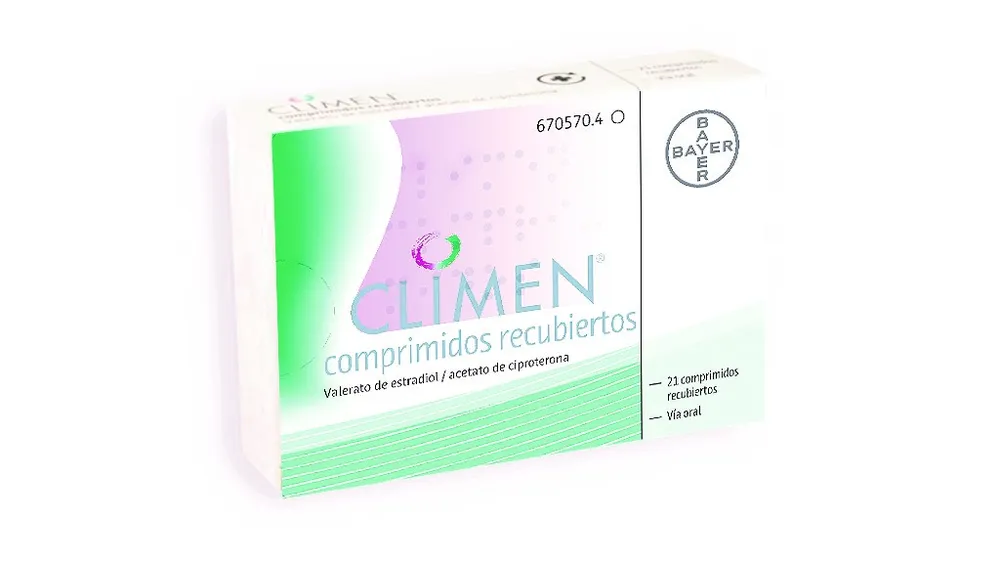
Table of Contents
Patient Information Leaflet
Introduction
Patient Information Leaflet
Climen coated tablets
Estradiol valerate / Cyproterone acetate
Read all of this leaflet carefully before you start taking this medicine, because it contains important information for you.
|
Package leaflet:
- What Climen is and what it is used for
- What you need to know before taking Climen
- How to take Climen
- Possible side effects
- Storage of Climen
- Contents of the pack and other information
1. What Climen is and what it is used for
Climen is indicated for:
-
Hormone replacement therapy (HRT) for:
-
The treatment of menopausal symptoms (the period during which reproductive function and menstruation cease in a woman, naturally or surgically induced), e.g. hot flushes, night sweats, urogenital disorders (atrophic vaginitis), depressive mood.
-
Prevention of osteoporosis (loss of bone mass) if you are at high risk of future fractures and cannot use other medications for this purpose. Consult your doctor regarding all available treatment options.
Climen must not be used to prevent heart disease or to enhance intellectual ability.
Climen is not a contraceptive and does not restore fertility.
2. What you need to know before starting Climen
Carefully follow all instructions given by your doctor.
Read the following information before using Climen.
Medical history and regular check-ups
The use of HRT carries risks that must be considered when deciding whether to start or continue treatment.
Experience in treating women with premature menopause (due to ovarian insufficiency or surgical intervention) is limited. If you have premature menopause, the risks of using HRT may differ. Consult your doctor.
Before starting (or restarting) HRT, your doctor will ask about your personal and family medical history. Your doctor may decide to perform a physical examination. This may include a breast examination and/or an internal examination, if necessary.
Once treatment with Climen has started, you must visit your doctor regularly for check-ups (at least once a year). During these visits, discuss with your doctor the benefits and risks of continuing Climen.
Regular breast examinations should be performed as recommended by your doctor.
Do not take Climen
if any of the following apply to you. If you are unsure about any of the following points, consult your doctor before taking Climen. Do not take Climen:
-
If you have or have had breast cancer or suspect you may have it.
-
If you have known or suspected premalignant lesions influenced by sex hormones or hormone-dependent tumors.
-
If you have cancer dependent on estrogen action, such as cancer of the inner lining of the uterus (endometrium), or suspect you may have it.
-
If you have meningioma or have ever been diagnosed with meningioma (a usually benign tumor of the tissue layer between the brain and skull).
-
If you are pregnant or suspect you may be pregnant, or if you are breastfeeding.
-
If you have abnormal vaginal bleeding.
-
If you have excessive thickening of the inner lining of the uterus (endometrial hyperplasia) and are not being treated.
-
If you have or have had formation of a blood clot in a vein (thrombosis), e.g., in the legs (deep vein thrombosis) or in the lungs (pulmonary embolism).
-
If you have a high risk of developing arterial or venous thrombosis (blood clot).
-
If you have any blood clotting disorder (such as protein C, protein S, or antithrombin deficiency).
-
If you have or have recently had a disease caused by blood clots in the arteries, such as heart attack, stroke, or angina pectoris.
-
If you have or have had liver disease, and your liver function tests have not returned to normal.
-
If you have a rare inherited blood disorder called "porphyria" passed from parents to children (hereditary).
-
If you are allergic to estradiol valerate, ciproterone acetate, or any of the other components of this medicine (listed in section 6).
If any of these conditions develops for the first time while you are taking Climen, stop treatment immediately and consult your doctor.
Warnings and precautions
Consult your doctor or pharmacist before starting Climen.
Visit your doctor regularly, at least once a year. Discuss with your doctor at each visit whether adjustments or continuation of treatment are needed. Your doctor will assess whether you have an increased risk of thrombosis due to a combination of risk factors or a single very high-risk factor. In case of a combination of risk factors, the risk may be higher than a simple addition of two individual risks. If the risk is too high, your doctor will not prescribe HRT.
For the treatment of menopausal symptoms, HRT should only be initiated when symptoms affect the woman's quality of life. In all cases, a careful annual assessment of risks and benefits should be performed, and HRT should only continue while benefits outweigh risks. The lowest effective dose and shortest possible duration of treatment should always be considered.
An increased risk of a benign brain tumor (meningioma) has been reported with high doses (25 mg or higher) of ciproterone acetate. If you are diagnosed with meningioma, your doctor will discontinue treatment with all medications containing ciproterone, including Climen, as a precautionary measure (see section "Do not take Climen").
Take special care with Climen:
Before starting treatment, inform your doctor if you have ever had any of the following conditions, as they may recur or worsen during treatment with Climen. If so, you should visit your doctor more frequently for check-ups:
-
Gynecological disorders of any kind, such as irregular, frequent, or persistent uterine bleeding, fibroids (a type of uterine tumor), endometriosis (presence of tissue from a part of the uterus called endometrium outside its normal location), or history of endometrial hyperplasia (excessive thickening of the inner lining of the uterus).
-
Increased risk of developing blood clots (see “Blood clots in a vein (thrombosis)”)
-
Increased risk of developing estrogen-dependent cancer (e.g., having a mother, sister, or grandmother who had breast cancer)
-
Changes or abnormalities in the breasts.
-
High levels of certain fats (triglycerides) in the blood or family history of this condition due to the risk of developing pancreatitis (inflammation of the pancreas).
-
High blood pressure.
-
Liver disorders, such as a benign liver tumor.
-
Diabetes.
-
Gallstones.
-
Migraines or severe headaches.
-
An autoimmune disease affecting multiple organs (systemic lupus erythematosus, SLE).
-
Epilepsy.
-
Multiple sclerosis (a nervous system disorder).
-
Asthma.
-
A disease affecting the eardrum and ear (otosclerosis).
-
Fluid retention due to heart or kidney problems
-
Chorea minor (a nervous system disorder).
-
Hereditary and acquired angioedema.
Stop taking Climen and contact your doctor immediately
If you experience any of the following conditions while taking HRT:
- Any of the conditions listed in the section “Do not take Climen”,
- Yellowing of the skin or whites of the eyes (jaundice). This may be a sign of liver disease,
- Swelling of the face, tongue, or throat and difficulty swallowing or hives accompanied by breathing difficulty, suggesting angioedema,
- A significant increase in blood pressure (symptoms may include headache, fatigue, dizziness),
- Migraine-type headaches when occurring for the first time,
- If you become pregnant,
- If you notice signs of a blood clot, such as
- painful swelling and redness in the legs
- sudden chest pain
- difficulty breathing
For more information, see “Blood clots in a vein (thrombosis)”
Note: Climen is not a contraceptive. If less than 12 months have passed since your last menstrual period or if you are under 50 years old, you may still need to use an additional contraceptive method to prevent pregnancy. Seek advice from your doctor.
Take special care not to exceed the recommended doses.
During HRT treatment, certain serious conditions such as blood clots (thrombosis) and some types of tumors may occur more frequently.
HRT and cancer
Excessive thickening of the inner lining of the uterus (endometrial hyperplasia) and cancer of the inner lining of the uterus (endometrial cancer).
HRT with estrogen alone increases the risk of excessive thickening of the inner lining of the uterus (endometrial hyperplasia) and cancer of the inner lining of the uterus (endometrial cancer).
The progestogen contained in Climen protects you from this increased risk.
In women with an intact uterus who do not use HRT, an average of 5 out of 1,000 women aged 50 to 65 will be diagnosed with endometrial cancer. In women with an intact uterus who use estrogen-only HRT, an average of 10 to 60 out of 1,000 women aged 50 to 65 will be diagnosed with endometrial cancer (i.e., between 5 and 55 additional cases), depending on the dose and duration of treatment.
Unexpected bleeding
You will have a monthly menstrual bleed (also called withdrawal bleed) while taking Climen. However, if you experience irregular bleeding or spotting in addition to your menstrual period that:
- Continues beyond the first 6 months;
- Begins after having taken Climen for more than 6 months;
- Continues after stopping Climen treatment;
consult your doctor as soon as possible.
Breast cancer
Available data show that the use of hormone replacement therapy (HRT) with combined estrogen-progestogen or estrogen-only increases the risk of breast cancer. The additional risk depends on how long you use HRT. The additional risk becomes evident after 3 years of use. After stopping HRT, the additional risk will decrease over time, but the risk may persist for 10 years or more if you have used HRT for more than 5 years.
Your doctor will guide you on how to detect breast abnormalities and will perform periodic checks during treatment.
Comparison:
In women aged 50 to 54 years not using HRT, an average of 13 to 17 out of 1,000 will be diagnosed with breast cancer over a 5-year period.
In women aged 50 who start estrogen-only HRT for 5 years, there will be between 16 and 17 cases per 1,000 users (i.e., between 0 and 3 additional cases).
In women aged 50 who start combined estrogen-progestogen HRT for 5 years, there will be 21 cases per 1,000 users (i.e., 4–8 additional cases).
In women aged 50 to 59 not taking HRT, an average of 27 cases of breast cancer per 1,000 women will be diagnosed over a 10-year period.
In women aged 50 who start estrogen-only HRT for more than 10 years, there will be 34 cases per 1,000 users (i.e., 7 additional cases).
In women aged 50 who start combined estrogen-progestogen HRT for 10 years, there will be 48 cases per 1,000 users (i.e., 21 additional cases).
Check your breasts regularly. Consult your doctor if you notice any changes such as:
- Dimpling of the skin
- Changes in the nipple
- Any lump you can see or feel
In addition, you are advised to participate in screening mammography programs when offered. For screening mammograms, it is important to inform the nurse/healthcare professional performing the X-ray that you are using HRT, as these medications can increase breast density, which may affect the mammogram result. When breast density is increased, the mammogram may not detect all lumps.
Ovarian cancer
Ovarian cancer is less common than breast cancer. The use of HRT with estrogen alone or combined estrogen-progestogen has been associated with a slightly increased risk of ovarian cancer.
The risk of ovarian cancer varies with age. For example, in women aged 50 to 54 not on HRT, about 2 cases of ovarian cancer per 2,000 women are observed over a 5-year period. In women on HRT for 5 years, about 3 cases per 2,000 patients are observed (i.e., about 1 additional case).
Effects of HRT on the heart and circulation
Blood clots in a vein (thrombosis)
The risk of venous blood clots is approximately 1.3 to 3 times higher in HRT users compared to non-users, especially during the first year of use. The risk of thrombosis also increases with age.
Blood clots can be serious, and if one travels to the lungs, it can cause chest pain, breathing difficulty, fainting, or even death.
Your risk of developing a venous blood clot increases with age and if any of the following apply to you. Inform your doctor if any of these situations affect you:
- You cannot walk for a prolonged period due to major surgery, injury, or illness (see also section 3, If you need to undergo surgery)
- You have severe obesity (BMI > 30 kg/m²)
- You have a blood clotting disorder requiring long-term treatment with a medication used to prevent blood clots
- A close relative has had a blood clot in the leg, lung, or any other organ
- You have systemic lupus erythematosus (SLE)
- You have cancer.
For symptoms of a blood clot, see “Stop taking Climen and contact your doctor immediately.”
Comparison:
In women in their fifties not taking HRT, an average of 4 to 7 out of 1,000 are expected to have a venous blood clot over a 5-year period.
In women in their fifties who have taken estrogen-progestogen HRT for more than 5 years, there will be 9 to 12 cases per 1,000 users (i.e., 5 additional cases).
Arterial thromboembolism
In large clinical trials with conjugated estrogens and medroxyprogesterone acetate (MPA), a possible increase in cardiovascular disease risk was observed in the first year of use, along with an increased risk of stroke. It is unknown whether these findings apply to other HRT compounds containing different estrogens and progestogens, such as Climen.
Coronary heart disease (heart attack)
HRT has not been shown to prevent heart attacks. You should not use HRT to prevent cardiovascular diseases.
Women over 60 using estrogen-progestogen HRT are slightly more likely to develop heart disease than those not taking any HRT.
Stroke
The risk of stroke is approximately 1.5 times higher in HRT users compared to non-users. The number of additional stroke cases due to HRT increases with age.
Comparison:
In women in their fifties not taking HRT, an average of 8 out of 1,000 are expected to have a stroke over a 5-year period. For women in their fifties taking HRT, there will be 11 cases per 1,000 users over a 5-year period (i.e., 3 additional cases).
Dementia
There is limited evidence from clinical studies that hormone therapy may increase the risk of significant loss of intellectual abilities, such as memory loss (dementia), if treatment is initiated at age 65 or older. The risk may decrease if treatment is started during early menopause, as observed in other studies. It is unknown whether these findings extend to other HRT products.
Other diseases
If you are diabetic, you should be monitored carefully while on HRT, as it may affect carbohydrate metabolism (peripheral insulin resistance and glucose tolerance).
If a prolactinoma (a non-cancerous tumor causing increased secretion of the hormone prolactin) is suspected, it should be ruled out before starting treatment. If you have a prolactinoma, close medical supervision is required (including periodic measurement of prolactin levels).
If you develop chloasma (irregularly bordered yellowish-brown skin patches, mainly on the face) during hormone replacement therapy (HRT), especially if you have a history of chloasma during pregnancy, you should avoid exposure to sunlight or ultraviolet rays while on treatment.
Inform your doctor if you have impaired kidney or heart function. Estrogens may cause fluid retention, and therefore, patients with impaired kidney function should be closely monitored.
You should discuss with your doctor the possible alternative treatments available for your specific condition and how long treatment should last. This should be reviewed periodically during treatment.
If you have a uterine fibroid (a type of uterine tumor), it may increase in size due to the influence of estrogens. In such a case, treatment should be discontinued.
If you experience reactivation of endometriosis, you are advised to discontinue treatment.
Climen is not a contraceptive and should not be used as such; it also does not restore fertility.
To avoid pregnancy, non-hormonal contraceptive methods should be used when necessary (except for rhythm and temperature methods). If there are signs suggesting pregnancy, tablet intake should be stopped until pregnancy is ruled out (see section “Pregnancy, breastfeeding and fertility”).
HRT does not prevent memory loss. There is some evidence of an increased risk of memory loss in women who start using HRT after age 65. Seek advice from your doctor.
In women with hereditary angioedema (swelling or edema of allergic type usually appearing on the face), exogenous estrogens such as those contained in Climen may induce or worsen symptoms.
Additional information in special populations
Children and adolescents
Climen is not indicated for use in children and adolescents.
Elderly population
There are no data suggesting a need for dosage adjustment in elderly patients.
Patients with hepatic impairment
Climen has not been specifically studied in patients with hepatic impairment. Climen is contraindicated in women with severe liver disease (see section “Do not take Climen”).
Patients with renal impairment
Climen has not been specifically studied in patients with renal impairment.
Use of Climen with other medicines
Inform your doctor or pharmacist if you are taking, have recently taken, or might need to take any other medicines, including those obtained without a prescription, herbal remedies, or other natural products.
Certain medicines may interact with the effect of Climen. This may cause irregular bleeding. In such cases, it may be necessary to change the dose or discontinue treatment with one of the medicines. This applies to the following medicines:
- Antiepileptic medicines (e.g., barbiturates, phenytoin, primidone, carbamazepine) and possibly oxcarbazepine, topiramate, and felbamate)
- Medicines for the treatment of tuberculosis (e.g., rifampicin and rifabutin)
- Medicines for HIV and Hepatitis C virus infection (protease inhibitors and non-nucleoside reverse transcriptase inhibitors) (e.g., nevirapine, efavirenz, ritonavir, nelfinavir)
- Herbal preparations containing St. John's wort (Hypericum perforatum). The effect of these preparations persists for up to two weeks after discontinuation.
- Medicines for the treatment of fungal infections (e.g., griseofulvin, fluconazole, itraconazole, ketoconazole, and voriconazole)
- Medicines for the treatment of bacterial infections (e.g., clarithromycin and erythromycin)
- Medicines for the treatment of certain heart conditions, high blood pressure (such as verapamil and diltiazem)
- Grapefruit juice
HRT may affect the function of other medicines:
-
An epilepsy medicine (lamotrigine), as it could increase seizure frequency.
-
Medicines for hepatitis C virus (HCV) infection (e.g., HCV combination regimens ombitasvir/paritaprevir/ritonavir and dasabuvir with or without ribavirin; glecaprevir/pibrentasvir or sofosbuvir/velpatasvir/voxilaprevir) may cause elevations in liver function blood tests (increase in liver enzyme ALT) in women using HRT containing ethinylestradiol. Climen contains estradiol instead of ethinylestradiol. It is unknown whether an increase in liver enzyme ALT may occur when Climen is used with this HCV combination regimen.
There are substances (e.g., paracetamol) that may increase the amount of circulating estradiol in the blood and thus potentially enhance its effect.
In specific cases, requirements for oral antidiabetics or insulin may vary due to effects on glucose tolerance.
Concomitant administration of Climen and cyclosporine may increase circulating levels of the latter, as well as creatinine and transaminases, due to a mechanism involving reduced hepatic elimination of cyclosporine.
Inform your doctor or pharmacist if you are taking, have recently taken, or might need to take any other medicines. Your doctor will advise you accordingly.
Laboratory tests
If you need a blood test, inform your doctor or laboratory staff that you are taking Climen, as it may alter the results of certain laboratory tests or analyses.
Pregnancy, breastfeeding and fertility
If you are pregnant or breastfeeding, or think you may be pregnant or plan to become pregnant, consult your doctor or pharmacist before using this medicine.
Climen is indicated only for postmenopausal women. Do not use Climen if you are pregnant or wish to become pregnant. If pregnancy occurs during treatment with Climen, treatment must be stopped immediately.
Do not use Climen if you are breastfeeding. Small amounts of sex hormones may be excreted in human milk.
Driving and use of machines
No effects on the ability to drive or use machines have been observed in users of Climen.
Climen contains lactose and sucrose
If your doctor has informed you that you have an intolerance to certain sugars, consult him before taking this medicine.
3. How to take Climen
Follow exactly the instructions for taking this medicine as given by your doctor or pharmacist. If in doubt, please consult your doctor or pharmacist again.
Remember to take your medicine.
- Adult women, including elderly women
If you still have menstrual cycles, treatment should start on the fifth day of the cycle (first day of menstrual bleeding = first day of the cycle).
If you have amenorrhea (absence of menstruation) or very infrequent periods, or if you are postmenopausal, you may start treatment at any time, provided that pregnancy has previously been ruled out.
Dosage
Take one white tablet once daily for the first 11 days, followed by one pink tablet once daily for the next 10 days. After these 21 days of treatment, there will be a 7-day interval without taking tablets.
Administration
Each pack provides treatment for 21 days. After the 7-day tablet-free interval, you should start a new pack of Climen on the same day of the week as you started the previous one. The tablets should be taken without chewing, with some liquid.
To help you follow the correct order of administration, 7 adhesive strips with the days of the week are provided.
Choose the adhesive strip for the week starting with the day on which you take your first tablet. For example, if you take your first tablet on a Wednesday, use the adhesive strip starting with “WED”.
Attach the weekly adhesive strip to the top of the Climen blister pack, where indicated “Attach strip here”, so that the first day is positioned above the tablet marked with the word “Start”. You will then have a day marked above each tablet and will be able to visually check whether you have taken the tablet on a given day.
Take one tablet daily, following the direction of the arrows, until you have finished the 21 tablets in the blister. In this way, you will take one white tablet daily for the first 11 days, followed by one pink tablet daily for the next 10 days.
It does not matter what time of day you take the tablet, but once you have chosen a specific time, you should take it at that same time every day.
During the 7-day tablet-free interval, bleeding usually occurs a few days after stopping the last tablet.
For both initiation and continuation of treatment of climacteric symptoms, the lowest effective dose should always be used for the shortest possible duration of treatment.
If you feel that the effect of Climen is too strong or too weak, inform your doctor or pharmacist.
Your doctor will advise you on the duration of your treatment with Climen. Do not stop treatment prematurely, as it may not produce the desired effect.
If you take more Climen than you should
In case of overdose or accidental ingestion, consult your doctor or pharmacist or call the Toxicology Information Service at telephone number 915 620 420, indicating the medicine and the amount taken.
Overdose may cause nausea, vomiting, and irregular bleeding. Specific treatment is not usually necessary, but you should consult your doctor if you are concerned.
If you forget to take Climen
Do not take a double dose to make up for forgotten doses.
If you have forgotten to take a tablet and less than 24 hours have passed, take the tablet as soon as possible and take the next tablet at your usual time. If more than 24 hours have passed, leave the forgotten tablet in the blister. Continue taking the remaining tablets at your usual time each day. If treatment is interrupted for a longer period, irregular bleeding may occur.
If you need surgery
If you are going to undergo surgery, inform your surgeon that you are taking Climen. You may need to stop taking Climen 4 to 6 weeks before surgery to reduce the risk of blood clots (see also section 2 “Blood clots in a vein”). Ask your doctor when you can resume treatment with Climen.
If you have any further questions about the use of this medicine, ask your doctor or pharmacist.
4. Possible adverse effects
Like all medicines, this medicine may cause adverse effects, although not everyone will experience them.
The following diseases occur more frequently in women using HRT compared to women who do not take HRT:
- breast cancer
- abnormal growth or cancer of the inner lining of the womb (endometrial hyperplasia or cancer)
- ovarian cancer
- blood clots in the veins of the legs or lungs (venous thromboembolism)
- coronary heart disease
- stroke
- possible memory loss if HRT is started after the age of 65.
For further information about these adverse effects, see section 2.
In addition to the adverse effects listed in the section "Take special care with Climen", the following possible adverse effects have been reported in users of various oral HRT preparations, classified according to the part of the body affected and their frequency of occurrence:
-
Frequent adverse effects (may affect up to 1 in 10 users):
-
Weight gain, weight loss
-
Headache
-
Abdominal pain, nausea
-
Skin rash, pruritus (itching)
-
Vaginal bleeding, including spotting
-
Uncommon adverse effects (may affect up to 1 in 100 users):
-
Hypersensitivity reaction (allergic reaction)
-
Depressed mood
-
Dizziness
-
Visual disturbances
-
Palpitations
-
Dyspepsia (indigestion)
-
Erythema nodosum (a type of skin inflammation causing nodules on the legs)
-
Urticaria (itching)
-
Breast pain, breast tenderness
-
Edema (fluid retention)
-
Rare adverse effects (may affect up to 1 in 1,000 users):
-
Anxiety, increased libido (sexual desire), decreased libido
-
Migraine
-
Intolerance to contact lenses
-
Bloating, vomiting
-
Hirsutism (excessive hair growth), acne
-
Muscle cramps
-
Dysmenorrhoea (painful menstruation), vaginal discharge, premenstrual-like syndrome, breast enlargement
-
Fatigue
In women with hereditary angioedema (swelling or allergic-type edema usually affecting the face), exogenous estrogens such as those contained in Climen may induce or worsen symptoms (see "Take special care with Climen").
The following adverse effects have been reported with other HRT medicines:
- Estrogen-dependent benign or malignant neoplasms, e.g., endometrial cancer.
- Venous thromboembolism, e.g., deep vein thrombosis in legs or pelvis and pulmonary embolism, worsening of varicose veins, hypertension (see sections "Do not take Climen" and "Take special care with Climen").
- Myocardial infarction.
- Stroke.
- Skin and subcutaneous tissue disorders:
- Skin discoloration, especially on the face or neck, known as chloasma (melasma) (skin patches),
- skin rash with red, target-like lesions or sores (erythema multiforme) (a type of skin inflammation),
- painful red nodules on the skin (erythema nodosum),
- vascular purpura (red spots on the skin),
- contact dermatitis, pigmentary changes,
- generalized itching, and
- exanthema (skin rash).
- Gallbladder disease.
- Possible dementia in women over 65 years of age (see section "Take special care with Climen").
Reporting of adverse effects
If you experience any adverse effect, talk to your doctor or pharmacist, even if it is a possible adverse effect not listed in this leaflet. You may also report them directly via the Spanish Pharmacovigilance System for Human Medicines: www.notificaRAM.es. By reporting adverse effects, you can help provide more information on the safety of this medicine.
5. Storage of Climen
Keep this medicine out of the sight and reach of children.
No special storage conditions are required.
Do not use this medicine after the expiry date stated on the packaging after EXP. The expiry date refers to the last day of the month indicated.
Medicines must not be disposed of via wastewater or household waste. Dispose of empty containers and unused medicines at the SIGRE Point  at your pharmacy. If in doubt, ask your pharmacist how to dispose of containers and medicines you no longer need. This will help protect the environment.
6. Contents of the package and other information
Composition of Climen
- The active substances are estradiol valerate and cyproterone acetate.
Each white coated tablet contains 2.0 mg of estradiol valerate.
Each pink coated tablet contains 2.0 mg of estradiol valerate and 1.0 mg of cyproterone acetate.
- The other components (excipients) are monohydrate lactose, corn starch, povidone 25, talc, magnesium stearate, sucrose, povidone 90, macrogol 6,000, calcium carbonate, glycol montanate, glycerol 85% (E-422), titanium dioxide (E-171), yellow iron oxide (E-172), red iron oxide (E-172).
Appearance of the medicine and contents of the pack
Climen is presented as coated tablets in a blister pack. Each blister pack contains 21 tablets (11 white tablets and 10 pink tablets).
Marketing Authorization Holder and Manufacturer
Bayer Hispania, S.L.
Av. Baix Llobregat, 3-5
08970 Sant Joan Despí (Barcelona)
Spain
Manufacturer
Bayer AG
Müllerstraße 178
13353 Berlin
Germany
or
Bayer Weimar GmbH und Co. KG
Döbereinerstraße 20
99427 Weimar
Germany
Date of the most recent revision of this leaflet: September 2025
Detailed information about this medicine is available on the website of the Spanish Agency of Medicines and Health Products (AEMPS) http://www.aemps.gob.es/.