Claversal 500 mg suppositories
Spain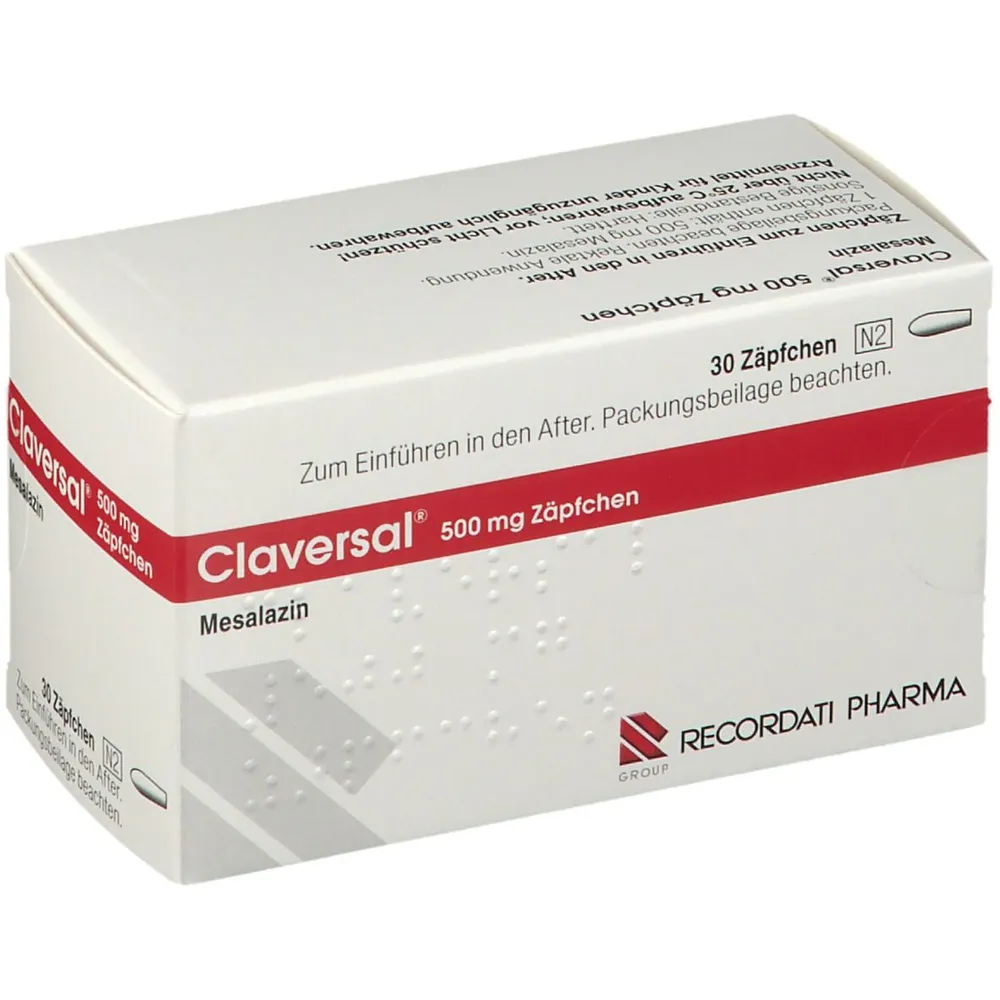
Table of Contents
- Package leaflet: Information for the user
- Introduction
- 1. What Claversal 500 mg suppositories is and what it is used for
- 2. What you need to know before using Claversal 500 mg suppositories
- 3. How to use Claversal 500 mg suppositories
- 4. Possible adverse effects
- 5. Storage of Claversal 500 mg suppositories
- 6. Contents of the pack and other information
Package leaflet: Information for the user
Introduction
Package leaflet: Information for the patient
Claversal 500 mg suppositories
mesalazine
Read the entire leaflet carefully before you start using this medicine, because it contains important information for you.
- Keep this leaflet, as you may need to read it again.
- If you have any questions, ask your doctor or pharmacist.
- This medicine has been prescribed for you and should not be given to other people, even if they have the same symptoms as you, because it could harm them.
- If you experience any adverse effects, consult your doctor or pharmacist, even if they are adverse effects not listed in this leaflet. See section 4.
Leaflet contents
- What Claversal 500 mg suppositories is and what it is used for
- What you need to know before using Claversal 500 mg suppositories
- How to use Claversal 500 mg suppositories
- Possible adverse effects
- How to store Claversal 500 mg suppositories
- Contents of the pack and other information
1. What Claversal 500 mg suppositories is and what it is used for
Claversal contains mesalazine (also known as 5-aminosalicylic acid), which belongs to a group of medicines called intestinal anti-inflammatory agents.
Claversal is indicated for the treatment of ulcerative colitis, an inflammatory bowel disease.
2. What you need to know before using Claversal 500 mg suppositories
Do not use Claversal
- if you are allergic to mesalazine or to any of the other ingredients of this medicine (listed in section 6)
- if you are allergic to acetylsalicylic acid or to any other salicylates
- if you have a medical condition that may make you prone to bleeding
- if you have severe renal and/or hepatic impairment
Warnings and precautions
Consult your doctor or pharmacist before starting to use Claversal 500 mg suppositories
- if you are pregnant or planning to become pregnant
- if you are breastfeeding
- if you have liver or kidney problems
- if you have a lung disease, for example, asthma
- if you have previously been allergic to sulfasalazine
- if you have a stomach or intestinal ulcer
- if you have previously had inflammation of the heart (which could be a consequence of a heart infection)
- if you have ever had a severe skin rash, skin peeling, blisters, or mouth sores after using mesalazine.
If you experience severe or recurrent headache, vision disturbances, or ringing or buzzing in the ears, contact your doctor immediately.
If any allergic reaction (e.g., skin rash, itching) or cramps, abdominal pain, severe headache, or fever occur during treatment, stop using Claversal suppositories immediately and inform your doctor without delay.
Before and during treatment, your doctor may wish to perform regular blood and urine tests to monitor the function of your liver, kidneys, blood, and lungs.
Kidney stones may occur with the use of mesalazine. Symptoms include pain in the sides of the abdomen and blood in the urine. Make sure to drink an adequate amount of fluids during treatment with mesalazine.
Severe skin reactions such as drug reaction with eosinophilia and systemic symptoms (DRESS), Stevens-Johnson syndrome (SJS), and toxic epidermal necrolysis (TEN) have been observed with mesalazine treatment. Stop taking mesalazine and seek immediate medical attention if you notice any of the symptoms related to these serious skin reactions described in section 4.
Mesalazine may cause a reddish-brown discoloration of urine after contact with sodium hypochlorite bleach in the toilet water. This is a chemical reaction between mesalazine and bleach and is harmless.
Children and adolescents
Safety information regarding the use of this medicine in children and adolescents is limited.
Do not administer to children under 5 years of age.
Other medicines and Claversal 500 mg suppositories
In general, you may continue treatment with other medicines while using Claversal. However, inform your doctor or pharmacist if you are taking, have recently taken, or might need to take any other medicines, including those obtained without a prescription.
Claversal may interact with certain medicines if taken at the same time.
In particular:
- medicines to lower blood sugar (antidiabetics)
- medicines to lower blood pressure (antihypertensives/diuretics)
- medicines for the treatment or prevention of gout attacks
- medicines that help bowel evacuation (laxatives containing lactulose)
- medicines to prevent blood clotting (anticoagulants)
- medicines to reduce the activity of the immune system (e.g. azathioprine, 6-mercaptopurine, or thioguanine)
- medicines for pain and inflammation (anti-inflammatory drugs)
Pregnancy and breastfeeding
If you are pregnant or breastfeeding, think you might be pregnant, or plan to become pregnant, consult your doctor or pharmacist before using this medicine.
Experience with the use of mesalazine during pregnancy and breastfeeding is limited. The newborn may develop allergic reactions after breastfeeding, such as diarrhea. If the newborn develops diarrhea, breastfeeding should be discontinued.
Use of Claversal in pregnant or breastfeeding women is not recommended unless otherwise directed by your doctor.
Driving and using machines
No adverse effects of Claversal on the ability to drive or operate machinery have been reported.
3. How to use Claversal 500 mg suppositories
Follow exactly the instructions given by your doctor regarding how and when to use Claversal 500 mg suppositories. If you do not, you may not fully benefit from its effects. Consult your doctor or pharmacist if you have any doubts.
Your doctor will indicate how long your treatment with Claversal 500 mg suppositories should last. Do not stop treatment early, even if you feel better, as symptoms may return if treatment is ended too soon.
Strictly follow the treatment regimen prescribed by your doctor, both during the acute inflammatory phase and during the maintenance period established by your doctor.
The recommended dose for adults is:
- Up to 3 suppositories of 500 mg per day, administered in three separate doses, with the last dose taken at bedtime.
Use in children and adolescents
The administration of Claversal suppositories is not recommended in children and adolescents under 18 years of age due to lack of data on safety and efficacy.
Do not administer to children under 5 years of age.
Use in elderly patients
The use of Claversal in elderly patients should be done with caution and is only recommended for patients with normal renal function.
Method of administration:
This medicine is for rectal use only and must be inserted into the anus. It must NOT be taken orally.
It is recommended to go to the toilet and empty the bowel before using the suppository.
It is advisable to insert the suppository while lying on your left side, and to remain in this position for approximately 1 hour.
The suppositories should be inserted deeply into the anus and retained in the rectum for 1 to 3 hours to increase effectiveness.
If you use more Claversal 500 mg suppositories than you should
If you have used more Claversal 500 mg suppositories than recommended, contact your doctor or pharmacist immediately or call the Toxicology Information Service at: 915620420, indicating the name of the medicine and the amount used. It is advisable to bring the medicine package and leaflet to the healthcare professional.
If you forget to use Claversal 500 mg suppositories
Use the missed suppository as soon as you remember, and then continue with the next dose at the usual time.
Do not use a double dose to make up for a missed dose.
If you stop treatment with Claversal 500 mg suppositories
It is important to use Claversal suppositories every day, even when you do not have symptoms of ulcerative colitis. Always complete the prescribed course of treatment.
If you have any further questions about the use of this medicine, ask your doctor or pharmacist.
4. Possible adverse effects
Like all medicines, this medicine can cause adverse effects, although not everyone experiences them.
All medicines can cause allergic reactions, although serious allergic reactions are very rare. If you experience any of the following symptoms after using this medicine, stop using it and contact your doctor immediately:
- Allergic skin rash;
- fever;
- difficulty breathing.
If you experience fever or irritation of the throat or mouth, stop using this medicine and contact your doctor immediately. These symptoms may, very rarely, be due to a decrease in the number of white blood cells in the blood (a condition called agranulocytosis).
Serious adverse effects:
Stop taking mesalazine and seek immediate medical help if you experience any of the following symptoms:
- Flat, reddish patches, or circular or coin-shaped patches on the chest, often with central blisters, skin peeling, ulcers in the mouth, throat, nose, genitals, and eyes, widespread rash, fever, and swollen lymph nodes. These severe skin rashes are often preceded by fever or flu-like symptoms.
- If you experience severe or recurring headache, vision disturbances, or ringing or buzzing in the ears. These could be symptoms of increased pressure inside the skull (idiopathic intracranial hypertension).
The following adverse effects have also been reported in patients using mesalazine:
Rare adverse effects (may affect up to 1 in 1,000 patients/people)
- Abdominal pain, diarrhea, flatulence, nausea, and vomiting;
- Headache, dizziness;
- Chest pain, difficulty breathing, or swollen extremities due to an effect on the heart;
- Increased sensitivity of the skin to sunlight and ultraviolet light (photosensitivity).
Very rare adverse effects (may affect fewer than 1 in 10,000 patients)
- Kidney function problems, sometimes with swelling of the extremities or flank pain;
- Severe abdominal pain due to acute inflammation of the pancreas;
- Worsening of colitis symptoms;
- Fever, sore throat, or nausea due to changes in blood cell counts;
- Breathing difficulties, cough, wheezing, lung infiltrates on chest X-ray due to allergic and/or inflammatory conditions in the lungs;
- Diarrhea and severe abdominal pain due to an allergic reaction to the medicine in the intestine;
- Skin rash or inflammation;
- Muscle and joint pain;
- Jaundice or abdominal pain due to disorders of hepatic or biliary flow;
- Hair loss and development of baldness;
- Erythema multiforme;
- Numbness and tingling in the fingers and toes (peripheral neuropathy);
- Reversible decrease in semen production;
- Blood count disorders.
Adverse effects with unknown frequency (cannot be estimated from available data)
- Kidney stones and associated renal pain (see also section 2).
Photosensitivity
More severe reactions have been reported in patients with pre-existing skin conditions such as atopic dermatitis and atopic eczema.
If these symptoms persist or worsen, consult your doctor.
Reporting of adverse effects:
If you experience any adverse effect, consult your doctor or pharmacist, even if it is a possible adverse effect not listed in this leaflet. You may also report them directly via the Spanish Pharmacovigilance System for Human Medicines: www.notificaRAM.es. By reporting adverse effects, you can help provide more information on the safety of this medicine.
5. Storage of Claversal 500 mg suppositories
Keep this medicine out of the sight and reach of children.
Store in the original packaging to protect from light.
Store below 30°C.
Do not use Claversal after the expiry date stated on the container. The expiry date is the last day of the month indicated.
Medicines should not be disposed of via wastewater or household waste. Dispose of unused containers and medicines at the SIGRE Point at your pharmacy. If in doubt, ask your pharmacist how to dispose of containers and medicines you no longer need. This will help protect the environment.
6. Contents of the pack and other information
Composition of Claversal
- The active substance is mesalazine (500 mg per suppository)
- The other components (excipients) are: solid semisynthetic glycerides
Nature of the product and contents of the container
Claversal is presented as torpedo-shaped suppositories, white-greyish to slightly reddish-violet in colour.
Pack containing 100 suppositories of 500 mg.
Marketing Authorization Holder
Faes Farma, S.A.
Autonomia Etorbidea, 10
48940 Leioa (Bizkaia)
Spain
Manufacturer
Faes Farma Portugal, S.A.
Rua Elias Garcia, 28
2700-327 Amadora
Portugal
***Date of the most recent review of this leaflet:***January 2025
Detailed information on this medicine is available on the website of the Spanish Agency for Medicines and Health Products (AEMPS) http://www.aemps.gob.es/