Clarithromycin Kern Pharma 500 mg film-coated tablets EFG
Spain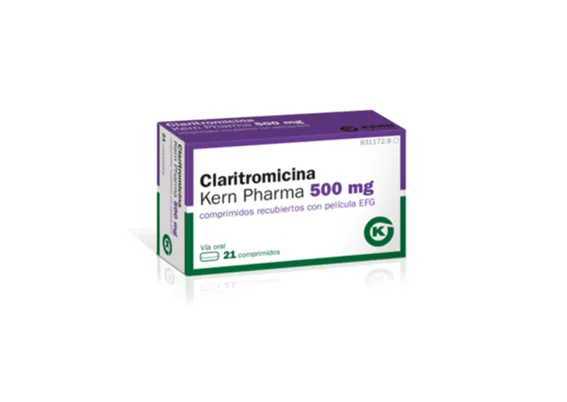
Table of Contents
- Patient Information Leaflet
- Introduction
- **Kern Pharma Clarithromycin 500 mg Film-Coated Tablets EFG**
- 1. What is Claritromicina Kern Pharma and what is it used for?
- 2. What you need to know before taking Clarithromycin Kern Pharma
- **Pregnancy**
- **Breastfeeding**
- **Driving and use of machines**
- 3. How to take Clarithromycin Kern Pharma
- **If you forget to take Claritromicina Kern Pharma**
- 4. Possible adverse effects
- 5. Storage of Clarithromycin Kern Pharma
- 6. Contents of the pack and other information
- **Marketing Authorization Holder and Manufacturing Responsible Party**
- Kern Pharma, S.L.
- 08228 Terrassa - Barcelona
- Spain
Patient Information Leaflet
Introduction
Patient Information Leaflet
Kern Pharma Clarithromycin 500 mg Film-Coated Tablets EFG
Read the entire leaflet carefully before you start taking this medicine, as it contains important information for you.
- Keep this leaflet, as you may need to read it again.
- If you have any questions, consult your doctor or pharmacist.
- This medicine has been prescribed for you only and must not be given to other people, even if they have the same symptoms as you, because it could harm them.
- If you experience any adverse effects, consult your doctor or pharmacist, even if they are effects not listed in this leaflet. See section 4.
Leaflet contents:
- What Clarithromycin Kern Pharma is and what it is used for
- What you need to know before taking Clarithromycin Kern Pharma
- How to take Clarithromycin Kern Pharma
- Possible adverse effects
- Storage of Clarithromycin Kern Pharma
- Contents of the pack and other information
1. What is Claritromicina Kern Pharma and what is it used for?
Claritromicina is a medicine that belongs to the macrolide group of antibiotics and works by eliminating bacteria.
Antibiotics are used to treat bacterial infections and are not effective against viral infections such as flu or the common cold.
It is important that you follow your doctor's instructions regarding dosage, administration, and duration of treatment.
Do not store or reuse this medicine. If you have any antibiotic left after completing your treatment, return it to the pharmacy for proper disposal. Do not dispose of medicines via the wastewater system or household waste.
Claritromicina is used to treat infections caused by susceptible microorganisms in:
Adults and adolescents aged 12 to 18 years:
- Infections of the upper respiratory tract, such as pharyngitis (infection of the pharynx causing sore throat), tonsillitis (infection of the tonsils), and sinusitis (infection of the paranasal sinuses located around the forehead, cheeks, and eyes).
- Infections of the lower respiratory tract, such as acute bronchitis (infection and inflammation of the bronchi), acute exacerbation of chronic bronchitis (worsening of long-term, recurrent lung inflammation), and bacterial pneumonia (lung inflammation caused by bacteria). (See section Warnings and precautions)
- Skin and soft tissue infections, such as folliculitis (infection of one or more hair follicles), cellulitis (acute inflammation of the skin), and erysipelas (a type of skin infection). (See section 2 Warnings and precautions)
- Gastric or duodenal ulcer
- Prevention and treatment of infections caused by mycobacteria (a type of bacteria).
2. What you need to know before taking Clarithromycin Kern Pharma
Do not take Clarithromycin Kern Pharma
- If you are allergic to clarithromycin, to other macrolide antibiotics such as erythromycin or azithromycin, or to any of the other ingredients of this medicine (listed in section 6)
- If your creatinine clearance is less than 30 ml/min.
- If you have an irregular heart rhythm.
- If you have severe kidney or liver problems.
- If you are taking ergotamine or dihydroergotamine, or using ergotamine inhalers for migraine while taking clarithromycin. Consult your doctor for alternative medications.
- If you are taking medicines known as terfenadine, astemizole (medicines for hay fever or allergies), cisapride or domperidone (used for stomach problems), or pimozide (a medicine used to treat certain psychiatric conditions), as taking these with clarithromycin may cause serious disturbances in heart rhythm. Consult your doctor for alternative medicines.
- If you are taking ticagrelor (to prevent blood clots in your veins and used in heart attacks and other heart problems), ivabradine, or ranolazine (for angina or to reduce the risk of myocardial infarction or stroke).
- If you are taking other medicines known to cause serious disturbances in heart rhythm.
- If you are being treated with oral midazolam (for anxiety or to help sleep)
- If you or a family member has a history of heart rhythm disorders (ventricular arrhythmia, including Torsade de Pointes) or abnormalities on the electrocardiogram (ECG, electrical recording of the heart) known as "QT prolongation syndrome".
- If you are taking medicines called lovastatin or simvastatin (to lower cholesterol levels), as combining these medicines may increase the risk of adverse effects. Consult your doctor for alternative medicines.
- If you are taking colchicine (for gout)
- If you are taking a medicine containing lomitapide.
- If you have abnormally low levels of potassium or magnesium in your blood (hypokalemia or hypomagnesemia).
Warnings and precautions
Consult your doctor or pharmacist before starting clarithromycin
- If you have heart, kidney, or liver problems.
- If you have or are prone to fungal infections (e.g., thrush).
- If you are pregnant or breastfeeding.
- If you are taking medicines known as colchicine, triazolam, midazolam (for anxiety or insomnia), lovastatin, or simvastatin.
- If you are diabetic and taking hypoglycemic agents (medicines to lower blood sugar such as nateglinide, pioglitazone, rosiglitazone, repaglinide, sulfonylureas, or insulin), as clarithromycin may excessively lower blood glucose. Careful glucose monitoring is recommended.
- If you are taking a medicine called warfarin or another anticoagulant, for example, dabigatran, rivaroxaban, apixaban, edoxaban (used to thin the blood).
- If you have myasthenia gravis, a condition in which your muscles become weak and tire easily.
- If you develop severe or prolonged diarrhea during or after taking clarithromycin, consult your doctor immediately.
If any of these situations apply to you, consult your doctor before taking clarithromycin.
Children and adolescents
Do not administer this medicine to children under 12 years of age; other formulations are available for this age group (granules for oral suspension).
Elderly patients
Since clarithromycin is eliminated via the liver and kidneys, caution should be exercised in patients with hepatic impairment, moderate or severe renal impairment, and in elderly patients.
Taking Clarithromycin Kern Pharma with other medicines
Inform your doctor or pharmacist if you are taking, have recently taken, or might take any other medicines, including those obtained without a prescription.
Clarithromycin must not be taken with ergot alkaloids, astemizole, terfenadine, cisapride, domperidone, pimozide, ticagrelor, ranolazine, colchicine, certain medicines used to treat high cholesterol, or medicines known to cause serious disturbances in heart rhythm (see Do not take Clarithromycin Kern Pharma).
This is especially important if you are taking medicines for:
- Heart problems (e.g., digoxin, verapamil, quinidine, or disopyramide).
- Blood thinning (e.g., warfarin or any other anticoagulant such as dabigatran, rivaroxaban, apixaban, edoxaban).
- Migraine (e.g., ergotamine or dihydroergotamine).
- Epilepsy or bipolar disorder (carbamazepine, valproate, phenobarbital, or phenytoin).
- High cholesterol (e.g., simvastatin or lovastatin).
Or if you are taking any medicine called:
- Theophylline (used in patients with breathing difficulties, such as asthma).
- Triazolam, alprazolam, or midazolam (sedatives).
- Cilostazol (for poor circulation).
- Methylprednisolone (a corticosteroid).
- Ibrutinib or vinblastine (for cancer treatment).
- Cyclosporine (an immunosuppressant).
- Rifabutin (for treating certain infections).
- Tacrolimus or sirolimus (for organ transplants and severe eczema).
- Sildenafil, tadalafil, or vardenafil (to treat impotence in adult men or pulmonary arterial hypertension (high blood pressure in the blood vessels of the lungs)).
- Zidovudine (to treat viruses).
- St. John's wort (a herbal product used to treat depression).
- Phenobarbital (a medicine to treat epilepsy).
- Nevirapine and efavirenz may decrease levels of clarithromycin.
- Rifampicin or rifapentine (to treat tuberculosis).
- Omeprazole (to treat stomach acidity and gastric or intestinal ulcers).
- Ritonavir (an antiviral medicine used in the treatment of HIV infection) may increase levels of clarithromycin. Concomitant use of atazanavir, etravirine, and saquinavir (also antiviral medicines used in the treatment of HIV infection) with clarithromycin may increase levels of both atazanavir (or saquinavir) and clarithromycin.
- Itraconazole (an antifungal) taken with clarithromycin may increase levels of both medicines.
- Fluconazole, another antifungal medicine, may increase levels of clarithromycin.
- Tolterodine (to treat symptoms of overactive bladder syndrome). In some patients, tolterodine levels may increase when taken with clarithromycin.
- Quetiapine (for schizophrenia or other psychiatric conditions).
- Beta-lactam antibiotics (certain penicillins and cephalosporins).
- Aminoglycosides (used as antibiotics to treat infections).
- Calcium channel blockers (medicines to treat high blood pressure).
- Hydroxychloroquine or chloroquine (used to treat diseases such as rheumatoid arthritis, or to treat or prevent malaria). Taking these medicines together with clarithromycin may increase the risk of abnormal heart rhythms and other serious adverse effects affecting the heart.
- Corticosteroids administered orally, by injection, or by inhalation (used to suppress the immune system; this is useful in treating a wide variety of diseases).
Pregnancy, breastfeeding, and fertility
If you are pregnant or breastfeeding, think you may be pregnant, or plan to become pregnant, consult your doctor or pharmacist before using this medicine.
Pregnancy
The safety of clarithromycin during pregnancy has not been established, so your doctor must carefully weigh the benefits against the potential risks, especially during the first 3 months of pregnancy.
Breastfeeding
Clarithromycin is excreted in breast milk; therefore, breastfeeding should be discontinued during treatment with clarithromycin.
Driving and use of machines
Since clarithromycin may cause dizziness, vertigo, confusion, and disorientation, caution must be exercised when driving or operating dangerous machinery during treatment with clarithromycin.
Warnings about excipients
This medicine contains less than 23 mg of sodium (1 mmol) per tablet; thus, it is essentially "sodium-free".
3. How to take Clarithromycin Kern Pharma
Follow these instructions unless your doctor has given you different advice. If in doubt, consult your doctor or pharmacist again.
Clarithromycin comes in tablets for oral administration. Take the tablets at the same time each day.
Recommended doses are:
Adults and children over 12 years of age:
Patients with respiratory tract, skin, and soft tissue infections
The recommended dose is 250 mg twice daily for 7 days; however, in more severe infections, the dose may be increased to 500 mg twice daily. The usual duration of treatment is 5 to 14 days, except for community-acquired pneumonia and sinusitis, which require 6 to 14 days of therapy.
This pharmaceutical form is not suitable for doses lower than 250 mg or for patients who have difficulty swallowing.
Eradication of Helicobacter pylori in patients with duodenal ulcers (adults):
For peptic ulcer disease associated with Helicobacter pylori, the recommended treatments are:
Triple therapy: one 500 mg clarithromycin tablet twice daily, together with 30 mg lansoprazole twice daily and 1,000 mg amoxicillin twice daily for 10 days.
Or one 500 mg clarithromycin tablet together with 1,000 mg amoxicillin and 20 mg omeprazole, all administered twice daily for 7 to 10 days.
Patients with mycobacterial infections:
The recommended average dose for prevention and treatment of mycobacterial infections is one 500 mg clarithromycin tablet every 12 hours. The duration of treatment should be determined by the physician.
Patients with renal impairment:
In patients with renal insufficiency and a creatinine clearance of less than 30 ml/min, the dose of clarithromycin should be reduced by half, i.e., 250 mg once daily, or 250 mg twice daily in more severe infections. In these patients, treatment should be discontinued after 14 days.
Continue to follow these instructions unless your doctor has given you different advice.
Since Clarithromycin Kern Pharma 500 mg tablets cannot be divided, use the 250 mg formulation instead.
Remember to take your medicine. Take the tablets at the same time each day.
Your doctor will determine how long your treatment should last.
If you think that the effect of clarithromycin is too strong or too weak, inform your doctor or pharmacist.
Elderly patients
Same as for adults.
Use in children and adolescents
There are appropriate formulations of clarithromycin available for children from 6 months of age and adolescents under 12 years of age (granules for oral suspension).
If you take more Clarithromycin Kern Pharma than you should
In case of overdose or accidental ingestion, contact your doctor or pharmacist immediately or call the Toxicology Information Service at 91 562 04 20, stating the name of the medicine and the amount ingested. It is recommended to bring the package leaflet and container to the healthcare professional. The most common symptoms associated with overdose are gastrointestinal disturbances. Hemodialysis and peritoneal dialysis are ineffective.
If you have taken more clarithromycin than prescribed, gastrointestinal disturbances may occur. Contact your doctor or pharmacist immediately, as steps should be taken to rapidly eliminate any unabsorbed clarithromycin from your body.
If you forget to take Claritromicina Kern Pharma
Do not take a double dose to make up for forgotten doses.
Take the tablet as soon as you remember, and then continue taking your doses every 12 hours as scheduled.
If you stop treatment with Claritromicina Kern Pharma
Your doctor will indicate how long your treatment with clarithromycin should last. Do not discontinue the treatment early, as even if you feel better, your condition could worsen or return.
If you have any further questions about the use of this product, consult your doctor or pharmacist.
4. Possible adverse effects
Like all medicines, clarithromycin can cause adverse effects, although not everyone will experience them.
Frequencies are defined as follows:
Very common: may affect more than 1 in 10 patients
Common: may affect up to 1 in 10 patients
Uncommon: may affect up to 1 in 100 patients
Frequency not known: cannot be estimated from the available data
Common and very common adverse reactions associated with clarithromycin treatment in both adults and children are abdominal pain, diarrhea, nausea, vomiting, and taste disturbance. These adverse reactions are usually mild in intensity and consistent with the known safety profile of macrolide antibiotics (see below).
There were no significant differences in the incidence of these gastrointestinal adverse reactions during clinical trials between patient populations with or without pre-existing mycobacterial infections.
Summary of adverse effects
Adverse effects are listed in decreasing order of severity within each body system:
? Very commonly observed (may affect more than 1 in 10 patients, with the intravenous formulation): phlebitis (vein inflammation) at the injection site.
? Frequently observed (may affect up to 1 in 10 patients) with all formulations containing clarithromycin:
- Gastrointestinal system: diarrhea, vomiting, gastric discomfort impairing digestion (dyspepsia), nausea, abdominal pain.
- Nervous system: altered taste sensation, headache, taste disturbance.
- Skin: mild skin rashes, excessive sweating.
- Psychiatric disorders: insomnia.
- Vascular disorders: vasodilation (dilation of blood vessels).
- Hepatic disorders: abnormal liver function tests.
- Administration site reactions: pain and inflammation at the injection site (only with intravenous formulation).
? Uncommonly observed (may affect up to 1 in 100 patients):
- Infections: cellulitis (only with intravenous formulation), candidiasis (fungal infection), gastroenteritis (only with prolonged-release tablets), infection (only with oral suspension granules), vaginal infection.
- Blood disorders: decreased white blood cells, decreased neutrophils (a type of white blood cell, only with immediate-release tablets), increased platelets and, to a lesser extent, increased red and white blood cells in blood (only with oral suspension granules), increased eosinophils (a type of white blood cell, only with immediate-release tablets).
- Immune system disorders: anaphylactoid reaction (generalized allergic reaction, only with intravenous formulation), hypersensitivity (exaggerated allergic reaction to external agents).
- Nutritional disorders: anorexia, decreased appetite.
- Psychiatric disorders: anxiety and nervousness (the latter only with oral suspension granules).
- Nervous system: loss of consciousness and difficulty moving (both effects only with intravenous formulation), dizziness, somnolence, tremor.
- Ear and labyrinth disorders: vertigo, hearing problems, tinnitus.
- Cardiac disorders: cardiac arrest and cardiac rhythm disturbances (atrial fibrillation) (both effects only with intravenous formulation), QT interval prolongation (an ECG indicator of potential ventricular arrhythmias), extrasystoles (premature heartbeat relative to normal heart rate, only with intravenous formulation), palpitations (irregular heartbeat).
- Respiratory disorders: asthma (difficulty breathing, chest tightness, and nocturnal or early morning cough, only with intravenous formulation), epistaxis (only with prolonged-release tablets), and pulmonary embolism (blockage of the pulmonary artery causing one-sided chest pain, cough, and breathing difficulty, only with intravenous formulation).
- Gastrointestinal disorders: esophagitis (only with intravenous formulation), gastroesophageal reflux disease (damage to the esophagus causing burning sensation, chronic cough, shortness of breath, and difficulty swallowing, only with prolonged-release tablets), gastric mucosal inflammation (gastritis), anal and rectal pain (only with prolonged-release tablets), oral mucosal inflammation, tongue inflammation, abdominal distension (only with immediate-release tablets), constipation, dry mouth, belching, flatulence.
- Hepatic disorders: decreased or suppressed bile flow to the intestine and liver inflammation (hepatitis) (both effects only with immediate-release tablets), increased alanine aminotransferase (liver enzyme), aspartate aminotransferase (another liver enzyme), and gamma-glutamyltransferase (another liver enzyme, only with immediate-release tablets).
- Skin: bullous dermatitis (blistering rash, only with intravenous formulation), pruritus, urticaria (edematous, red, itchy skin lesions), maculopapular rash (skin lesion with a papule or wart on a patch, only with oral suspension granules).
- Musculoskeletal disorders: muscle spasms (only with oral suspension granules), musculoskeletal rigidity (only with intravenous formulation), muscle pain (only with prolonged-release tablets).
- Renal disorders: increased serum creatinine and serum urea (both indicators of impaired kidney function, only with intravenous formulation).
- General disorders: malaise (only with immediate-release tablets), chest pain, chills, and fatigue (the last three only with immediate-release tablets).
- Laboratory findings: abnormal albumin-globulin ratio (only with intravenous formulation), increased serum alkaline phosphatase and increased blood lactate dehydrogenase (the last two only with immediate-release tablets).
? Frequency not known (cannot be estimated from available data):
-
Infections: pseudomembranous colitis (diarrhea that may be severe), erysipelas (variable skin redness that may cause pain, itching, and fever).
-
Blood disorders: decreased neutrophil count (a type of white blood cell), thrombocytopenia (decreased platelets).
-
Immune system disorders: anaphylactic reaction (generalized allergic reaction), angioedema (subcutaneous swelling).
-
Psychiatric disorders: psychotic disorder, confusion, depersonalization, depression, disorientation, hallucinations, daydreaming (attenuated perception of external stimuli).
-
Nervous system: seizures, decreased or loss of taste, altered sense of smell, loss or decreased sense of smell, tingling, numbness, or burning sensation in hands, feet, arms, or legs.
-
Ear: deafness.
-
Cardiac disorders: torsades de pointes (a type of ventricular tachycardia), ventricular tachycardia (accelerated heart rate exceeding 100 beats per minute with at least 3 consecutive irregular beats).
-
Vascular disorders: hemorrhage.
-
Gastrointestinal disorders: acute pancreatitis (acute inflammation of the pancreas), tongue discoloration, tooth discoloration.
-
Hepatic disorders: liver failure, hepatocellular jaundice (yellowing of the skin and eyes).
-
Skin: Stevens-Johnson syndrome (widespread rash with blisters and skin peeling, mainly affecting genital, oral, and trunk areas), acute generalized exanthematous pustulosis (widespread scaly red rash with subcutaneous bumps and blisters, accompanied by fever, primarily localized in skin folds, trunk, and upper limbs), and toxic epidermal necrolysis (widespread rash with blisters and skin peeling, particularly around the mouth, nose, eyes, and genitals, causing widespread skin detachment (more than 30% of body surface), flu-like symptoms with skin rash, fever, lymph node swelling, and abnormal blood test results (such as increased white blood cells (eosinophilia) and elevated liver enzymes) [drug reaction with eosinophilia and systemic symptoms (DRESS)], acne. If any of these reactions occur, treatment with clarithromycin must be stopped immediately and you should consult your doctor for appropriate management.
-
Musculoskeletal disorders: rhabdomyolysis (muscle breakdown that may cause kidney damage), myopathy (muscle disease of various causes).
-
Renal disorders: kidney function failure, interstitial nephritis (inflammation of renal tubules).
-
Laboratory findings: increased international normalized ratio (INR, a test to detect blood coagulation), prolonged prothrombin time (indicating impaired blood coagulation), and abnormal urine color.
Specific adverse effects
Phlebitis at the injection site, pain at the injection site, pain at the venipuncture site, and inflammation at the injection site are specific to the intravenous formulation of clarithromycin.
After marketing of the medicine, reports of central nervous system effects (e.g., somnolence and confusion) have been received with concomitant use of clarithromycin and triazolam. Patient monitoring is advised.
In some rhabdomyolysis reports, clarithromycin was administered concomitantly with statins, fibrates, colchicine, or allopurinol (see Do not take clarithromycin and Warnings and precautions).
Rarely, there have been reports of prolonged-release clarithromycin tablets appearing in feces. Many of these cases occurred in patients with gastrointestinal anatomical disorders [including ileostomy or colostomy (surgery to artificially divert intestinal waste from the ileum or colon)] or functional disorders (conditions caused by a bodily defect) with shortened gastrointestinal transit time. In several reports, tablet residues appeared in the context of diarrhea. Patients who notice tablet residues in their feces and do not experience clinical improvement should consider switching to another formulation of clarithromycin (e.g., suspension) or to another antibiotic.
Adverse effects in children and adolescents
The frequency, type, and severity of adverse reactions in children are expected to be the same as in adults.
Immunocompromised patients
In patients with AIDS and other immunocompromised patients treated with high doses of clarithromycin over long periods for mycobacterial infections, it is often difficult to distinguish adverse effects possibly associated with clarithromycin administration from those caused by the underlying disease or other comorbid conditions associated with AIDS.
In adult patients treated with total daily doses of 1,000 mg and 2,000 mg of clarithromycin, the most frequently reported adverse reactions were: nausea, vomiting, taste disturbance, abdominal pain, diarrhea, skin rash, flatulence, headache, constipation, hearing disturbances, and elevated transaminases (which may indicate liver, pancreas, heart, or muscle involvement). Less frequently reported were dyspnea, insomnia, and dry mouth. Incidence rates were similar in patients receiving 1,000 mg and 2,000 mg, but were generally 3 to 4 times higher in those receiving a total daily dose of 4,000 mg of clarithromycin.
In these immunocompromised patients, approximately 2% to 3% receiving 1,000 mg or 2,000 mg daily developed severely abnormal elevations in transaminases, as well as abnormally low white blood cell and platelet counts. A smaller percentage of patients in both dosage groups also had elevated blood urea nitrogen levels (which may indicate reduced kidney function). In patients receiving 4,000 mg daily, slightly higher incidences of abnormal values were observed for all parameters except white blood cell count.
Contact a doctor immediately if you experience a severe skin reaction: a red, scaly rash with bumps under the skin and blisters (exanthematous pustulosis). The frequency of this adverse effect is considered not known (cannot be estimated from the available data).
Reporting of adverse effects
If you experience any adverse effect, consult your doctor or pharmacist, even if it is an effect not listed in this leaflet. You may also report them directly via the Spanish Pharmacovigilance System for Human Medicines: www.notificaRAM.es. By reporting adverse effects, you can help provide more information on the safety of this medicine.
5. Storage of Clarithromycin Kern Pharma
Keep this medicine out of the sight and reach of children.
Do not store above 30°C.
Do not use this medicine after the expiry date stated on the packaging after EXP. The expiry date refers to the last day of the month indicated.
Medicines must not be disposed of via wastewater or household waste. Dispose of unused medicines and their containers at the SIGRE Point at your pharmacy. If you are in doubt, ask your pharmacist how to dispose of medicines and containers you no longer need. This will help protect the environment.
6. Contents of the pack and other information
Composition of Clarithromycin Kern Pharma
- The active substance is clarithromycin. Each coated tablet contains 500 mg of clarithromycin.
- The other components (excipients) are: pregelatinized corn starch, croscarmellose sodium, povidone K 25, microcrystalline cellulose, anhydrous colloidal silica, magnesium stearate, hydroxypropylmethylcellulose, titanium dioxide (E-171), talc and propylene glycol (E 1520).
Appearance of the product and contents of the pack
Clarithromycin Kern Pharma is presented as coated tablets in packs containing 14 or 21 tablets.
Only some pack sizes may be marketed.
Marketing Authorization Holder and Manufacturing Responsible Party
Kern Pharma, S.L.
Venus, 72 - Pol. Ind. Colón II
08228 Terrassa - Barcelona
Spain
Date of the last review of this leaflet: February 2024
Detailed information about this medicine is available on the website of the Spanish Agency of Medicines and Medical Devices (AEMPS) http://www.aemps.es/.