Citalopram Teva-Rimafar 20 mg film-coated tablets EFG
Spain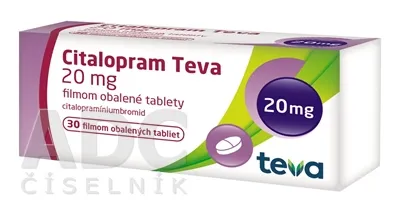
Table of Contents
- Package leaflet: Information for the user
- Introduction
- 1. What Citalopram Teva-Rimafar is and what it is used for
- **Citalopram is an antidepressant medicine that belongs to the group of "selective serotonin reuptake inhibitors".**
- 2. What you need to know before taking Citalopram Teva-Rimafar
- 3. How to take Citalopram Teva-Rimafar
- 4. Possible adverse effects
- 5. Storage of Citalopram Teva-Rimafar
- 6. Contents of the pack and other information
Package leaflet: Information for the user
Introduction
Package leaflet: information for the user
Citalopram Teva-Rimafar 20 mg film-coated tablets EFG
Read the entire leaflet carefully before you start using this medicine, because it contains important information for you. ? Keep this leaflet, as you may need to read it again. ? If you have any questions, consult your doctor or pharmacist. ? This medicine has been prescribed for you only and must not be given to other people, even if they have the same symptoms as you, because it could harm them. ? If you experience adverse effects, consult your doctor or pharmacist, even if these are adverse effects not listed in this leaflet. |
Package leaflet contents:
- What Citalopram Teva-Rimafar is and what it is used for.
- What you need to know before taking Citalopram Teva-Rimafar.
- How to take Citalopram Teva-Rimafar.
- Possible side effects.
- How to store Citalopram Teva-Rimafar.
- Contents of the pack and other information.
1. What Citalopram Teva-Rimafar is and what it is used for
Citalopram is an antidepressant medicine that belongs to the group of "selective serotonin reuptake inhibitors".
Citalopram Teva-Rimafar is indicated for the treatment of:
- depression and prevention of relapse.
- panic disorder with or without agoraphobia.
- obsessive-compulsive disorder.
2. What you need to know before taking Citalopram Teva-Rimafar
Do not take Citalopram Teva-Rimafar 20 mg:
- If you are allergic to citalopram or any of the other ingredients of this medicine (listed in section 6).
- If you are being treated with other antidepressants of the monoamine oxidase inhibitors (MAOIs) group, or if you have been treated with such medications within the last two weeks.
- If you are taking any medicine containing pimozide.
- In combination with linezolid.
- If you were born with a heart rhythm disorder or have ever experienced such an episode (this can be detected by an electrocardiogram, a test used to evaluate heart function).
- If you are taking medications for a heart condition that affects heart rhythm.
- If you are taking medications that may affect heart rhythm.
Warnings and precautions
Talk to your doctor or pharmacist before starting to take Citalopram Teva-Rimafar 20 mg tablets:
- If you have liver failure or severe kidney failure.
- If you have experienced manic episodes.
- If you have or have a history of epilepsy. If seizures occur or the frequency of seizures increases, treatment with citalopram should be discontinued.
- If you have diabetes, as you may need an adjustment in your insulin or oral antidiabetic medication dosage.
- If you have a bleeding disorder, are taking medications that affect blood coagulation, or are pregnant (see "Pregnancy, breastfeeding and fertility").
- If you are receiving electroconvulsive therapy.
- If you are taking herbal remedies containing St. John's Wort (Hypericum perforatum).
- If you have or have had heart problems or recently suffered a heart attack.
- If your heart beats slowly at rest (known as bradycardia) and/or if you think your body may be losing salts, for example due to prolonged diarrhea and vomiting or use of diuretics (medications that increase urination).
- If you have noticed rapid or irregular heartbeats, or have experienced fainting or dizziness when standing up from a sitting or lying position. These symptoms may indicate a heart rhythm disorder.
Some medicines in the same group as Citalopram Teva-Rimafar (called SSRIs/SNRIs) may cause symptoms of sexual dysfunction (see section 4). In some cases, these symptoms may persist after stopping treatment.
Depression is associated with an increased risk of suicidal thoughts, self-harm, and suicide. This risk persists until significant improvement occurs. Since improvement may not occur during the first few weeks or more of treatment, patients should be closely monitored during this period. Clinical experience shows that the risk of self-harm is highest at the beginning of a depressive episode and may increase again when clinical improvement begins. In addition, antidepressants may rarely increase the risk of suicidal thoughts and self-harm. Patients with a history of suicidal behavior or those who have significant suicidal ideation before starting treatment have a higher risk of suicidal thoughts or suicide attempts during treatment.
When stopping treatment, withdrawal symptoms are common, especially if treatment is stopped abruptly (see section “Possible side effects”).
An increased risk of bone fractures has been observed in patients treated with this type of medication.
Closed-angle glaucoma
SSRIs, including citalopram, may affect pupil size, causing mydriasis. This mydriatic effect may narrow the eye angle, potentially increasing intraocular pressure and leading to closed-angle glaucoma, especially in predisposed patients. Therefore, citalopram should be used with caution in patients with closed-angle glaucoma or a history of glaucoma.
Other medicines and Citalopram Teva-Rimafar
Tell your doctor or pharmacist if you are taking, have recently taken, or might need to take any other medicines.
Concomitant administration of citalopram with non-selective or selective B monoamine oxidase inhibitors (MAOIs) (such as selegiline, an antiparkinsonian medicine) is contraindicated, as well as during the two weeks following discontinuation of MAOI treatment.
Concomitant administration of citalopram with selective A MAOIs (such as moclobemide, an antidepressant) is not recommended.
Concomitant use of citalopram with MAOIs carries a risk of serotonin syndrome (see section “Possible side effects”).
Precautions should be taken if citalopram is administered together with any of the following medicines:
- Carbamazepine (antiepileptic medicine): increased blood levels of carbamazepine may occur, possibly requiring a dose reduction.
- Lithium (medicine used to treat bipolar disorder): increases the risk of serotonin syndrome.
- Oral anticoagulants, acetylsalicylic acid, non-steroidal anti-inflammatory drugs (NSAIDs), and other medicines affecting blood coagulation: may increase the risk of bleeding.
- Imipramine (antidepressant medicine): increased blood levels of imipramine's metabolite occur.
- Cimetidine (anti-ulcer medicine) and fluconazole (used to treat fungal infections): may increase citalopram blood levels.
- Metoprolol (antihypertensive, antianginal, and antiarrhythmic medicine).
- Preparations containing St. John's Wort: adverse effects may be more frequent.
- Do not take citalopram if you are already taking medicines for a heart condition affecting heart rhythm, or if you are taking medicines that may affect heart rhythm, such as class IA and III antiarrhythmics, antipsychotics (e.g., phenothiazine derivatives, pimozide, haloperidol), tricyclic antidepressants, certain antimicrobial agents (sparfloxacin, moxifloxacin, IV erythromycin, pentamidine, antimalarials particularly halofantrine), or certain antihistamines (astemizole, mizolastine). If you have any doubts, consult your doctor.
- Medicines that induce hypokalemia/hypomagnesemia: caution is required when using such products concomitantly, as these conditions increase the risk of malignant arrhythmias.
- Serotonergic medicines, such as buprenorphine, as they may increase the risk of serotonin syndrome.
Taking Citalopram Teva-Rimafar 20 mg with food, drinks, and alcohol
It is advisable to avoid alcohol consumption while taking this medicine.
Pregnancy, breastfeeding, and fertility
If you are pregnant or breastfeeding, think you may be pregnant, or plan to become pregnant, consult your doctor or pharmacist before using this medicine.
The use of citalopram during pregnancy and breastfeeding is not recommended.
If you take Citalopram Teva-Rimafar late in pregnancy, there may be an increased risk of heavy vaginal bleeding shortly after delivery, especially if you have a history of bleeding disorders. Your doctor or midwife should be informed about your use of this medicine.
Animal studies have shown that citalopram reduces sperm quality. This could theoretically affect fertility, but no impact on human fertility has been observed so far.
Ensure that your midwife and/or doctor knows you are taking Citalopram Teva-Rimafar. Medicines like Citalopram Teva-Rimafar, when taken during pregnancy, particularly during the last three months, may increase the risk of a serious condition in newborns called persistent pulmonary hypertension of the newborn (PPHN), which causes the baby to breathe faster and appear bluish. These symptoms usually begin within the first 24 hours after birth. If this occurs with your baby, contact your midwife and/or doctor immediately.
Children and adolescents
Citalopram Teva-Rimafar 20 mg should not normally be used to treat children and adolescents under 18 years of age. Additionally, you should know that in patients under 18 years of age, there is an increased risk of adverse effects such as suicide attempts, suicidal thoughts, and hostility (mainly aggression, confrontational behavior, and irritability) when taking this type of medicine. Nevertheless, your doctor may prescribe Citalopram Teva-Rimafar 20 mg to patients under 18 years if they consider it appropriate. If your doctor has prescribed Citalopram Teva-Rimafar 20 mg to a patient under 18 and you wish to discuss this decision, please consult your doctor again. You should inform your doctor if any of the symptoms mentioned above worsen or complications arise while a patient under 18 is taking Citalopram Teva-Rimafar 20 mg. In addition, the long-term effects on safety, growth, maturation, and cognitive and behavioral development of Citalopram Teva-Rimafar 20 mg in this age group have not yet been fully established.
Driving and using machines
Like other psychotropic medicines, citalopram may cause drowsiness and, consequently, may impair the ability to drive vehicles or operate machinery.
Citalopram Teva-Rimafar contains lactose and sodium
This medicine contains lactose. If your doctor has informed you of an intolerance to certain sugars, consult them before taking this medicine.
This medicine contains less than 1 mmol of sodium (23 mg) per tablet; thus, it is essentially “sodium-free”.
3. How to take Citalopram Teva-Rimafar
Follow exactly the dosing instructions provided in this leaflet or those given by your doctor or pharmacist. If in doubt, consult your doctor or pharmacist. Remember to take your medication.
Your doctor will determine the duration of your treatment with Citalopram Teva-Rimafar 20 mg. Do not stop treatment prematurely or abruptly, as this could worsen your condition.
You should continue taking your medication even if you do not notice improvement, as it may take several weeks for the medicine to start working.
Citalopram Teva-Rimafar 20 mg are tablets for oral administration. The tablets can be taken at any time of day, regardless of meals, and should be taken as a single dose.
They must be swallowed with a sufficient amount of liquid (a glass of water) and must not be chewed.
Recommended dose:
Adults:
Depression
The recommended initial dose is 20 mg daily. Depending on the individual patient's response and the severity of depression, your doctor may gradually increase the dose up to a maximum of 40 mg per day.
Panic disorder
The recommended initial dose is 10 mg daily for the first week, after which it may be increased to 20–30 mg daily. If necessary, your doctor may increase this dose up to a maximum of 40 mg per day.
Obsessive-compulsive disorder (OCD)
The recommended initial dose is 20 mg daily. If necessary, your doctor may increase the dose up to a maximum of 40 mg per day.
Elderly patients
Treatment in elderly patients should be initiated at half the recommended dose, for example 10–20 mg daily. In general, elderly patients should not take more than 20 mg daily.
Children and adolescents
The safety and efficacy of Citalopram Teva-Rimafar 20 mg have not been established in children and adolescents under 18 years of age, and therefore its use is not recommended in this population group.
Patients with hepatic impairment:
For patients with mild to moderate hepatic impairment, a dose of 10 mg daily is recommended for the first two weeks of treatment. Depending on the individual patient's response, the dose may be increased up to a maximum of 20 mg/day. Particular caution and careful dose adjustment are recommended in patients with severe hepatic impairment.
Patients with renal impairment:
Caution is recommended in patients with severe renal impairment.
If you think that the effect of Citalopram Teva-Rimafar 20 mg is too strong or too weak, inform your doctor or pharmacist.
If you take more Citalopram Teva-Rimafar 20 mg than you should
If you have taken more Citalopram than prescribed, contact your doctor, pharmacist, or call the Toxicology Information Service immediately at telephone number: 91 5620420, indicating the medication and the amount ingested.
The most frequent symptoms in case of overdose are: nausea, vomiting, sweating, drowsiness, bluish discoloration of the skin, tremors, seizures, loss of consciousness, and palpitations.
If you forget to take Citalopram Teva-Rimafar 20 mg
If you miss a dose, wait until your next scheduled dose. Do not take a double dose to make up for the missed dose.
If you stop taking Citalopram Teva-Rimafar 20 mg
If treatment with Citalopram is stopped abruptly, some withdrawal symptoms may occur, such as dizziness, sensory disturbances (including paresthesia), sleep disturbances (including insomnia and vivid dreams), agitation or anxiety, nausea and/or vomiting, tremor, confusion, sweating, headache, diarrhea, palpitations, emotional instability, irritability, visual disturbances, and tingling sensations in the hands or feet. The risk of withdrawal reactions depends on several factors, including duration of treatment, dose used, and rate of dose reduction. Generally, these symptoms are mild or moderate; however, in some patients they may be severe. Usually, these symptoms are self-limiting and resolve within two weeks, although in some patients they may last longer.
Your doctor will advise you on how to gradually discontinue treatment with this medicine.
If you have any further questions about the use of this medicine, ask your doctor or pharmacist.
4. Possible adverse effects
Like all medicines, Citalopram Teva-Rimafar 20 mg may produce adverse effects, although not everyone experiences them.
Adverse effects are generally mild or moderate in intensity. They usually occur during the first, or even the first two, weeks of treatment and subsequently disappear as the condition improves.
The following adverse effects have been reported:
-
Neuropsychiatric disorders: nervousness, somnolence, weakness, headache, dizziness,
sleep disturbances, memory loss, suicidal ideation and serotonin syndrome
(characterized by symptoms such as agitation, confusion, increased sweating, hallucinations,
increased reflex responses, involuntary movements, chills, tachycardia and
tremor), psychomotor agitation/acathisia (characterized by restlessness and an urge to move, frequently accompanied by difficulty sitting still or remaining at rest. This is more likely to occur during the first weeks of treatment) -
Gastrointestinal disorders: nausea, vomiting, diarrhea, constipation, dry mouth.
-
Skin disorders: rash, itching, increased sweating, alopecia, purpura, photosensitivity reaction, bruising, angioedema.
-
Visual disorders: disturbances in adaptation, mydriasis.
-
Metabolic disorders: weight loss or weight gain, loss or increase in appetite, hyponatremia and hypokalemia.
-
Cardiovascular disorders: tachycardia, bradycardia, dizziness upon standing due to a drop in blood pressure, slowed heart rate in some patients, rapid and irregular heartbeat or fainting sensation, as these could be symptoms of a serious heart condition known as torsade de pointes, bleeding, orthostatic hypotension.
-
Reproductive system and breast disorders: impotence, ejaculation disorder, menorrhagia, metrorrhagia, priapism, galactorrhea.
-
Renal and urinary disorders: urinary retention.
-
Hepatic disorders: rare cases of increased liver enzymes have been reported.
Frequency not known: Heavy vaginal bleeding shortly after childbirth (postpartum hemorrhage); see «Pregnancy and breastfeeding» in section 2 for more information, increased blood levels of prolactin hormone.
Rarely, cases of bleeding in the skin and mucous membranes have been observed, such as skin hemorrhages, vaginal bleeding and gastrointestinal bleeding.
If you experience any of these adverse effects or any others not listed in this leaflet, consult your doctor or pharmacist.
Reporting of adverse effects:
If you experience any type of adverse effect, consult your doctor or pharmacist, even if it is a possible adverse effect not listed in this leaflet. You may also report them directly through the Spanish Pharmacovigilance System for Human Medicines: https://www.notificaram.es. By reporting adverse effects, you can help provide more information on the safety of this medicine.
5. Storage of Citalopram Teva-Rimafar
Keep this medicine out of the sight and reach of children.
This medicine does not require any special storage conditions.
Do not use this medicine after the expiry date which is stated on the packaging after
EXP. The expiry date refers to the last day of the month indicated.
Medicines must not be disposed of via wastewater or household waste. Dispose of empty containers and unused medicines at the SIGRE collection point located at your pharmacy. If you have any doubts, ask your pharmacist how to properly dispose of unused medicines and their containers. This will help protect the environment.
6. Contents of the pack and other information
Composition of Citalopram Teva-Rimafar 20 mg tablets
- The active substance is citalopram (hydrobromide). Each tablet contains 20 mg of citalopram.
- The other components (excipients) are: Gluten-free maize starch, lactose monohydrate,
sodium croscarmellose, glycerine, copovidone, magnesium stearate and microcrystalline cellulose.
The excipients in the film coating are: Hypromellose type E5, macrogol 400 and titanium dioxide (E 171).
Appearance of the product and contents of the pack
Citalopram Teva-Rimafar 20 mg are film-coated tablets. They are supplied in packs of 14, 28 or 56 tablets. The tablets are white, oval-shaped and scored.
Only certain pack sizes may be marketed.
Other presentations:
Citalopram Teva-Rimafar 30 mg film-coated tablets.
Marketing Authorization Holder and Manufacturer
Marketing Authorization Holder: Manufacturer:
Teva Pharma, S.L.U. Teva Pharma, S.L.U.
C/Anabel Segura 11. Edificio Albatros B, 1st floor Polígono Malpica c/ C 4.
28108 Alcobendas. Madrid Spain 50016 - Zaragoza. Spain
or
Industria Química y Farmacéutica VIR, S.A.
C/ Laguna 66-68-70.
28923 Alcorcón. Madrid Spain
Date of the most recent revision of this leaflet: April 2024
Detailed and up-to-date information on this medicinal product is available on the website of the Spanish Agency of Medicines and Medical Devices (AEMPS) http://www.aemps.gob.es/