Cisplatin Hikma 1 mg/ml concentrate for infusion solution EFG
Spain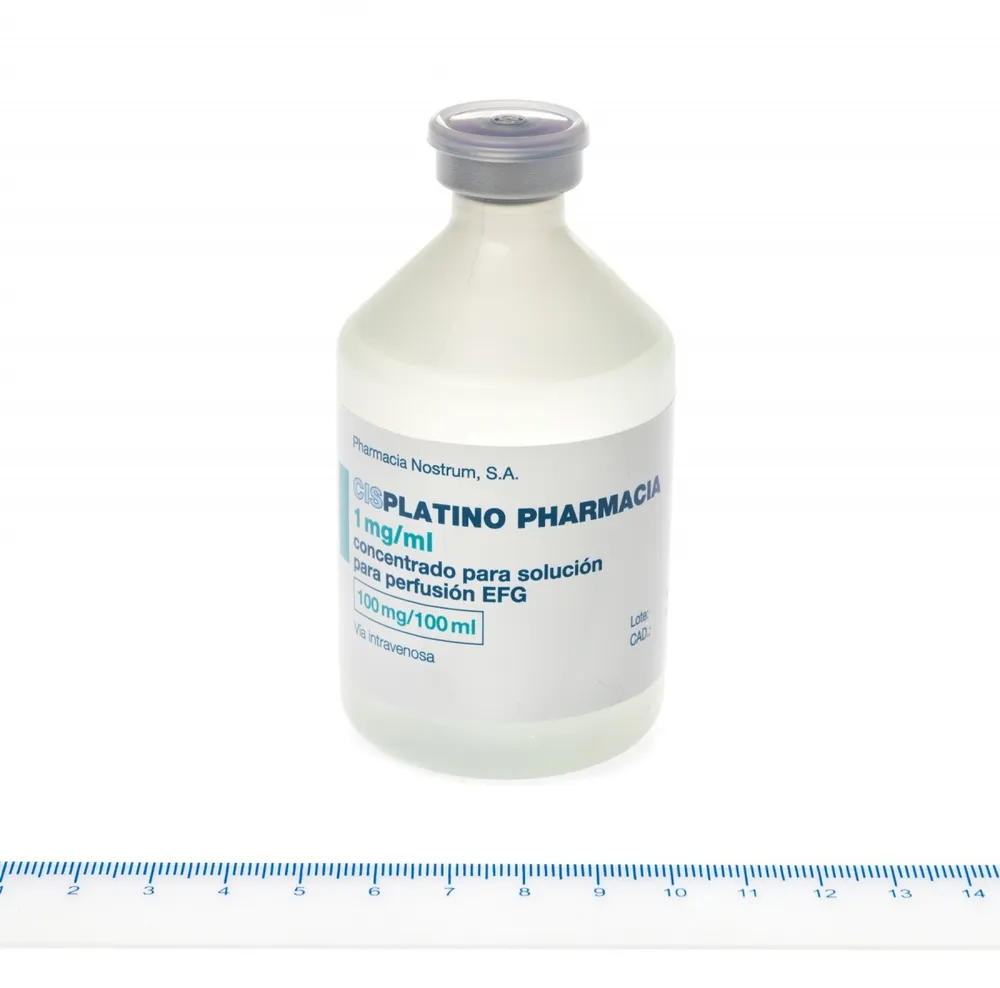
Table of Contents
- Package leaflet: Information for the user
- Introduction
- **Package Leaflet: Information for the Patient**
- 1. What Cisplatino Hikma is and what it is used for
- 2. What you need to know before using Cisplatino Hikma
- **Do not use Cisplatino Hikma**
- **Warnings and precautions:**
- **Taking Cisplatin Hikma with other medicines**
- **Pregnancy, breastfeeding and fertility**
- **Driving and use of machines**
- **Cisplatin Hikma contains sodium**
- 3. How to use Cisplatin Hikma
- **Cisplatin Hikma (monotherapy):**
- **If you receive more Cisplatino Hikma than you should**
- 4. Possible adverse effects
- **Inform your doctor immediately if you experience any of the following side effects:**
- **Other possible side effects may occur:**
- **Frequent (may affect up to 1 in 10 people)**
- **Uncommon (may affect up to 1 in 100 people)**
- **Rare (may affect up to 1 in 1,000 people)**
- **Very rare (may affect up to 1 in 10,000 people)**
- **Frequency not known (cannot be estimated from the available data)**
- **Reporting of adverse reactions**
- 5. Storage of Cisplatin Hikma
- 6. Contents of the container and other information
- **Appearance of Cisplatin Hikma and contents of the pack**
- **This medicinal product is authorized in the European Economic Area member states under the following names:**
- **This information is intended for healthcare professionals only:**
- **Incompatibilities**
- **Shelf Life after Dilution**
- Preparation for intravenous administration
- **Administration:**
- It must be administered only by or under the direct supervision of a qualified physician experienced in the use of chemotherapeutic agents for cancer.
- **Preparation of the product (instructions):**
- 1. Chemotherapeutic agents must be prepared for administration only by personnel trained in the safe handling of these preparations.
- **2. Reconstitution, dilution, and transfer to syringes must be performed only in the designated area. 3. Personnel performing these procedures must be adequately protected with clothing, gloves, and eye protection.** 4. Pregnant personnel are advised not to handle chemotherapeutic agents.
- **Pollution:**
- (a) In case of contact with skin or eyes, the affected area should be washed thoroughly with abundant water or normal saline solution. A mild cream may be used to treat transient skin irritation. Seek medical advice if eyes are affected.
- **Disposal:**
Package leaflet: Information for the user
Introduction
Package Leaflet: Information for the Patient
Cisplatin Hikma 1 mg/ml concentrate for solution for infusion EFG
Read the entire leaflet carefully before you start using this medicine, as it contains important information for you.
- Keep this leaflet, as you may need to read it again.
- If you have any questions, consult your doctor, pharmacist, or nurse.
- This medicine has been prescribed for you only, and you should not give it to others, even if they have the same symptoms as you, as it may harm them.
- If you experience any adverse effects, consult your doctor, pharmacist, or nurse, even if these effects are not listed in this leaflet. See section 4.
Contents of the leaflet
- What Cisplatin Hikma is and what it is used for
- What you need to know before using Cisplatin Hikma
- How to use Cisplatin Hikma
- Possible adverse effects
- How to store Cisplatin Hikma
- Contents of the pack and other information
1. What Cisplatino Hikma is and what it is used for
Cisplatin belongs to a group of medicines called cytostatics, which are used in the treatment of cancer. Cisplatin may be used alone, but is commonly used in combination with other cytostatics.
What it is used for
Cisplatin is capable of destroying cells in your body that can cause certain types of cancer (testicular tumour, ovarian tumour, bladder tumour, head and neck epithelial tumour, lung cancer, and cervical cancer in combination with radiotherapy).
2. What you need to know before using Cisplatino Hikma
Do not use Cisplatino Hikma
- if you are allergic to cisplatin or to any of the other ingredients of this medicine (listed in section 6);
- if you are allergic (hypersensitive) to any other medicine containing platinum compounds;
- if you have kidney problems (renal insufficiency);
- if you are dehydrated;
- if you have severe suppression of bone marrow function; these are some of the symptoms: extreme fatigue, easy bleeding or bruising, development of infections;
- if you have hearing disturbances;
- if you have nervous system disorders caused by cisplatin;
- if you are breastfeeding;
- in combination with live vaccines, including the yellow fever vaccine;
- in combination with prophylactic use of phenytoin (see section "Taking Cisplatino Hikma with other medicines").
Warnings and precautions:
Your doctor should perform tests to determine calcium, sodium, potassium, and magnesium levels in the blood, as well as to check your blood count, liver and kidney function, and neurological function.
- This medicine must only be administered under the strict supervision of a specialist doctor experienced in administering chemotherapy.
- A hearing test will be performed before each treatment with this medicine.
- If you have a nervous system disorder not caused by this medicine.
- If you have received radiation therapy to the head.
- If you have an infection, please consult your doctor.
- If you wish to have children (see section "Pregnancy, breastfeeding and fertility").
Consult your doctor if any of the above conditions apply to you before starting treatment with this medicine.
In case of cisplatin spill, contaminated skin must be washed immediately with soap and water. If cisplatin is accidentally injected outside the blood vessels, administration must be stopped immediately. Cisplatin on the skin may cause tissue damage (cellulitis, fibrosis, and necrosis).
Inform your doctor, even if any of the circumstances mentioned above have occurred to you in the past.
Taking Cisplatin Hikma with other medicines
Please note that these instructions may also apply to medicines that have been used previously or may be used in the future. Inform your doctor or pharmacist if you are taking, have recently taken, or might need to take any other medicines.
-
Concomitant use of medicines that inhibit bone marrow function or radiation therapy may increase the adverse effects of cisplatin on the bone marrow.
-
The toxicity of this medicine may increase when administered simultaneously with other cytostatic agents (other cancer treatments), such as bleomycin and methotrexate.
-
Medicines used to treat high blood pressure (antihypertensives) such as furosemide, hydralazine, diazoxide, or propranolol may increase the toxic effect of cisplatin on the kidneys.
-
Cisplatin nephrotoxicity may be increased when administered with other medicines that may cause kidney-related adverse effects, such as those used in the prevention/treatment of certain infections (antibiotics: cephalosporins, aminoglycosides, and/or antifungals: Amphotericin B) and contrast media.
-
Ototoxicity of cisplatin may be enhanced when administered with agents known to cause adverse effects on hearing, such as aminoglycosides.
-
If you are taking medicines to treat gout during your treatment with cisplatin, the dose of these medicines may need to be adjusted (e.g., allopurinol, colchicine, probenecid, and/or sulfinpyrazone).
-
Administration of medicines to increase urine output (loop diuretics) in combination with cisplatin (when the cisplatin dose does not exceed 60 mg/m² and urine output is not less than 1,000 ml per 24 hours) may result in kidney and ear toxicity.
-
Early signs of hearing problems (such as dizziness and tinnitus) may be masked if you are given medicines to treat hypersensitivity, feeling unwell, or with mental health conditions (antihistamines such as buclizine, cyclizine, loxapine, meclizine, phenothiazines, thioxanthenes, and/or trimethobenzamides) during cisplatin treatment.
-
Cisplatin in combination with ifosfamide may cause ear damage.
-
Administration of pyridoxine and hexamethylmelamine may reduce the response to cisplatin treatment.
-
Cisplatin in combination with bleomycin and vinblastine may cause paleness or bluish discoloration of the fingers and/or toes (Raynaud's phenomenon).
-
Administration of cisplatin for treatment with paclitaxel or in combination with docetaxel may cause severe nerve damage.
-
Regular monitoring of lithium levels is recommended, as reduced blood lithium levels have been observed after treatment with cisplatin in combination with bleomycin and etoposide.
-
Cisplatin may reduce the effects of phenytoin in the treatment of epilepsy.
-
Penicillamine and other chelating agents may reduce the effectiveness of this medicine.
-
Cisplatin may negatively affect the efficacy of medicines that prevent blood clotting (anticoagulants). Therefore, it is recommended to increase the frequency of coagulation monitoring during combined use of these medicines.
-
Cisplatin in combination with cyclosporine may cause immunosuppression with risk of proliferation of white blood cells (lymphocytes).
-
You should not receive live virus vaccines within the first three months after completing treatment with cisplatin.
-
You should not receive the yellow fever vaccine while undergoing this treatment (See section “Do not use Cisplatin Hikma”).
Pregnancy, breastfeeding and fertility
Pregnancy
If you are pregnant or breastfeeding, think you may be pregnant, or plan to become pregnant, consult your doctor, pharmacist, or nurse before using this medicine. Cisplatin must not be used during pregnancy unless specifically indicated by your doctor. Measures must be taken to avoid conception if you are of childbearing age, during treatment and for at least 6 months after treatment with Cisplatin Hikma.
Breastfeeding
This medicine must not be used by women who are breastfeeding.
Fertility
Men treated with cisplatin are advised not to father a child during treatment and for up to 6 months after treatment. In addition, men who wish to have children in the future are advised to seek advice regarding sperm cryopreservation prior to treatment.
Driving and use of machines
Cisplatin may cause drowsiness and/or vomiting. If you experience any of these effects, avoid driving or operating machinery requiring special attention.
Cisplatin Hikma contains sodium
Cisplatin Hikma 50 mg/50 ml contains 177 mg of sodium (the main component of table/cooking salt) in each 50 ml vial. This corresponds to 8.9% of the recommended maximum daily sodium intake for an adult.
Cisplatin Hikma 100 mg/100 ml contains 354 mg of sodium (the main component of table/cooking salt) in each 100 ml vial. This corresponds to 17.7% of the recommended maximum daily sodium intake for an adult.
3. How to use Cisplatin Hikma
Posology and method of administration
Cisplatin may only be administered by a specialist in cancer treatment. The concentrate is diluted with sodium chloride solution.
Cisplatin must be given only by intravenous injection (intravenous infusion). Supportive equipment must be available to manage allergic reactions.
Cisplatin must not come into contact with materials containing aluminium.
The recommended dose of cisplatin depends on your health status, the expected effects of treatment, and whether cisplatin is used alone (monotherapy) or in combination with other medicines (combination chemotherapy).
Cisplatin Hikma (monotherapy):
The following doses are recommended:
- A single dose of 50 to 120 mg/m² body surface area every 3–4 weeks.
- 15 to 20 mg/m² per day for 5 days, every 3–4 weeks.
This medicine in combination with other chemotherapeutic agents (combination chemotherapy):
- The recommended dose is 20 mg/m² or more, every 3–4 weeks.
For the treatment of cervical cancer, cisplatin is used in combination with radiotherapy. A typical dose is 40 mg/m² weekly for 6 weeks.
To prevent or reduce kidney problems, it is advisable to drink large amounts of water for a 24-hour period following treatment with cisplatin.
If you receive more Cisplatino Hikma than you should
Your doctor will ensure that you are given the correct dose. In case of overdose, you may experience increased adverse effects. Your doctor may provide symptomatic treatment for these adverse effects. If you think you have received too much cisplatin, contact your doctor immediately.
If you have any further questions about the use of this medicine, ask your doctor or nurse.
4. Possible adverse effects
Like all medicines, this medicine may cause adverse effects, although not everyone will experience them.
If you experience any adverse effect, it is important that you inform your doctor before the next treatment.
Inform your doctor immediately if you experience any of the following side effects:
- persistent or severe diarrhea or vomiting
- stomatitis/mucositis (sore lips or mouth ulcers)
- swelling of the face, lips, mouth, or throat
- unexplained respiratory symptoms such as dry cough, difficulty breathing, or crackling sounds
- difficulty swallowing
- numbness or tingling in the fingers or toes
- extreme tiredness
- unusual bruising or bleeding
- signs of infection, such as sore throat and high fever
- feeling unwell near or at the injection site during infusion
- severe pain or swelling in either leg, chest pain, or difficulty breathing (which may indicate harmful blood clots in a vein) (common: may affect up to 1 in 10 people)
Other possible side effects may occur:
Very common (may affect more than 1 in 10 people)
- decrease in white blood cells making infections more likely (leukopenia)
- decrease in platelets which increases the risk of bruising and bleeding (thrombocytopenia)
- decrease in the number of red blood cells which may cause paleness of the skin and lead to weakness or dyspnea (anemia)
- renal dysfunction such as lack of urine production (anuria)
- blood poisoning due to urine retention (uremia)
- reduced levels of electrolytes (sodium)
- Hyperuricemia (high levels of uric acid in the blood)
Frequent (may affect up to 1 in 10 people)
- Infection (sepsis).
- Nervous system damage (neurotoxicity).
- Arrhythmia, including slowed heart rate (bradycardia) and increased heart rate (tachycardia).
- Inflammation of a vein (phlebitis).
- Difficulty breathing (dyspnea), lung inflammation (pneumonia), and respiratory failure.
- Redness and inflammation of the skin (erythema, skin ulceration) at the injection site, fluid retention-related swelling (edema), and pain at the injection site.
- Dizziness (vertigo)
Uncommon (may affect up to 1 in 100 people)
- severe hypersensitivity reactions (anaphylactic), including skin rash, eczema with severe itching and hives (urticaria), redness and inflammation of the skin (erythema), or itching (pruritus), anaphylactoid reactions with symptoms such as facial swelling and fever, low blood pressure (hypotension), rapid heartbeat (tachycardia), breathing difficulties (dyspnea), distress due to muscle cramps in the airways (bronchospasms)
- Low magnesium levels in the blood.
- Hearing problems (ototoxicity).
- Dysfunctional spermatogenesis (impaired sperm formation) and abnormal ovulation, painful abnormal development of the breasts in men (gynecomastia).
Rare (may affect up to 1 in 1,000 people)
- A type of blood cancer (severe leukemia).
- Decreased immune system function (immunosuppression).
- Increased levels of normal cholesterol in the blood (hypercholesterolemia).
- Peripheral neuropathy of sensory nerves (bilateral sensory neuropathy), characterized by tingling, itching, or prickling sensations without cause, and sometimes characterized by loss of taste, touch, or vision, as well as brain dysfunction (confusion, difficulty speaking, sometimes blindness, memory loss, and paralysis); sudden sharp pains radiating from the neck down the back to the legs when bending forward, spinal disease, seizures, loss of certain types of brain function, including brain dysfunction characterized by spasms and reduced levels of consciousness (encephalopathy), as well as closure of the carotid artery.
- Inflammation of the optic nerve combined with pain and reduced nerve function (optic neuritis), dysfunction in eye movement.
- Changes in the arteries of the heart, myocardial infarction.
- Increases in blood pressure (hypertension).
- Inflammation of the mucous membranes of the mouth (stomatitis).
- Reduction in blood levels of albumin (protein).
Very rare (may affect up to 1 in 10,000 people)
- Seizures
- Increased iron in blood
Frequency not known (cannot be estimated from the available data)
- Increased blood amylase levels (enzymes),
- Reduced levels of electrolytes (magnesium, calcium, sodium, phosphate, potassium) in the blood, with muscle cramps and/or changes in an electrocardiogram (ECG), dehydration, involuntary muscle contractions (tetany).
- Stroke (cerebrovascular accident)
- Loss of vision (blindness), difficulty in color perception, blurred vision, swelling of the optic disc (papilledema)
- Tinnitus, deafness.
- Heart disorder
- Impaired blood flow, for example, in the brain, but also in the fingers and toes (Raynaud's syndrome).
- Pulmonary embolism (blockage of a pulmonary artery)
- Loss of appetite (anorexia), nausea, vomiting, diarrhea
- Hiccups
- Hair loss (alopecia), skin rash
- Fever, weakness (asthenia), general malaise
- Stroke (cerebrovascular accident).
Reporting of adverse reactions
If you experience any type of adverse reaction, consult your doctor, pharmacist, or nurse, even if it is a possible adverse reaction not listed in this leaflet. You may also report them directly through the Spanish Pharmacovigilance System for Human Medicinal Products: https://www.notificaram.es. By reporting adverse reactions, you can help provide more information on the safety of this medicine.
5. Storage of Cisplatin Hikma
Keep this medicine out of the sight and reach of children.
Expiry
Do not use this medicine after the expiry date stated on the vial and outer packaging following 'EXP'. The expiry date refers to the last day of the month indicated. Do not use this medicine if you notice any visible signs of deterioration.
Storage
Do not store above 25°C. Do not refrigerate or freeze. Keep the vial in the outer packaging to protect it from light.
After dilution, the product should be used immediately. If immediate use is not possible, it may be stored for up to 48 hours at room temperature (15 to 25°C) protected from light, provided it has been prepared under conditions that exclude microbial contamination. Prepared infusions must not be refrigerated.
6. Contents of the container and other information
Composition of Cisplatino Hikma
The active substance is cisplatin.
Each millilitre (ml) of concentrate for solution for infusion contains 1 milligram (mg) of cisplatin.
The other components are sodium chloride, hydrochloric acid 37%, sodium hydroxide and water for injections.
Appearance of Cisplatin Hikma and contents of the pack
Cisplatin Hikma is a concentrate for infusion solution, transparent, colourless to pale yellow, in a 50 or 100 mL amber glass vial.
Vials are packed in cartons containing 1 vial.
Only certain pack sizes may be marketed.
Marketing Authorisation Holder and Manufacturer
Marketing Authorisation Holder: Hikma Farmacêutica (Portugal), S.A.
Estrada do Rio da Mó 8, 8A and 8B
2705-906 Terrugem SNT, Portugal
Manufacturer:
Thymoorgan Pharmazie GmbH
Schiffgraben 23
D-38690 Goslar
Germany
For further information about this medicinal product, please contact the local representative of the Marketing Authorisation Holder:
Hikma España, S.L.U.
Calle Anabel Segura nº11, Edificio A, planta 1ª, oficina 2
28108 - Alcobendas, Madrid
Spain
This medicinal product is authorized in the European Economic Area member states under the following names:
Austria | Cisplatin Hikma 1 mg/ml concentrate for solution for infusion |
Germany | Cisplatin Hikma 1 mg/ml concentrate for solution for infusion |
Spain | Cisplatin Hikma 1 mg/ml concentrate for solution for infusion |
France | Cisplatin Hikma 1 mg/ml solution for infusion (to be diluted) |
Italy | Cisplatin Hikma |
Netherlands | Cisplatin Hikma 1 mg/ml, concentrate for infusion solution |
Portugal | Cisplatin Hikma |
United Kingdom | Cisplatin 1 mg/ml concentrate for solution for infusion |
Date of the most recent review of this leaflet: October 2021
Detailed information on this medicinal product is available on the website of the Spanish Agency of Medicines and Medical Devices (AEMPS) http://www.aemps.gob.es/
Cisplatin Hikma 1 mg/ml concentrate for solution for infusion EFG
This information is intended for healthcare professionals only:
In addition to the information included in section 3, practical information on the preparation/handling of the medicinal product is provided here.
Incompatibilities
Must not come into contact with aluminium. Cisplatin may react with aluminium, resulting in the formation of a black precipitate of platinum. Contact with any intravenous administration equipment, needles, catheters, and syringes containing aluminium must be avoided. Cisplatin decomposes when dissolved in media with low chloride content; the chloride concentration should be at least equivalent to 0.45% sodium chloride.
In the absence of compatibility studies, this medicinal product must not be mixed with other medicinal products.
Antioxidants (such as sodium metabisulfite), bicarbonates (sodium bicarbonate), sulfates, fluorouracil, and paclitaxel may inactivate cisplatin in infusion systems.
Shelf life after opening:
Chemical and physical in-use stability has been demonstrated for the diluted solution for 56 days at 20–25 °C, whether exposed to or protected from light. From a microbiological standpoint, the product should be used immediately unless the method of opening excludes the risk of microbial contamination. If not used immediately, the times and conditions of storage after opening are the responsibility of the user.
Shelf Life after Dilution
The chemical and physical in-use stability after dilution with perfusion fluids described in section 6.6 of the SPC indicates that, after dilution with the recommended intravenous fluids, cisplatin Hikma remains stable for up to 48 hours at a temperature of 15 to 25 °C, protected from light.
The diluted solution must be protected from light.
Do not store diluted solutions in the refrigerator or freezer.
From a microbiological standpoint, the diluted solution should be used immediately. If not used immediately, the in-use storage times and conditions prior to use are the responsibility of the user, and the dilution must be carried out under controlled, aseptic, and validated conditions.
Preparation for intravenous administration
Take the required amount of solution from the vial and dilute it with at least 1 or 2 liters of one of the following solutions:
- sodium chloride 9 mg/ml (0.9%);
- mixture of sodium chloride 0.9% / glucose 5% (1:1), (resulting final concentrations: sodium chloride 0.45%, glucose 2.5%);
- sodium chloride 0.9% and mannitol 1.875%;
- sodium chloride 0.45%, glucose 2.5% and mannitol 1.875%
Compatibility has been demonstrated with the above solutions at concentrations of 0.1 and 0.22 mg/ml.
Do not allow contact with injection materials containing aluminum.
Do not administer undiluted.
Administration:
It must be administered only by or under the direct supervision of a qualified physician experienced in the use of chemotherapeutic agents for cancer.
Preparation of the product (instructions):
1. Chemotherapeutic agents must be prepared for administration only by personnel trained in the safe handling of these preparations.
2. Reconstitution, dilution, and transfer to syringes must be performed only in the designated area. 3. Personnel performing these procedures must be adequately protected with clothing, gloves, and eye protection. 4. Pregnant personnel are advised not to handle chemotherapeutic agents.
Pollution:
(a) In case of contact with skin or eyes, the affected area should be washed thoroughly with abundant water or normal saline solution. A mild cream may be used to treat transient skin irritation. Seek medical advice if eyes are affected.
(b) In case of spillage, operators should wear gloves and clean up the spilled material using a sponge kept in the area for this purpose. Rinse the area twice with water. Place all solutions and sponges into a plastic bag and seal it.
Disposal:
Syringes, containers, absorbent materials, solution, and any other contaminated materials must be placed in a thick plastic bag or other impermeable container and incinerated.
Any unused medicinal product or waste material must be disposed of in accordance with local requirements.