Circadin 2 mg prolonged-release tablets (30 tablets)
Spain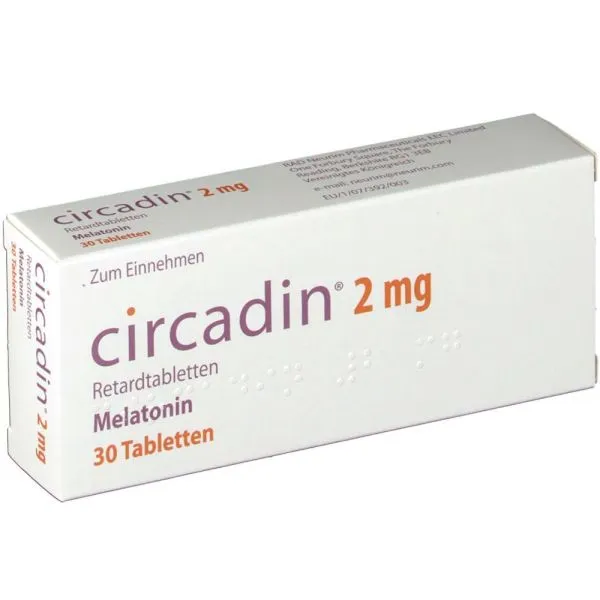
Table of Contents
- Patient Information Leaflet
- Introduction
- **Read the entire leaflet carefully before you start taking this medicine, as it contains important information for you.**
- **Package leaflet:**
- 1. What Circadin is and what it is used for
- 2. What you need to know before starting to take Circadin
- **Warnings and precautions**
- **Children and adolescents**
- **Taking Circadin with other medicines**
- **Taking Circadin with food, drinks, and alcohol**
- **Pregnancy and breastfeeding**
- **Driving and use of machines**
- **Circadin contains lactose monohydrate**
- 3. How to take Circadin
- **If you take more Circadin than you should**
- **If you forget to take Circadin**
- **If you stop taking Circadin**
- 4. Possible adverse effects
- **Reporting of adverse effects**
- 5. Storage of Circadin
- 6. Contents of the pack and other information
- **Appearance of the product and contents of the package**
- **Marketing Authorisation Holder and Manufacturer**
Patient Information Leaflet
Introduction
Package leaflet: information for the patient
Circadin 2 mg prolonged-release tablets
Melatonin
Read the entire leaflet carefully before you start taking this medicine, as it contains important information for you.
- Keep this leaflet, as you may need to read it again.
- If you have any questions, consult your doctor or pharmacist.
- This medicine has been prescribed for you only, and you should not give it to others, even if they have the same symptoms as you, as it may harm them.
- If you experience any adverse effects, consult your doctor or pharmacist, even if they are adverse effects not listed in this leaflet. See section 4.
Package leaflet:
- What Circadin is and what it is used for
- What you need to know before taking Circadin
- How to take Circadin
- Possible side effects
- How to store Circadin
- Contents of the pack and other information
1. What Circadin is and what it is used for
The active substance of Circadin is melatonin and belongs to a group of natural hormones produced by the body.
Circadin is used alone for the short-term treatment of primary insomnia (persistent difficulty in falling asleep or staying asleep, or poor sleep quality) in patients over 55 years of age. "Primary" means that the insomnia has no identifiable medical, mental, or environmental cause.
2. What you need to know before starting to take Circadin
Do not take Circadin
- if you are allergic to melatonin or to any of the other ingredients of this medicine (listed in section 6).
Warnings and precautions
Consult your doctor or pharmacist before starting to take Circadin.
- If you have liver or kidney problems. Studies on the use of Circadin in people with liver or kidney disease have not been conducted; you should speak with your doctor before taking Circadin, as its use is not recommended.
- If your doctor has told you that you have an intolerance to certain sugars.
- If you have been diagnosed with an autoimmune disease (when the body is “attacked” by its own immune system). Studies on the use of Circadin in people with autoimmune diseases have not been conducted; therefore, you should speak with your doctor before taking Circadin, as its use is not recommended.
- Circadin may cause drowsiness; you should be cautious if drowsiness occurs, as it
may affect your ability to perform tasks such as driving.
- Tobacco may reduce the effectiveness of Circadin, since components of tobacco smoke can increase the breakdown of melatonin in the liver.
Children and adolescents
This medicine should not be administered to children or adolescents aged 0 to 18 years, as it has not been evaluated in this population and its effects are unknown. For administration to children aged 2 to 18 years, another melatonin-containing medicine may be more appropriate; consult your doctor or pharmacist.
Taking Circadin with other medicines
Inform your doctor or pharmacist if you are taking, have recently taken, or might need to take any other medicines. These medicines include:
- Fluvoxamine (used to treat depression and obsessive-compulsive disorder), psoralens (used to treat skin disorders such as psoriasis), cimetidine (used to treat stomach problems such as ulcers), quinolones and rifampicin (used to treat bacterial infections), estrogens (used as contraceptives or in hormone replacement therapy), and carbamazepine (used to treat epilepsy).
- Adrenergic agonists and antagonists (such as certain medicines used to control blood pressure by narrowing blood vessels, nasal decongestants, or drugs to reduce blood pressure), opioid agonists and antagonists (such as some medicines used in the treatment of drug addiction), prostaglandin inhibitors (such as non-steroidal anti-inflammatory drugs), antidepressants, tryptophan, and alcohol.
- Benzodiazepines and non-benzodiazepine hypnotics (medicines used to induce sleep, such as zaleplon, zolpidem, and zopiclone).
- Thioridazine (for the treatment of schizophrenia) and imipramine (for the treatment of depression).
Taking Circadin with food, drinks, and alcohol
Take Circadin after having ingested some food. Do not drink alcohol either before or after taking Circadin or during its administration, as it reduces the effectiveness of Circadin.
Pregnancy and breastfeeding
Do not take Circadin if you are pregnant, think you might be pregnant, or are planning to become pregnant. Consult your doctor or pharmacist before using this medicine.
Driving and use of machines
Circadin may cause drowsiness. If this occurs, you should not drive or operate machinery. Consult your doctor if you experience persistent drowsiness.
Circadin contains lactose monohydrate
Circadin contains lactose monohydrate. If your doctor has informed you of an intolerance to certain sugars, consult with him before taking this medicine.
3. How to take Circadin
Follow exactly the instructions for use of this medicine as given by your doctor or pharmacist. If in doubt, consult your doctor or pharmacist again.
The recommended dose is one tablet (2 mg) of Circadin per day, taken orally after eating, 1 to 2 hours before bedtime. This dose may be continued for up to thirteen weeks.
Swallow the tablet whole. Circadin tablets must not be crushed or split.
If you take more Circadin than you should
If you accidentally take more medication than you should, go to your doctor or pharmacist as soon as possible.
Taking a higher dose than recommended for each day may cause drowsiness.
If you forget to take Circadin
If you forget to take the tablet, take it as soon as you remember, before going to bed, or wait until your next scheduled dose and then continue as before.
Do not take a double dose to make up for a missed dose.
If you stop taking Circadin
Stopping or prematurely ending treatment with Circadin does not cause any known harmful effects. The use of Circadin does not produce withdrawal effects after treatment is discontinued.
If you have any further questions about the use of this medicine, ask your doctor or pharmacist.
4. Possible adverse effects
Like all medicines, this medicine can cause adverse effects, although not everyone will experience them.
If you experience any of the following serious adverse effects, stop taking the medicine and contact your doctor immediately:
Uncommon (may affect up to 1 in 100 people):
- Chest pain
Rare (may affect up to 1 in 1,000 people):
- Loss of consciousness or fainting
- Severe chest pain due to angina
- Awareness of heartbeat
- Depression
- Visual impairment
- Blurred vision
- Disorientation
- Dizziness (feeling of unsteadiness or that “everything is spinning”)
- Presence of red blood cells in the urine
- Decrease in the number of white blood cells in the blood
- Decrease in the number of platelets in the blood, which increases the risk of bleeding or bruising
- Psoriasis
If you experience any of the following non-serious adverse effects, contact your doctor or seek medical advice:
Uncommon (may affect up to 1 in 100 people):
Irritability, nervousness, restlessness, insomnia, abnormal dreams, nightmares, anxiety, migraine, headache, lethargy (tiredness, lack of energy), restlessness associated with increased activity, dizziness, exhaustion, high blood pressure, abdominal pain, indigestion, mouth ulceration, dry mouth, nausea, alteration in blood composition that may cause a yellowish discoloration of the skin or eyes, skin inflammation, night sweats, itching, skin rash, dry skin, pain in the limbs, menopausal symptoms,
feeling of weakness, glucose excretion in urine, excess protein in urine, abnormal liver function, and weight gain.
Rare (may affect up to 1 in 1,000 people):
Herpes zoster, increased concentration of fat molecules in the blood, reduced concentration of calcium in the blood, reduced concentration of sodium in the blood, mood alteration, aggression, agitation, crying, stress symptoms, waking up early in the morning, increased libido (increased sexual desire), depressive mood, memory impairment, attention disturbance, dreamy state, restless legs syndrome, poor quality of sleep, prickling sensation, increased tearing, dizziness upon standing or sitting up, hot flushes, acid reflux, gastrointestinal disturbances, ulceration of the mouth, ulceration of the tongue, stomach discomfort, vomiting, abnormal intestinal noises, flatulence, excessive saliva production, bad breath, abdominal discomfort, stomach disorders, inflammation of the stomach mucosa, eczema, skin redness, dermatitis of the hands, skin redness and itching, nail abnormalities, arthritis, muscle spasms, neck pain, nocturnal cramps, prolonged erection which may be painful, prostate inflammation, fatigue, pain, thirst, increased urine volume, nocturnal urge to urinate, increased liver enzymes, blood electrolyte abnormalities, and laboratory test abnormalities.
Frequency not known (cannot be estimated from available data):
Hypersensitivity reaction, swelling of the mouth or tongue, skin swelling, and abnormal milk secretion.
Reporting of adverse effects
If you experience any adverse effects, consult your doctor or pharmacist, even if they are possible adverse effects not listed in this leaflet. You can also report them directly through the national reporting system included in Annex V. By reporting adverse effects, you can help provide more information on the safety of this medicine.
5. Storage of Circadin
Keep this medicine out of the sight and reach of children.
Do not use this medicine after the expiry date stated on the packaging after (EXP). The expiry date is the last day of the month indicated.
Do not store above 25°C. Keep in the original packaging to protect from light.
Medicines should not be disposed of via wastewater or household waste. Ask your pharmacist how to dispose of medicines and packaging that you no longer need. This will help protect the environment.
6. Contents of the pack and other information
- The active substance is melatonin. Each prolonged-release tablet contains 2 mg of melatonin.
- The other components (excipients) are ammonio methacrylate copolymer type B, calcium hydrogen phosphate dihydrate, lactose monohydrate, silica (colloidal anhydrous), talc and magnesium stearate.
Appearance of the product and contents of the package
Circadin 2 mg prolonged-release tablets are presented as white or almost white, biconvex, round tablets. Each tablet pack contains a blister strip with 7, 20, or 21 tablets, or a cardboard box containing two blister strips with 15 tablets each (30 tablets in total). Only certain pack sizes may be marketed.
Marketing Authorisation Holder and Manufacturer
Marketing Authorisation Holder:
RAD Neurim Pharmaceuticals EEC SARL
4 rue de Marivaux
75002 Paris
France
Email: [email protected]
Manufacturers:
Sites responsible for batch release in the EEA:
Temmler Pharma GmbH & Co. KG
Temmlerstrasse 2
35039 Marburg
Germany
Iberfar - Indústria Farmacêutica S.A.
Rua Consiglieri Pedroso, n.º 121-123 - Queluz de Baixo
Barcarena, 2734-501
Portugal
Rovi Pharma Industrial Services, S.A.
Vía Complutense, 140
Alcalá de Henares, Madrid, 28805
Spain
For further information on this medicinal product, please contact the local representative of the Marketing Authorisation Holder.
België/Belgique/Belgien
Takeda Belgium
Tél/Tel: +32 2 464 06 11
[email protected]
Lietuva
RAD Neurim Pharmaceuticals EEC SARL
Tel: +33 185149776 (FR)
Email: [email protected]
????????
RAD Neurim Pharmaceuticals EEC SARL
Tel: +33 185149776 (FR)
Email: [email protected]
Luxembourg/Luxemburg
Takeda Belgium
Tél/Tel: +32 2 464 06 11 (BE)
[email protected]
Ceská republika
RAD Neurim Pharmaceuticals EEC SARL
Tel: +44 7563543352 (UK)
Email: [email protected]
Magyarország
RAD Neurim Pharmaceuticals EEC SARL
Tel: +33 185149776 (FR)
Email: [email protected]
Danmark
Takeda Pharma A/S
Tlf: +45 46 77 11 11
Malta
RAD Neurim Pharmaceuticals EEC SARL
Tel: +33 185149776 (FR)
Email: [email protected]
Deutschland
MEDICE Arzneimittel Pütter GmbH & Co. KG
Tel: +49 (0)2371 9370
[email protected]
Nederland
Takeda Nederland b.v.
Tel: +31 20 203 5492
[email protected]
Eesti
RAD Neurim Pharmaceuticals EEC SARL
Tel: +33 185149776 (FR)
Email: [email protected]
Norge
Takeda AS
Tlf: +47 6676 3030
[email protected]
Ελλάδα
TAKEDA ΕΛΛΑΣ Α.Ε.
Tel: +30 210 6387800
[email protected]
Österreich
SANOVA PHARMA GesmbH
Tel.: +43 (01) 80104-0
Email: [email protected]
España
EXELTIS HEALTHCARE, S.L.
Tel: +34 91 7711500
Polska
MEDICE Arzneimittel Pütter GmbH & Co. KG
Tel.: +48-(0)22 642 2673
Email: [email protected]
France
BIOCODEX
Tél: +33 (0)1 41 24 30 00
Email: [email protected]
Portugal
Italfarmaco, Produtos Farmacêuticos, Lda.
Tel: +351 214 342 530
Email: [email protected]
Hrvatska
RAD Neurim Pharmaceuticals EEC SARL
Tel: +33 185149776 (FR)
Email: [email protected]
România
RAD Neurim Pharmaceuticals EEC SARL
Tel: +33 185149776 (FR)
Email: [email protected]
Ireland
RAD Neurim Pharmaceuticals EEC SARL
Tel: +33 185149776 (FR)
Email: [email protected]
Slovenija
RAD Neurim Pharmaceuticals EEC SARL
Tel: +33 185149776 (FR)
Email: [email protected]
Ísland
Vistor hf.
Tel: +354 535 7000
Slovenská republika
RAD Neurim Pharmaceuticals EEC SARL
Tel: +33 185149776 (FR)
Email: [email protected]
Italia
Fidia Farmaceutici S.p.A.
Tel: +39 049 8232222
Email: [email protected]
Suomi/Finland
Takeda Oy
Puh/Tel: +358 20 746 5000
Κύπρος
RAD Neurim Pharmaceuticals EEC SARL
Tel: +33 185149776 (FR)
Email: [email protected]
Sverige
Takeda Pharma AB
Tel: +46 8 731 28 00
[email protected]
Latvija
RAD Neurim Pharmaceuticals EEC SARL
Tel: +33 185149776 (FR)
Email: [email protected]
United Kingdom (Northern Ireland)
RAD Neurim Pharmaceuticals EEC SARL
Tel: +33 185149776 (FR)
Email: [email protected]
Date of the most recent review of this leaflet: {month YYYY}
Other sources of information
Detailed information on this medicinal product is available on the European Medicines Agency website: http://www.ema.europa.eu