Ciqorin 100 mg soft capsules EFG
Spain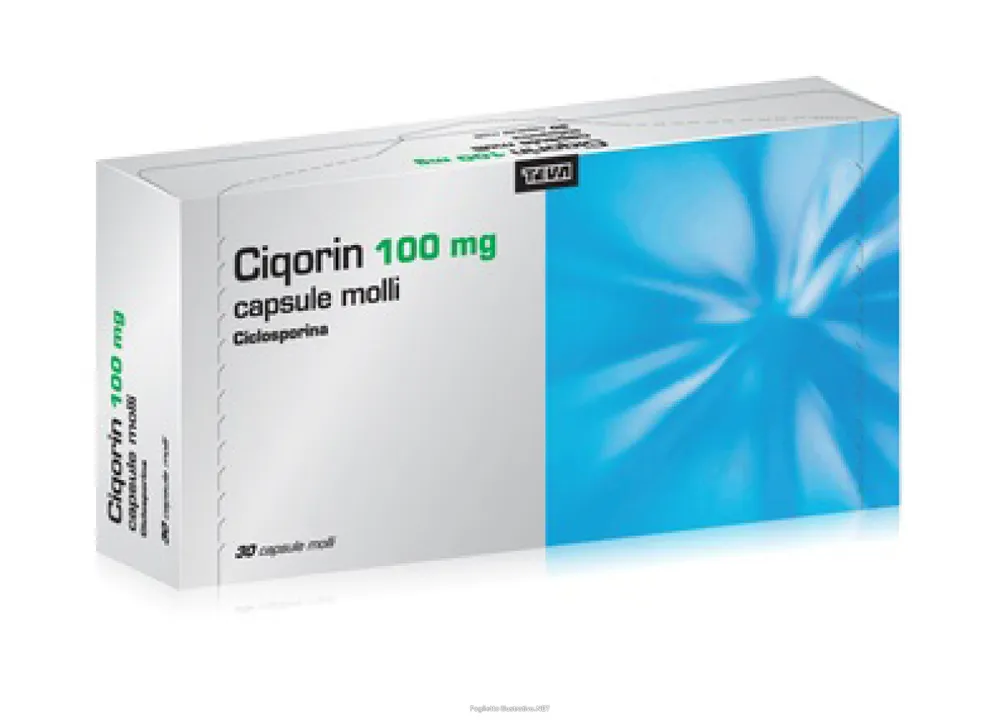
Table of Contents
- Package leaflet: Information for the user
- Introduction
- 1. What Ciqorin is and what it is used for
- 2. What you need to know before starting to take Ciqorin
- If you are taking Ciqorin after a transplant, it must have been prescribed only by a doctor experienced in transplantation and/or autoimmune diseases.
- **Pregnancy and breastfeeding**
- 3. How to take Ciqorin
- **Follow exactly the instructions for using this medicine as given by your doctor. If in doubt, consult your doctor again.**
- 4. Possible adverse effects
- 5. Storage of Ciqorin
- 6. Contents of the pack and other information
Package leaflet: Information for the user
Introduction
Package leaflet: Information for the patient
Ciqorin 100 mg soft capsules EFG
Ciclosporin
Read all of this leaflet carefully before you start taking this medicine because it contains important information for you.
- Keep this leaflet. You may need to read it again.
- If you have any questions, ask your doctor or pharmacist.
- This medicine has been prescribed for you only and must not be given to other people, even if they have the same symptoms as you. It could harm them.
- If you get any side effects, talk to your doctor or pharmacist, even if the side effects are not listed in this leaflet. See section 4.
Contents of the leaflet
- What Ciqorin is and what it is used for
- What you need to know before taking Ciqorin
- How to take Ciqorin
- Possible side effects
- How to store Ciqorin
- Contents of the pack and other information
1. What Ciqorin is and what it is used for
What Ciqorin is
The name of your medicine is Ciqorin. It contains the active substance ciclosporin. It belongs to a group of medicines known as immunosuppressants. These medicines are used to reduce the body's immune responses.
What Ciqorin is used for and how it works
- If you have undergone an organ, bone marrow, or stem cell transplant, the function of Ciqorin is to suppress your body's immune system. Ciqorin prevents rejection of transplanted organs by inhibiting the development of certain cells that would normally attack the transplanted tissue.
- If you have an autoimmune disease, in which your body's immune response attacks its own cells, Ciqorin suppresses this immune reaction. These diseases include eye disorders that may affect your vision (endogenous uveitis, including Behçet's uveitis), severe cases of certain skin diseases (atopic dermatitis or eczema, and psoriasis), severe rheumatoid arthritis, and a kidney disease known as nephrotic syndrome.
2. What you need to know before starting to take Ciqorin
If you are taking Ciqorin after a transplant, it must have been prescribed only by a doctor experienced in transplantation and/or autoimmune diseases.
The recommendations in this leaflet may vary depending on whether you are taking the medicine for a transplant or for an autoimmune disease.
Follow carefully all instructions given by your doctor. They may differ from the general information contained in this leaflet.
Do not take Ciqorin
- if you are allergic to ciclosporin or to any of the other ingredients of this medicine (listed in section 6)
- with medicines containing Hypericum perforatum (St. John’s wort).
- with medicines containing dabigatran etexilate (used to prevent blood clots after surgery) or bosentan and aliskiren (used to lower high blood pressure).
If any of these apply to you, do not take Ciqorin and inform your doctor. If you are unsure, consult your doctor before taking Ciqorin.
Warnings and precautions
Before and during treatment with Ciqorin, inform your doctor immediately:
- if you have any signs of infection, such as fever or sore throat. Ciqorin suppresses the immune system and may also affect your body’s ability to fight infections.
- if you have liver problems
- if you have kidney problems. Your doctor will carry out regular blood tests and may adjust your dose if necessary.
- if you have high blood pressure. Your doctor will monitor your blood pressure regularly and may prescribe medication to lower it if needed.
- if you have low levels of magnesium in your body. Your doctor may give you magnesium supplements, especially shortly after surgery if you have had a transplant.
- if you have high levels of potassium in your blood.
- if you suffer from gout.
- if you need to receive a vaccine.
If you develop any of the above conditions before or during treatment with Ciqorin, inform your doctor immediately.
Sun protection and sunlight exposure
Ciqorin suppresses your immune system. This may increase the risk of developing cancer, particularly of the skin and lymphatic system. Therefore, you should limit your exposure to sunlight and UV radiation as follows:
- Wearing appropriate protective clothing.
- Applying frequently a high-protection sunscreen.
Monitoring during your treatment with Ciqorin
Your doctor will monitor:
- ciclosporin blood levels, especially if you have had a transplant,
- your blood pressure before starting treatment and regularly during treatment,
- how well your liver and kidneys are functioning,
- your blood lipid levels (fats).
If you have any questions about how Ciqorin works or why you have been prescribed this medicine, consult your doctor.
Additionally, if you are taking Ciqorin for a condition other than transplantation (intermediate or posterior uveitis and Behçet's uveitis, atopic dermatitis, severe rheumatoid arthritis or nephrotic syndrome), do not take Ciqorin:
- if you have kidney problems (except for nephrotic syndrome).
- if you have an infection that is not controlled with medication.
- if you have any type of cancer.
- if you have high blood pressure (hypertension) that is not controlled with medication. If you develop high blood pressure during treatment and it cannot be controlled, your doctor should discontinue treatment with Ciqorin.
If any of these situations apply to you, do not take Ciqorin. If you are unsure, consult your doctor or pharmacist before taking Ciqorin.
If you are being treated for Behçet's uveitis, your doctor will monitor you closely, especially if you experience neurological symptoms (e.g.: frequent forgetfulness, changes in personality observed over time, psychiatric or mood disorders, burning sensation in the limbs, reduced sensitivity in the limbs, tingling sensation in the limbs, limb weakness, motor disturbances, headache with or without nausea and vomiting, visual disturbances including limited eye movement).
Your doctor will monitor you closely if you are elderly and are being treated for psoriasis or atopic dermatitis. If Ciqorin has been prescribed to treat your psoriasis or atopic dermatitis, you must not be exposed to UVB radiation or photochemotherapy during treatment.
Children and adolescents
Ciqorin must not be administered to children for indications other than transplantation, except for the treatment of nephrotic syndrome.
Elderly population (aged 65 years and older)
There is limited experience with Ciqorin in elderly patients. Your doctor should monitor your kidney function. If you are over 65 years old and suffer from psoriasis or atopic dermatitis, Ciqorin treatment should only be used if your condition is particularly severe.
Taking Ciqorin with other medicines
Inform your doctor or pharmacist if you are taking, have recently taken or might take any other medicines.
In particular, inform your doctor or pharmacist if you are taking any of the following medicines before or during treatment with Ciqorin:
-
Medicines that may affect your potassium levels. These include medicines containing potassium, potassium supplements, potassium-sparing diuretics, and some medicines that lower your blood pressure.
-
Methotrexate. Used to treat tumors, severe psoriasis, and severe rheumatoid arthritis.
-
Medicines that may increase or decrease ciclosporin (the active substance in Ciqorin) levels in your blood. Your doctor may check your ciclosporin blood level when starting or stopping treatment with other medicines.
-
Medicines that may increase ciclosporin levels in your blood include: antibiotics (such as erythromycin or azithromycin), antifungals (voriconazole, itraconazole), medicines used for heart disorders or high blood pressure (diltiazem, nicardipine, verapamil, amiodarone), metoclopramide (used to stop vomiting), oral contraceptives, danazol (used to treat menstrual disorders), medicines used to treat gout (allopurinol), cholic acid and derivatives (used to treat gallstones), protease inhibitors used to treat HIV, imatinib (used to treat leukemia or tumors), colchicine, telaprevir (used to treat hepatitis C), cannabidiol (its uses include, among others, treatment of epileptic seizures).
-
Medicines that may decrease ciclosporin levels in your blood include: barbiturates (used to help you sleep), certain anticonvulsants (such as carbamazepine or phenytoin), octreotide (used to treat acromegaly or neuroendocrine tumors in the intestine), antibacterial medicines used to treat tuberculosis, orlistat (used to help lose weight), herbal medicines containing St. John’s wort, ticlopidine (used after stroke), certain medicines that lower blood pressure (bosentan), and terbinafine (an antifungal medicine, used to treat foot and nail infections).
- Medicines that may affect your kidneys. These include: antibacterial medicines (gentamicin, tobramycin, ciprofloxacin), antifungal medicines containing amphotericin B, medicines used for urinary tract infections containing trimethoprim, cancer medicines containing melphalan, medicines to reduce stomach acid (acid secretion inhibitors of the H2-receptor antagonist type), tacrolimus, analgesics (non-steroidal anti-inflammatory drugs such as diclofenac), fibric acid medicines (used to reduce blood fat levels).
- Nifedipine. Used to treat high blood pressure and chest pain. You may develop swollen gums that could grow over your teeth if you are taking nifedipine during ciclosporin treatment.
- Digoxin (used to treat heart disorders), cholesterol-lowering medicines (HMG-CoA reductase inhibitors also called statins), prednisolone, etoposide (used to treat cancer), repaglinide (an oral antidiabetic medicine), immunosuppressants (everolimus, sirolimus), ambrisentan and specific anticancer medicines called anthracyclines (such as doxorubicin).
- Sodium mycophenolate or mycophenolate mofetil (an immunosuppressant) and eltrombopag (used to treat bleeding disorders).
If any of these situations apply to you (or you are unsure), inform your doctor or pharmacist before taking Ciqorin.
Hepatitis C
Inform your doctor if you have hepatitis C. Your liver function may change during hepatitis C treatment, which may affect ciclosporin blood levels. Your doctor may need to closely monitor your ciclosporin blood levels and adjust the dose after starting treatment for hepatitis C.
Taking Ciqorin with food and drinks
Do not take Ciqorin with grapefruit or grapefruit juice. This is because it may affect how Ciqorin works.
Pregnancy and breastfeeding
Consult your doctor or pharmacist before taking this medicine. Your doctor will discuss with you the potential risks of taking Ciqorin during pregnancy.
- Inform your doctor if you are pregnant or intend to become pregnant. Experience with Ciqorin in pregnant women is limited. In general, Ciqorin should not be administered during pregnancy. If it is necessary for you to take this medicine, your doctor will discuss with you the potential benefits and risks of taking it during pregnancy.
- Inform your doctor if you are breastfeeding. Breastfeeding is not recommended during treatment with Ciqorin. This is because cyclosporine, the active substance, passes into breast milk and could affect your child.
Driving and use of machines
You may feel drowsy, disoriented, or experience blurred vision after taking cyclosporine. Exercise caution when driving or operating machinery while taking cyclosporine until you know how it affects you.
Ciqorin contains ethanol
This medicine contains 159.50 mg of alcohol (ethanol) in each capsule. A dose of 500 mg (797.5 mg of ethanol) is equivalent to less than 20 ml of beer or 8 ml of wine. The small amount of alcohol in this medicine will not have any notable effect.
Ciqorin contains sorbitol
This medicine contains 19.06 mg of sorbitol in each capsule.
Ciqorin contains macrogol glycerides hydroxystearate
May cause stomach discomfort and diarrhoea.
3. How to take Ciqorin
Follow exactly the instructions for using this medicine as given by your doctor. If in doubt, consult your doctor again.
Do not take more than the recommended dose.
Your doctor will carefully adjust the dose of this medicine to your individual needs. Too much of this medicine may affect your kidneys. You will have regular blood tests and hospital visits, especially after transplantation. This will allow you to discuss your treatment and any problems you may have with your doctor.
How much Ciqorin should you take
Your doctor will tell you the correct dose of Ciqorin for you. This depends on your body weight and the reason for which you are taking this medicine. Your doctor will also inform you how often you should take your medicine.
- In adults:
Organ, bone marrow and stem cell transplantation
- The total daily dose is normally between 2 mg and 15 mg per kilogram of body weight. This is divided into two doses.
- Higher doses are usually used before and immediately after your transplant. Lower doses are used once your transplanted organ or bone marrow has stabilized.
- Your doctor will adjust the dose to one that is ideal for you. To do this, your doctor may need to carry out some blood tests.
Endogenous uveitis
- The total daily dose is normally between 5 mg and 7 mg per kilogram of body weight. This is divided into two doses.
Nephrotic syndrome
- The total daily dose for adults is normally 5 mg per kilogram of body weight. This is divided into two doses. In patients with renal impairment, the initial daily dose should not exceed 2.5 mg per kilogram of body weight.
Severe rheumatoid arthritis
- The total daily dose is normally between 3 mg and 5 mg per kilogram of body weight. This is divided into two doses.
Psoriasis and atopic dermatitis
-
The total daily dose is normally between 2.5 mg and 5 mg per kilogram of body weight. This is divided into two doses.
-
In children:
Nephrotic syndrome
- The total daily dose for children is normally 6 mg per kilogram of body weight. This is divided into two doses. In patients with renal impairment, the initial daily dose should not exceed 2.5 mg per kilogram of body weight.
Follow exactly your doctor's instructions and never change the dose yourself, even if you feel well.
Conversion from cyclosporine to cyclosporine microemulsion
You may have previously been taking another oral cyclosporine medicine. Your doctor may decide to switch you to this medicine, Ciqorin.
- All these medicines contain cyclosporine as the active substance.
- Ciqorin is a different and improved formulation of cyclosporine. Cyclosporine is better absorbed into the blood with Ciqorin and is less likely to be affected by food intake. This means that cyclosporine blood levels remain more consistent with Ciqorin.
If your doctor switches you from oral cyclosporine to oral cyclosporine microemulsion:
- Do not go back to taking the previous medicine unless your doctor tells you to.
- After the switch, your doctor will monitor you more closely for a short period of time. This is due to the change in how cyclosporine is absorbed into the blood. Your doctor will ensure you are taking the correct dose according to your individual needs.
- You may experience some adverse effects. If this happens, inform your doctor or pharmacist. It may be necessary to reduce your dose. Never reduce your dose yourself unless instructed by a doctor.
If your doctor switches you from one oral cyclosporine formulation to another
After switching from one oral cyclosporine formulation to another:
- Your doctor will monitor you more closely for a short period of time.
- You may experience some adverse effects. If this happens, inform your doctor or pharmacist. It may be necessary to adjust your dose. Never adjust your dose yourself unless instructed by a doctor.
When to take Ciqorin
Take Ciqorin at the same time each day. This is very important if you have had a transplant.
How to take Ciqorin
Your daily dose must always be administered in two divided doses.
Remove the capsules from the blister pack. Swallow the capsules whole with a glass of water.
How long to take Ciqorin
Your doctor will tell you how long you need to take Ciqorin. This depends on whether you are taking it after a transplant or for the treatment of serious skin diseases, rheumatoid arthritis, uveitis, or nephrotic syndrome. In the case of severe skin rash, treatment usually lasts 8 weeks.
Continue taking Ciqorin for as long as your doctor tells you to.
If you have any doubts about how long you should take Ciqorin, consult your doctor or pharmacist.
If you take more Ciqorin than you should
If you accidentally take too much medicine, inform your doctor immediately or go to the nearest hospital emergency department. You may require medical attention.
You can also call the Toxicology Information Service at telephone number 91 562 04 20, indicating the medicine and the amount taken.
If you forget to take Ciqorin
If you forget to take a dose, take it as soon as you remember. However, if it is nearly time for your next dose, skip the missed dose. Then continue as before. Do not take a double dose to make up for a missed dose.
If you stop taking Ciqorin
Do not stop taking Ciqorin unless your doctor tells you to.
Continue taking Ciqorin even if you feel well. Stopping treatment with Ciqorin may increase the risk of rejection of your transplanted organ.
If you have any further questions about the use of this medicine, ask your doctor or pharmacist.
4. Possible adverse effects
Like all medicines, this medicine can cause adverse effects, although not everyone experiences them.
Some adverse effects may be serious
Tell your doctor immediately if you notice any of the following serious adverse effects:
- Like other medicines that affect the immune system, cyclosporine may affect your body's ability to fight certain infections and may cause tumors or other malignant diseases, especially of the skin. Signs of infection could include fever or sore throat.
- Vision disturbances, lack of coordination, clumsiness, memory loss, difficulty speaking or understanding what others say, and muscle weakness. These could be signs of a brain infection called progressive multifocal leukoencephalopathy.
- Brain problems with signs such as seizures, confusion, disorientation, reduced sensation, personality changes, agitation, insomnia, vision disturbances, blindness, coma, paralysis of part or all of the body, torticollis, lack of coordination with or without abnormal speech or eye movements.
- Inflammation at the back of the eye that may be associated with blurred vision. It may also affect your vision due to increased pressure inside the head (benign intracranial hypertension).
- Liver injury and liver function abnormalities, with or without yellowing of the eyes or skin, nausea, vision loss, and dark urine.
- Kidney problems, which may greatly reduce the amount of urine you produce.
- Decrease in the number of red blood cells or platelets. These signs include pale skin, fatigue, shortness of breath, dark urine (a sign of red blood cell breakdown), unexplained bleeding or bruising, confusion, disorientation, difficulty concentrating, and kidney problems.
Other adverse effects include:
Very common (may affect more than 1 in 10 people)
- Kidney problems.
- High blood pressure.
- Headache.
- Uncontrollable body tremors.
- Excessive growth of facial and body hair.
- Increased blood lipids.
If any of these affect you severely, tell your doctor.
Common (may affect up to 1 in 10 people)
- Seizures.
- Liver problems.
- Increased blood sugar.
- Fatigue.
- Loss of appetite.
- Nausea (feeling of dizziness), vomiting, abdominal discomfort/pain, diarrhea.
- Excessive hair growth.
- Acne, hot flushes.
- Fever.
- Decrease in the number of white blood cells.
- Sensation of numbness or tingling.
- Muscle pain, muscle spasms.
- Stomach ulcer.
- Excessive growth of gum tissue that may cover your teeth.
- Excess uric acid or potassium in the blood, decreased magnesium levels in the blood.
If any of these affect you severely, tell your doctor.
Uncommon (may affect up to 1 in 100 people)
- Symptoms of brain disturbances including sudden seizures, mental confusion, insomnia, disorientation, vision disturbances, unconsciousness, feeling of weakness in the limbs, impaired movement.
- Skin rash.
- Generalized swelling.
- Weight gain.
- Decrease in the number of red blood cells and platelets in the blood, which may lead to an increased risk of bleeding.
If any of these affect you severely, tell your doctor.
Rare (may affect up to 1 in 1,000 people)
-
Nerve disturbances with numbness or tingling in the fingers and toes.
-
Pancreatitis (inflammation of the pancreas) with severe upper abdominal pain.
-
Muscle weakness, loss of muscle strength, muscle pain in the legs, hands, or any part of the body.
-
Destruction of red blood cells, including kidney problems with symptoms such as swelling of the face, abdomen, hands and/or feet, reduced urine output, difficulty breathing, chest pain, seizures, unconsciousness.
-
Changes in menstrual cycle, breast enlargement in men.
-
If any of these affect you severely, tell your doctor.
Very rare (may affect up to 1 in 10,000 people)
- Inflammation at the back of the eye that may be associated with increased pressure inside the head and deterioration of vision.
If this affects you severely, tell your doctor.
Frequency not known: Cannot be estimated from the available data.
- Severe liver problems with and without yellowing of the eyes or skin, nausea (feeling of dizziness), loss of appetite, dark urine, swelling of the face, feet, hands and/or entire body.
- Bleeding under the skin or purple spots on the skin, sudden unexplained bleeding.
- Migraine or severe headache, often with dizziness or the same sensation (nausea, vomiting), and sensitivity to light.
- Pain in legs and feet.
- Hearing impairment.
If any of these affect you severely, tell your doctor.
Other adverse effects in children and adolescents
No additional adverse effects are expected in children and adolescents compared to adults.
Reporting of adverse effects
If you experience any type of adverse effect, talk to your doctor or pharmacist, even if it is a possible adverse effect not listed in this leaflet.
You may also report them directly via the Spanish Pharmacovigilance System for Human Medicinal Products: https://www.notificaram.es. By reporting adverse effects, you can help provide more information on the safety of this medicine.
5. Storage of Ciqorin
Keep this medicine out of sight and reach of children.
Do not use this medicine after the expiry date stated on the carton and blister after EXP. The expiry date refers to the last day of the month indicated.
Store below 30°C. Do not freeze. Keep in the original packaging to protect from light and moisture.
Medicines must not be disposed of via wastewater or household waste. Dispose of unused medicines and their packaging at a SIGRE collection point at your pharmacy. If you have any doubts, ask your pharmacist how to dispose of unused medicines and packaging. This will help protect the environment.
6. Contents of the pack and other information
Composition of Ciqorin
- The active substance is ciclosporin.
- Each soft capsule contains 100 mg of ciclosporin.
- The other components in the capsule contents are macrogol glycerol hydroxystearate, glycerol monolinoleate, diethylene glycol monoethyl ether, anhydrous ethanol, and D,L-α-tocopherol.
- The other components in the capsule shell are gelatin, glycerol, liquid sorbitol (non-crystalline) (E420), glycine, titanium dioxide (E171), iron oxide brown (E172), and light liquid paraffin.
Nature of the product and pack sizes
Ciqorin 100 mg soft capsules are opaque brown soft gelatin capsules containing a colourless to slightly yellow oily liquid. Approximate size: 24.7 x 9.9 mm.
The capsules are available in pack sizes of 20, 30, 30 x 1, 50, 50x1, 60, 90 and 100 in blisters OPA/Alu/PVC-Aluminium.
Only certain pack sizes may be marketed.
Marketing Authorisation Holder and Manufacturer
Marketing Authorisation Holder:
Teva Pharma S.L.U.
C/ Anabel Segura 11, Edificio Albatros B, 1A planta
28108 Alcobendas
Madrid, Spain
Manufacturer:
Teva Czech Industries s.r.o.
Ostravska 29, c.p. 305, 74770 Opava-Komarov
Czech Republic
or
TEVA Pharmaceutical Works Private Limited Company
Pallagi út 13, 4042 Debrecen
Hungary
or
Pharmachemie B.V.
Swensweg 5, 2031 GA Haarlem
The Netherlands
or
Merckle GmbH
Ludwig-Merckle-Straße 3, 89143 Blaubeuren
Germany
or
Teva Operations Poland Sp. z.o.o
ul. Mogilska 80, 31-546 Krakow
Poland
This medicinal product is authorised in the European Economic Area and in the United Kingdom (Northern Ireland) under the following names:
Germany Ciqorin 100 mg Weichkapseln
Spain Ciqorin 100 mg soft capsules EFG
Italy Ciqorin
United Kingdom (Northern Ireland) Vanquoral 100 mg Capsules, soft
Date of the most recent revision of this leaflet: January 2024
Detailed and up-to-date information on this medicinal product is available on the website of the Spanish Agency for Medicines and Health Products (AEMPS) http*://www.aemps.gob.es/.*