Ciprofloxacin CINFA 750 mg film-coated tablets EFG
Spain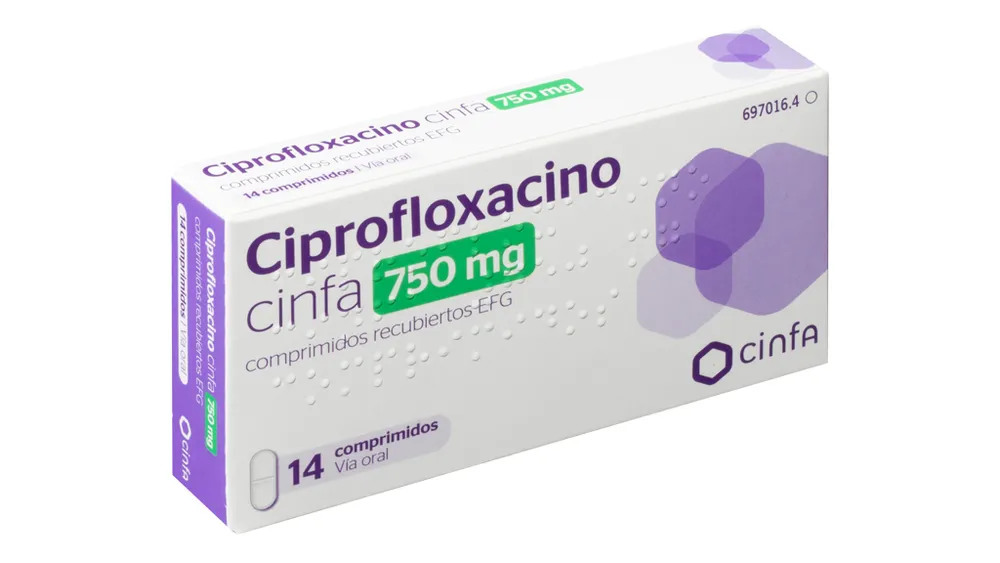
Table of Contents
- Patient Information Leaflet
- Introduction
- 1. What ciprofloxacin cinfa is and what it is used for
- 2. What you need to know before starting to take ciprofloxacin cinfa
- 3. How to take ciprofloxacin cinfa
- 4. Possible adverse effects
- 5. Storage of ciprofloxacin cinfa
- 6. Contents of the pack and other information
Patient Information Leaflet
Introduction
Patient Information Leaflet
ciprofloxacin cinfa 750 mg coated tablets EFG
ciprofloxacin hydrochloride
Read the entire leaflet carefully before you start taking this medicine, because it contains important information for you.
- Keep this leaflet, as you may need to read it again.
- If you have any questions, ask your doctor or pharmacist.
- This medicine has been prescribed for you only, and you should not give it to others, even if they have the same symptoms as you, because it may harm them.
- If you experience any adverse effects, consult your doctor or pharmacist, even if they are effects not listed in this leaflet. See section 4.
Leaflet Contents
- What ciprofloxacin cinfa is and what it is used for
- What you need to know before taking ciprofloxacin cinfa
- How to take ciprofloxacin cinfa
- Possible adverse effects
- How to store ciprofloxacin cinfa
- Contents of the pack and other information
1. What ciprofloxacin cinfa is and what it is used for
Ciprofloxacin cinfa contains the active substance ciprofloxacin. Ciprofloxacin is an antibiotic that belongs to the fluoroquinolone family. Ciprofloxacin works by eliminating the bacteria that cause infections. It only acts against specific strains of bacteria.
Antibiotics are used to treat bacterial infections and are not effective against viral infections such as influenza or the common cold. It is important to follow your doctor's instructions regarding dosage, dosing interval, and duration of treatment. Do not keep or reuse this medicine. If you have any antibiotic left after completing the treatment, return it to the pharmacy for proper disposal. Medicines must not be disposed of via wastewater or household waste. |
Adults
ciprofloxacin cinfa is used in adults to treat the following bacterial infections:
- respiratory tract infections
- long-lasting or recurrent ear or sinus infections
- urinary tract infections
- male and female genital tract infections
- gastrointestinal and intra-abdominal infections
- skin and soft tissue infections
- bone and joint infections
- prevention of infections caused by the bacterium Neisseria meningitidis
- inhalational exposure to anthrax.
Ciprofloxacin may be used to treat patients with low white blood cell count (neutropenia) who have fever suspected to be due to a bacterial infection.
If you have a severe infection or if the infection is caused by more than one type of bacteria, you may be given additional antibiotic treatment alongside ciprofloxacin.
Children and adolescents
ciprofloxacin cinfa is used in children and adolescents, under specialized medical supervision, to treat the following bacterial infections:
- lung and bronchial infections in children and adolescents with cystic fibrosis
- complicated urinary tract infections, including infections that have reached the kidneys (pyelonephritis)
- inhalational exposure to anthrax.
ciprofloxacin cinfa may also be used for the treatment of severe infections in children and adolescents when deemed necessary by your doctor.
2. What you need to know before starting to take ciprofloxacin cinfa
Do not take ciprofloxacin cinfa
- if you are allergic to ciprofloxacin, other quinolones, or any of the other components of this medicine (listed in section 6).
- if you are taking tizanidine (see section 2: “Other medicines and ciprofloxacin cinfa”).
Warnings and precautions
Before starting this medicine
Do not take antibacterial medicines containing fluoroquinolones or quinolones, including ciprofloxacin, if you have previously experienced a serious adverse reaction to a quinolone or fluoroquinolone. If this applies to you, inform your doctor as soon as possible.
Quinolone antibiotics can cause an increase in your blood sugar levels above normal (hyperglycaemia), or a decrease in your blood sugar levels below normal, which in severe cases may lead to loss of consciousness (hypoglycaemic coma) (see section 4). This is particularly important for people with diabetes. If you have diabetes, your blood sugar levels should be carefully monitored.
Talk to your doctor before starting to take ciprofloxacin cinfa
- if you have ever had kidney problems, as your treatment may need to be adjusted,
- if you have epilepsy or other neurological conditions,
- if you have a history of tendon problems during previous treatment with antibiotics such as ciprofloxacin,
- if you have diabetes, as you may be at risk of hypoglycaemia with ciprofloxacin,
- if you have myasthenia gravis (a type of muscle weakness), as symptoms may worsen,
- if you have been diagnosed with an enlarged blood vessel or a “bulge” in a large blood vessel (aortic aneurysm or peripheral large-vessel aneurysm),
- if you have previously experienced aortic dissection (tearing of the aortic wall),
- if you have been diagnosed with heart valve insufficiency (regurgitation of heart valves),
- if you have a family history of aortic dissection or aneurysm, congenital heart valve disease, or other risk factors or predisposing conditions (e.g., connective tissue disorders such as Marfan syndrome, Ehlers-Danlos syndrome, Turner syndrome, or Sjögren's syndrome (an inflammatory autoimmune disease), vascular disorders such as Takayasu arteritis, giant cell arteritis, Behçet's disease, known hypertension, atherosclerosis, rheumatoid arthritis (a joint disease), or endocarditis (a heart infection)),
- if you have heart problems. Caution should be exercised when administering ciprofloxacin if you were born with or have a family history of prolonged QT interval (seen on ECG, the electrical recording of the heart), have electrolyte imbalances in the blood (especially low potassium or magnesium levels), have a very slow heart rate (known as bradycardia), have a weak heart (heart failure), have a history of heart attacks (myocardial infarction), are female or elderly, or are taking other medicines that cause abnormal changes in the ECG (see section 2: “Other medicines and ciprofloxacin cinfa”),
- if you or a family member has glucose-6-phosphate dehydrogenase (G6PD) deficiency, as you may be at risk of anaemia with ciprofloxacin.
For the treatment of certain genital tract infections, your doctor may prescribe another antibiotic in addition to ciprofloxacin. If there is no improvement in symptoms after 3 days of treatment, please consult your doctor.
During treatment with this medicine
Inform your doctor immediately if any of the following occur while taking ciprofloxacin. Your doctor will decide whether treatment with ciprofloxacin should be discontinued.
- If you experience sudden and severe pain in the abdomen, chest, or back, which may be symptoms of aortic dissection or aneurysm, go immediately to an emergency department.
The risk may be increased if you are receiving systemic corticosteroid therapy.
-
If you develop sudden onset of shortness of breath, especially when lying down, or notice swelling in your ankles, feet, or abdomen, or experience palpitations (a sensation of rapid or irregular heartbeat), inform your doctor immediately.
-
Severe and sudden allergic reaction (anaphylactic reaction or angioedema). There is a small chance that even with the first dose, you may experience a severe allergic reaction with symptoms such as chest tightness, dizziness, nausea, or fainting, or feel dizzy upon standing. If this happens, do not take any more ciprofloxacin and contact your doctor immediately.
Serious, disabling, long-lasting, and potentially irreversible adverse effects
-
Antibacterial medicines containing fluoroquinolones or quinolones, including ciprofloxacin, have been associated with very rare but serious adverse effects, some of which may be long-lasting (persisting for months or years), disabling, or potentially irreversible. These include tendon, muscle, and joint pain in the upper and lower limbs, difficulty walking, abnormal sensations such as pricking, tingling, pins and needles, numbness, or burning (paraesthesia), sensory disturbances such as decreased vision, taste, smell, or hearing, depression, memory impairment, severe fatigue, and serious sleep disorders.
-
If you experience any of these adverse effects after taking ciprofloxacin cinfa, contact your doctor immediately before continuing treatment. You and your doctor will decide whether to continue treatment, possibly considering the use of an antibiotic from another class.
-
Rarely, joint pain and swelling, or tendon inflammation or rupture may occur. The risk is higher if you are elderly (over 60 years), have had an organ transplant, have kidney problems, or are taking corticosteroids. Tendon inflammation and rupture may occur within the first 48 hours of treatment and even several months after stopping ciprofloxacin. At the first sign of tendon pain or swelling (e.g., in the ankle, wrist, elbow, shoulder, or knee), stop taking ciprofloxacin cinfa, contact your doctor, and rest the affected area. Avoid unnecessary physical activity, as this may increase the risk of tendon rupture.
-
If you have epilepsy or another neurological condition, such as cerebral ischaemia or stroke, you may experience central nervous system-related adverse effects. If seizures occur, stop taking ciprofloxacin and contact your doctor immediately.
-
Rarely, you may experience symptoms of nerve damage (neuropathy) such as pain, burning, tingling, numbness, and/or weakness, especially in the feet and legs or hands and arms. If this occurs, stop taking ciprofloxacin and contact your doctor immediately to prevent potentially irreversible damage.
-
You may experience psychiatric reactions the first time you take ciprofloxacin cinfa. If you have depression or psychosis, your symptoms may worsen during treatment with ciprofloxacin. In rare cases, depression or psychosis may progress to suicidal thoughts, suicide attempts, or completed suicide. If this occurs, stop taking ciprofloxacin cinfa and contact your doctor immediately.
-
Diarrhoea may develop while you are taking antibiotics, including ciprofloxacin, or even several weeks after stopping them. If diarrhoea becomes severe or persistent, or if you notice blood or mucus in your stools, stop taking ciprofloxacin and contact your doctor immediately, as this may be life-threatening. Do not take medicines that stop or delay bowel movements.
-
If your vision worsens or you experience any other eye changes, consult an ophthalmologist immediately.
-
Your skin may become more sensitive to sunlight or ultraviolet (UV) light while taking ciprofloxacin. Avoid exposure to intense sunlight or artificial UV light, such as sunbeds.
-
While taking ciprofloxacin, inform your doctor or laboratory staff if you need to undergo a blood or urine test.
-
If you have kidney problems, inform your doctor, as your dose may need adjustment.
-
Ciprofloxacin may cause liver damage. If you notice symptoms such as loss of appetite, jaundice (yellowing of the skin), dark urine, itching, or stomach pain, consult your doctor immediately.
-
Ciprofloxacin may reduce your white blood cell count and possibly reduce your resistance to infections. If you develop an infection with symptoms such as fever and severe deterioration in your general condition, or fever with local infection symptoms such as sore throat/pharynx/mouth, or urinary problems, contact your doctor immediately. A blood test will be performed to check for possible low white blood cell count (agranulocytosis). It is important to inform your doctor about your medication.
Other medicines and ciprofloxacin cinfa
Inform your doctor or pharmacist if you are taking, have recently taken, or might need to take any other medicines.
Do not take ciprofloxacin at the same time as tizanidine, as this could cause adverse effects such as low blood pressure and drowsiness (see section 2: “What you need to know before starting to take ciprofloxacin cinfa”).
The following medicines are known to interact with ciprofloxacin in your body. Taking ciprofloxacin together with these medicines may affect their therapeutic effect and may also increase the risk of adverse effects.
Inform your doctor if you are taking:
- vitamin K antagonists (e.g., warfarin, acenocoumarol, phenprocoumon, or fluindione) or other oral anticoagulants (to thin the blood)
- probenecid (for gout)
- methotrexate (for certain types of cancer, psoriasis, rheumatoid arthritis)
- theophylline (for respiratory problems)
- tizanidine (for muscle spasticity in multiple sclerosis)
- olanzapine (an antipsychotic)
- clozapine (an antipsychotic)
- ropinirole (for Parkinson’s disease)
- phenytoin (for epilepsy)
- metoclopramide (for nausea and vomiting)
- ciclosporin (for skin diseases, rheumatoid arthritis, and organ transplants)
- other medicines that may alter your heart rhythm: medicines belonging to the antiarrhythmic group (e.g., quinidine, hydroquinidine, disopyramide, amiodarone, sotalol, dofetilide, ibutilide), tricyclic antidepressants, some antimicrobials (belonging to the macrolide group), some antipsychotics
- zolpidem (for sleep disorders).
Ciprofloxacin may increase blood levels of the following medicines:
- pentoxifylline (for circulatory disorders)
- caffeine
- duloxetine (for depression, diabetic polyneuropathy, or incontinence)
- lidocaine (for heart conditions or anaesthetic use)
- sildenafil (e.g., for erectile dysfunction)
- agomelatine (for depression).
Some medicines decrease the effect of ciprofloxacin. Inform your doctor if you are taking or wish to take:
- antacids
- omeprazole
- mineral supplements
- sucralfate
- a polymeric phosphate binder (e.g., sevelamer or lanthanum carbonate)
- medicines or supplements containing calcium, magnesium, aluminium, or iron.
If these preparations are essential, take ciprofloxacin approximately two hours before or four hours after taking these preparations.
Taking ciprofloxacin cinfa with food and drinks
Although you may take ciprofloxacin with meals, do not consume any dairy products (such as milk or yoghurt) or calcium-fortified drinks when taking the tablets, as they may affect the absorption of the active ingredient.
Pregnancy and breastfeeding
If you are pregnant or breastfeeding, think you may be pregnant, or plan to become pregnant, consult your doctor or pharmacist before using this medicine.
It is preferable to avoid using ciprofloxacin during pregnancy.
Do not take ciprofloxacin while breastfeeding, as ciprofloxacin is excreted in breast milk and may harm your baby.
Driving and using machines
Ciprofloxacin may reduce your level of alertness. Some neurological effects may occur. Therefore, make sure you know how you react to ciprofloxacin before driving or operating machinery. If in doubt, consult your doctor.
ciprofloxacin cinfa contains sodium
This medicine contains less than 1 mmol of sodium (23 mg) per tablet; hence, it is essentially “sodium-free”.
3. How to take ciprofloxacin cinfa
Follow exactly the instructions given by your doctor for taking this medicine. If in doubt, consult your doctor or pharmacist again.
Your doctor will explain exactly how much ciprofloxacin you should take, how often, and for how long. This will depend on the type and severity of your infection.
Inform your doctor if you have kidney problems, as your dose may need to be adjusted.
Treatment usually lasts from 5 to 21 days, but may be longer for severe infections.
- Swallow the tablets with plenty of liquid. Do not chew the tablets, as they have an unpleasant taste.
- Try to take the tablets at the same time each day.
- You may take the tablets with or between meals. Calcium consumed as part of a meal will not significantly affect the absorption of the medicine. However, do not take ciprofloxacin tablets with dairy products such as milk or yogurt, or with calcium-fortified fruit juices (for example, calcium-fortified orange juice).
Remember to drink plenty of fluids while taking this medicine.
The score line is intended solely for dividing the tablet if you have difficulty swallowing it whole.
If you take more ciprofloxacin cinfa than you should
If you take more than prescribed, seek medical help immediately. If possible, bring the tablets or the pack to show your doctor.
In case of overdose or accidental ingestion, contact your doctor or pharmacist immediately or call the Toxicology Information Service at telephone number 91 562 04 20, indicating the medicine and the amount ingested.
If you forget to take ciprofloxacin cinfa
Take the missed dose as soon as possible, and then continue with your treatment as prescribed. However, if it is almost time for your next dose, skip the missed dose and continue with your regular schedule. Do not take a double dose to make up for a missed one. Be sure to complete the full course of treatment.
If you stop taking ciprofloxacin cinfa:
It is important that you complete the full course of treatment, even if you start to feel better after a few days. If you stop taking this medicine too early, your infection may not be completely cured, and symptoms may return or worsen. You may also develop resistance to the antibiotic.
If you have any further questions about the use of this medicine, ask your doctor or pharmacist.
4. Possible adverse effects
Like all medicines, this medicine can cause adverse effects, although not everyone experiences them.
The following section describes the most serious adverse effects that you can recognize yourself:
Stop taking ciprofloxacin and contact your doctor immediately to consider alternative antibiotic treatment if you experience any of the following serious adverse effects:
Rare (may affect up to 1 in 1,000 people):
- seizures (see section 2: “Warnings and precautions”).
Very rare (may affect up to 1 in 10,000 people):
- severe and sudden allergic reaction with symptoms such as chest tightness, dizziness, nausea, or fainting, or experiencing dizziness upon standing (anaphylactic reaction or shock) (see section 2: “Warnings and precautions”),
- muscle weakness, tendon inflammation that may lead to tendon rupture, especially of the long tendon at the back of the ankle (Achilles tendon) (see section 2: “Warnings and precautions”),
- skin rashes that may be life-threatening, typically presenting as blisters or ulcers in the mouth, throat, nose, eyes, and other mucous membranes such as the genitals, which may progress to widespread blistering or skin peeling (Stevens-Johnson syndrome, toxic epidermal necrolysis).
Frequency not known (cannot be estimated from available data):
- unusual sensations of pain, burning, tingling, numbness, or muscle weakness in the limbs (neuropathy) (see section 2: “Warnings and precautions”),
- a drug reaction causing skin rash, fever, internal organ inflammation, blood abnormalities, and systemic illness (DRESS – Drug Reaction with Eosinophilia and Systemic Symptoms, AGEP – Acute Generalized Exanthematous Pustulosis).
Other adverse effects observed during treatment with ciprofloxacin are listed below according to their frequency:
Common (may affect up to 1 in 10 people):
- nausea, diarrhea,
- joint pain and joint inflammation in children.
Uncommon (may affect up to 1 in 100 people):
- joint pain in adults,
- fungal superinfections (fungal infections),
- elevated eosinophil count, a type of white blood cell,
- decreased appetite,
- hyperactivity or restlessness,
- headache, dizziness, sleep disturbances, or taste disturbances,
- vomiting, abdominal pain, digestive problems such as slow digestion (indigestion/heartburn) or flatulence,
- increased levels of certain substances in the blood (transaminases and/or bilirubin),
- skin rash, itching, or hives,
- impaired kidney function,
- muscle and bone pain, feeling unwell (asthenia), or fever,
- increased alkaline phosphatase in blood (a blood test parameter).
Rare (may affect up to 1 in 1,000 people):
- muscle pain, joint inflammation, increased muscle tone, and cramps,
- inflammation of the intestine (colitis) associated with antibiotic use (may be fatal in very rare cases) (see section 2: “Warnings and precautions”),
- changes in blood cell counts (leukopenia, leukocytosis, neutropenia, anemia), increase or decrease in platelets (a blood clotting factor),
- allergic reaction, swelling (edema), or rapid swelling of the skin and mucous membranes (angioedema) (see section 2: “Warnings and precautions”),
- increased blood sugar (hyperglycemia),
- decreased blood sugar (hypoglycemia) (see section 2: “Warnings and precautions”),
- confusion, disorientation, anxiety reactions, strange dreams, depression (potentially leading to suicidal thoughts, suicide attempts, or completed suicides) (see section 2: “Warnings and precautions”), or hallucinations,
- tingling and numbness sensations, unusual sensitivity to sensory stimuli, reduced skin sensitivity, tremors, or dizziness,
- vision problems (including double vision) (see section 2: “Warnings and precautions”),
- tinnitus (ringing in the ears), hearing loss, or worsening of hearing,
- increased heart rate (tachycardia),
- dilation of blood vessels (vasodilation), decreased blood pressure, or fainting,
- difficulty breathing, including asthma-like symptoms,
- liver disorders, jaundice (cholestatic jaundice), hepatitis,
- sensitivity to light (see section 2: “Warnings and precautions”),
- kidney failure, blood or crystals in urine, inflammation of the urinary tract,
- fluid retention or excessive sweating,
- increased levels of amylase enzyme.
Very rare (may affect up to 1 in 10,000 people):
- a specific type of reduced red blood cell count (hemolytic anemia), a dangerous reduction in a type of white blood cells (agranulocytosis) (see section 2: “Warnings and precautions”), reduced levels of both white and red blood cells and platelets (pancytopenia), with risk of death, and bone marrow suppression, also with risk of death,
- an allergic reaction called serum sickness-like reaction (see section 2: “Warnings and precautions”),
- mental disorders (psychotic reactions potentially leading to suicidal thoughts, suicide attempts, or completed suicides) (see section 2: “Warnings and precautions”),
- migraine, coordination disorder, unsteadiness when walking (gait disorders), disturbances in the sense of smell (olfactory disorders); increased pressure in the brain (intracranial pressure and pseudotumor cerebri),
- color vision disturbances,
- inflammation of the blood vessel wall (vasculitis),
- pancreatitis,
- liver cell death (hepatic necrosis), which very rarely leads to liver failure with risk of death (see section 2: “Warnings and precautions”),
- small pinpoint bleeding under the skin (petechiae), various skin rashes or exanthems,
- worsening of symptoms of myasthenia gravis (see section 2: “Warnings and precautions”).
Frequency not known (cannot be estimated from available data):
- syndrome associated with inadequate water excretion and low sodium levels (SIADH),
- feeling highly excited (mania) or sensations of extreme optimism and hyperactivity (hypomania),
- abnormally fast heart rate, irregular and life-threatening heart rhythm, disturbances in heart rhythm (known as “prolongation of the QT interval”, observed on ECG, the heart's electrical activity),
- effects on blood clotting (in patients treated with vitamin K antagonists),
- loss of consciousness due to a severe drop in blood sugar levels (hypoglycemic coma). See section 2.
The administration of antibiotics containing quinolones and fluoroquinolones has been associated with very rare cases of long-lasting (even months or years) or permanent adverse reactions, such as tendon inflammation, tendon rupture, joint pain, limb pain, difficulty walking, abnormal sensations such as pricking, tingling, pins and needles, burning, numbness, or pain (neuropathy), fatigue, reduced memory and concentration, effects on mental health (which may include sleep disorders, anxiety, panic attacks, depression, and suicidal thoughts), as well as reduced hearing, vision, taste, and smell, in some cases regardless of the presence of pre-existing risk factors.
Cases of enlargement and weakening or tearing of the aortic wall (aneurysms and dissections), which could lead to rupture and may be fatal, and heart valve insufficiency have been reported in patients receiving fluoroquinolones. See also section 2.
Reporting of adverse effects
If you experience any adverse effect, consult your doctor or pharmacist, even if they are possible adverse effects not listed in this leaflet. You may also report them directly via the Spanish Pharmacovigilance System for Human Medicines: https://www.notificaram.es. By reporting adverse effects, you can help provide more information on the safety of this medicine.
5. Storage of ciprofloxacin cinfa
Keep this medicine out of the sight and reach of children.
Do not use this medicine after the expiry date stated on the packaging after EXP. The expiry date is the last day of the month indicated.
This medicine does not require any special storage conditions.
Medicines should not be disposed of via wastewater or household waste. Dispose of unused containers and medicines at the SIGRE Point at your pharmacy. If in doubt, ask your pharmacist how to dispose of containers and medicines you no longer need. This will help protect the environment.
6. Contents of the pack and other information
Composition of ciprofloxacin cinfa
- The active substance is ciprofloxacin (hydrochloride). Each coated tablet contains 750 mg of ciprofloxacin (hydrochloride).
- The other components are: sodium croscarmellose, microcrystalline cellulose (E-460), anhydrous colloidal silica, gluten-free maize starch, sodium lauryl sulphate, magnesium stearate (E-470b), talc (E-553b), hypromellose (E-464), titanium dioxide (E-171) and macrogol 400.
Appearance of the product and contents of the pack
ciprofloxacin cinfa 750 mg is presented as white, oval-shaped coated tablets, marked with the code “C750C” on one side and scored on the other.
The coated tablets are packed in PVC-PVDC/aluminum blisters. Each pack contains 8, 10, 14, 16 or 20 coated tablets.
Only certain pack sizes may be marketed.
Marketing Authorization Holder and Manufacturer
Laboratorios Cinfa, S.A.
Carretera Olaz-Chipi, 10. Polígono Industrial Areta
31620 Huarte (Navarra) - Spain
Date of the most recent revision of this summary: January 2025
Detailed and updated information on this medicinal product is available on the website of the Spanish Agency of Medicines and Medical Devices (AEMPS) http://www.aemps.gob.es/
You can access detailed and up-to-date information about this medicine by scanning with your mobile phone (smartphone) the QR code included in the package leaflet and packaging. You can also access this information at the following internet address: https://cima.aemps.es/cima/dochtml/p/62766/P_62766.html
QR code link: https://cima.aemps.es/cima/dochtml/p/62766/P_62766.html
Medical advice / Patient education
Antibiotics are used to treat bacterial infections. They are not effective against viral infections.
If your doctor has prescribed antibiotics, you need them specifically for your current illness.
Despite antibiotic treatment, some bacteria may survive or grow. This phenomenon is known as resistance: certain antibiotic treatments become ineffective.
Improper use of antibiotics increases resistance. Even you can help bacteria become more resistant, thereby delaying your recovery or reducing the effectiveness of antibiotics if you do not follow:
- the prescribed dose,
- the dosing schedule,
- the duration of treatment.
Therefore, in order to maintain the effectiveness of this medicine:
-
Use antibiotics only when prescribed by a doctor.
-
Follow the prescription exactly.
-
Do not reuse an antibiotic without a medical prescription, even if you wish to treat a similar illness.
-
Never give your antibiotics to another person; they may not be suitable for their condition.
-
After completing a course of treatment, return all unused medicines to the pharmacy, to ensure they are properly disposed of.