Cimzia 200 mg solution for injection in pre-filled syringe
Spain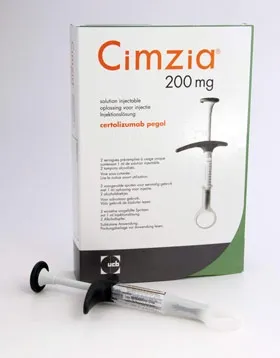
Table of Contents
Patient Information Leaflet
Introduction
Patient Information Leaflet
Cimzia 200 mg solution for injection in pre-filled syringe
Certolizumab pegol
Read all of this leaflet carefully before you start using this medicine, as it contains important information for you.
- Keep this leaflet as you may need to read it again.
- If you have any questions, ask your doctor, pharmacist or nurse.
- This medicine has been prescribed for you only, and you should not give it to other people, even if they have the same symptoms as you. It may harm them.
- If you experience any adverse effects, consult your doctor, pharmacist or nurse, even if they are adverse effects not listed in this leaflet. See section 4.
Contents of the leaflet
- What Cimzia is and what it is used for
- What you need to know before using Cimzia
- How to use Cimzia
- Possible side effects
- How to store Cimzia
- Contents of the pack and other information
Your doctor will also provide you with a "Patient Information Card" containing important safety information you should know before receiving Cimzia and during treatment with this medicine. Keep this "Patient Information Card" with you.
1. What Cimzia is and what it is used for
Cimzia contains the active substance certolizumab pegol, a human antibody fragment. Antibodies are proteins that specifically recognize and bind to other proteins. Cimzia binds to a specific protein called tumor necrosis factor α (TNFα). By doing so, Cimzia blocks this TNFα, thereby reducing inflammation in conditions such as rheumatoid arthritis, axial spondyloarthritis, psoriatic arthritis, and plaque psoriasis. Medicines that bind to TNFα are also known as TNF blockers.
Cimzia is used in adults for the following inflammatory diseases:
- rheumatoid arthritis,
- axial spondyloarthritis (including ankylosing spondylitis and non-radiographic axial spondyloarthritis),
- psoriatic arthritis,
- plaque psoriasis.
Rheumatoid arthritis
Cimzia is used to treat rheumatoid arthritis. Rheumatoid arthritis is an inflammatory disease affecting the joints. If you have moderate to severe active rheumatoid arthritis, you may first be given other medications, usually methotrexate. If you do not respond well enough to these medications, you will be given Cimzia in combination with methotrexate to treat your rheumatoid arthritis. If your doctor determines that methotrexate is inappropriate, Cimzia may be given alone.
Cimzia in combination with methotrexate may also be used to treat severe, progressive, active rheumatoid arthritis without prior use of methotrexate or other disease-modifying therapies.
When administered in combination with methotrexate, Cimzia is used to:
- reduce the signs and symptoms of your disease,
- slow down joint damage to cartilage and bone caused by the disease,
- improve your physical function and ability to perform daily activities.
Ankylosing spondylitis and non-radiographic axial spondyloarthritis
Cimzia is used to treat ankylosing spondylitis and non-radiographic axial spondyloarthritis (sometimes referred to as non-radiographic axial spondyloarthritis). These diseases are inflammatory conditions of the spine. If you have ankylosing spondylitis or non-radiographic axial spondyloarthritis, you will first be treated with other medications. If you do not respond well enough to these treatments, you will be given Cimzia to:
- reduce the signs and symptoms of your disease,
- improve your physical function and ability to perform daily activities.
Psoriatic arthritis
Cimzia is used to treat active psoriatic arthritis. Psoriatic arthritis is an inflammatory joint disease, usually accompanied by psoriasis. If you have active psoriatic arthritis, you will first be given other medications, usually methotrexate. If you do not respond well enough to these medications, you will be given Cimzia in combination with methotrexate to:
- reduce the signs and symptoms of your disease,
- improve your physical function and ability to perform daily activities.
If your doctor determines that methotrexate is not an appropriate treatment, Cimzia may be given alone.
Plaque psoriasis
Cimzia is used to treat moderate to severe plaque psoriasis. Plaque psoriasis is an inflammatory skin disease that may also affect the scalp and nails.
Cimzia is used to reduce skin inflammation and other signs and symptoms of the disease.
2. What you need to know before using Cimzia
- If you are ALLERGIC (hypersensitive) to certolizumab pegol or to any of the other components of this medicine (listed in section 6).
- If you have a serious infection, including active TUBERCULOSIS (TB).
- If you have moderate to severe HEART FAILURE. Inform your doctor if you have ever had or currently have serious heart problems.
Warnings and precautions
Before starting treatment with Cimzia, inform your doctor if:
Allergic reactions
- You experience ALLERGIC REACTIONS such as chest tightness, difficulty breathing, dizziness, swelling, or rash, stop using Cimzia and contact your doctor IMMEDIATELY. Some of these reactions may occur after the first dose of Cimzia.
- You have ever had an allergic reaction to latex.
Infections
- You have had RECURRENT or OPPORTUNISTIC INFECTIONS or other conditions that increase your risk of infections (such as treatment with immunosuppressants, which are medicines that may reduce your ability to fight infections).
- You currently have any infection or develop symptoms such as fever, wounds, fatigue, or dental problems. While being treated with Cimzia, you may be more likely to get an infection, including serious infections, or in rare cases, life-threatening infections.
- Cases of TUBERCULOSIS (TB) have been reported in patients receiving Cimzia. Your doctor will examine you for signs or symptoms of tuberculosis before starting treatment with Cimzia. This will include a thorough medical history, chest X-ray, and tuberculin skin test. These tests must be recorded on your “Patient Information Card.” If you are diagnosed with latent (inactive) tuberculosis, you may need to receive appropriate anti-tuberculosis treatment before starting Cimzia. In rare cases, tuberculosis may develop during treatment, even if you have received preventive treatment for tuberculosis. It is very important that you inform your doctor if you have ever had tuberculosis or have been in contact with someone who has tuberculosis. If symptoms of tuberculosis (persistent cough, weight loss, general malaise, low-grade fever) or any other infection appear during or after treatment with Cimzia, contact your doctor immediately.
- You are at risk of infection with the HEPATITIS B VIRUS (HBV), are a carrier of HBV, or have an active HBV infection. Cimzia may increase the risk of HBV reactivation in carriers of this virus. If this occurs, you must stop using Cimzia. Your doctor should test you for HBV before starting treatment with Cimzia.
Heart failure
- If you have mild HEART FAILURE and are being treated with Cimzia, your doctor should closely monitor your heart condition. It is important to inform your doctor if you have ever had or currently have serious heart problems. If you develop new symptoms of heart failure or your current symptoms worsen (e.g., difficulty breathing or swelling in the feet), contact your doctor immediately. Your doctor will decide whether you should stop treatment with Cimzia.
Cancer
- Although rare, cases of certain types of CANCER have been observed in patients treated with Cimzia or other TNF blockers. People with more severe rheumatoid arthritis or who have had the disease for a long time may have a higher than average risk of developing lymphoma, a type of cancer affecting the lymphatic system. If you are treated with Cimzia, your risk of developing lymphoma or other types of cancer may increase. In addition, rare cases of non-melanoma skin cancer have been observed in patients using Cimzia. Inform your doctor if new skin lesions appear or if existing lesions change in appearance during or after treatment with Cimzia.
- Cases of cancer, including rare types, have occurred in children and adolescents taking TNF blockers, some of which resulted in death (see below “Use in children and adolescents”).
Other diseases
- Patients with chronic obstructive pulmonary disease (COPD) or who smoke heavily may have an increased risk of developing cancer during treatment with Cimzia. If you have COPD or smoke heavily, consult your doctor on whether treatment with a TNF blocker is appropriate for you.
- If you have a neurological disease such as multiple sclerosis, your doctor will decide whether you should use Cimzia.
- In some patients, the body may be unable to produce enough blood cells that help fight infections or those that help stop bleeding. If you have persistent fever, bruising easily, or bleeding excessively, or if you appear very pale, contact your doctor immediately. Your doctor may decide to discontinue treatment with Cimzia.
- Although rare, symptoms of a disease called lupus (e.g., persistent rash, fever, joint pain, and fatigue) may appear. Contact your doctor if you experience these symptoms. Your doctor may decide to stop treatment with Cimzia.
Vaccines
- Inform your doctor if you have received or are scheduled to receive any vaccine. Some vaccines (live vaccines) should not be given while you are being treated with Cimzia.
- Some vaccines may cause infections. If you received Cimzia during pregnancy, your baby may have an increased risk of such infections for up to approximately five months after your last dose during pregnancy. It is important to inform your baby’s doctors and other healthcare professionals about your Cimzia treatment so they can determine when your baby should be vaccinated.
Surgery or dental procedures
- Inform your doctor if you are scheduled for surgery or a dental procedure. Inform the surgeon or dentist performing the procedure that you are being treated with Cimzia by showing them your Patient Information Card.
Children and adolescents
The use of Cimzia is not recommended in patients under 18 years of age.
Use of Cimzia with other medicines
You MUST NOT use Cimzia if you are taking the following medicines for rheumatoid arthritis:
- Anakinra
- Abatacept
If you have any doubts, consult your doctor.
Cimzia may be used together with:
- methotrexate,
- corticosteroids, or
- pain medications, including non-steroidal anti-inflammatory drugs (also known as NSAIDs).
Inform your doctor or pharmacist if you are taking, have recently taken, or might need to take any other medicines.
Pregnancy and breastfeeding
If you are pregnant or breastfeeding, think you may be pregnant, or are planning to become pregnant, consult your doctor or pharmacist before using this medicine.
Cimzia should only be used during pregnancy if clearly necessary. If you are a woman of childbearing potential, discuss with your doctor the use of appropriate contraceptive measures while using Cimzia. For women planning to become pregnant, contraception should be considered for 5 months after the last dose of Cimzia.
If you received Cimzia during pregnancy, your baby may have an increased risk of infection. It is important to inform your baby’s doctors and other healthcare professionals about your Cimzia treatment before your baby receives any vaccinations (for more information, see the section on vaccines).
Cimzia may be used during breastfeeding.
Driving and using machines
The effect of Cimzia on the ability to drive and use machines is minor. Dizziness (including dizziness with spinning sensation, blurred vision, and fatigue) may occur after using Cimzia.
Cimzia contains sodium acetate and sodium chloride
This medicine contains less than 23 mg (1 mmol) of sodium per 400 mg dose and is therefore considered essentially “sodium-free”.
3. How to use Cimzia
Cimzia will be administered to you in a hospital or clinic by your doctor or nurse.
Rheumatoid arthritis
- The starting dose for adults with rheumatoid arthritis is 400 mg given at weeks 0, 2, and 4.
- This is followed by a maintenance dose of 200 mg every two weeks. If you respond to the medicine, your doctor may prescribe you an alternative maintenance dose of 400 mg every 4 weeks.
- Treatment with methotrexate should be continued during treatment with Cimzia. If your doctor determines that methotrexate is inappropriate, Cimzia may be given alone.
Axial spondyloarthritis
- The starting dose for adults with axial spondyloarthritis is 400 mg given at weeks 0, 2, and 4.
- This is followed by a maintenance dose of 200 mg every two weeks (starting at week 6) or 400 mg every 4 weeks (starting at week 8), as directed by your doctor. If you have received Cimzia for at least 1 year and respond to the medicine, your doctor may prescribe you a reduced maintenance dose of 200 mg every 4 weeks.
Psoriatic arthritis
- The starting dose for adults with psoriatic arthritis is 400 mg given at weeks 0, 2, and 4.
- This is followed by a maintenance dose of 200 mg every two weeks. If you respond to the medicine, your doctor may prescribe you an alternative maintenance dose of 400 mg every 4 weeks.
- Treatment with methotrexate should be continued during treatment with Cimzia. If your doctor determines that methotrexate is inappropriate, Cimzia may be given alone.
Plaque psoriasis
- The initial dose for adults with plaque psoriasis is 400 mg every 2 weeks, administered at weeks 0, 2, and 4.
- This is followed by a maintenance dose of 200 mg every 2 weeks or 400 mg every 2 weeks, as directed by your doctor.
How to use Cimzia
Cimzia is normally administered by a specialist doctor or healthcare professional. Cimzia will be given as an injection (200 mg dose) or two injections (400 mg dose) under the skin (subcutaneously, abbreviated: SC). It is usually injected into the thigh or abdomen. However, it should not be injected into areas where the skin is red, bruised, or hardened.
Instructions for self-injection of Cimzia
After appropriate training, your doctor may allow you to self-inject Cimzia. Please read the instructions on how to inject yourself with Cimzia at the end of this leaflet.
If your doctor has determined that you may self-inject this medicine, you must have follow-up visits with your doctor before continuing self-injection:
- after 12 weeks if you have rheumatoid arthritis, axial spondyloarthritis, or psoriatic arthritis; or
- after 16 weeks if you have plaque psoriasis.
This is so your doctor can determine whether Cimzia is working for you or whether another treatment should be considered.
If you use more Cimzia than you should
If your doctor has determined that you may self-inject this medicine and you accidentally inject Cimzia more frequently than prescribed, you must inform your doctor. Always carry your Patient Information Card and the medicine carton with you, even if it is empty.
If you forget to use Cimzia
If your doctor has determined that you may self-inject this medicine and you forget to administer an injection, you should inject the next dose of Cimzia as soon as you remember. Then, continue injecting the subsequent doses as originally instructed. Afterwards, speak with your doctor and follow their advice for subsequent doses.
If you stop using Cimzia
Do not stop treatment with Cimzia without first consulting your doctor.
If you have any further questions about the use of this medicine, ask your doctor, pharmacist, or nurse.
4. Possible adverse effects
Like all medicines, this medicine can cause adverse effects, although not everyone will experience them.
INFORM YOUR DOCTOR IMMEDIATELY if you notice any of the following adverse effects:
- severe rash, skin eruption or other signs of allergic reaction (urticaria)
- swollen face, hands, feet (angioedema)
- breathing or swallowing difficulties (multiple causes for these symptoms)
- shortness of breath (dyspnea) during exertion or when lying down, or swelling of the feet (heart failure)
- symptoms of blood disorders such as persistent fever, bruising, bleeding, paleness (pancytopenia, anemia, low platelet count, low white blood cell count)
- severe skin rashes. These may appear as macules or circular red patches resembling targets, often with central blisters on the trunk, skin peeling, mouth ulcers, throat, nose, genitals and eyes, and may be preceded by fever and flu-like symptoms (Stevens-Johnson syndrome).
INFORM YOUR DOCTOR AS SOON AS POSSIBLE if you notice any of the following adverse effects:
- signs of infection such as fever, malaise, wounds, dental problems, burning sensation when urinating
- feeling of weakness or fatigue
- cough
- tingling
- numbness
- double vision
- weakness in arms or legs
- bruises or sores that do not heal
The symptoms described above may be due to some of the adverse effects listed below, which have been observed with Cimzia:
Common (may affect up to 1 in 10 patients):
- bacterial infections at any site (pus accumulation)
- viral infections (including cold sores, shingles, and influenza)
- fever
- high blood pressure
- rash or itching
- headaches (including migraine)
- sensory disturbances such as numbness, tingling, burning sensation
- feeling of weakness and general malaise
- pain
- blood disorders
- liver problems
- injection site reactions
- nausea
Uncommon (may affect up to 1 in 100 patients):
- allergic diseases including rhinitis and allergic reactions to the medicine (including anaphylactic shock)
- antibodies directed against normal tissue
- cancers of the lymphatic system and blood such as lymphoma and leukemia
- solid tumors
- skin cancers, precancerous skin lesions
- benign (non-cancerous) tumors and cysts (including skin cysts)
- heart problems including weakened heart muscle, heart failure, myocardial infarction, chest discomfort or pressure, abnormal heart rhythm including irregular heartbeats
- edema (swelling in face or legs)
- symptoms of lupus (an immune disease affecting connective tissue): joint pain, skin rashes, photosensitivity, and fever
- inflammation of blood vessels
- sepsis (serious infection that may lead to organ failure, shock, or death)
- tuberculosis infection
- fungal infections (occur when the ability to fight infections is reduced)
- respiratory disorders and inflammation (including asthma, shortness of breath, cough, sinus blockage, pleuritis, or difficulty breathing)
- stomach problems including abdominal fluid accumulation, ulcers (including mouth ulcers), perforation, distension, inflammation, burning, stomach discomfort, dry mouth
- bile-related problems
- muscle problems including increased muscle enzymes
- changes in levels of various salts in the blood
- changes in cholesterol and lipid levels in the blood
- blood clots in veins or lungs
- bleeding or bruising
- changes in blood cell counts, including low red blood cell count (anemia), low platelet count, increased platelet count
- swollen lymph nodes
- flu-like symptoms, chills, altered temperature perception, night sweats, flushing
- anxiety and mood disorders such as depression, appetite disturbances, weight changes
- ringing in the ears
- dizziness (vertigo)
- fainting, including loss of consciousness
- nerve disorders in limbs including symptoms of numbness, tingling, burning sensation, dizziness, tremor
- skin disorders such as new episodes or worsening of psoriasis, skin inflammation (eczema), sweat gland disorders, ulcers, photosensitivity, acne, hair loss, skin color changes, nail separation, dry skin, and wounds
- healing problems
- urinary and kidney problems including altered kidney function, blood in urine, and urinary abnormalities
- menstrual cycle disorders (monthly period) including absence of bleeding, excessive bleeding, or irregular bleeding
- breast disorders
- eye and eyelid inflammation, vision disturbances, tear problems
- increase in certain blood parameters (elevated alkaline phosphatase in blood)
- prolonged coagulation times
Rare (may affect up to 1 in 1,000 patients):
- gastrointestinal cancer, melanoma
- lung inflammation (interstitial lung disease, pulmonary inflammation)
- stroke, blood vessel blockage (arteriosclerosis), poor blood circulation causing numbness and paleness in toes and fingers (Raynaud's phenomenon), purple spots, skin discoloration, small veins near the skin surface becoming visible
- pericarditis (inflammation of the pericardium)
- cardiac arrhythmia
- spleen enlargement
- increased red blood cell mass
- abnormal white blood cell morphology
- gallstone formation
- kidney problems (including nephritis)
- immune disorders such as sarcoidosis (rash, joint pain, fever), serum sickness, inflammation of fatty tissue, angioneurotic edema (swelling of lips, face, throat)
- thyroid disorders (goiter, fatigue, weight loss)
- increased iron levels in the body
- increased blood levels of uric acid (increase)
- suicide attempt, mental disorder, delirium
- inflammation of auditory nerve, vision nerve, or facial nerve, coordination or balance disturbances
- ringing in the ears
- increased gastrointestinal motility
- fistula (a duct connecting one organ to another) (in any area)
- mouth disorders including pain when swallowing
- skin peeling, vesicular disorders, hair texture disorders
- sexual dysfunction
- seizures
- worsening of a disease called dermatomyositis (which presents as muscle weakness accompanied by a skin rash)
- Stevens-Johnson syndrome (a serious skin disease where early symptoms include malaise, fever, headache, and rash)
- inflammatory skin rash (erythema multiforme)
- lichenoid reactions (itchy red-purple skin rash and/or thick white-gray lines in mucous membranes)
Frequency not known (frequency cannot be estimated from available data):
- multiple sclerosis*
- Guillain-Barré syndrome*
- Merkel cell carcinoma (a type of skin cancer)*
- Kaposi's sarcoma (a rare cancer associated with human herpesvirus 8 infection. Kaposi's sarcoma usually presents more frequently as purplish skin lesions).
*These events have been associated with this class of medicines, but the incidence with Cimzia is unknown.
Other adverse effects
When Cimzia has been used to treat other diseases, the following uncommon adverse effects have occurred:
- gastrointestinal stenosis (narrowing of part of the digestive tract)
- gastrointestinal obstruction (blockage of the digestive tract)
- deterioration of general physical health
- spontaneous abortion
- azoospermia (lack of sperm production)
Reporting of adverse effects
If you experience any adverse effect, talk to your doctor, pharmacist, or nurse, even if it is an adverse effect not listed in this leaflet. You may also report them directly through the national reporting system listed in Appendix V.
By reporting adverse effects, you can help provide more information on the safety of this medicine.
5. Storage of Cimzia
Keep this medicine out of the sight and reach of children.
Do not use this medicine after the expiry date stated on the packaging after EXP and on the syringe after EXP. The expiry date refers to the last day of the month indicated.
Store in a refrigerator (2 °C-8 °C).
Do not freeze.
Keep the pre-filled syringe in the outer packaging to protect it from light.
Pre-filled syringes may be stored at room temperature (not above 25 °C) for a single period of up to 10 days, protected from light. At the end of this period, pre-filled syringes must be used or discarded.
Do not use this medicine if the solution is discolored, cloudy, or if particles are visible.
Medicines should not be disposed of via wastewater or household waste. Ask your pharmacist how to dispose of medicines and packaging you no longer need. This will help protect the environment.
6. Contents of the pack and other information
Composition of Cimzia
- The active substance is certolizumab pegol. Each pre-filled syringe contains 200 mg of certolizumab pegol in one ml.
- The other components are: sodium acetate, sodium chloride and water for injections (see “Cimzia contains sodium acetate and sodium chloride” in section 2).
Nature and contents of the container
Cimzia is supplied as a ready-to-use injectable solution in a pre-filled syringe. The solution is clear to opalescent, colourless to slightly yellow.
A Cimzia pack contains:
- two pre-filled syringes with needle guards containing the solution, and
- two alcohol wipes (for cleaning the selected injection sites).
Packs containing 2 pre-filled syringes and 2 alcohol wipes.
Marketing Authorization Holder
UCB Pharma S.A.
Allée de la Recherche 60
B-1070 Brussels
Belgium
Manufacturer
UCB Pharma S.A.
Chemin du Foriest
B-1420 Braine l'Alleud
Belgium
You can request further information on this medicinal product by contacting the local representative of the Marketing Authorization Holder:
Belgium/Belgium/Belgium UCB Pharma SA/NV Tel/Tel: +32-(0)2 559 92 00 | Lithuania UCB Pharma Oy Finland Tel: +358-92 514 4221 (Finland) |
| Luxembourg/Luxembourg UCB Pharma SA/NV Tél/Tel: +32-(0)2 559 92 00 |
Czech Republic UCB s.r.o. Tel: +420-221 773 411 | Hungary UCB Magyarország Kft. Tel.: +36-(1) 391 0060 |
Denmark UCB Nordic A/S Tlf.: +45-32 46 24 00 | Malta Pharmasud Ltd. Tel: +356-21 37 64 36 |
Germany UCB Pharma GmbH Tel: +49-(0) 2173 48 48 48 | Netherlands UCB Pharma B.V. Tel: +31-(0)76-573 11 40 |
Estonia UCB Pharma Oy Finland Tel: +358-92 514 4221 (Finland) | Norway UCB Nordic A/S Tlf: +45-32 46 24 00 |
Greece UCB Α.Ε. Tel: +30-2109974000 | Austria UCB Pharma GmbH Tel: +43-(0)1 291 80 00 |
Spain UCB Pharma S.A. Tel: +34-91 570 34 44 | Poland UCB Pharma Sp. z o.o. Tel.: +48-22 696 99 20 |
France UCB Pharma S.A. Tél: +33-(0)1 47 29 44 35 | Portugal BIAL-Portela & Cª, S.A. Tel: +351-22 986 61 00 |
Croatia Medis Adria d.o.o. Tel: +385-(0)1 230 34 46 | Romania UCB Pharma România S.R.L. Tel: +40-21 300 29 04 |
Ireland UCB (Pharma) Ireland Ltd. Tel: +353-(0)1-46 37 395 | Slovenia Medis, d.o.o. Tel: +386-1 589 69 00 |
Iceland Vistor hf. Tel: +354-535 7000 | Slovakia UCB s.r.o., organizačná zložka Tel: +421-(0)2 5920 2020 |
Italy UCB Pharma S.p.A. Tel: +39-02 300 791 | Finland/Finland UCB Pharma Oy Finland Tel/Puh: +358-92 514 4221 |
Cyprus Lifepharma (Z.A.M.) Ltd Tel: +357-22 05 63 00 | Finland/Finland UCB Pharma Oy Finland Tel/Puh: +358-92 514 4221 |
Latvia UCB Pharma Oy Finland Tel: +358-92 514 4221 (Finland) |

Date of last review of this leaflet: {MM/YYYY}.
Other sources of information
Detailed information on this medicine is available on the European Medicines Agency website: http://www.ema.europa.eu/.
<
This information is intended for healthcare professionals only:
INSTRUCTIONS FOR INJECTING CIMZIA USING A PRE-FILLED SYRINGE WITH NEEDLE SHIELD
The following instructions explain how to inject Cimzia. Read them carefully and follow each step exactly. Do not mix the contents of the syringe with any other medicine.
Below is a diagram of the pre-filled syringe with needle shield.
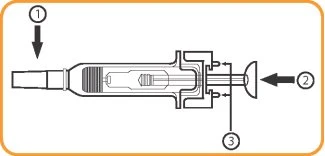
Figure 1
1: Needle cap
2: Plunger head
3: Needle shield activation clips
For each injection, you will need:
- 1 pre-filled syringe with needle shield
- 1 alcohol swab
- Preparation
- Remove the Cimzia pack from the refrigerator.
- If the seal(s) is missing or broken – do not use and contact your pharmacist.
- Remove the following items from the Cimzia box and place them on a clean, flat surface:
- One or two pre-filled syringes, depending on your prescribed dose.
- One or two alcohol swabs
- Check the expiry date on the pack and the tray. Do not use Cimzia after the date stated on the carton after "EXP" and on the tray after "EXP". The expiry date refers to the last day of the month indicated.
- Allow the pre-filled syringe to reach room temperature. This will take about 30 minutes. This will help reduce discomfort during injection.
- Do not heat the pre-filled syringe – allow it to warm up on its own.
- Remove the pre-filled syringe from the tray by holding it by the barrel as shown in Figure 2. Do not touch the needle shield activation clips (marked as 3 in Figure 1) during removal (as shown in Figure 3) to prevent premature activation of the needle shield.
- Remove the Cimzia pack from the refrigerator.
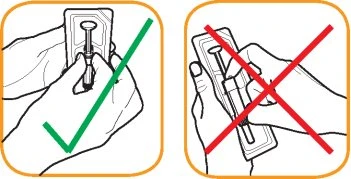
Figure 2 Figure 3
- Do not use the syringe if it has been dropped without its packaging.
- Do not remove the cap until you are ready to administer the injection.
- Wash your hands thoroughly.
-
Choosing and preparing the injection site
- Select an area on your thigh or abdomen.
- Each new injection should be given in a different area from the previous injection.
- Never inject into an area where the skin is red, bruised, or hardened.
- Clean the injection site with the provided alcohol swab using a circular motion from the center outward.
- Do not touch this area again before the injection.
- Do not inject until the skin is dry.
-
Injection
- Do not shake the syringe.
Check the medicine in the syringe barrel.
-
- Do not use this medicine if the solution is discolored, cloudy, or if you see particles in it.
- Small air bubbles may be visible – this is normal. Injecting a solution containing small air bubbles subcutaneously is harmless.
- Remove the needle cap by pulling it straight off. Be careful not to touch the needle or let it touch any surface. Do not touch the needle shield activation clips (marked as 3 in Figure 1) during removal to prevent premature covering of the needle by the shield.
- Inject within 5 minutes after removing the cap.
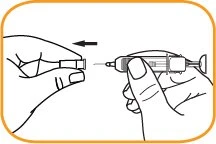
- Gently pinch the cleaned area of skin with one hand and hold it firmly.
- With the other hand, hold the syringe at a 45-degree angle to the skin.
- With a short, quick motion, insert the entire needle into the skin.
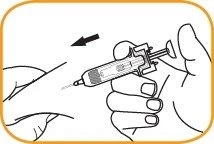
- Release the skin area held with the first hand.
- Push the plunger head until the full dose has been administered and the plunger head is between the needle shield activation clips. It may take about 10 seconds to empty the syringe.
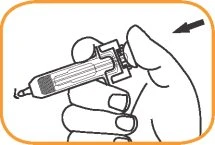
- When the syringe is empty, carefully remove the needle from the skin at the same angle used for insertion.
- Remove your thumb from the plunger head. The empty syringe and needle will automatically retract into the barrel and become enclosed.
- The needle safety device will not activate until the full dose has been administered.
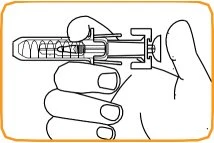
- Use a small piece of cotton to apply gentle pressure to the injection site for a few seconds.
- Do not rub the injection site.
- If needed, you may cover the injection site with an adhesive bandage.
- After use
- Do not reuse the syringe.
- Any unused product(s) or waste material must be disposed of according to local requirements.
- If you need to perform a second injection as prescribed by your doctor, repeat the injection process starting at step 2.