Cidine 1 mg tablets
Spain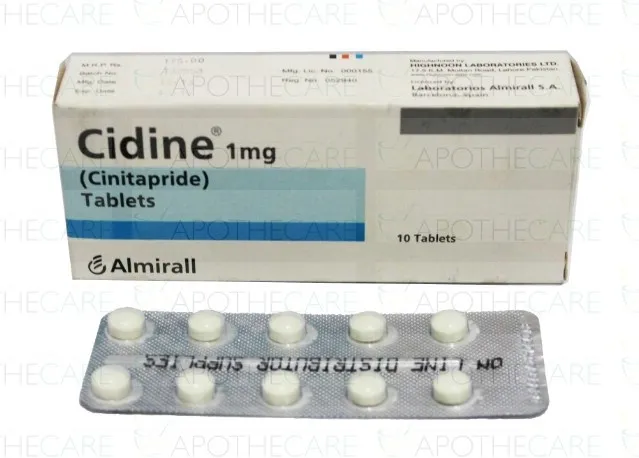
Table of Contents
- Patient Information Leaflet
- Introduction
- **Read the entire leaflet carefully before you start taking this medicine, as it contains important information for you.**
- **Package leaflet:**
- 1. What Cidine 1 mg Tablets are and what they are used for
- 2. What you need to know before taking Cidine 1 mg Tablets
- **Do not take Cidine 1 mg Tablets**
- **Warnings and precautions**
- **Taking Cidine 1 mg Tablets with other medicines**
- **Taking Cidine 1 mg Tablets with food, drinks, and alcohol**
- **Pregnancy and lactation**
- **Driving and operating machinery**
- **Cidine 1 mg Tablets contain lactose**
- 3. How to take Cidine 1 mg Tablets
- **Use in children and adolescents**
- **Use in adults (over 20 years of age)**
- **If you take more Cidine 1 mg Tablets than you should**
- **If you forget to take Cidine 1 mg Tablets**
- 4. Possible adverse effects
- **Uncommon (may affect up to 1 in 100 people)**
- **Frequency unknown (cannot be estimated from the available data)**
- 5. Storage of Cidine 1 mg Tablets
- 6. Contents of the pack and other information
- **Composition of Cidine 1 mg Tablets**
- **Appearance of the product and contents of the pack**
- **Marketing Authorization Holder and Manufacturing Responsible**
- **Marketing Authorization Holder**
- **Manufacturer**
Patient Information Leaflet
Introduction
Package leaflet: Information for the patient
Cidine 1 mg Tablets
Cinitapride
Read the entire leaflet carefully before you start taking this medicine, as it contains important information for you.
- Keep this leaflet, as you may need to read it again.
- If you have any questions, consult your doctor or pharmacist.
- This medicine has been prescribed for you only, and you should not give it to other
people, even if they have the same symptoms as you, because it may harm them.
- If you experience any adverse effects, consult your doctor or pharmacist, even if they are
adverse effects not listed in this leaflet.
Package leaflet:
- What Cidine 1 mg Tablets are and what they are used for
- What you need to know before taking Cidine 1 mg Tablets
- How to take Cidine 1 mg Tablets
- Possible side effects
- How to store Cidine 1 mg Tablets
- Contents of the pack and other information
1. What Cidine 1 mg Tablets are and what they are used for
Cidine belongs to a group of medicines called prokinetics, which work by stimulating gastrointestinal motility.
Cidine is indicated for the treatment of gastroesophageal reflux to enhance the effect of proton pump inhibitors (medicines that reduce gastric acid production) and for mild-to-moderate functional disorders of gastrointestinal motility.
2. What you need to know before taking Cidine 1 mg Tablets
Do not take Cidine 1 mg Tablets
- if you are allergic to cinitapride or to any of the other ingredients of this medicine (listed in section 6).
- if you have gastrointestinal bleeding, obstruction, or perforation.
- if you have a history of neuroleptic-induced tardive dyskinesia (repetitive, involuntary movements of the head, neck, trunk, or limbs that may appear months after discontinuation of treatment).
Warnings and precautions
Consult your doctor or pharmacist before starting to take Cidine 1 mg Tablets
- if you are an elderly patient and take the medicine for a prolonged period of time, as it may cause tardive dyskinesia (rapid, repetitive movements of the head, neck, trunk, or limbs that may appear months after treatment has been discontinued).
Taking Cidine 1 mg Tablets with other medicines
Inform your doctor or pharmacist if you are taking, have recently taken, or might need to take any other medicines.
Cidine may increase the neurological effects of certain medicines, especially those used to treat nervous system disorders, insomnia, and moderate to severe pain relief.
Cidine may reduce the effect of digoxin, a medicine used to treat heart failure.
On the other hand, some medicines may reduce the action of Cidine. This is the case with certain medicines used to treat Parkinson's disease, abdominal pain, or respiratory diseases such as chronic bronchitis.
Taking Cidine 1 mg Tablets with food, drinks, and alcohol
Cidine must not be taken with alcohol, as alcohol enhances its sedative effects.
Pregnancy and lactation
If you are pregnant or breastfeeding, think you may be pregnant, or are planning to become pregnant, consult your doctor or pharmacist before using this medicine.
Pregnancy
There are no data regarding the use of cinitapride in pregnant women. Animal studies do not suggest any direct or indirect adverse effects in terms of reproductive toxicity. As a precautionary measure, it is preferable to avoid using cinitapride during pregnancy.
Your doctor will decide whether or not you should take Cidine.
Lactation
It is unknown whether the medicine passes into breast milk. As a precautionary measure, it is preferable to avoid using this medicine during breastfeeding.
Driving and operating machinery
Do not drive or operate hazardous machinery during treatment with Cidine.
Cidine 1 mg Tablets contain lactose
This medicine contains lactose. If your doctor has informed you of an intolerance to certain sugars, consult with him before taking this medicine.
This medicine contains less than 23 mg of sodium (1 mmol) per tablet; this is essentially "sodium-free".
3. How to take Cidine 1 mg Tablets
Follow exactly the instructions for use of this medicine provided by your doctor. If you have any doubts, consult your doctor or pharmacist again.
Remember to take your medicine.
Use in children and adolescents
The administration of Cidine is not recommended in children and adolescents due to lack of experience with use in these age groups.
Use in adults (over 20 years of age)
The recommended dose for adults (over 20 years of age) is 1 tablet, 3 times daily, 15 minutes before each meal.
It is neither more effective nor advisable to increase the recommended doses.
Your doctor will determine the duration of your treatment with Cidine. Do not discontinue treatment prematurely.
The tablets should be taken orally with a glass of water.
If you feel that the effect of Cidine is too strong or too weak, inform your doctor or pharmacist.
If you take more Cidine 1 mg Tablets than you should
If you have taken more Cidine than you should, consult your doctor or pharmacist immediately or call the Toxicology Information Service at telephone number: 915 620 420, indicating the medication and the amount taken.
Symptoms of overdose may include: drowsiness, disorientation, and extrapyramidal reactions (involuntary muscle movements of the face, neck, and tongue), which normally disappear upon discontinuation of treatment.
If you forget to take Cidine 1 mg Tablets
Do not take a double dose to make up for missed doses. Take the missed dose as soon as you remember, then continue with your regular dosing schedule. However, if it is almost time for your next dose, do not take the missed dose and wait until the scheduled time to take the next dose.
If you have any further questions about the use of this medicine, ask your doctor or pharmacist.
4. Possible adverse effects
Like all medicines, Cidine can cause adverse effects, although not everyone will experience them.
Adverse effects may include:
Uncommon (may affect up to 1 in 100 people)
Some patients may experience mild sedation or drowsiness.
Frequency unknown (cannot be estimated from the available data)
- Extrapyramidal reactions (involuntary muscle movements of the face, neck, and tongue) may occur.
- Skin reactions may appear, such as rash, itching, angioedema (swelling of lips and tongue that may affect the larynx), gynecomastia (excessive development of breast tissue), and galactorrhea (milk secretion).
Reporting of adverse reactions
If you experience any type of adverse reaction, consult your doctor, pharmacist, or nurse, even if it is a possible adverse reaction not listed in this leaflet. You can also report them directly via the Spanish Pharmacovigilance System for Human Medicines: https://www.notificaram.es. By reporting adverse reactions, you can help provide more information on the safety of this medicine.
5. Storage of Cidine 1 mg Tablets
Keep this medicine out of the sight and reach of children.
No special storage conditions are required.
Do not use this medicine after the expiry date stated on the packaging after Exp. The expiry date is the last day of the month indicated.
Medicines must not be disposed of via wastewater or household waste. Dispose of unused medicines and their containers at the Sigre Point in your pharmacy. If you have any doubts, ask your pharmacist how to dispose of medicines and containers you no longer need. This will help protect the environment.
6. Contents of the pack and other information
Composition of Cidine 1 mg Tablets
- The active substance is cinitapride (as acid tartrate). Each tablet contains 1 mg of cinitapride.
- The other components are sodium carboxymethyl starch (from potato), microcrystalline cellulose, anhydrous lactose, colloidal silicon dioxide, magnesium stearate (E-470b).
Appearance of the product and contents of the pack
Cidine 1 mg Tablets are round, bevelled, light yellow tablets, scored on one side. Each box contains 50 tablets.
Marketing Authorization Holder and Manufacturing Responsible
Marketing Authorization Holder
Almirall, S.A.
General Mitre, 151
08022 - Barcelona (Spain)
Manufacturer
Industrias Farmacéuticas Almirall, S.A.
Ctra. de Martorell, 41-61
08740 Sant Andreu de la Barca - Barcelona (Spain)
Date of the most recent revision of this leaflet: March 2019
Detailed and up-to-date information on this medicinal product is available on the website of the Spanish Agency for Medicines and Health Products (AEMPS) http://www.aemps.gob.es/