Cerdelga 84 mg hard capsules
Spain
Table of Contents
Package leaflet: Information for the user
Introduction
Package leaflet: information for the patient
Cerdelga 21 mg hard capsules
Cerdelga 84 mg hard capsules
eliglustat
This medicinal product is subject to additional monitoring, which will enable rapid identification of new information on its safety. You can help by reporting any adverse reactions you may experience. Information on how to report adverse reactions is included at the end of section 4.
Read this entire leaflet carefully before you start taking this medicine, because it contains important information for you.
- Keep this leaflet, as you may need to read it again.
- If you have any questions, ask your doctor or pharmacist.
- This medicine has been prescribed for you only; do not pass it on to other people, even if they have the same symptoms as you, since it could harm them.
- If you experience any adverse reactions, consult your doctor or pharmacist, even if they are not listed in this leaflet. See section 4.
Leaflet contents
- What Cerdelga is and what it is used for
- What you need to know before taking Cerdelga
- How to take Cerdelga
- Possible side effects
- How to store Cerdelga
- Contents of the pack and other information
1. What Cerdelga is and what it is used for
Cerdelga contains the active substance eliglustat and is used for the long-term treatment of adults and children aged 6 years and older who weigh at least 15 kg with type 1 Gaucher disease.
When used in children, Cerdelga is intended for those whose disease is controlled by enzyme replacement therapy. Your doctor will determine whether Cerdelga is suitable for you or your child before starting treatment, using a simple laboratory test.
Type 1 Gaucher disease is a rare inherited disorder in which the body does not properly break down a substance called glucosylceramide. As a result, glucosylceramide accumulates in the spleen, liver, and bones. This buildup prevents these organs from functioning properly. Cerdelga contains the active substance eliglustat, which reduces the production of glucosylceramide and thereby prevents its accumulation. In turn, this helps the affected organs to function better.
There are differences among individuals in the rate at which the body breaks down this medicine. Therefore, the amount of medicine in the blood may vary from one patient to another, which may affect how a patient responds to treatment. Cerdelga is intended for use in patients who break down the medicine at a normal rate (known as intermediate and rapid metabolizers) or at a slow rate (known as poor metabolizers).
Type 1 Gaucher disease is a lifelong condition, so you must continue taking this medicine according to your doctor's instructions to achieve the maximum benefit from treatment.
2. What you need to know before taking Cerdelga
Do not take Cerdelga
- If you are allergic to eliglustat or any of the other ingredients of this medicine (listed in section 6).
- If you are an intermediate or extensive metabolizer and are taking medications known as strong or moderate CYP2D6 inhibitors (such as quinidine and terbinafine) in combination with strong or moderate CYP3A inhibitors (such as erythromycin and itraconazole). The combination of these medicines will interfere with your body's ability to break down Cerdelga and may result in higher levels of the active substance in your blood (see section “Other medicines and Cerdelga” for a comprehensive list of medicines).
- If you are a poor metabolizer and are taking medicines known as strong CYP3A inhibitors (for example: itraconazole). These types of medicines will interfere with your body's ability to metabolize Cerdelga, which may result in higher levels of the active substance in your blood (see section “Other medicines and Cerdelga” for a comprehensive list of medicines).
- If you are an extensive metabolizer and have severely impaired liver function.
- If you are an extensive metabolizer with mild or moderate impairment of liver function while taking a strong or moderate CYP2D6 inhibitor.
Warnings and precautions
Talk to your doctor or pharmacist before starting to take Cerdelga if:
- you are currently receiving treatment with any of the medicines listed in section “Other medicines and Cerdelga” or are about to start such treatment.
- you have had a myocardial infarction or heart failure.
- you have a slow heart rate.
- you have an irregular or abnormal heart rhythm, including a heart condition called long QT syndrome.
- you have other heart problems.
- you are taking an antiarrhythmic medicine (used to treat irregular heartbeat) such as quinidine, amiodarone, or sotalol.
- you are an extensive metabolizer with moderately impaired liver function.
- you are an intermediate or poor metabolizer with any degree of impaired liver function.
- you are an intermediate or poor metabolizer with impaired kidney function.
- you are a patient with end-stage renal disease (ESRD).
Children and adolescents
Cerdelga is not intended for use in children under 6 years of age or weighing less than 15 kg.
Other medicines and Cerdelga
Tell your doctor or pharmacist if you are taking, have recently taken, or might need to take any other medicines.
Medicines that must not be taken together with Cerdelga
Cerdelga must not be used with certain types of medicines. These medicines may interfere with the body's ability to break down Cerdelga, leading to higher levels of Cerdelga in the blood. These medicines are known as strong or moderate CYP2D6 inhibitors and strong or moderate CYP3A inhibitors. There are many medicines in these categories, and depending on how your body metabolizes Cerdelga, the effects may vary from person to person. Consult your doctor about these medicines before starting Cerdelga. Your doctor will determine which medicines you can take based on how quickly your body metabolizes eliglustat.
Medicines that may increase the level of Cerdelga in the blood:
- paroxetine, fluoxetine, fluvoxamine, duloxetine, bupropion, moclobemide – antidepressants (used to treat depression)
- dronedarone, quinidine, verapamil – antiarrhythmics (used to treat irregular heartbeat)
- ciprofloxacin, clarithromycin, erythromycin, telithromycin – antibiotics (used to treat infections)
- terbinafine, itraconazol, fluconazole, posaconazole, voriconazole – antifungals (used to treat fungal infections)
- mirabegron – used to treat overactive bladder
- cinacalcet – calcimimetic (used in some dialysis patients and certain cancers)
- atazanavir, darunavir, fosamprenavir, indinavir, lopinavir, ritonavir, saquinavir, tipranavir – antiretrovirals (used to treat HIV infection)
- cobicistat – used to boost the effects of antiretrovirals (used to treat HIV)
- aprepitant – antiemetic (used to reduce vomiting)
- diltiazem – antihypertensive (used to increase blood flow and reduce heart rate)
- conivaptan – diuretic (used to raise low sodium levels in the blood)
- boceprevir, telaprevir – antivirals (used to treat Hepatitis C)
- imatinib – anticancer agent (used to treat cancer)
- amlodipine, ranolazine – used to treat angina
- cilostazol – used to treat leg cramps during walking due to poor blood supply in the legs
- isoniazid – used to treat tuberculosis
- cimetidine, ranitidine – antacids (used to treat indigestion)
- goldenseal – (also known as Hydrastis canadensis), an over-the-counter herbal medicine used to aid digestion.
Medicines that may reduce the level of Cerdelga in the blood:
- rifampicin, rifabutin – antibiotics (used to treat infections)
- carbamazepine, phenobarbital, phenytoin – antiepileptics (used to treat epilepsy and seizures)
- St. John’s wort (also called Hypericum perforatum) – an over-the-counter herbal medicine used to treat depression and other disorders.
Cerdelga may increase the blood levels of the following medicines:
- dabigatran – anticoagulant (used to thin the blood)
- phenytoin – antiepileptic (used to treat epilepsy and seizures)
- nortriptyline, amitriptyline, imipramine, desipramine – antidepressants (used to treat depression)
- phenothiazines – antipsychotics (used to treat schizophrenia and psychosis)
- digoxin – used to treat heart failure and atrial fibrillation
- colchicine – used to treat gout
- metoprolol – used to reduce blood pressure and/or heart rate
- dextromethorphan – antitussive
- atomoxetine – used to treat attention deficit hyperactivity disorder (ADHD)
- pravastatin – used to lower cholesterol and prevent heart disease.
Taking Cerdelga with food and drink
Avoid consuming grapefruit or grapefruit juice, as it may increase the level of Cerdelga in the blood.
Pregnancy, breastfeeding, and fertility
If you are pregnant, think you may be pregnant, or are planning to become pregnant, consult your doctor, who will advise you whether you can take this medicine during pregnancy.
It has been shown that the active substance of this medicine passes into breast milk in very small amounts in animals. Breastfeeding is not recommended during treatment with this medicine. Inform your doctor if you are breastfeeding.
No known effects on fertility at normal doses.
Driving and using machines
Cerdelga may affect the ability to drive and use machines in patients who experience dizziness after taking it.
Cerdelga contains lactose
If your doctor has informed you that you have an intolerance to certain sugars, consult him before taking this medicine.
3. How to take Cerdelga
Follow exactly the instructions for administration of this medicine as given by your doctor or pharmacist. If in doubt, consult your doctor or pharmacist again.
Cerdelga is available in two different strengths. The hard capsules containing 84 mg of eliglustat are greenish-blue and white, and the hard capsules containing 21 mg of eliglustat are completely white. When administering this medicine to your child, make sure they are taking the correct dose.
Cerdelga should be taken orally in children who can swallow the capsule whole.
Cerdelga hard capsules must be swallowed whole with water at the same time each day. They may be taken with or without food. Patients who take the dose twice daily should take one dose in the morning and one dose in the evening.
Do not open, crush, dissolve, or chew the hard capsule before swallowing. If you cannot swallow the capsule whole, inform your doctor.
Mixing the capsule contents (eliglustat powder) with food or drink has not been studied.
Recommended dose for adults
If you are an intermediate metabolizer or extensive metabolizer:
Swallow one 84 mg capsule whole twice daily with water. It may be taken with or without food. Take one capsule in the morning and one in the evening.
If you are a poor metabolizer:
Swallow one 84 mg capsule whole once daily with water. It may be taken with or without food. Take one capsule at the same time each day.
Recommended dose for children
The amount of this medicine your child takes depends on their body weight and how they metabolize the drug. Your doctor will determine this before starting treatment.
Weight | If your child is an intermediate or rapid metabolizer | If your child is a poor metabolizer |
Greater than or equal to 50 kg | One 84 mg capsule (green-blue and white) twice daily | One 84 mg capsule (green-blue and white) once daily |
25 kg to less than 50 kg | One 84 mg capsule (green-blue and white) twice daily | Two 21 mg capsules (white) once daily |
15 kg to less than 25 kg | Two 21 mg capsules (white) twice daily | One 21 mg capsule (white) once daily |
Continue taking Cerdelga every day unless your doctor tells you otherwise.
How to dispense the 21 mg hard capsule
Break the foil covering the capsule with your thumb or index finger and push the capsule out.
How to remove the blister from the case for the 84 mg hard capsule
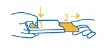
Pressing together with your thumb and index finger at one end of the case (1), gently pull out the blister to open the case (2).
If you take more Cerdelga than you should
If you take more capsules than prescribed, contact your doctor immediately. You may experience dizziness with loss of balance, low heart rate, nausea, vomiting, and drowsiness.
If you forget to take Cerdelga
Take the next capsule at your usual time. Do not take a double dose to make up for missed doses.
If you stop taking Cerdelga
Do not stop treatment with Cerdelga without informing your doctor.
If you have any further questions about the use of this medicine, ask your doctor or pharmacist.
4. Possible adverse effects
Like all medicines, this medicine can cause adverse effects, although not everyone will experience them.
Frequent (may affect up to 1 in 10 people):
- Headache
- Dizziness
- Taste disturbance (dysgeusia)
- Palpitations
- Throat irritation
- Cough
- Heartburn (dyspepsia)
- Stomach pain (upper abdominal pain)
- Diarrhoea
- Nausea
- Constipation
- Abdominal pain
- Acid reflux disease (gastro-oesophageal reflux disease)
- Swelling (abdominal distension)
- Inflammation of the stomach (gastritis)
- Difficulty swallowing (dysphagia)
- Vomiting
- Dry mouth
- Gas (flatulence)
- Dry skin
- Hives (urticaria)
- Joint pain (arthralgia)
- Pain in arms, legs or back
- Tiredness (fatigue)
Reporting of adverse effects
If you experience any adverse effect, consult your doctor or pharmacist, even if it is a possible adverse effect not listed in this leaflet. You may also report them directly through the national reporting system detailed in Appendix V. By reporting adverse effects, you can help provide further information on the safety of this medicine.
5. Storage of Cerdelga
Keep this medicine out of the sight and reach of children.
Do not use this medicine after the expiry date stated on the carton, the pouch, and the blister after "EXP". The expiry date refers to the last day of the month indicated.
No special storage conditions are required.
Medicines must not be disposed of via wastewater or household waste. Ask your pharmacist how to dispose of medicines and packaging that you no longer need. This will help protect the environment.
6. Contents of the pack and other information
Composition of Cerdelga
The active substance is eliglustat (as tartrate).
Cerdelga 21 mg hard capsules
Each hard capsule contains 21 mg of eliglustat.
The other components are:
- In the capsule: microcrystalline cellulose (E460), monohydrate lactose (see section 2 “Cerdelga contains lactose”), hypromellose 15 mPa.S, 2910 and glyceryl dibehenate.
- In the capsule coating: gelatin (E441), potassium and aluminium silicate (E555), titanium dioxide (E171).
- In the printing ink: shellac, black iron oxide (E172), propylene glycol (E1520) and concentrated ammonium solution (E527).
Cerdelga 84 mg hard capsules
Each hard capsule contains 84 mg of eliglustat.
The other components are:
- In the capsule: microcrystalline cellulose (E460), monohydrate lactose (see section 2 “Cerdelga contains lactose”), hypromellose and glyceryl dibehenate.
- In the capsule coating: gelatin (E441), potassium and aluminium silicate (E555), titanium dioxide (E171), yellow iron oxide (E172) and indigotine (E132).
- In the printing ink: shellac, black iron oxide (E172), propylene glycol (E1520) and concentrated ammonium solution (E527).
Appearance of Cerdelga and contents of the pack
Cerdelga 21 mg hard capsules
Cerdelga 21 mg hard capsules have an opaque pearly white cap and an opaque pearly white body, with the inscription “GZ04” printed in black on the capsule.
Pack size of 56 hard capsules in 4 blisters of 14 capsules each.
Cerdelga 84 mg hard capsules
Cerdelga 84 mg hard capsules have an opaque pearly blue-green cap and an opaque pearly white body, with the inscription “GZ02” printed in black on the capsule.
Pack sizes of 14 hard capsules in 1 blister, 56 hard capsules in 4 blisters of 14 capsules each, or 196 hard capsules in 14 blisters of 14 capsules each.
Only some pack sizes may be marketed.
Marketing Authorisation Holder
Sanofi B.V.
Paasheuvelweg 25
1105 BP Amsterdam
The Netherlands
Manufacturer
Cerdelga 21 mg hard capsule
Patheon France
40 Boulevard de Champaret
Bourgoin Jallieu
38300
France
Cerdelga 84 mg hard capsule
Sanofi Winthrop Industrie
30-36 avenue Gustave Eiffel
37100 Tours
France
Sanofi Winthrop Industrie
1 rue de la Vierge
Ambares et Lagrave
33565 Carbon Blanc cedex
France
Genzyme Ireland Ltd
IDA Industrial Park
Old Kilmeaden Road
Waterford
Ireland
For further information about this medicinal product, please contact the local representative of the Marketing Authorisation Holder:
Belgium/Belgium/Belgium/ Luxembourg/Luxembourg Sanofi Belgium Tél/Tel: + 32 2 710 54 00 | Lithuania Swixx Biopharma UAB Tel: +370 5 236 91 40 |
| Hungary SANOFI-AVENTIS Zrt. Tel.: +36 1 505 0050 |
Czech Republic Sanofi s.r.o. Tel: +420 233 086 111 | Malta Sanofi S.r.l. Tel: +39 02 39394275 |
Denmark Sanofi A/S Tlf.: +45 45 16 70 00 | Netherlands Sanofi B.V. Tel: +31 20 245 4000 |
Germany Sanofi-Aventis Deutschland GmbH Tel.: 0800 04 36 996 Tel. from abroad: +49 69 305 70 13 | Norway sanofi-aventis Norge AS Tlf: + 47 67 10 71 00 |
Estonia Swixx Biopharma OÜ Tel: +372 640 10 30 | Austria sanofi-aventis GmbH Tel: + 43 1 80 185 - 0 |
Sanofi-Aventis Mono.prosopia A.E. +30 210 900 1600 | Poland Sanofi Sp. z o.o. Tel.: +48 22 280 00 00 |
Spain sanofi-aventis, S.A. Tel: +34 93 485 94 00 | Portugal Sanofi – Produtos Farmacêuticos, Lda. Tel: +351 21 35 89 400 |
France Sanofi Winthrop Industrie Tél: 0 800 222 555 Call from abroad: +33 1 57 63 23 23 | Romania Sanofi Romania SRL Tel: +40 (0) 21 317 31 36 |
Croatia Swixx Biopharma d.o.o. Tel: +385 1 2078 500 | Slovenia Swixx Biopharma d.o.o. Tel: +386 1 235 51 00 |
Ireland sanofi-aventis Ireland Ltd. T/A SANOFI Tel: +353 (0) 1 403 56 00 Iceland Vistor hf. Sími: +354 535 7000 | Slovakia Swixx Biopharma s.r.o. Tel: +421 2 208 33 600 |
Italy Sanofi S.r.l. Tel: 800 536 389 | Finland Sanofi Oy Puh/Tel: + 358 201 200 300 |
Cyprus C.A. Papaellinas Ltd. Tel: +357 22 741741 | Sweden Sanofi AB Tel: +46 (0)8 634 50 00 |
Latvia Swixx Biopharma SIA Tel: +371 6 616 47 50 |
Date of the most recent review of this leaflet:
Other sources of information
Detailed information on this medicine is available on the website of the European Medicines Agency: http://www.ema.europa.eu. There are also links to other websites about rare diseases and orphan medicinal products.