Cemidon B6 150 mg/25 mg tablets
Spain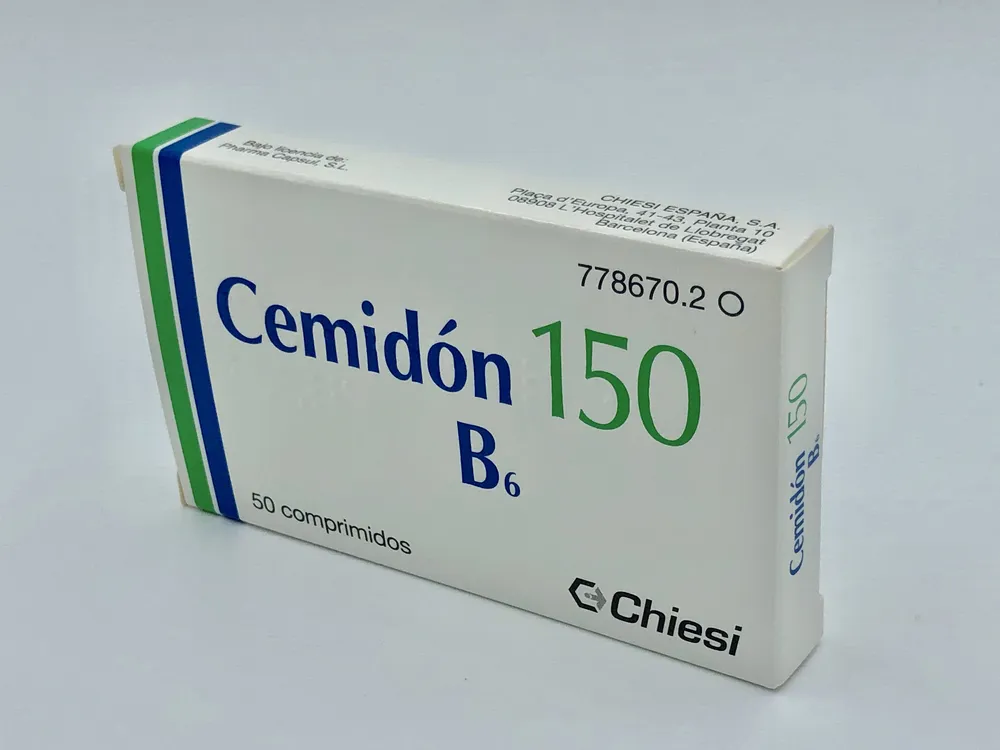
Table of Contents
Package Leaflet: Information for the User
Introduction
Package leaflet: information for the patient
Cemidon B6 150 mg/25 mg tablets
isoniazid/pyridoxine
Read the entire leaflet carefully before you start taking this medicine, as it contains important information for you.
-
Keep this leaflet. You may need to read it again.
-
If you have any questions, ask your doctor or pharmacist.
-
This medicine has been prescribed for you only, and you should not give it to others, even if they have the same symptoms as you, because it could harm them.
- If you experience any adverse effects, consult your doctor or pharmacist, even if they are adverse effects not listed in this leaflet. See section 4.
Leaflet Contents
- What Cemidon B6 is and what it is used for
- What you need to know before taking Cemidon B6
- How to take Cemidon B6
- Possible side effects
- How to store Cemidon B6
- Contents of the pack and other information
1. What Cemidon B6 is and what it is used for
Cemidon B6 is a combination of two medicinal substances. It contains isoniazid, an antibiotic belonging to the group of antituberculosis medicines, and vitamin B6.
Antibiotics are used to treat bacterial infections and are not effective against viral infections such as influenza or the common cold. It is important to follow your doctor's instructions regarding dosage, administration, and duration of treatment. Do not store or reuse this medication. If you have any antibiotic left over after completing treatment, return it to the pharmacy for proper disposal. Do not dispose of medicines down the drain or in the trash. |
Cemidon B6 is indicated for the treatment of tuberculosis and, exceptionally, for the treatment of infections caused by atypical mycobacteria.
In addition, it is used for the prevention of:
- Asymptomatic acute infection identified by tuberculin skin test.
- Individuals at risk of reactivation of tuberculosis.
- Contact with a person who has tuberculosis.
2. What you need to know before taking Cemidon B6
Do not take Cemidon B6
- If you are allergic to the active substances or to any of the other ingredients of this medicine (listed in section 6).
- If you have severe liver problems.
- If you have ever had a severe skin rash, skin peeling, blisters, and/or mouth sores after taking Cemidon.
Warnings and precautions
Talk to your doctor or pharmacist before starting to take Cemidon B6.
Take special care:
- If you have a history of seizures or neurological problems. Medications to prevent seizures should be administered if there is a risk.
- If you have any liver function disorders. In such case, your doctor will monitor your liver function weekly during the first month and then monthly throughout treatment. If any liver injury occurs, your doctor will discontinue treatment.
- If you have alcohol addiction.
- If you have any kidney disease. Your doctor will prescribe the most appropriate dose for you.
- Serious skin reactions have been reported, such as: Stevens-Johnson syndrome (SJS), toxic epidermal necrolysis (TEN), drug reaction with eosinophilia and systemic symptoms (DRESS), acne, lymphadenitis, and acute generalized exanthematous pustulosis (AGEP), associated with Cemidon treatment. Stop taking Cemidon and seek immediate medical attention if you notice any of the symptoms described in section 4.
Other medicines and Cemidon B6
Inform your doctor or pharmacist if you are taking, have recently taken, or might need to take any other medicines, including those not requiring a prescription.
In particular, inform your doctor or pharmacist if you are taking any of the following medicines:
- Medicines used to treat epilepsy (phenytoin, carbamazepine). Your doctor may need to adjust the dose of this medicine.
- Aluminum salts (medicines used to treat gastric acidity). These should be taken at least 2 hours apart from Cemidon.
- Halogenated anesthetics (medicines used during surgical procedures). It is recommended to stop Cemidon treatment one week before surgery and not restart until 15 days after the procedure.
- Oral anticoagulants (medicines used to prevent blood clots) such as acenocoumarol.
- Glucocorticoids (such as prednisolone).
- Ketoconazole (a medicine used to treat fungal infections). Cemidon doses should be spaced at least 12 hours apart. Your doctor may need to adjust the dose of ketoconazole.
- Antibiotic medicines used to treat tuberculosis (pyrazinamide, rifampicin); increased clinical and biological monitoring is required.
Taking Cemidon B6 with food, drinks, and alcohol
Isoniazid interacts with foods containing a substance called tyramine, found in foods such as cheese and red wine. Also, when taken with foods containing histamine (e.g., tuna or other tropical fish), it may cause an exaggerated response with headache, sweating, palpitations, flushing, and low blood pressure. Therefore, your doctor will advise you not to consume foods containing tyramine or histamine during treatment with Cemidon B6.
Pregnancy and breastfeeding
If you are pregnant or breastfeeding, think you might be pregnant, or plan to become pregnant, consult your doctor or pharmacist before using this medicine.
During pregnancy, Cemidon B6 should not be administered except when the potential benefits outweigh the possible risks associated with treatment. Your doctor will make this assessment.
Breastfeeding women should consult their doctor before taking this medicine, as isoniazid passes into breast milk.
Driving and using machines
The effect of Cemidon B6 on the ability to drive and operate machinery is significant because it may cause blurred vision and/or dizziness.
Cemidon B6 150 mg/25 mg tablets contain tartrazine.
This medicine can cause allergic reactions because it contains tartrazine. It may cause asthma, especially in patients allergic to acetylsalicylic acid.
3. How to take Cemidon B6
Follow exactly the instructions for use of this medicine as given by your doctor or pharmacist. If in doubt, consult your doctor or pharmacist again.
The recommended dose is:
Adults and adolescents weighing over 45 kg:
- Treatment:
- 5 mg/kg daily up to a maximum of 300 mg.
- or 10 mg/kg three times per week.
- or 15 mg/kg twice per week.
- Prevention: 300 mg per day, for at least six months.
Use in children and adolescents
- Treatment in children and adolescents weighing equal to or less than 45 kg: the recommended dose is 10 mg/kg per day. The maximum daily dose should not exceed 300 mg.
- Prevention in children under 5 years of age or immunocompromised: 7–15 mg/kg per day (maximum 300 mg), for at least six months.
There are no data available on the use of isoniazid in infants under 3 months of age.
Method of administration
It is recommended that the medicine be taken in the morning on an empty stomach, at least 30 minutes before or 2 hours after meals.
The score line is provided only to divide the tablet if you have difficulty swallowing it whole.
Due to its size, Cemidon tablets are not suitable for the treatment of adults, children, or adolescents who cannot swallow the tablets whole.
If you think that the effect of Cemidon B6 is too strong or too weak, inform your doctor or pharmacist.
If you take more Cemidon B6 than you should
If you have taken more Cemidon B6 than you should, contact your doctor or pharmacist immediately or call the Toxicology Information Service at telephone number: (91) 562 04 20, indicating the medicine and the amount ingested.
After an overdose of this medicine, nausea, vomiting, dizziness, visual disturbances, or hallucinations may occur, along with increased levels of acid in the body, presence of acetone in urine, and high blood sugar levels. With higher doses, respiratory depression and central nervous system depression may occur, potentially leading to seizures and deep coma.
If you forget to take Cemidon B6
Do not take a double dose to make up for forgotten doses.
If you stop taking Cemidon B6
Your doctor will advise you on how long your treatment with Cemidon B6 should last. Do not stop treatment early, even if you feel better. If you stop treatment too soon, the infection may recur.
If you have any further questions about the use of this medicine, ask your doctor or pharmacist.
4. Possible adverse effects
Like all medicines, this medicine can cause adverse effects, although not everyone experiences them.
Uncommon adverse effects (may affect up to 1 in 100 people):
- Hepatitis (inflammation of the liver).
Rare adverse effects (may affect up to 1 in 1,000 people):
- Toxic epidermal necrolysis (a skin reaction causing large areas of blistering and peeling skin, which may become life-threatening), drug reaction with eosinophilia and systemic symptoms (a severe skin reaction characterized by widespread skin rash, swollen lymph nodes, and increased levels of certain blood cells such as eosinophils).
Frequency not known (cannot be estimated from available data):
- Agranulocytosis (reduction in a type of white blood cells, granulocytes), aplastic anemia (failure of the bone marrow to produce enough blood cells), hemolytic anemia (destruction of red blood cells in the blood), eosinophilia (increase in a type of white blood cells, eosinophils),
- Acidosis (increased levels of acid in the body), low blood glucose levels, nicotinic acid deficiency (vitamin B3), anorexia,
- Hyperactivity, euphoria, insomnia, manic episodes, acute delirium, depression,
- Peripheral neuropathy (damage to nerves outside the brain and spinal cord), optic nerve inflammation, seizures,
- Visual disturbances, blurred vision,
- Breast enlargement in men,
- Deafness, tinnitus (ringing in the ears), dizziness,
- Vasculitis (inflammation of blood vessels),
- Liver failure (severe deterioration of liver function), acute liver disorders, liver damage, jaundice (yellowing of the skin and eyes),
- Constipation, dry mouth, nausea, vomiting, pancreatitis (acute inflammation of the pancreas), stomach pain (abdominal pain),
- Lung lesions causing inflammation or scarring of the lungs (interstitial lung disease),
- Acute skin reactions, Stevens-Johnson syndrome (a severe skin reaction with blistering and peeling of the skin, particularly around the mouth, nose, eyes, and genitals), acne, swollen lymph nodes,
- Generalized red, scaly rash with lumps under the skin and blisters,
accompanied by fever. Symptoms usually appear at the beginning of treatment (acute generalized exanthematous pustulosis),
- Systemic lupus erythematosus (a chronic autoimmune disease that may affect joints, skin, brain, lungs, kidneys, and blood vessels), lupus-like syndrome (causing symptoms such as joint inflammation, fatigue, and skin rashes), shoulder-hand syndrome, joint pain, muscle pain,
- Pain or discomfort when urinating,
- Fever,
- Increased liver enzymes.
When treatment is withdrawn or discontinued, the following symptoms may occur: headache, difficulty sleeping, excessive sleepiness, irritability, nervousness.
Reporting of adverse effects
If you experience any type of adverse effect, consult your doctor or pharmacist, even if it is a possible adverse effect not listed in this leaflet. You may also report them directly via the Spanish Pharmacovigilance System for Human Medicines: https://www.notificaram.es. By reporting adverse effects, you can help provide more information on the safety of this medicine.
5. Storage of Cemidon B6
Keep this medicine out of sight and reach of children.
Do not use this medicine after the expiry date stated on the carton after EXP. The expiry date is the last day of the month indicated.
This medicine should be stored in a cool, dry place. Store protected from light at a temperature not exceeding 25°C.
Medicines must not be disposed of via wastewater or household waste. Return empty containers and unused medicines to the SIGRE collection point at your pharmacy. Ask your pharmacist how to dispose of containers and medicines you no longer need. In this way, you will help protect the environment.
6. Contents of the container and additional information
Composition of Cemidon B6
- The active substances are isoniazid and pyridoxine.
- The other components (excipients) are: acacia gum (E-414), hypromellose, talc, magnesium stearate, tartrazine (E-102).
Appearance of the product and contents of the container
Cemidon B6 150 mg/25 mg tablets are biconvex, yellow, scored tablets with an approximate diameter of 8.2 mm.
Each pack contains 50 tablets in a PVC-PVDC-aluminum blister.
Marketing Authorization Holder and Manufacturer
Marketing Authorization Holder
CHIESI ESPAÑA, S.A.U.
Plaça d’Europa, 41-43, 10th floor
08908 L’Hospitalet de Llobregat
Barcelona (Spain)
Manufacturer
LABORATORIOS ALCALA FARMA S.L.
Avenida de Madrid, 82
28802 Alcalá de Henares
Madrid (Spain)
Date of the most recent revision of this leaflet: September 2025
Detailed information about this medicinal product is available on the website of the Spanish Agency of Medicines and Medical Devices (AEMPS): http://www.aemps.gob.es