Cefuroxime Reig Jofre 250 mg powder and solvent for injection solution EFG
Spain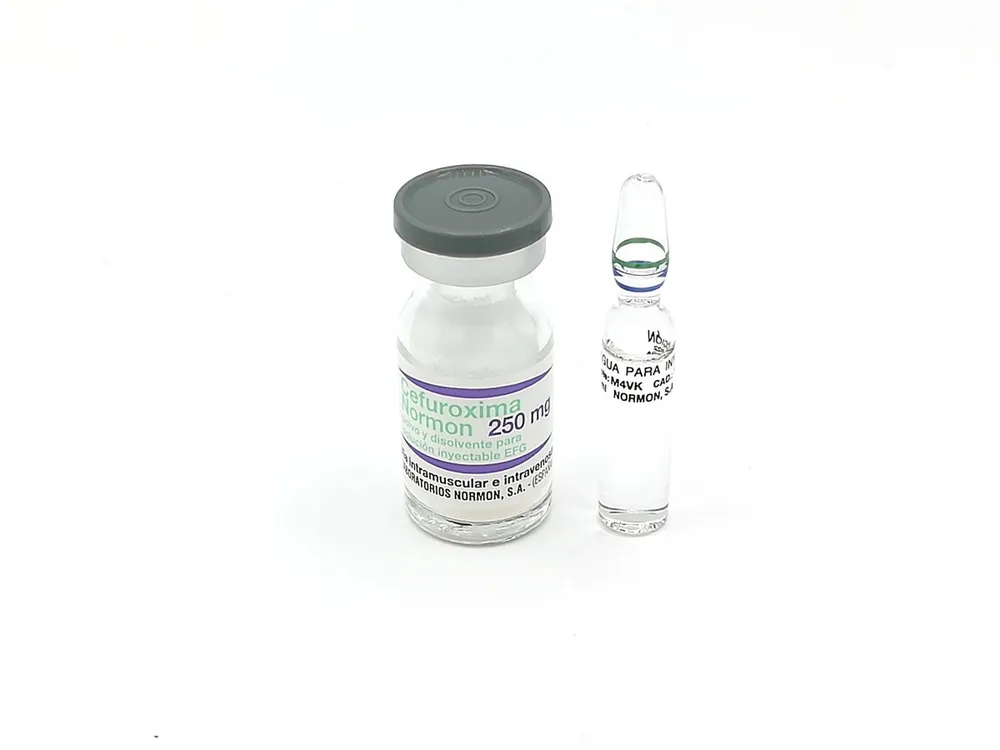
Instructions for Use
Patient Information Leaflet
Introduction
Patient Information Leaflet
Cefuroxime Reig Jofre 250 mg powder and solvent for injectable solution EFG
Read the entire leaflet carefully before you start using this medicine, as it contains important information for you.
- Keep this leaflet as you may need to read it again.
- If you have any questions, consult your doctor, pharmacist or nurse.
- If you experience any adverse effects, consult your doctor or nurse, even if they are effects not listed in this leaflet. See section 4.
Leaflet Contents:
- What Cefuroxime Reig Jofre is and what it is used for
- What you need to know before using Cefuroxime Reig Jofre
- How to use Cefuroxime Reig Jofre
- Possible side effects
- How to store Cefuroxime Reig Jofre
- Contents of the pack and other information
1. What Cefuroxime Reig Jofre is and what it is used for
Cefuroxime Reig Jofre is an antibiotic used in both adults and children. It works by eliminating the bacteria that cause infections. It belongs to a group of medicines called cephalosporins.
Antibiotics are used to treat bacterial infections and are not effective against viral infections such as influenza or the common cold. It is important to follow your doctor's instructions regarding dosage, administration, and duration of treatment. Do not store or reuse this medicine. If you have any leftover antibiotic after completing the treatment, return it to the pharmacy for proper disposal. Medicines must not be disposed of via wastewater or household waste. |
Cefuroxime Reig Jofre is used to treat infections of:
- the lungs or chest,
- the urinary tract,
- the skin and soft tissues,
- the abdomen.
Cefuroxime Reig Jofre is also used to:
- prevent infections during surgical procedures.
2. What you need to know before using Cefuroxima Reig Jofre
Do not use Cefuroxima:
- if you are allergic (hypersensitive) to cephalosporins or to any of the other components of this medicine (listed in section 6).
- if you have ever had a severe allergic reaction (hypersensitivity) to any other type of beta-lactam antibiotic (penicillins, monobactams, and carbapenems).
- if you have ever developed a severe skin rash or skin peeling, blisters, and/or mouth ulcers after treatment with cefuroxime or any other cephalosporin antibiotic.
Consult your doctor before starting treatment with cefuroxime; if you think any of the above may apply to you, Cefuroxima Reig Jofre should not be administered.
Warnings and precautions
You should be aware of certain symptoms such as allergic reactions and gastrointestinal disorders, such as diarrhoea, while receiving cefuroxime. This will reduce the risk of possible complications. See (“Symptoms to which you should pay attention”) in section 4. If you have previously had an allergic reaction to other antibiotics, such as penicillin, you may also be allergic to Cefuroxima Reig Jofre.
Severe skin reactions, including Stevens-Johnson syndrome, toxic epidermal necrolysis, drug reaction with eosinophilia and systemic symptoms (DRESS), have been reported during treatment with cefuroxime. Seek immediate medical attention if you notice any symptoms related to these severe skin reactions described in section 4.
If you need blood or urine tests
Cefuroxime may affect test results for glucose in blood and urine tests (Coombs test). If you are undergoing testing:
Inform the person taking your sample that you are receiving cefuroxime.
Use of Cefuroxima Reig Jofre with other medicines
Tell your doctor or pharmacist if you are taking any other medicine, if you have recently taken any, or if you might need to take any other medicines.
Some medicines may affect how cefuroxime works, or increase the likelihood of adverse effects. These include:
- antibiotics of the aminoglycoside type,
- “medicines used to increase urination” (diuretics), such as furosemide,
- probenecid,
- oral anticoagulants.
Consult your doctor if you think this may affect you. You may require additional monitoring to assess kidney function while taking cefuroxime.
Oral contraceptives
Cefuroxime may reduce the effectiveness of oral contraceptives. If you are taking oral contraceptives while being treated with cefuroxime, you should also use barrier contraceptive methods (such as condoms). Ask your doctor for advice.
Pregnancy, breastfeeding, and fertility
Inform your doctor before being treated with cefuroxime:
- if you are pregnant, think you might be pregnant, or plan to become pregnant,
- if you are breastfeeding.
Your doctor will assess the benefit of treating you with cefuroxime against the potential risk to your baby.
Driving and use of machines
Do not drive or operate machinery if you do not feel well.
Cefuroxima Reig Jofre contains sodium:
One vial of Cefuroxima Reig Jofre 250 mg contains 14 mg (0.59 mmol) of sodium, which is considered essentially “sodium-free”.
Two vials of Cefuroxima Reig Jofre 250 mg contain 28 mg (1.12 mmol) of sodium, which should be taken into account in patients on low-sodium diets.
3. How to use Cefuroxime Reig Jofre
Cefuroxime is normally administered by a doctor or nurse. It may be given as an injection directly into a vein or into a muscle.
Normal dosage
Your doctor will decide the optimal dose of cefuroxime for you, based on: the severity and type of infection, whether you are being treated with other antibiotics, your weight and age, and how well your kidneys are functioning.
Newborns (0 - 3 weeks)
Per kg of the newborn's body weight, 30 to 100 mg of cefuroxime per day will be administered, divided into two or three doses.
Infants (over 3 weeks) and children
Per kg of the infant's or child's body weight, 30 to 100 mg of cefuroxime per day will be administered, divided into three or four doses.
Adults and adolescents
750 mg to 1,500 mg of cefuroxime per day, divided into two, three, or four doses. The maximum dose is 6 g per day.
Patients with kidney problems
If you have kidney problems, your doctor may adjust your dose. Consult your doctor if you are affected by this condition.
4. Possible adverse effects
Like all medicines, this medicine can cause adverse effects, although not everyone will experience them.
Symptoms to watch for
A small number of people who received cefuroxime have experienced an allergic reaction or a potentially serious skin reaction. Symptoms of these reactions include:
- Severe allergic reaction. Signs include skin rash with itching, swelling, sometimes of the face or mouth, causing difficulty breathing,
- Skin rash, possibly causing blisters, appearing like small targets (a dark spot in the center surrounded by a lighter area, with a dark ring around the edge),
- Widespread skin rash, with blisters and peeling skin. (These may be symptoms of Stevens-Johnson syndrome or toxic epidermal necrolysis),
- Fungal infections. Rarely, medicines such as cefuroxime may cause overgrowth of fungi (Candida) in the body, leading to fungal infections (such as thrush). This side effect is more likely if you have been treated with cefuroxime for a prolonged period.
- Generalized rash, high body temperature, and enlarged lymph nodes (DRESS syndrome or drug hypersensitivity syndrome).
- Chest pain in the context of allergic reactions, which may be a symptom of an allergic-triggered heart attack (Kounis syndrome).
Contact a doctor or nurse immediately if you experience any of these symptoms.
Frequent adverse effects
May affect up to 1 in 10 people:
- Pain at the injection site, swelling and redness along the vein.
Contact your doctor if you experience any of these symptoms.
Frequent adverse effects that may appear in blood tests:
- Increase in certain substances (enzymes) produced by the liver,
- Changes in white blood cell count (neutropenia or eosinophilia),
- Low levels of red blood cells (anemia).
Uncommon adverse effects
May affect up to 1 in 100 people:
- Skin rash, itching, hives (wheals),
- Diarrhea, nausea, stomach pain.
Contact your doctor if you experience any of these symptoms.
Uncommon adverse effects that may appear in blood tests:
- Low levels of white blood cells (leukopenia),
- Increased bilirubin (a substance produced by the liver),
- Positive Coombs test.
Other adverse effects
Other adverse effects have occurred in a very small number of people, but their exact frequency is unknown:
- Fungal infections,
- High temperature (fever),
- Allergic reactions,
- Inflammation of the colon (large intestine), causing diarrhea, usually with blood and mucus,
- Stomach pain,
- Inflammation in the kidneys and blood vessels,
- Rapid destruction of red blood cells (hemolytic anemia),
- Skin rash, possibly causing blisters, appearing like small targets (a dark spot in the center surrounded by a lighter area, with a dark ring around the edge) erythema multiforme.
Contact your doctor if you experience any of these symptoms.
Adverse effects that may appear in blood tests:
- Decrease in the number of blood platelets (cells that help blood to clot – thrombocytopenia),
- Increased levels of blood urea nitrogen and serum creatinine in the blood.
Reporting of adverse effects
If you experience any type of adverse effect, consult your doctor, pharmacist, or nurse, even if it is a possible adverse effect not listed in this leaflet. You may also report them directly via the Spanish Pharmacovigilance System for Human Medicinal Products: https://www.notificaRAM.es. By reporting adverse effects, you can help provide more information on the safety of this medicine.
5. Storage of Cefuroxime Reig Jofre
Keep this medicine out of sight and reach of children.
Do not use this medicine after the expiry date stated on the carton after EXP.
The expiry date refers to the last day of the month indicated.
Store below 30°C.
Keep the vial in the outer packaging to protect it from light.
For storage conditions of the reconstituted powder, see "INFORMATION FOR HEALTHCARE PROFESSIONALS" at the end of the leaflet.
Medicines should not be disposed of via wastewater or household waste. Return unused medicines and their containers to the SIGRE Point at your pharmacy. If you have any doubts, ask your pharmacist how to dispose of medicines and containers you no longer need. This will help protect the environment.
6. Contents of the pack and other information
Composition of Cefuroxime Reig Jofre:
The active substance is cefuroxime sodium.
Each 250 mg vial contains Reig Jofre 267.37 mg of cefuroxime sodium, equivalent to 250 mg of cefuroxime.
The solvent ampoule contains water for injections.
Appearance of Cefuroxime Reig Jofre and contents of the pack
Cefuroxime sodium is a white or pale yellow powder.
It is supplied in 10 ml clear type II glass vials, closed with a grey bromobutyl rubber stopper and sealed with a "flip-off" cap.
Solvent ampoule made of type I glass containing 2 ml of water for injection.
Pack containing 1 vial and 1 solvent ampoule.
Marketing Authorization Holder and Manufacturer
Marketing Authorization Holder
Laboratorio Reig Jofre, S.A.
Gran Capitán 10, 08970 Sant Joan Despí
Barcelona (Spain)
Manufacturer
LABORATORIO REIG JOFRE, S.A
Jarama 111, Polígono Industrial, Toledo
45007 Toledo
Date of the most recent review of this leaflet: May 2023
Detailed and up-to-date information on this medicine is available on the website of the Spanish Agency of Medicines and Health Products (AEMPS) http://www.aemps.gob.es/
INFORMATION FOR HEALTHCARE PROFESSIONALS
Reconstitution instructions
For single use only. Discard any unused solution.
Intramuscular use
Add 1 ml of water for injections to 250 mg cefuroxime powder for injectable solution (see Table "Volumes to be added and concentrations of the solution, which may be useful when fractional doses are required").
Gently shake to obtain an opaque suspension.
Intravenous use
Dissolve in water for injections using at least 2 ml for 250 mg cefuroxime. Gently shake to obtain a clear solution.
Table: Volumes to be added and concentrations of the solution, which may be useful when fractional doses are required
Additional volumes and concentrations of the solution, which may be useful when fractional doses are required | |||
Vial size | Amount of water for injection to be added (ml) | Approximate concentration of cefuroxime (mg/ml)** | |
250 mg powder and solvent for injectable solution | |||
250 mg | intramuscular intravenous bolus | 1 ml at least 2 ml | 216 116 |
** The resulting volume of the cefuroxime solution in the reconstitution medium increases by the drug displacement factor resulting at the concentrations listed in mg/mL.
Compatibility
Cefuroxime sodium is compatible with aqueous solutions containing up to 1% lidocaine hydrochloride.
The stability of cefuroxime sodium in 0.9% sodium chloride solution for injection w/v and in 5% glucose solution for injection is not affected by the presence of sodium hydrocortisone phosphate.
Storage of injectable cefuroxime:
Store below 30°C.
Keep the vial in the outer packaging to protect from light.
Reconstituted solution: From a microbiological standpoint, once opened, the product should be used immediately. If not used immediately, storage in use and conditions prior to use are the responsibility of the user and should normally not exceed 8 hours at 25°C and 24 hours in the refrigerator (between 2°C and 8°C), unless reconstitution was carried out under controlled and validated conditions.
Incompatibilities
Solutions containing cefuroxime must not be mixed with or added to solutions containing other products not previously mentioned (see “Compatibility”).
Cefuroxime powder for injectable solution must not be mixed in the same syringe with aminoglycoside antibiotics.
The pH of 2.74% w/v sodium bicarbonate injection considerably affects the color of solutions and, therefore, this solution is not recommended for the dilution of cefuroxime powder for injectable solution.
Similar Medications
-
Cefuroxime Normon 250 mg powder and solvent for injection solution EFG
Form: powder and solvent for solution for injection
Active substance Dosage CEFUROXIME SODIUM 271 mg Manufacturer: Laboratorios Normon S.A.
-
Cefuroxime Normon 750 mg powder and solvent for injection solution EFG
Form: powder and solvent for solution for injection
Active substance Dosage CEFUROXIME SODIUM 813 mg Manufacturer: Laboratorios Normon S.A.
This page has been machine-translated and may contain inaccuracies. The original data is available in the manufacturing country's language.
Last data check: May 18, 2026 · Data source: CIMA — AEMPS