Ceftazidime Normon 1 g powder and solvent for solution for injection EFG
Spain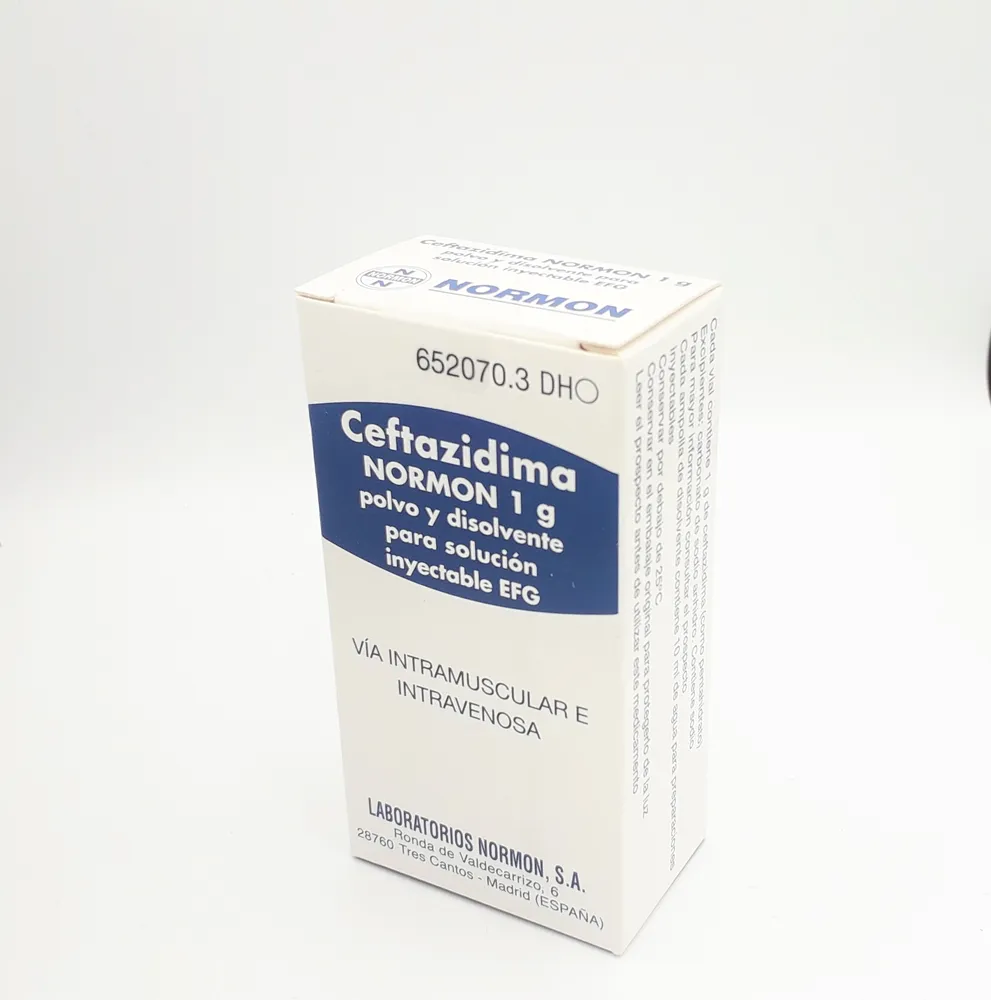
Table of Contents
- Package leaflet: Information for the user
- Introduction
- 1. What Ceftazidime Normon is and what it is used for
- 2. What you need to know before you are given Ceftazidime Normon
- 3. How to use Ceftazidima Normon
- 4. Possible adverse effects
- 5. Storage of Ceftazidime Normon
- 6. Contents of the pack and other information
Package leaflet: Information for the user
Introduction
Package leaflet: information for the user
Ceftazidime Normon 1 g powder and solvent for solution for injection EFG
ceftazidime
Read all of this leaflet carefully before you start using this medicine, because it contains important information for you.
- Keep this leaflet, as you may need to read it again.
- If you have any questions, ask your doctor, pharmacist or nurse.
- This medicine has been prescribed for you only and must not be given to other people, even if they have the same symptoms as you, because it could harm them.
- If you experience any adverse effects, consult your doctor, pharmacist or nurse, even if they are adverse effects not listed in this leaflet. See section 4.
Contents of the leaflet:
- What Ceftazidime Normon is and what it is used for
- What you need to know before being given Ceftazidime Normon
- How to administer Ceftazidime Normon
- Possible side effects
- How to store Ceftazidime Normon
- Contents of the pack and other information
1. What Ceftazidime Normon is and what it is used for
Ceftazidime Normon is an antibiotic used in adults and children (including newborns). It works by killing the bacteria that cause infections. It belongs to a group of medicines known as cephalosporins.
Antibiotics are used to treat bacterial infections and are not effective against viral infections such as influenza or the common cold. It is important to follow your doctor's instructions regarding dosage, dosing interval, and duration of treatment. Do not store or reuse this medicine. If you have any antibiotic left after completing the treatment, return it to the pharmacy for proper disposal. Medicines must not be disposed of via wastewater or household waste. |
Ceftazidime Normon is used to treat serious bacterial infections of:
- The lungs or chest
- The lungs and bronchi in patients with cystic fibrosis
- The brain (meningitis)
- The ear
- The urinary tract
- The skin and soft tissues
- The abdomen and abdominal wall (peritonitis)
- The bones and joints.
Ceftazidime Normon may also be used:
- To prevent infections during prostate surgery in men
- To treat patients with low white blood cell count (neutropenia) and fever due to a bacterial infection.
2. What you need to know before you are given Ceftazidime Normon
Do not be given this medicine:
-
if you are allergic (hypersensitive) to ceftazidime, to other cephalosporins, or to any of the other components of this medicine (listed in section 6).
-
if you have ever had a severe allergic reaction to any other antibiotic (penicillins, monobactams, and carbapenems), as you may also be allergic to this medicine.
-
Tell your doctor before starting treatment with this medicine if you think this applies to you. This medicine must not be given to you.
Warnings and precautions
While receiving this medicine, you should be alert for certain symptoms such as allergic reactions, nervous system disorders, and gastrointestinal disorders such as diarrhea. This will reduce the risk of potential problems. (See Symptoms to watch for in section 4.) If you have ever had an allergic reaction to other antibiotics, you may also be allergic to this medicine.
Serious skin reactions have been reported with ceftazidime treatment, including Stevens-Johnson syndrome, toxic epidermal necrolysis, drug reaction with eosinophilia and systemic symptoms (DRESS), and acute generalized exanthematous pustulosis (AGEP). Seek immediate medical attention if you notice any symptoms related to these serious skin reactions described in section 4.
If you need blood or urine tests
Ceftazidime Normon may affect the results of urine glucose tests and a blood test known as the Coombs test. If you are having tests:
- Inform the person taking the sample that you have been administered ceftazidime.
Use of Ceftazidime Normon with other medicines
Tell your doctor if you are taking, have recently taken, or might need to take any other medicines, including those obtained without a prescription.
Do not be given this medicine without first talking to your doctor if you are also taking:
-
an antibiotic called chloramphenicol
-
a type of antibiotics known as aminoglycosides, for example: gentamicin, tobramycin
-
a "water tablet" (a diuretic called furosemide)
-
Tell your doctor if this applies to you.
Pregnancy and breastfeeding
Tell your doctor before you are given this medicine:
- If you are pregnant, think you may be pregnant, or plan to become pregnant
- If you are breastfeeding
Your doctor will assess the benefit of treating you with this medicine against the risk to the baby.
Driving and using machines
Ceftazidime Normon may cause adverse effects such as dizziness, which may affect your ability to drive.
Do not drive or operate machinery unless you are certain it does not affect you.
Ceftazidime Normon contains sodium.
This medicine contains 52.08 mg (2.26 mmol) of sodium (the main component of table/cooking salt) per vial. This corresponds to 2.65% of the maximum daily intake for an adult.
3. How to use Ceftazidima Normon
This medicine is normally administered by a doctor or a nurse.
It can be given directly as an injection into a vein or into a muscle.
Recommended dose
The correct dose of this medicine for you will be decided by your doctor and depends on: the severity and type of infection, whether you are being treated with other antibiotics, your weight and age, and your kidney function.
Newborn babies (0–2 months)
For each 1 kg of the baby's weight, 25 to 60 mg of Ceftazidima Normon will be given per day, divided into two doses.
Infants (over 2 months) and children weighing less than 40 kg
For each 1 kg of the infant's or child's weight, 100 to 150 mg of this medicine will be given per day, divided into three doses. Maximum 6 g per day.
Adults and adolescents weighing 40 kg or more
1 g to 2 g of this medicine, three times a day. Maximum 9 g per day.
Patients over 65 years of age
The daily dose should normally not exceed 3 g per day, especially if you are over 80 years old.
Patients with kidney problems
You may be given a different dose than usual. Your doctor will decide how much of this medicine you need, depending on the severity of your kidney disease. Your doctor will monitor you closely and kidney function tests will be performed more frequently.
If you are given more Ceftazidima Normon than you should
If you accidentally receive more than the prescribed dose, contact your doctor or the nearest hospital immediately.
You may also call the Toxicology Information Service at telephone number: 91 562 04 20, stating the name of the medicine and the amount administered.
If you forget to use Ceftazidima Normon
If you miss an injection, it should be given as soon as possible. However, if it is almost time for the next injection, skip the missed dose. Do not use a double dose (two injections at the same time) to make up for the forgotten dose. Receive the next dose at the usual time.
If you stop treatment with Ceftazidima Normon
Do not stop receiving this medicine unless your doctor tells you to do so.
If you have any further questions about the use of this medicine, ask your doctor or pharmacist.
4. Possible adverse effects
Like all medicines, this medicine can cause adverse effects, although not everyone will experience them.
Seek immediate medical attention if you notice any of the following symptoms:
-
Red skin patches with a target-like or circular shape on the trunk, often with blisters in the center, peeling of the skin, or ulcers in the mouth, throat, nose, genitals, or eyes. These serious skin rashes may be preceded by fever and flu-like symptoms (Stevens-Johnson syndrome, toxic epidermal necrolysis).
-
Widespread rash, high body temperature, and enlarged lymph nodes (DRESS syndrome or drug hypersensitivity syndrome).
-
Widespread red rash with peeling, lumps under the skin, and blisters accompanied by fever. Symptoms usually appear at the beginning of treatment (acute generalized exanthematous pustulosis).
Symptoms to watch for
The following serious adverse effects have occurred in a small number of patients, but their exact frequency is unknown:
- Severe allergic reaction. Signs include raised, itchy rash, swelling, sometimes in the face or mouth, causing difficulty breathing.
- Skin rash, which may form blisters, and appears as small target-like lesions (a dark central spot surrounded by a paler area, with a dark ring around the edge).
- Widespread rash with blisters and peeling of the skin. (These may be signs of Stevens-Johnson syndrome or toxic epidermal necrolysis.)
- Nervous system disorders: tremors, seizures, and in some cases coma. These have occurred in patients receiving very high doses, especially in those with kidney disease.
Rare cases of severe hypersensitivity reaction with severe skin rash have been reported, which may be accompanied by fever, fatigue, facial swelling or swollen lymph nodes, increased eosinophils (a type of white blood cell), and involvement of the liver, kidneys, or lungs (a reaction known as DRESS syndrome).
- Contact your doctor immediately if you experience any of these symptoms.
Common adverse effects
May affect 1 in 10 people:
-
Diarrhea
-
Swelling and redness around a vein
-
Red, raised rash, which may be itchy
-
Pain, burning, swelling, or inflammation at the injection site.
-
Tell your doctor if any of these adverse effects concern you.
Common adverse effects that may appear in blood tests:
- Increase in a type of white blood cells (eosinophilia)
- Increase in the number of cells that help blood to clot
- Increase in liver enzymes.
Uncommon adverse effects
May affect 1 in 100 people:
-
Inflammation of the intestine, which may cause pain or diarrhea that may contain blood
-
Fungal infections in the mouth or vagina
-
Headache
-
Dizziness
-
Stomach pain
-
Nausea or vomiting
-
Fever and chills.
-
Tell your doctor if you experience any of these.
Uncommon adverse effects that may appear in blood tests:
- Decrease in the number of white blood cells
- Decrease in the number of platelets (cells that help blood to clot)
- Increase in blood levels of urea, blood urea nitrogen, or serum creatinine.
Very rare adverse effects
May affect 1 in 10,000 people:
- Inflammation or failure of the kidneys
Other adverse effects
Other adverse effects that have occurred in a small number of patients, but whose exact frequency is unknown:
- Tingling sensations
- Bad taste in the mouth
- Yellowing of the skin or whites of the eyes.
Other adverse effects that may appear in blood tests:
- Rapid destruction of red blood cells
- Increase in a certain type of white blood cells
- Severe decrease in the number of white blood cells.
Reporting of adverse effects:
If you experience any adverse effect, consult your doctor, pharmacist, or nurse, even if it is a possible adverse effect not listed in this leaflet. You may also report them directly through the Spanish Pharmacovigilance System for Human Medicines: https://www.notificaram.es. By reporting adverse effects, you can help provide more information on the safety of this medicine.
5. Storage of Ceftazidime Normon
Keep this medicine out of the sight and reach of children.
Store below 25 °C.
Keep in the original packaging to protect from light.
Do not use this medicine after the expiry date stated on the container after EXP. The expiry date refers to the last day of the month indicated.
From a microbiological standpoint, the product should be used immediately. If not used immediately, the maximum shelf life after reconstitution of the injectable with the indicated volume of diluent is 8 hours at 25 °C and 24 hours at a temperature between 2 °C and 8 °C.
Medicines must not be disposed of via wastewater or household waste. If you are unsure how to dispose of medicines and packaging you no longer need, consult your pharmacist. This will help protect the environment.
6. Contents of the pack and other information
Composition of Ceftazidima Normon
The active substance is ceftazidime. Each vial contains 1 g of ceftazidime (as pentahydrate).
It contains anhydrous sodium carbonate as excipient.
Each solvent ampoule contains 10 ml of water for injections.
Appearance of the product and contents of the pack
The pack of Ceftazidima Normon 1 g powder and solvent for injectable solution contains one 17 ml vial with 1 g of ceftazidime as powder and one solvent ampoule containing 10 ml of water for injections. It is also available in packs of 50 vials and 50 ampoules (hospital pack).
Marketing Authorisation Holder and Manufacturer
LABORATORIOS NORMON, S.A.
Ronda de Valdecarrizo, 6 – 28760 Tres Cantos – Madrid (Spain)
Date of the most recent review of this summary: October 2024
Detailed and up-to-date information on this medicinal product is available on the website of the Spanish Agency for Medicines and Health Products (AEMPS) http://www.aemps.gob.es.