Cefixime Sandoz 200 mg film-coated tablets EFG
Spain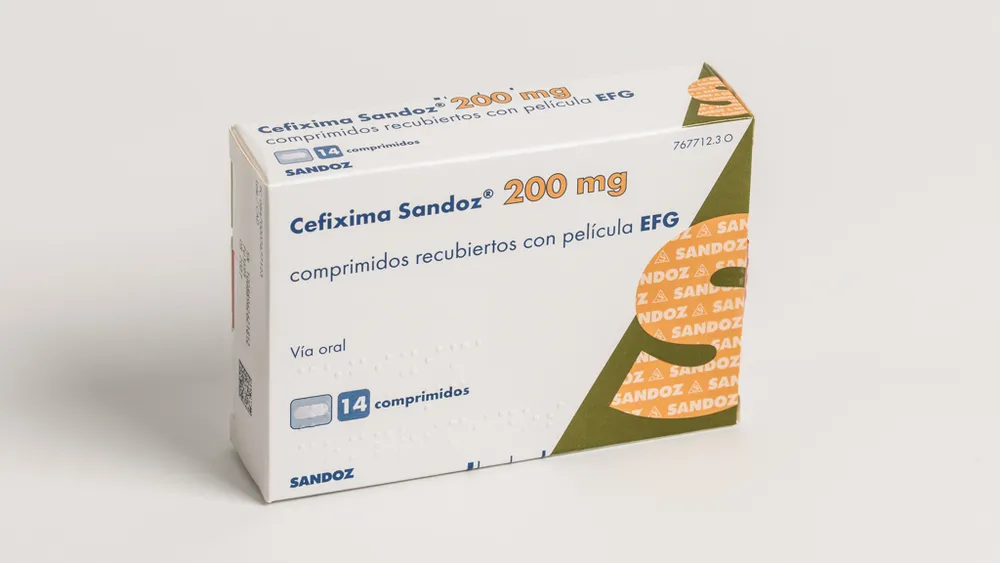
Table of Contents
Patient Information Leaflet
Introduction
Package leaflet: Information for the patient
Cefixima Sandoz 200 mg film-coated tablets EFG
Read this entire leaflet carefully before you start taking this medicine, because it contains important information for you.
- Keep this leaflet. You may need to read it again. If you have any further questions, ask your doctor or pharmacist.
- This medicine has been prescribed for you only. Do not pass it on to other people, even if they have the same symptoms as you, because it may harm them.
- If you experience any adverse effects, talk to your doctor or pharmacist, including any adverse effects not listed in this leaflet. See section 4.
Leaflet contents
- What Cefixima Sandoz is and what it is used for
- What you need to know before taking Cefixima Sandoz
- How to take Cefixima Sandoz
- Possible side effects
- How to store Cefixima Sandoz
- Contents of the pack and other information
1. What Cefixima Sandoz is and what it is used for
Cefixima Sandoz contains the active substance cefixime, an antibiotic belonging to a group called "cephalosporins".
Antibiotics are used to treat bacterial infections and are not effective against viral infections such as flu or the common cold.
It is important that you follow your doctor's instructions regarding dosage, administration, and duration of treatment.
Do not store or reuse this medicine. If you have any antibiotic left over after completing treatment, return it to the pharmacy for proper disposal. Medicines must not be disposed of via wastewater or household waste.
This medicine is used to treat the following bacterial infections in adults and adolescents over 12 years of age:
- acute ear infection,
- acute infection of the nasal cavity and paranasal sinuses,
- infection causing sudden worsening of chronic bronchitis,
- community-acquired pneumonia,
- uncomplicated acute urinary tract infections,
- uncomplicated gonorrhea.
Consult your doctor if you worsen or do not improve.
2. What you need to know before taking Cefixima Sandoz
Do not take Cefixima Sandoz if:
- you are allergic to cefixime or to any of the other ingredients of this medicine (listed in section 6),
- you are allergic to any other type of antibiotic belonging to the cephalosporin family.
Warnings and precautions
Consult your doctor or pharmacist before starting cefixime:
- if you have ever had an allergic reaction to treatment with antibiotics. You may also be allergic to this treatment,
- if you have renal impairment. Your doctor will adjust your daily dose,
- if you have ever experienced antibiotic-induced hemolytic anemia due to treatment with cephalosporin antibiotics, including cefixima (a reduction in red blood cells in the blood, which may cause paleness, weakness, or difficulty breathing).
During or after treatment, inform your doctor immediately:
- if you develop diarrhea. Do not take any medication for diarrhea without first consulting your doctor,
- if you develop skin rash or itching.
- like with all medicines in this class of antibiotics (beta-lactam antibiotics), administration of this medicine may carry a risk of encephalopathy, which may cause seizures, confusion, altered consciousness, or abnormal movements, especially in cases of overdose or impaired renal function. If you experience these symptoms, consult your doctor or pharmacist immediately (see sections 3 and 4).
- serious skin reactions have been reported with Cefixima Sandoz, such as toxic epidermal necrolysis (TEN, also known as Lyell's syndrome), Stevens-Johnson syndrome (SJS), drug hypersensitivity syndrome with eosinophilia and systemic symptoms (DRESS), and acute generalized exanthematous pustulosis (AGEP) (see section 4).
Your doctor may decide to discontinue treatment with this medicine and/or prescribe appropriate treatment (see section 4. Possible side effects).
If you develop severe skin reactions or any of the reactions listed in section 4, stop treatment immediately and contact your doctor or healthcare professional.
Children
Cefixima Sandoz is not recommended for children under 12 years of age.
Other medicines and Cefixima Sandoz
Tell your doctor or pharmacist if you are taking, have recently taken, or might need to take any other medicines. Inform your doctor if you are taking the following medicines, as they may interact with cefixime:
- anticoagulants (medicines that prevent blood clotting),
- caution is advised when taking calcium channel blockers.
Interference with laboratory tests
If you are undergoing blood or urine tests, inform your doctor that you are taking cefixime, as cefixime may alter the results of some of these tests.
Pregnancy, breastfeeding, and fertility
If you are pregnant or breastfeeding, think you may be pregnant, or are planning to become pregnant, consult your doctor or pharmacist before using this medicine.
Pregnancy
Cefixima Sandoz should only be used during pregnancy on the advice of your doctor. If you find out you are pregnant during treatment, consult your doctor, who is the only one who can decide whether you should continue treatment.
Breastfeeding
You should not take this medicine while breastfeeding unless clearly instructed by your doctor. However, if your child develops gastrointestinal problems (diarrhea, fungal infection called Candida) or develops a rash, stop breastfeeding or stop taking the medicine and consult your doctor immediately. A decision on whether to discontinue breastfeeding or to discontinue/abstain from treatment with cefixime should be made by taking into account the benefit of breastfeeding for the child and the benefit of therapy for the woman.
Driving and use of machines
Cefixima may cause dizziness. If affected, you should not drive or operate machinery.
Cefixima Sandoz contains sodium
This medicine contains less than 1 mmol of sodium (23 mg) per tablet; that is, essentially “sodium-free”.
3. How to take Cefixima Sandoz
Follow exactly the instructions given by your doctor for taking this medicine. If in doubt, consult your doctor or pharmacist again.
Dosage
Your doctor will decide the correct dose of Cefixima Sandoz and will tell you how long you should take the medicine. The number of tablets you need to take depends on your condition. Follow your doctor's instructions precisely and never change the dose yourself. Ask your doctor or pharmacist if you are unsure about how much medicine to take or when to take it.
Adults and adolescents over 12 years of age
The recommended dose is 400 mg of cefixime: 400 mg (2 tablets of Cefixima Sandoz) once daily every 24 hours.
If your doctor has prescribed a once-daily dose, take it every 24 hours. If your doctor has prescribed two doses per day, each dose should be taken every 12 hours. The medicine should always be taken at the same time each day.
Duration of treatment
Most infections can be treated within 7 days. However, in severe cases, cefixime may be used for up to 14 days.
Children under 12 years of age
Please note that Cefixima Sandoz tablets are not suitable for children. Instead, an oral suspension should be used, or consult your doctor for further information.
Elderly patients
Dose adjustment is not necessary in elderly patients if kidney function is normal.
Patients with renal impairment
If you have severe renal problems or are undergoing dialysis, your doctor may reduce your dose. There is insufficient data on the use of cefixime in children with renal impairment. Therefore, the use of cefixime is not recommended in these patients.
In cases with creatinine clearance values below 20 ml/min, undergoing continuous ambulatory peritoneal dialysis or hemodialysis, the recommended dosage is 200 mg once daily.
Patients with hepatic impairment
Dose adjustment is not necessary in patients with liver problems.
Method of administration
Oral use
The tablet should be taken with sufficient water and must be swallowed whole.
Cefixima Sandoz may be taken with or without food.
If you take more Cefixima Sandoz than you should
If you accidentally take or ingest more Cefixima Sandoz tablets, or if a child ingests any of the cefixime tablets, inform your doctor or contact the nearest emergency department immediately.
In case of overdose or accidental ingestion, consult your doctor or pharmacist immediately or call the Toxicology Information Service (telephone: 91 562 04 20), indicating the medicine and the amount ingested.
If you forget to take Cefixima Sandoz
If you forget to take a dose, take it as soon as you remember. However, if less than 6 hours remain before the next dose, do not take the missed dose and resume your regular dosing schedule. Do not take a double dose to make up for a forgotten dose.
If you stop taking Cefixima Sandoz
Do not stop treatment prematurely, as it is important that you continue taking this medicine for the full prescribed duration. Stopping treatment too early may cause the infection to return.
If you have any further questions about the use of this medicine, ask your doctor or pharmacist.
4. Possible adverse effects
Like all medicines, this medicine can cause adverse effects, although not everyone experiences them.
You should contact your doctor immediately if you experience any of the following serious side effects:
Allergic reactions
All medicines can cause allergic reactions, although serious allergic reactions are rare (may affect up to 1 in 1,000 people), very rare (may affect up to 1 in 10,000 people), or frequency not known (frequency cannot be estimated from available data). They may include the following allergic reactions, for which the frequency is not known:
- serum sickness-like reaction (an allergic reaction that may include symptoms such as rash, joint pain, muscle pain, and fever),
- sudden wheezing and chest tightness,
- swelling of the eyelids, face, or lips.
Diarrhoea (may affect up to 1 in 10 people):
- if you have diarrhoea while taking this medicine or after taking it, do not try to treat it yourself. You should contact your doctor immediately. Your doctor may decide to stop treatment and prescribe appropriate therapy.
- there is a frequent risk of diarrhoea. Blood may be present in the diarrhoea. In very rare cases, this may be a severe form of colitis (pseudomembranous colitis or enterocolitis), which requires immediate discontinuation of treatment.
Serious skin reactions
- flu-like symptoms with rash, fever, swollen lymph nodes, and abnormal blood test results (including increased white blood cells (eosinophilia) and liver enzymes) (Drug Reaction with Eosinophilia and Systemic Symptoms (DRESS)). (Frequency not known)
- blisters or bleeding of the skin around the lips, eyes, mouth, nose, and genitals. Also flu-like symptoms and fever (Stevens-Johnson syndrome). (May affect up to 1 in 10,000 people)
- severe blistering rash in which layers of skin may peel off, leaving large areas of exposed, raw skin all over the body. Also general malaise, fever, chills, and muscle pain (toxic epidermal necrolysis). (May affect up to 1 in 10,000 people)
- symptoms of AGEP may include widespread red, scaly rash with bumps under the skin (including skin folds, chest, abdomen (including stomach), back, and arms) and blisters accompanied by fever. (May affect up to 1 in 10,000 people)
All these allergic reactions require urgent medical attention. If you think you are experiencing any of these reactions, stop taking this medicine and contact your doctor or the nearest hospital emergency department immediately.
The following adverse effects have been reported:
Uncommon (may affect up to 1 in 100 people):
- headache,
- nausea,
- vomiting,
- abdominal pain,
- rash,
- changes in blood tests measuring liver function.
Rare (may affect up to 1 in 1,000 people):
- severe allergic reaction causing swelling of the face or throat (angioedema),
- hypersensitivity reactions (skin rashes that are less severe allergic reactions than those mentioned above, lumpy rash [urticaria], itching),
- dizziness/vertigo,
- loss of appetite (anorexia),
- flatulence (gas),
- dyspepsia,
- itching,
- fever,
- abnormal increase in the number of cells (eosinophils) in the blood, characteristic of allergic states,
- increased blood urea (a measure of kidney function),
- inflammation of mucous membranes,
- recurrent bacterial infections,
- recurrent fungal infections.
Very rare (may affect up to 1 in 10,000 people):
- severe allergic reaction causing breathing difficulties or shock (anaphylactic shock),
- intestinal inflammation that sometimes occurs after antibiotic treatment (antibiotic-associated colitis),
- severe reduction in white blood cells, increasing the likelihood of infections (agranulocytosis),
- severe reduction in blood cells that may cause weakness, bruising, or make infections more likely (pancytopenia),
- decrease in small cells necessary for blood clotting, increasing the risk of bleeding or bruising (thrombocytopenia) (if you have a blood test for any reason, inform the person taking the sample that you are taking this medicine, as it may affect the result),
- reduction in red blood cells that may cause the skin to become pale yellow and lead to weakness or shortness of breath (haemolytic anaemia),
- low white blood cell count (leucopenia),
- feeling of restlessness associated with increased activity (psychomotor hyperactivity),
- reversible inflammation of the kidney affecting its structure and function,
- inflammation of the liver (hepatitis),
- biliary disorder (cholestatic jaundice),
- changes in special blood tests showing kidney function (increased blood creatinine).
Frequency not known (cannot be estimated from available data):
- acute kidney injury, including inflammation of the kidney affecting its structure and function (acute renal failure, including tubulointerstitial nephritis),
- a brain condition with symptoms such as seizures, confusion, reduced alertness or awareness, unusual muscle movements, or stiffness. This may be a condition called encephalopathy. This side effect is more likely if you have taken an overdose or already have kidney problems,
- genital or vaginal itching,
- thrombocytosis,
- decreased number of neutrophils in the blood (neutropenia).
Reporting of adverse reactions
If you experience any adverse effect, talk to your doctor or pharmacist, even if it is a possible adverse effect not listed in this leaflet. You can also report them directly via the Spanish Pharmacovigilance System for Human Medicines: www.notificaRAM.es. By reporting adverse reactions, you can help provide more information on the safety of this medicine.
5. Storage of Cefixime Sandoz
Keep this medicine out of the sight and reach of children.
Do not use this medicine after the expiry date stated on the packaging and on the blister after CAD/EXP. The expiry date refers to the last day of the month indicated.
Do not store above 30°C.
Medicines must not be disposed of via wastewater or household waste. Dispose of empty containers and unused medicines at the SIGRE Point at your pharmacy. If you are unsure, please ask your pharmacist how to dispose of containers and medicines you no longer need. This will help protect the environment.
6. Contents of the pack and other information
Composition of Cefixima Sandoz:
The active substance is cefixime.
Each film-coated tablet contains 200 mg of cefixime (as cefixime trihydrate).
The other components are:
- Core: calcium hydrogen phosphate, microcrystalline cellulose, sodium croscarmellose, sodium lauryl sulfate, magnesium stearate.
- Coating: poly(vinyl alcohol) grafted macrogol copolymer, talc, mono/diglycerides, titanium dioxide (E171), poly(vinyl alcohol).
Appearance of the product and contents of the pack
Film-coated tablets, white to off-white, oblong, biconvex, approximately 6.5 x 16 mm in size.
This medicine is available in Al/Al blisters packed in cardboard cartons.
Pack sizes: 4, 5, 6, 7, 8, 10, 12, 14, 16 and 21 film-coated tablets.
Only certain pack sizes may be marketed.
Marketing Authorization Holder and Manufacturer
Marketing Authorization Holder
Sandoz Farmacéutica, S.A.
Centro Empresarial Parque Norte
Edificio Roble,
C/Serrano Galvache, 56
28033 Madrid
Spain
Manufacturer
Sandoz GmbH
Biochemiestrasse 10
Kundl Triol 6250
Austria
This medicine is authorized in the Member States of the European Economic Area under the following names:
Germany: Cefixim HEXAL 200 mg Filmtabletten
France: CEFIXIME SANDOZ 200 mg, comprimé pelliculé
Romania: Axtrifia 200 mg, comprimate filmate
Slovenia: Cefixim Sandoz 200 mg
Date of the most recent review of this leaflet: 03/2025
Detailed information on this medicine is available on the website of the Spanish Agency of Medicines and Health Products (AEMPS): http://www.aemps.gob.es/
Medical advice/information
Antibiotics are used to treat infections caused by bacteria. They have no effect against infections caused by viruses.
Sometimes, a bacterial infection does not respond to antibiotic treatment. One of the most common reasons for this is that the bacteria causing the infection are resistant to the antibiotic being used. This means they can survive and even multiply despite the antibiotic.
Bacteria can become resistant to antibiotics for many reasons. The rational use of antibiotics can help reduce the likelihood of bacteria becoming resistant.
When your doctor prescribes an antibiotic, it is intended solely to treat your current illness. Please follow the advice below to help prevent the emergence of resistant bacteria, which could render antibiotics ineffective.
- It is very important that you take the antibiotic at the correct dose, at the right time, and for the correct number of days. Read the label instructions carefully, and if anything is unclear, ask your doctor or pharmacist to explain it.
- You should not take an antibiotic unless it has been specifically prescribed for you, and you should use it only to treat the infection for which it was prescribed.
- You should not take antibiotics prescribed for other people, even if their infection was similar to yours.
- You should not give antibiotics prescribed for you to other people.
- If you have leftover antibiotics after completing your treatment as directed by your doctor, return the remaining tablets to a pharmacy for proper disposal.