Cefepime Sala 1 g powder for injection and for infusion EFG
Spain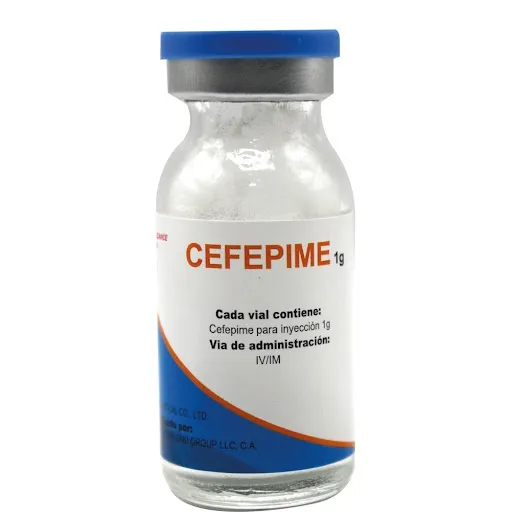
Table of Contents
Package leaflet: Information for the user
Introduction
Package leaflet: information for the user
Cefepime Sala 1 g powder for injectable solution and for infusion EFG
Read the entire leaflet carefully before you start using this medicine, because it contains important information for you.
- Keep this leaflet, as you may need to read it again.
- If you have any questions, ask your doctor, pharmacist, or nurse.
- If you experience any side effects, consult your doctor, pharmacist, or nurse, even if they are side effects not listed in this leaflet. See section 4.
Leaflet contents
- What Cefepime Sala is and what it is used for
- What you need to know before using Cefepime Sala
- How to use Cefepime Sala
- Possible side effects
- How to store Cefepime Sala
- Contents of the pack and other information
1. What Cefepima Sala is and what it is used for
Cefepima Sala contains the active substance cefepime.
Cefepime belongs to a group of antibiotics called cephalosporins, which work by killing bacteria.
Cefepime is used when an infection is known to be caused by bacteria sensitive to cefepime. It is used to treat the following infections:
- lung infections such as pneumonia,
- infections of the reproductive system (in adults), urinary tract, and kidneys,
- skin infections,
- abdominal infections,
- bloodstream infections caused by bacteria (bacteremia),
- infections of the brain and spinal cord in children (meningitis),
- infections in patients with low white blood cell counts (neutropenia)
2. What you need to know before using Cefepime Sala
Do not use Cefepime Sala
- if you are allergic to cefepime or to any of the other ingredients of this medicine (listed in section 6).
Warnings and precautions
Consult your doctor, pharmacist, or nurse before starting to use cefepime:
- If you have kidney problems.
- If you are allergic to anything not mentioned in this leaflet.
- If you have ever had intestinal problems, particularly colitis (inflammation of the intestine).
- If you are an elderly patient.
Use of cefepime with other medicines
Inform your doctor or nurse if you are taking, have recently taken, or might need to take any other medicines. This includes medicines obtained without a prescription and herbal medicines. This is because cefepime may affect how other medicines work. Likewise, other medicines may affect how cefepime works.
In particular, inform your doctor or nurse if you are taking any of the following medicines:
- Aminoglycosides or other antibiotics (used to treat infections)
- Anticoagulants (medicines to thin the blood)
You should also inform your doctor or nurse if you are undergoing glucose or blood tests.
Pregnancy and breastfeeding
If you are pregnant or breastfeeding, think you might be pregnant, or are planning to become pregnant, consult your doctor or pharmacist before using this medicine.
Driving and using machines
No studies have been conducted to determine the effects on the ability to drive or operate machinery.
Do not drive or operate machinery unless you are certain that it does not affect you.
3. How to use Cefepime Sala
A doctor or nurse will administer this medicine to you. It will be given in one of the following ways:
- As an injection into a muscle (for example, the muscle of the arm).
- As a slow injection into one of your veins. This process may last between 3 and 5 minutes.
- Through a small tube inserted into one of your veins. This is called intravenous infusion. Usually, the duration is at least 30 minutes.
You will normally be given Cefepime Sala for 7–10 days, depending on the type of infection you have.
Adults and elderly patients
The usual dose is 500 mg (milligrams) up to 1 g (gram) every 12 hours. If you have a severe infection, your doctor may give you a higher dose of up to 2 g every 8 hours.
Use in children and adolescents
The dose will be calculated by the doctor based on body weight.
- In children over 2 months of age and weighing less than 40 kg, the usual dose is 50 mg per kg of body weight every 12 hours. Depending on the type and severity of the infection, doses may be given every 8 hours.
- In children under 2 months of age, a dose of 30 mg per kg of body weight every 12 hours may be administered.
- For children weighing more than 40 kg, the adult dose may be used.
- The maximum dose in children must not exceed 2 g every 8 hours.
Patients with kidney problems
If you have kidney problems, you will be given a lower dose. You may need to have blood tests to ensure you are receiving the correct dose.
If you use more Cefepime Sala than you should
If you think you have been given too much Cefepime Sala, inform your doctor or nurse.
In case of overdose or accidental ingestion, contact your doctor or pharmacist immediately or call the Toxicology Information Service at telephone number: 91 562 04 20, stating the medication and the amount ingested.
If you have any further questions about the use of this medicine, ask your doctor or nurse.
4. Possible adverse effects
Like all medicines, this medicine can cause adverse effects, although not everyone experiences them.
Severe allergic reactions (rare, may affect fewer than 1 in 1,000 people)
If you experience a severe allergic reaction, contact your doctor immediately.
Symptoms may include:
- Sudden swelling of the face, throat, lips, and mouth. This may make it difficult for you to breathe or swallow.
- Sudden swelling of the hands, feet, and ankles.
Other possible adverse effects:
Very common: may affect more than 1 in 10 people
- Positive Coombs test results (a blood test for certain blood disorders)
Common: may affect up to 1 in 10 people
- Blood clotting problems. Symptoms include easy bruising
- Anemia that may make you appear pale, feel tired, and experience shortness of breath
- Inflammation, pain, or burning sensation at the injection site
- Diarrhea
- Liver problems, for example, jaundice and changes in liver enzymes in blood tests
- Rash
Uncommon: may affect up to 1 in 100 people
- Yeast infection in the mouth
- Vaginal infections
- Changes in the number of white blood cells in your blood. Symptoms include sudden rise in body temperature (fever), chills, and sore throat
- Headache
- Inflammation of the large intestine (colon). Symptoms include diarrhea, usually with blood and mucus, stomach pain, and fever
- Nausea and vomiting
- Hives, itching, and redness of the skin
- Kidney problems (which may be observed in a blood test)
- Fever
Rare: may affect up to 1 in 1,000 people
- Fungal infections
- Prickling or tingling sensations in the body
- Dizziness, with spasms (seizures)
- Difficulty breathing
- Abdominal pain, constipation
- Feeling cold and chills
- Genital pruritus
Frequency not known: frequency cannot be estimated from the available data
- Certain types of anemia (hemolytic anemia or aplastic anemia)
- False positives in urine glucose tests
- Confusion, hallucinations
- Loss of consciousness, brain disorders
- Kidney problems
- Severe skin rash with mouth ulcers, joint pain, and eye pain
Reporting of adverse effects
If you experience any adverse effect, talk to your doctor, pharmacist, or nurse, even if it is a possible adverse effect not listed in this leaflet. You may also report them directly via the Spanish Pharmacovigilance System for Human Medicines: www.notificaRAM.es. By reporting adverse effects, you can help provide more information on the safety of this medicine.
5. Storage of Cefepime Sala
Your doctor or pharmacist is responsible for the storage of this medicine.
Keep this medicine out of the sight and reach of children.
Do not use this medicine after the expiry date stated on the container, after EXP.
Unopened
No special storage conditions are required. Store the vial in the outer packaging to protect it from light.
Once opened
The product should be used immediately after opening.
Reconstituted product
IM administration
Water for injections, sodium chloride 9 mg/ml (0.9%), glucose 50 mg/ml (5%), and
lidocaine 5 mg/ml (0.5%)
Chemical and physical in-use stability has been demonstrated for 2 hours at 25°C ± 5°C or for 24 hours at a temperature not exceeding 2–8°C.
From a microbiological standpoint, the product should be administered immediately. If not administered immediately, the conditions and duration of in-use storage prior to use are the user's responsibility and normally should not exceed 24 hours at
2–8°C, unless reconstitution/dilution has been carried out under controlled and validated aseptic conditions.
IV administration
Water for injections, sodium chloride 9 mg/ml (0.9%) and glucose 50 mg/ml (5%)
Chemical and physical in-use stability has been demonstrated for 2 hours at 25°C ± 5°C or for 24 hours at a temperature not exceeding 2–8°C.
From a microbiological standpoint, the product should be administered immediately. If not administered immediately, the conditions and duration of in-use storage prior to use are the user's responsibility and normally should not exceed 24 hours at
2–8°C, unless reconstitution/dilution has been carried out under controlled and validated aseptic conditions.
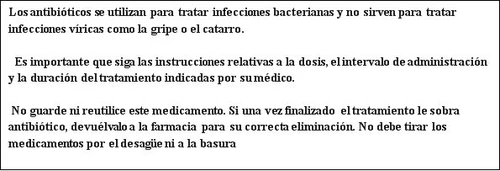
Medicines must not be disposed of via wastewater or household waste. Ask your
pharmacist how to dispose of medicines and packaging that you no longer need.
This will help protect the environment.
6. Contents of the container and other information
Composition of Cefepima Sala
- The active substance is cefepime (as monohydrate dihydrochloride).
- Each vial contains 1 g of cefepime (as monohydrate dihydrochloride).
- The other components are: arginine.
Appearance of the product and contents of the container
Cefepima Sala is a powder. It is white to pale yellow in colour.
It is supplied in a 20 ml clear Type I glass vial, closed with a bromobutyl rubber stopper and an aluminium flip-off seal.
It is available in packs containing 1 or 50 vials.
Not all pack sizes may be marketed.
Marketing Authorisation Holder
Laboratorio Reig Jofré, S.A.
Gran Capitan 10, 08970
Sant Joan Despí – Barcelona, Spain
Manufacturer
Laboratorio Reig Jofré, S.A.
C/ Jarama, 111, Polígono industrial – 45007 Toledo, Spain
Date of the most recent review of this summary: May 2016
“Detailed and up-to-date information on this medicine is available on the website of the Spanish Agency of Medicines and Health Products (http://www.aemps.gob.es)<---------------------------------------------------------------------------------------------------------
This information is intended for healthcare professionals only:
Cefepima Sala 1 g powder for injectable solution and for infusion EFG
Dosage and method of administration
It can be administered intravenously or intramuscularly.
Intravenous administration is preferred in patients with severe or potentially life-threatening infections, particularly when shock is possible.
It must be reconstituted before administration. The reconstituted solution is white or slightly yellowish. The solution should be clear and free from visible particles.
The dosage and route of administration of cefepime vary depending on the nature and severity of the infection, the susceptibility of the microorganism, renal function, and the patient's general condition.
Adults with normal renal function
According to the following table:
Severity of infection | Dosage and route of administration | Dosing interval |
Mild to moderate urinary tract infections. | 500 mg to 1 g IV or IM | Every 12 hours |
Other mild or moderate infections (not UTI) | 1 g IV or IM | Every 12 hours |
Severe infections | 2 g IV | Every 12 hours |
Extremely severe or potentially life-threatening infections | 2 g IV | Every 8 hours |
The duration of treatment is normally 7 to 10 days; however, a longer treatment duration may be required for more severe infections. For empirical treatment of febrile neutropenia, the duration of treatment is normally 7 days or until resolution of neutropenia.
In patients with a body weight <40 kg, the pediatric dose is recommended.
Adults with renal impairment
The dose of cefepime should be adjusted to compensate for reduced renal elimination rate. In adult patients with mild to moderate renal impairment, the recommended initial dose of cefepime should be the same as that for patients with normal renal function. The recommended maintenance dose should be according to the instructions in the table below.
To estimate creatinine clearance, the following formula (Gault and Cockcroft) may be used only when serum creatinine is available. Serum creatinine should represent a stable state of renal function:
Men: Creatinine clearance (ml/min) = Weight (kg) x (140 – age)
Creatinine clearance (mL/min) |
Recommended maintenance dose |
|||
> 50 |
Usual dose. Dose adjustment not required |
|||
2 g, 3x daily |
2 g, 2x daily |
1 g, 2x daily |
500 mg, 2x daily |
|
30 to 50 |
2 g, 2x daily |
2 g, 1x daily |
1 g, 1x daily |
500 mg, 1x daily |
11 to 29 |
2 g, 1x daily |
1 g, 1x daily |
500 mg, 1x daily |
500 mg, 1x daily |
< 10 |
2 g, 1x daily |
500 mg, 1x daily |
250 mg, 1x daily |
250 mg, 1x daily |
Hemodialysis* |
500 mg, 1x daily |
500 mg, 1x daily |
500 mg, 1x daily |
500 mg, 1x daily |
|
Patients undergoing dialysis
If hemodialysis is performed, approximately 68% of the total amount of cefepime is removed at the start of dialysis during a 3-hour dialysis session. In cases of continuous ambulatory peritoneal dialysis, cefepime may be administered at the usual recommended doses for patients with normal renal function, i.e., 500 mg, 1 g, or 2 g depending on the severity of the infection, but only at 48-hour intervals.
Elderly patients
Dosage adjustment is not necessary in patients with normal renal function. However, dosage adjustment is recommended for patients with renal impairment (see sections 4.4 and 5.1).
Patients with hepatic impairment
Dose adjustment is not required in patients with hepatic impairment (see section 5.1).
Paediatric population
Children with normal renal function
The recommended normal dose in children is:
Children over 2 months of age weighing less than 40 kg | |||
Type of infection | Dosage | Dosing interval | Duration |
Pneumonia, urinary tract infections, skin and skin structure infections | 50 mg/kg | 12 hours; severe infections: every 8 hours | 10 days |
Bacterial meningitis and empirical treatment of febrile neutropenia and treatment of patients with bacteremia occurring in association with, or associated with, any of the above-mentioned infections. | 50 mg/kg | Every 8 hours | 7–10 days |
Experience is limited in children under 2 months of age. Based on data obtained in the age group >2 months, a pharmacokinetic model recommends that for children between 1 and 2 months of age, doses of 30 mg/kg every 12 hours or every 8 hours should be administered. Administration of cefepime in these patients should be carefully monitored.
For children >40 kg, adult dosing guidelines apply. The pediatric dose must not exceed the maximum daily adult dose (2 g every 8 hours). Experience with intramuscular injection in children is limited.
In children, the primary route of elimination of cefepime is renal and urinary excretion; dosage adjustment is required in children with renal impairment.
A dose of 50 mg/kg (patients aged between 2 months and 12 years) and a dose of 30 mg/kg (patients aged between 1 and 2 months) are comparable to a 2 g dose in adults.
The same dosing interval or same dose reduction recommended for an adult with renal impairment is advised.
Administration instructions
Reconstitute before use.
Like other cephalosporins, after reconstitution the solution may become slightly yellowish, but this does not indicate a loss of activity.
The solution should only be used if it is clear and free of particles.
Intravenous administration:
For IV administration, Cefepima Sala must be reconstituted with 10 ml of water for injections or glucose solution 50 mg/ml (5%), or sodium chloride solution 9 mg/ml (0.9%).
Injection
The prepared solution should be injected slowly over a period of 3 to 5 minutes—either directly into a vein or directly into the cannula of an infusion system.
Infusion
For IV infusion, the powder should be dissolved as described for direct IV injections. An appropriate amount of the prepared solution is added to an infusion container.
The solution should be administered over a period of approximately 30 minutes.
Intramuscular administration:
Prepare the solution for IM administration by diluting 1 g of Cefepima Sala with 3 ml of water for injections or lidocaine hydrochloride solution 5 mg/ml (0.5%) or sodium chloride solution 9 mg/ml (0.9%) or glucose 50 mg/ml (5%):
The following table contains reconstitution instructions:
Dose | Diluent added (ml) | Concentration (approx., in mg/ml) |
1 g IV | 10 | 90 |
2 g IV | 10 | 160 |
1 g IM | 3 | 230 |
Cefepime Sala may be administered simultaneously with other antibiotics or other medications, provided that the same syringe, infusion bottle, or injection site is not used.
Like other cephalosporins, after reconstitution the solution may become slightly yellowish, but this does not indicate a loss of activity. The solution should only be used if it is clear and free from particles.
Disposal of unused medicinal product and of all materials that have been in contact with it must be carried out in accordance with local regulations.
Incompatibilities
Solutions of Cefepime Sala must not be mixed with the following antibiotics: metronidazole, vancomycin, gentamicin, tobramycin, and netilmicin, as physical or chemical incompatibilities may occur. If concomitant therapy is indicated, these agents should be administered separately.
Shelf life
Unopened
3 years
After opening
The product should be used immediately after opening.
Reconstituted product
IM administration
Water for injections, sodium chloride 9 mg/ml (0.9%), glucose 50 mg/ml (5%), and lidocaine 5 mg/ml (0.5%)
Chemical and physical in-use stability has been demonstrated for 2 hours at 25°C ± 5°C or for 24 hours at temperatures not exceeding 2 to 8°C.
From a microbiological standpoint, the product should be administered immediately. If not administered immediately, the storage conditions and times in use before administration are the responsibility of the user and should normally not exceed 24 hours at 2–8°C, unless reconstitution/dilution has been carried out under controlled and validated aseptic conditions.
IV administration
Water for injections, sodium chloride 9 mg/ml (0.9%) and glucose 50 mg/ml (5%)
Chemical and physical in-use stability has been demonstrated for 2 hours at 25°C ± 5°C or for 24 hours at temperatures not exceeding 2 to 8°C.
From a microbiological standpoint, the product should be administered immediately. If not administered immediately, the storage conditions and times in use before administration are the responsibility of the user and should normally not exceed 24 hours at 2–8°C, unless reconstitution/dilution has been carried out under controlled and validated aseptic conditions.
No special storage conditions are required. Keep the vial in the outer packaging to protect it from light.