Cefepime Qilu 1 g powder for injection and for infusion EFG
Spain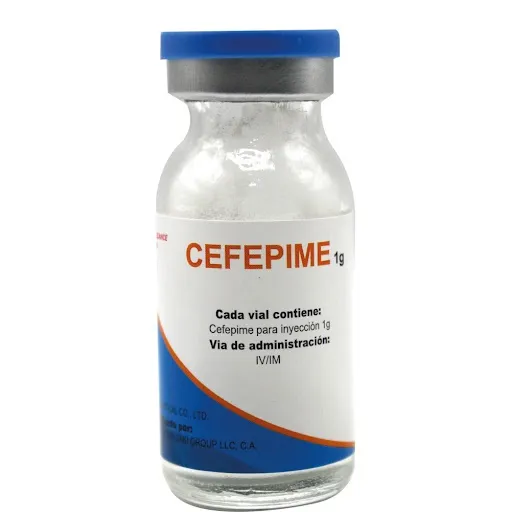
Table of Contents
Package Leaflet: Information for the User
Introduction
Package Leaflet: Information for the Patient
Cefepima Qilu 1g Powder for Injection and for Infusion Solution EFG
cefepime
Read the entire leaflet carefully before you start using this medicine, as it contains important information for you.
- Keep this leaflet, as you may need to read it again.
- If you have any questions, consult your doctor, pharmacist, or nurse.
- If you experience any adverse effects, consult your doctor, pharmacist, or nurse, even if they are effects not listed in this leaflet. See section 4.
Leaflet Contents
- What Cefepima Qilu is and what it is used for
- What you need to know before using Cefepima Qilu
- How to use Cefepima Qilu
- Possible side effects
- How to store Cefepima Qilu
- Contents of the pack and other information
1. What Cefepime Qilu is and what it is used for
Cefepime Qilu contains the active substance cefepime (in the form of cefepime dihydrochloride monohydrate), which is an antibiotic belonging to the cephalosporin group. This type of antibiotic works in a similar way to penicillin.
Antibiotics are used to treat bacterial infections and are not effective against viral infections such as influenza or the common cold.
It is important that you follow the instructions regarding dose, dosing interval, and duration of treatment as directed by your doctor.
Do not store or reuse this medicine. If you have any antibiotic left after completing your treatment, return it to the pharmacy for proper disposal. Medicines must not be disposed of via wastewater or household waste.
This medicine is used to treat the following infections caused by pathogens sensitive to cefepime:
Adults
- Bloodstream infection resulting from one of the infections listed here.
- Acute pneumonia.
- Complicated urinary tract infections.
- Intra-abdominal infections, including peritonitis (infection of the lining of the abdominal wall), if necessary in combination with another antibiotic.
- Infections of the gallbladder and biliary tract.
- Febrile episodes of unknown origin in patients with weakened defences against infections, if necessary in combination with another antibiotic.
Children
- Bloodstream infection resulting from one of the infections listed here.
- Acute pneumonia.
- Complicated urinary tract infections.
- Bacterial meningitis.
- Febrile episodes of unknown origin in patients with weakened defences against infections, if necessary in combination with another antibiotic.
2. What you need to know before using Cefepime Qilu
Do not use Cefepime Qilu:
- if you are allergic to cefepime or to any of the other ingredients of this medicine (listed in section 6).
- if you are allergic to cephalosporin antibiotics or to other similar antibiotics (beta-lactam antibiotics, such as penicillins, monobactams, or carbapenems).
Warnings and precautions
Talk to your doctor, pharmacist, or nurse before starting to use Cefepime Qilu.
Special caution is required especially:
- If you have kidney impairment, as this will affect the elimination of cefepime.
- If you have any allergies (e.g., pollen allergy, hives) and have previously experienced allergic reactions to beta-lactam antibiotics (penicillins, monobactams, or carbapenems) or to other medicines. If you develop an allergic reaction while being treated with cefepime, contact your doctor immediately, as it could lead to serious consequences. In such a case, your doctor will stop your treatment immediately.
- If you have ever had asthma or are prone to allergic reactions.
- If you are undergoing blood or urine tests. It is important that you inform your doctor that you are receiving Cefepime Qilu, as this medicine may affect the results of certain tests.
- If you develop persistent diarrhoea during or after treatment with Cefepime Qilu. You must inform your doctor, who will assess whether the antibiotic treatment has caused inflammation of the intestinal walls and, if necessary, take appropriate measures to treat it.
Treatment with Cefepime Qilu may lead to secondary infections caused by other microorganisms (e.g., fungal infections of the mucous membranes, with redness and white deposits on the mucous membranes). Your doctor will treat these secondary infections as appropriate.
Children
In infants and children, special administration guidelines must be followed (see section 3).
Elderly patients
In elderly patients, the dosage regimen should be carefully selected based on kidney function, as the likelihood of reduced renal activity is higher (see section 3).
Use of Cefepime Qilu with other medicines
Tell your doctor if you are taking, have recently taken, or might need to take any other medicines.
Pregnancy and breastfeeding
If you are pregnant or breastfeeding, think you might be pregnant, or are planning to become pregnant, consult your doctor or pharmacist before using this medicine.
Pregnancy
Cefepime Qilu should not be given during pregnancy unless strictly necessary.
Breastfeeding
Cefepime is excreted in breast milk; therefore, Cefepime Qilu should only be administered during breastfeeding after carefully weighing the benefits against the risks.
Driving and using machines
Do not drive or operate tools or machinery, as treatment with Cefepime Qilu may cause side effects such as altered consciousness, dizziness, confusion, or hallucinations.
3. How to use Cefepime Qilu
The physician must use Cefepime Qilu according to the information provided below or the information contained in the Summary of Product Characteristics or Package Leaflet. If you have any doubts, consult your physician or pharmacist.
Dosage in patients with normal renal function:
Adults and children weighing more than 40 kg body weight (approximately 12 years of age):
Single dose of cefepime and administration interval | |
Serious infections:
| Severe infections:
|
2 g every 12 hours | 2 g every 8 hours |
The duration of treatment is usually 7 to 10 days. Cefepime Qilu is generally used for a minimum of 7 days and a maximum of 14 days per treatment course. When treating febrile episodes in patients with poor defenses against infections (neutropenia), the usual duration of treatment is 7 days or until neutropenia has improved.
Children from 1 month of age up to 40 kg body weight (approximately 12 years):
Single dose of cefepime (mg/kg body weight)/dosing interval/duration of treatment | ||
Serious infections:
| Severe infections:
| |
Children from 2 months up to ≤ 40 kg body weight | 50 mg/kg body weight every 12 hours More serious infections: 50 mg/kg body weight every 8 hours Duration: 10 days | 50 mg/kg body weight every 8 hours Duration: 7–10 days |
Infants 1–2 months | 30 mg/kg body weight every 12 hours More serious infections: 30 mg/kg body weight every 8 hours Duration: 10 days | 30 mg/kg body weight every 8 hours Duration: 7–10 days |
For children aged 1–2 months, a dose of 30 mg/kg body weight every 12 or 8 hours is sufficient. Children of this age should be carefully monitored during administration.
For children with a body weight over 40 kg, the adult dosing recommendations should be applied (see table above). For children aged 12 years with a body weight below 40 kg, the dosing recommendations for younger patients with a body weight ≤ 40 kg should be applied. The dose in children must not exceed the maximum adult dose (2 g every 8 hours).
Dosing in patients with renal impairment:
Adults and children with body weight of 40 kg and above (approximately 12 years of age):
If you have renal impairment, the dose should be adjusted to compensate for slower excretion through the kidneys. The initial dose for patients with mild to moderate renal impairment is the same as for patients with normal renal function, i.e., 2 g of cefepime.
The following tables provide subsequent dosing guidelines (maintenance doses):
Recommended maintenance dose: Cefepime single dose and dosing interval | ||
Creatinine clearance (mL/min) (measure of kidney function) | Serious infections:
| Severe infections:
|
> 50 | 2 g every 12 hours (dose adjustment not required) | 2 g every 8 hours (dose adjustment not required) |
30–50 | 2 g every 24 hours | 2 g every 12 hours |
11–29 | 1 g every 24 hours | 2 g every 24 hours |
≤ 10 | 500 mg every 24 hours | 1 g every 24 hours |
Patients on dialysis:
If you require hemodialysis, you will receive a reduced dose:
- 1 g of cefepime on the first day of treatment, and thereafter 500 mg of cefepime/day on subsequent days for all injections, except in the case of febrile episodes in patients with low defenses against infections (neutropenia). In this case, the dose is 1 g per day.
Cefepime should be administered at the same time each day whenever possible, and on dialysis days, it should be given after completion of dialysis.
In patients with renal impairment undergoing continuous peritoneal dialysis (peritoneal dialysis), the following dosage regimen is recommended:
- 1 g of cefepime every 48 hours in the case of severe infections (bloodstream infection, pneumonia, complicated urinary tract infections, gallbladder and biliary tract infections).
- 2 g of cefepime every 48 hours in the case of very severe infections (intra-abdominal infections, including peritonitis, febrile episodes in patients with low defenses against infections (neutropenia)).
Children from 1 month of age up to 40 kg body weight (approximately 12 years of age):
A dose of 50 mg/kg body weight in children from 2 months to 12 years of age, or a dose of 30 mg/kg body weight in children from 1 to 2 months of age, which is equivalent to a 2 g dose in adults.
Therefore, the same prolongation of the dosing interval or dose reduction as in adults is recommended, according to the following tables.
Children from 2 months of age up to 40 kg body weight (approximately 12 years of age):
Single dose of cefepime (mg/kg body weight)/dosing interval | ||
Creatinine clearance (ml/min) | Severe infections:
| Very severe infections:
|
> 50 | 50 mg/kg body weight every 12 hours (dose adjustment not necessary) | 50 mg/kg body weight every 8 hours (dose adjustment not necessary) |
30–50 | 50 mg/kg body weight every 24 hours | 50 mg/kg body weight every 12 hours |
11–29 | 25 mg/kg body weight every 24 hours | 50 mg/kg body weight every 24 hours |
≤ 10 | 12.5 mg/kg body weight every 24 hours | 25 mg/kg body weight every 24 hours |
Infants 1-2 months of age:
Single dose of cefepime (mg/kg body weight)/dosing interval | ||
Creatinine clearance (ml/min) | Severe infections:
| Very severe infections:
|
> 50 | 30 mg/kg body weight every 12 hours (no dose adjustment necessary) | 30 mg/kg body weight every 8 hours (no dose adjustment necessary) |
30–50 | 30 mg/kg body weight every 24 hours | 30 mg/kg body weight every 12 hours |
11–29 | 15 mg/kg body weight every 24 hours | 30 mg/kg body weight every 24 hours |
≤ 10 | 7.5 mg/kg body weight every 24 hours | 15 mg/kg body weight every 24 hours |
Method of administration:
These solutions can be administered by slow intravenous injection (3-5 minutes) using a syringe or by intravenous infusion.
If you need more information, see the section This information is intended for healthcare professionals only at the end of this leaflet.
If you use more CefepimaQilu than you should
Contact your doctor or other healthcare professionals immediately, as you may experience more severe adverse effects in certain situations.
In case of overdose or accidental ingestion, contact your doctor or pharmacist immediately, or call the Toxicology Information Service at telephone number 915 620 420, indicating the medication and the amount ingested.
If you forget to use CefepimaQilu
Inform your doctor immediately.
If you stop treatment with CefepimaQilu
If you stop receiving CefepimaQilu too early, the underlying illness you have may worsen.
If you have any further questions about using this medicine, ask your doctor, pharmacist, or nurse.
4. Possible adverse effects
Like all medicines, this medicine can cause adverse effects, although not everyone will experience them.
If you experience any of the following serious adverse events, inform your doctor immediately:
- severe allergic reaction, associated with sudden and progressive breathing difficulty, swelling of the head and body, skin rash, circulatory disturbances, and drop in blood pressure
- sudden onset of rash, blisters, or severe skin peeling, accompanied by fever (Stevens-Johnson syndrome)
- persistent, mild to severe diarrhea, accompanied by abdominal pain and fever, which may occur during antibiotic treatment or up to two months afterwards
- altered consciousness, accompanied by confusion, hallucinations, physical rigidity, loss of consciousness, muscle spasms, and seizures
Very common (may affect more than 1 in 10 people)
- positive Coombs test result (a method for detecting antibodies)
Common (may affect up to 1 in 10 people)
- prolonged blood clotting time (prolongation of prothrombin time and partial thromboplastin time)
- anemia
- increased count of certain blood cells (eosinophilia)
- inflammation of the blood vessel walls at the infusion site
- diarrhea
- rash
- irritation at the infusion site
- pain and inflammation at the injection site
- increased levels of certain blood parameters (alanine aminotransferase, aspartate aminotransferase, bilirubin, alkaline phosphatase)
Uncommon (may affect up to 1 in 100 people)
- fungal infection in the mouth, accompanied by white deposits
- vaginal inflammation
- reduced number of certain blood cells (thrombocytopenia, leucopenia, neutropenia)
- headache
- inflammation of the colon, accompanied by abdominal pain (colitis)
- nausea
- vomiting
- skin redness (erythema)
- hives (urticaria)
- itching of the skin
- increased blood urea nitrogen
- increased serum creatinine
- fever
- inflammation at the infusion site
Rare (may affect up to 1 in 1,000 people)
- nonspecific fungal infection
- allergic reaction, seizures (fits)
- abnormal skin sensations, such as tingling or numbness (paresthesia)
- taste disturbances
- dizziness
- dilation of blood vessels
- breathing difficulty
- abdominal pain
- constipation
- fluid accumulation in tissues (edema)
- joint pain
- genital itching
- chills
- ringing in the ears (tinnitus)
Frequency not known (cannot be estimated from available data)
- decrease in certain blood cells (aplastic anemia), increased breakdown of red blood cells (hemolytic anemia)
- agranulocytosis (low white blood cell count), resulting in increased risk of bleeding, bruising, and infection
- swelling (angioedema)
- false positive urine glucose test
- confusion
- hallucinations
- coma
- stupor
- non-inflammatory brain disease (encephalopathy)
- disturbance of awareness
- muscle jerks
- bleeding
- gastrointestinal disorders
- skin cell death (toxic epidermal necrolysis)
- inflammatory skin redness (erythema multiforme)
- kidney failure
- kidney disease (toxic nephropathy)
Reporting of adverse effects
If you experience any adverse effect, consult your doctor, pharmacist, or nurse, even if it is a possible adverse effect not listed in this leaflet. You may also report them directly via the Spanish Pharmacovigilance System for Human Medicines: www.notificaRAM.es. By reporting adverse effects, you can help provide more information on the safety of this medicine.
5. Storage of Cefepime Qilu
Keep this medicine out of the sight and reach of children.
Do not use this medicine after the expiry date stated on the carton and vial after "EXP". The expiry date refers to the last day of the month indicated.
Do not store above 25 °C. Store in the original packaging to protect from light.
Reconstituted solution
Physical and chemical stability in use has been demonstrated for 2 hours at 25 °C and for 6 hours at 2–8 °C.
From a microbiological standpoint, the medicinal product should be used immediately unless the method of opening and reconstitution precludes the risk of microbiological contamination.
If not used immediately, the observation of storage time and conditions during use is the responsibility of the healthcare professional in charge of the treatment.
Diluted solution
Physical and chemical stability in use has been demonstrated for 2 hours at 25 °C and for 6 hours at 2–8 °C when cefepime is mixed with solutions of amikacin, clindamycin, heparin, potassium chloride, theophylline, peritoneal dialysis, and parenteral nutrition.
From a microbiological standpoint, the medicinal product should be used immediately unless the method of opening and reconstitution precludes the risk of microbiological contamination.
If not used immediately, the observation of storage time and conditions during use is the responsibility of the healthcare professional in charge of the treatment.
Medicines must not be disposed of via wastewater or household waste. Dispose of containers and unused medicines at a SIGRE collection point at the pharmacy or through any other medicine waste collection system. If in doubt, ask your pharmacist how to dispose of medicines and containers you no longer need. This will help protect the environment.
6. Contents of the container and other information
Composition of CefepimaQilu
The active substance is cefepime.
Each vial of Cefepima Qilu 1 g contains 1 g of cefepime (as cefepime dihydrochloride monohydrate).
The other components are: arginine.
Appearance of Cefepima Qilu and contents of the container
Cefepima Qilu is a powder for injectable solution and for infusion, white to pale yellow in colour. Cefepima Qilu is available in packs of 1, 10 and 50 glass vials, closed with a butyl rubber stopper coated with a 20 mm film and sealed with an aluminium-plastic combination cap.
Marketing Authorization Holder
QILU PHARMA SPAIN S.L.
Paseo de la Castellana 40,
8th floor, 28046-Madrid,
Spain
Local representative
Sun Pharma Laboratorios, S.L.
Rambla de Catalunya, 53-55
08007 – Barcelona, Spain
Manufacturer responsible
KYMOS, S.L.
Ronda de Can Fatjó,
7B (Parque Tecnológico del Vallès),
Cerdanyola del Vallès, 08290
Barcelona, Spain
MIAS Pharma Limited
Suite 2, Stafford House, Strand Road,
Portmarnock, Co. Dublin,
Ireland
Tillomed Malta Ltd.
Malta Life Sciences Park,
LS2.01.06 Industrial Estate,
San Gwann, SGN 3000,
Malta
This medicinal product is authorized in the Member States of the European Economic Area under the following names:
Member State | Proposed trade name |
Germany | Cefepim Qilu 1 g Powder for the preparation of an injectable/infusion solution |
Italy | Cefepime Qilu |
Spain | Cefepime Qilu 1 g Powder for injectable solution and infusion EFG |
Date of the last review of this leaflet: October 2022
Updated and detailed information on this medicinal product is available on the website of the Spanish Agency of Medicines and Medical Devices (AEMPS) http://www.aemps.gob.es/
This information is intended for healthcare professionals only:
If you require further information regarding resistance data for cefepime, please refer to the Summary of Product Characteristics or Technical Data Sheet of Cefepime Qilu.
Method of administration:
Preparation and administration of the ready-to-use solution for intravenous (IV) use:
The powder must be reconstituted with:
-
Water for injections or with one of the following intravenous solutions listed in section b):
-
0.9 % sodium chloride solution (9 mg/ml).
0.9 % sodium chloride solution (9 mg/ml) with 5 % glucose (50 mg/ml).
5 % glucose solution (50 mg/ml) or 10 % glucose solution (100 mg/ml).
Compound sodium lactate solution.
Compound sodium lactate solution with 5 % glucose (50 mg/ml).
Sodium lactate 1/6 M solution.
The volume of solvent to be added to the vial and the resulting cefepime concentration are shown in the following table:
Amount of cefepime per vial | Volume of diluent added (ml) | Final volume available (approximately) (ml) | Cefepime concentration (approximately) (mg/ml) |
1 g | 10 | 11.4 | 90 |
These solutions should be used immediately as a slow intravenous injection (3-5 minutes) using a syringe or infusion line.
Alternatively, it may be added to one of the infusion solutions listed in section b), administered as a short intravenous infusion over a period of approximately 30 minutes.
Cefepime must not be mixed with other medicinal products or solutions except those listed above in sections a) and b).
Compatibility (miscibility):
Simultaneous intravenous administration of cefepime with other antibiotics (other than amikacin and clindamycin, for which compatibility has been demonstrated; see below) is possible; however, they must not be administered mixed with cefepime or through the same intravenous line (see section 6.2).
The following table shows which medicinal products and solutions are compatible with cefepime (i.e., may be mixed) and under which conditions the infusion solution can be stored (temperature, duration):
Cefepime concentration (mg/ml): | Compatible (miscible) with: | Solvent or diluent | Stability of ready-to-use infusion solution |
40 | Amikacin 6 mg/ml | 0.9% sodium chloride solution (9 mg/ml) or 5% glucose solution (50 mg/ml) | up to 6 hours refrigerated (2-8 °C) |
4-40 | Clindamycin 0.25-6 mg/ml | 0.9% sodium chloride solution (9 mg/ml) or 5% glucose solution (50 mg/ml) | up to 6 hours refrigerated (2-8 °C) |
4 | Heparin 10-50 IU/ml | 0.9% sodium chloride solution (9 mg/ml) or 5% glucose solution (50 mg/ml) | up to 6 hours refrigerated (2-8 °C) |
4 | Potassium chloride 10-40 mEq/L | 0.9% sodium chloride solution (9 mg/ml) or 5% glucose solution (50 mg/ml) | up to 6 hours refrigerated (2-8 °C) |
4 | Theophylline 0.8 mg/ml | 5% glucose solution (50 mg/ml) | up to 6 hours refrigerated (2-8 °C) |
1-4 | Parenteral nutrition solution | ------ | up to 6 hours refrigerated (2-8 °C) |
0.125-0.25 | Peritoneal dialysis solution | ------ | up to 6 hours refrigerated (2-8 °C) |
Mixtures of cefepime with solutions of amikacin, clindamycin, heparin, potassium chloride, theophylline, peritoneal dialysis, and parenteral nutrition are physically and chemically stable at room temperature (25 °C) for 2 hours and in the refrigerator (2–8 °C) for 6 hours.
However, regardless of the demonstrated physical and chemical stability, due to the potential for microbial contamination of the preparation, the solution in question should be freshly prepared shortly before administration whenever possible. If this is not feasible, the ready-to-use solution must be stored in a refrigerator (2–8 °C) for no longer than 6 hours.
Information on the use of the ready-to-use solution.
Note:
Ready-to-use solutions prepared according to the instructions may range in color from pale yellow to brownish yellow. This is not an indication of loss of efficacy of cefepime.
The contents of a vial are intended for single use only. Any unused portion of the ready-to-use solution must be discarded.
The ready-to-use solution must be inspected visually for the presence of particulate matter prior to administration. If particulate matter is observed, the solution must not be used.
Disposal of unused medicine and of all materials that have come into contact with it must be carried out in accordance with local regulations.