Cefepime Normon 2 g powder and solvent for solution for injection and for infusion EFG
Spain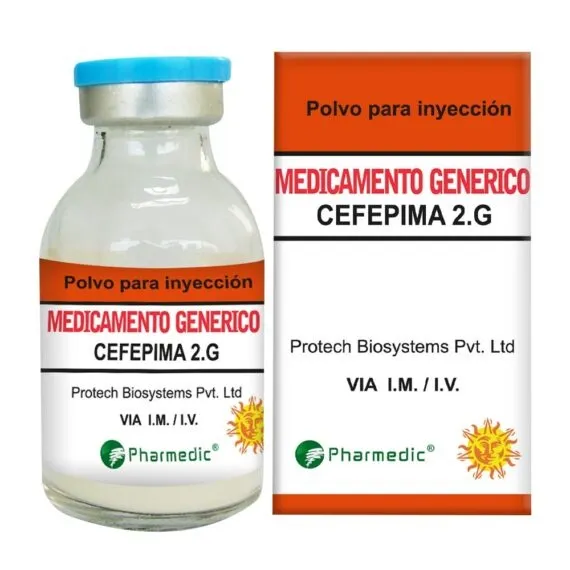
Table of Contents
Package leaflet: Information for the user
Introduction
Package leaflet: Information for the user
Cefepime NORMON 2 g powder and solvent for injectable solution and for infusion EFG
Read the entire leaflet carefully before you start using this medicine.
- Keep this leaflet, as you may need to read it again.
- If you have any questions, ask your doctor or pharmacist.
- This medicine has been prescribed for you; do not give it to others, even if they have the same symptoms, as it may harm them.
- If you experience any adverse effects, consult your doctor or pharmacist, even if they are effects not listed in this leaflet. See section 4.
Leaflet contents:
- What Cefepime NORMON is and what it is used for
- What you need to know before using Cefepime NORMON
- How to use Cefepime NORMON
- Possible side effects
- How to store Cefepime NORMON
- Contents of the pack and other information
1. What Cefepima NORMON is and what it is used for
Cefepima NORMON is an antibiotic administered by infusion (intravenous drip) or by intravenous injection.
Cefepima belongs to the group of antibiotics known as "cephalosporins." These antibiotics are closely related to penicillin.
Antibiotics are used to treat bacterial infections and are not effective against viral infections such as influenza or the common cold. It is important that you follow the instructions regarding dosage, dosing interval, and duration of treatment as prescribed by your doctor. Do not store or reuse this medication. If you have leftover antibiotics after completing treatment, return them to the pharmacy for proper disposal. Medicines must not be disposed of via the sink or in household waste. |
Cefepime NORMON is effective against certain types of bacteria that are sensitive to the active substance cefepime.
It is suitable for the treatment of infections in adults such as:
- lung infections (pneumonia),
- kidney and bladder infections (urinary tract),
- skin infections and infections of the underlying tissue layers,
- fever in patients with severe or moderate reduction in certain white blood cells,
- abdominal infections (peritonitis, biliary tract infections).
Cefepime may also be used to help prevent infections following abdominal surgery.
It is suitable for the treatment in children of infections such as:
- severe lung infections (pneumonia),
- severe bladder and kidney infections (urinary tract),
- skin infections and infections of the underlying tissue layers,
- fever in patients with moderate or severe reduction in the number of certain white blood cells,
- brain infections (bacterial meningitis).
2. What you need to know before using Cefepime NORMON
Do not use Cefepime NORMON:
- If you are allergic (hypersensitive) to cefepime or arginine.
- If you are allergic (hypersensitive) to any other cephalosporin or any other type of antibiotic.
- If you have ever had a severe allergic reaction to penicillin or any other beta-lactam antibiotic, because this could mean that you may also be allergic to cefepime.
- If you have previously experienced other types of allergic reactions, asthma, hay fever, or hives (urticaria).
- If you have high levels of potassium in your blood.
- If you have high blood acidity levels.
If in doubt, consult your doctor or pharmacist.
Warnings and precautions
Talk to your doctor or pharmacist before using cefepime if:
- you have ever had an allergic reaction to penicillin or other drugs belonging to the penicillin family (beta-lactam antibiotics),
- you have kidney problems,
- you have previously had intestinal problems with diarrhea, known as colitis, or any serious intestinal disorder.
If any of these situations apply to you, your doctor may wish to change your treatment or give you special instructions.
Using Cefepime NORMON with other medicines
Inform your doctor or pharmacist if you are taking, have recently taken, or might need to take any other medicines.
This is important because certain medicines should not be taken together with Cefepime NORMON. In particular, inform your doctor if:
- You are taking medicines that may affect kidney function, such as aminoglycoside antibiotics or drugs that increase urine output or the need to urinate (diuretics).
- You have diabetes: Inform your doctor if you have diabetes and routinely test sugar levels in your urine. Cefepime may alter the results of non-enzymatic urine sugar tests. Alternative tests may be used to monitor diabetes during treatment with this medicine.
- You are having blood tests: This medicine may alter the results of certain blood tests (such as the Coombs test). It is important that you inform your doctor that you are being treated with cefepime when undergoing blood tests.
Pregnancy and breastfeeding
If you are pregnant, breastfeeding, think you may be pregnant, or plan to become pregnant, consult your doctor or pharmacist before using this medicine. Cefepime should only be administered if the expected benefit to the mother outweighs the unknown risks to the fetus.
Do not breastfeed while taking this medicine, as small amounts of the drug may pass into breast milk and therefore into the infant.
Consult your doctor or pharmacist before using any medicine.
Driving and using machines
No studies have been conducted to determine the effects on the ability to drive or operate machinery. However, side effects may occur that could affect your ability to drive or use machines (see section 4).
3. How to use Cefepime NORMON
Follow exactly the administration instructions for this medicine as indicated by your doctor or pharmacist. If in doubt, consult your doctor or pharmacist again.
Cefepime is normally administered by a doctor or nurse. If in doubt, consult your doctor or pharmacist again.
It is administered:
By intravenous injection (over 3-5 minutes) or by infusion (over 30 minutes) into a vein (infusion).
The dose of Cefepime will be determined by your doctor according to your age, weight, severity of the infection, and the degree of kidney function. Your doctor will explain this to you.
- The usual dose in adults is 2 to 4 grams (g) daily. In severe infections, the dose may be increased up to 6 g daily.
- Children or patients with renal problems may require lower doses. This will be decided by your doctor.
If you use more Cefepime NORMON than you should:
Since Cefepime will be administered by a doctor or nurse, it is unlikely that you will receive an incorrect dose. However, if you experience side effects or think you have been given too much, inform your doctor immediately.
In case of overdose or accidental ingestion, contact your doctor or pharmacist immediately or call the Toxicology Information Service at: 91 562 04 20, indicating the medicine and the amount ingested.
If you forget to use Cefepime NORMON
If you think you have missed a dose of Cefepime, inform your doctor immediately.
If you have any further questions about the use of this medicine, ask your doctor or pharmacist.
4. Possible adverse effects
Like all medicines, this medicine can cause adverse effects, although not everyone will experience them.
You must immediately inform your doctor if you notice any of the following:
Uncommon adverse effects (may affect up to 1 in 100 people)
- Inflammation of the intestines (colitis or antibiotic-associated colitis), causing severe, prolonged watery diarrhoea with stomach cramps and fever.
Rare adverse effects (may affect up to 1 in 1,000 people)
- Severe allergic reactions (sudden wheezing, difficulty breathing or dizziness, swelling of the eyelids, face, lips or throat)
- Seizures (epileptic fits)
Adverse effects of unknown frequency
- Destruction and inability to form red blood cells, possibly causing weakness, bruising, frequent infections, pale skin, fatigue, difficulty breathing, and dark urine.
- Absence of white blood cells, which may cause sudden high fever, severe sore throat, and mouth ulcers.
- A severe and rapid allergic reaction, with narrowing of the airways that may prevent breathing.
- Coma, decreased level of consciousness, or difficulty thinking.
- Various conditions affecting the brain, symptoms of which may include paralysis of part or all of the body, neck stiffness, speech and eye movement abnormalities.
- Sudden muscle contraction.
- Skin peeling and blistering, including in the mouth, eyes, and genitals.
- Kidney failure, causing a significant decrease in urine production.
Other possible adverse effects:
Very common adverse effects (may affect more than 1 in 10 people)
- False positive in a test for red blood cell status (Coombs test).
Common adverse effects (may affect up to 1 in 10 people)
-
Low red blood cell count, increase in certain types of white blood cells, changes in blood coagulation parameters.
-
Intravenous administration may cause inflammation of blood vessels.
-
Diarrhoea.
-
Increased levels of certain liver enzymes, high levels of bilirubin in the blood.
-
Rash.
-
Reactions at the injection or infusion site, including pain and inflammation at the injection site.
Uncommon adverse effects (may affect up to 1 in 100 people)
- Oral candidiasis (yeast infection), vaginal infections.
- Serious blood disorders, including changes in the number of certain white blood cells and platelets (symptoms may include fatigue, new infections, easy bruising, and bleeding).
- Headache, feeling of nausea (nausea), and dizziness (vomiting).
- Skin rash (urticaria), redness and itching of the skin.
- Abnormal results in kidney function tests.
- Fever.
Rare adverse effects (may affect up to 1 in 1,000 people)
- Tingling or numbness in the hands or feet.
- Decreased level of consciousness or difficulty thinking, dizziness.
- Disturbance of taste sensation.
- Dilation of blood vessels.
- Difficulty breathing.
- Stomach (abdominal) pain, constipation.
- Genital itching.
- Tremors.
Adverse effects of unknown frequency
- False positives in urine glucose tests.
- Confusion, hallucinations, somnolence, altered consciousness.
- Bleeding.
- Gastrointestinal discomfort.
Reporting of adverse effects
If you experience any type of adverse effect, consult your doctor or pharmacist, even if they are adverse effects not listed in this leaflet. You may also report them directly via the Spanish System for Pharmacovigilance of Human Medicines: www.notificaRAM.es. By reporting adverse effects, you can help provide more information on the safety of this medicine.
5. Storage of Cefepime NORMON
Keep this medicine out of the sight and reach of children.
Do not use this medicine after the expiry date stated on the packaging after "EXP". The expiry date refers to the last day of the month indicated.
Do not store above 30°C. Keep in the cardboard box to protect from light.
Storage conditions for reconstituted/diluted solutions of the medicine can be found at the end of the leaflet under “This information is intended for healthcare professionals only”.
Medicines must not be disposed of via wastewater or household waste. Dispose of unused medicines and their containers at the SIGRE disposal point at your pharmacy. If you are unsure, ask your pharmacist how to dispose of medicines and containers you no longer need. This will help protect the environment.
6. Pack contents and other information
Composition of Cefepime NORMON
Each vial contains 2 g of cefepime (as cefepime hydrochloride monohydrate).
The other component (excipient) is L-arginine.
Each ampoule contains water for injections.
Appearance of the product and pack contents
Cefepime NORMON is a white or almost white powder for injectable solution and for infusion, presented in glass vials closed with an elastomeric stopper and a flip-off cap.
The vials are packed in cardboard boxes.
Pack sizes: 1 and 50 vials.
Only certain pack sizes may be marketed.
Marketing Authorization Holder and Manufacturer
LABORATORIOS NORMON, S.A.
Ronda de Valdecarrizo, 6 – 28760 Tres Cantos – Madrid (SPAIN)
Date of the most recent revision of this leaflet: May 2014
Detailed and up-to-date information on this medicinal product is available on the website of the Spanish Agency of Medicines and Health Products (AEMPS): http://www.aemps.gob.es/
This information is intended exclusively for healthcare professionals:
Cefepime NORMON 2 g powder and solvent for injectable solution and for infusion EFG
This is an extract from the Summary of Product Characteristics to assist in the administration of Cefepime NORMON. To determine its suitability for use in a particular patient, the physician must be familiar with the Summary of Product Characteristics.
For intravenous injection or infusion.
INCOMPATIBILITIES WITH DILUENTS AND OTHER MEDICINES
Cefepime NORMON solutions must not be mixed with the following antibiotics: metronidazole, vancomycin, gentamicin, tobramycin sulfate, and netilmicin sulfate, as physical or chemical incompatibilities may occur. If concomitant therapy is indicated, these antibiotics should be administered separately.
INSTRUCTIONS FOR USE, HANDLING, AND DISPOSAL
Aseptic techniques must be used when reconstituting the solution. The reconstituted solution should be administered immediately after preparation.
Inspect the vial before use. It should only be used if the solution is free from particles.
Use only clear solutions.
As with other cephalosporins, cefepime solutions may turn from yellow to amber in colour, depending on storage conditions. However, this does not have any negative effect on the efficacy of the product.
Disposal of unused medicine and of all materials that have been in contact with it must be carried out in accordance with local regulations.
Method of administration:
Intravenous administration:
For direct IV injection, the contents of the ampoule should be dissolved in 5 or 10 ml of water for injections, 5% glucose solution for infusion, or sodium chloride 9 mg/ml (0.9%) solution for infusion, as indicated in the following table. Reconstitution must be performed with immediate and vigorous shaking until complete dissolution of the product after adding the solvent volume to reconstitute the vial, avoiding diffusion of the solvent into the powder without dissolving it. The prepared solution should be injected slowly over 3 to 5 minutes directly into a vein or via a cannula of an infusion system while the patient is receiving an IV infusion with a compatible solution.
For IV infusions, the powder should be dissolved as described for direct IV injections. An appropriate amount of the prepared solution should be added to an IV infusion container containing a compatible infusion solution.
Cefepime NORMON, once reconstituted, is compatible with the following infusion solutions: water for injections, sodium chloride 9 mg/ml (0.9%) solution for infusion, 5% glucose solution for infusion, 10% glucose solution for infusion, 1/6M sodium lactate solution for infusion, 5% glucose and sodium chloride 9 mg/ml (0.9%) solution for infusion, 5% glucose and Ringer's lactate solution for infusion, and Ringer's lactate solution for infusion. Reconstituted and diluted solutions must be administered immediately after preparation.
Dosage:
Adults and adolescents with body weight above 40 kg (approximately over 12 years of age):
- The recommended doses for adults and adolescents with body weight above 40 kg and normal renal function are shown in the following table:
Severity of infection Dosing interval | Dose and route of administration | Dosing interval |
Mild to moderate infections | 1 g IV | 12h |
Moderate to severe skin and soft tissue infections | 2 g IV | 12h |
Severe infections | 2 g IV | 12h |
Extremely severe or potentially life-threatening infections |
| 8h |
- For prophylaxis in intra-abdominal surgery, a single dose of 2 g administered by infusion over 30 minutes, 60 minutes before the procedure, is recommended, followed by administration of 500 mg of metronidazole. The metronidazole dose must be reconstituted and administered according to the official Summary of Product Characteristics. Due to incompatibility between cefepime and metronidazole, these two active substances must not be administered together. Prior to infusion of metronidazole, it is recommended that the infusion line be flushed with a compatible fluid. If the procedure lasts longer than 12 hours, the infusion should be repeated after 12 hours.
Paediatric population:
Pneumonia, urinary tract infections, skin and soft tissue infections: 50 mg/kg every 12 hours for 10 days. For severe infections, the dose may be administered every 8 hours.
- Bacterial meningitis and empirical treatment of febrile neutropenia: 50 mg/kg every 8 hours for 7–10 days.
- Experience is limited in children under 2 months of age. The recommended dose is 30 mg/kg every 12 hours or every 8 hours. These patients should be carefully monitored when receiving Cefepime NORMON.
- Paediatric doses must not exceed the maximum daily dose for adults (2 g every 8 hours).
- Experience with intramuscular administration in paediatric patients is limited.
Elderly patients:
Dosage adjustment is not required, except in cases of renal impairment.
Hepatic impairment in adults:
Dosage adjustment is not required in patients with hepatic impairment.
Renal impairment in adults:
The recommended initial dose in patients with renal impairment (except those undergoing dialysis; see below) is the same as that for patients with normal renal function. The following table shows the maintenance dosing for adult patients with renal dysfunction:
Creatinine clearance (ml/min) | Recommended maintenance dose (Usual dose, no dose adjustment needed) | ||
> 50 | 2 g every 8 h | 2 g every 12 h | 1 g every 12 h |
30–50 | 2 g every 12 h | 2 g every 24 h | 1 g every 24 h |
11–29 | 2 g every 24 h | 1 g every 24 h | 500 mg every 24 h |
≤ 10 | 1 g every 24 h | 500 mg every 24 h | 250 mg every 24 h |
Hemodialysis | 500 mg every 24 h | 500 mg every 24 h | 500 mg every 24 h |
Patients on dialysis:
The recommended dose is 1 g of cefepime on the first day of treatment, followed by 500 mg/day for all infections, except febrile neutropenia. On hemodialysis days, cefepime should be administered after hemodialysis. Whenever possible, cefepime should be administered at the same time each day.
In cases of continuous ambulatory peritoneal dialysis, cefepime may be administered at the same doses recommended for patients with normal renal function, but with 48-hour intervals.
Children with renal impairment:
Maintenance dose in children aged 2 months to 12 years with renal impairment:
Creatinine clearance (ml/min) | Recommended maintenance dose in children > 2 months to 12 years |
> 50 | Usual dose, no adjustment required: 50 mg/kg every 8h / 50 mg/kg every 12h |
30-50 | 50 mg/kg every 12h / 50 mg/kg every 24h |
11-29 | 50 mg/kg every 24h / 25 mg/kg every 24h |
≤10 | 25 mg/kg every 24h / 12.5 mg/kg every 24h |
Duration of treatment:
In general, treatment should always be continued for a few days beyond the reduction of fever and resolution of pathological symptoms. The duration of treatment is usually 7 to 10 days; however, a longer treatment period may be necessary for more severe infections. For empirical treatment of febrile neutropenia, the duration of treatment is generally 7 days or until resolution of neutropenia.