Cefazolin Sala 1 g powder for injection solution EFG
Spain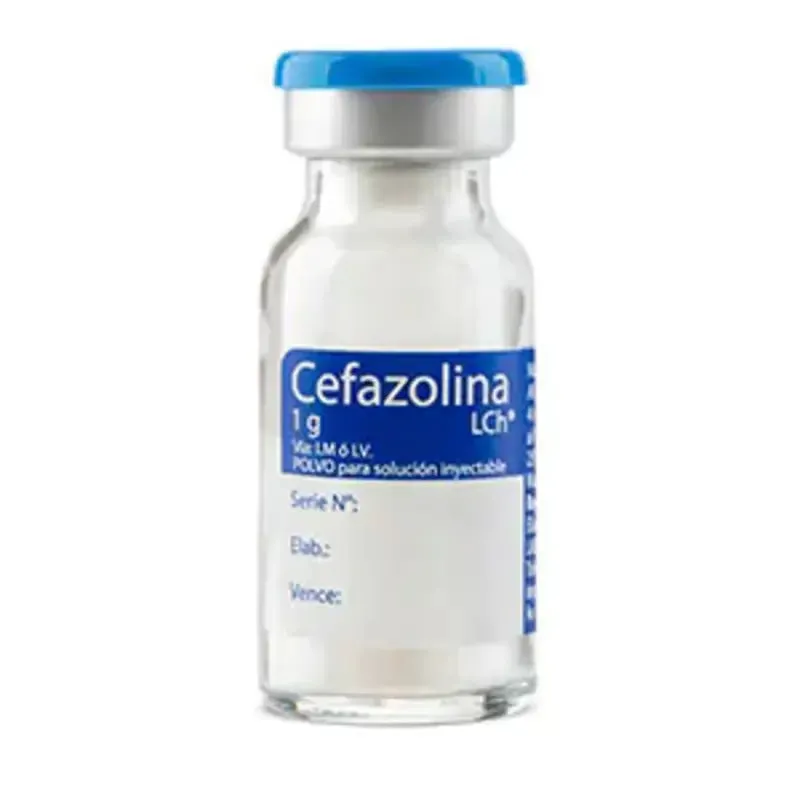
Table of Contents
- Package leaflet: Information for the user
- Introduction
- 1. What Cefazolin Sala is and what it is used for
- 2. What you need to know before starting to use Cefazolin Sala.
- **Risk factors that may cause vitamin K deficiency or risk factors affecting other blood coagulation mechanisms.**
- 3. How to use Cefazolina Sala
- 4. Possible adverse effects
- 5. Storage of Cefazolin Sala
- 6. Contents of the container and other information
Package leaflet: Information for the user
Introduction
Package leaflet: information for the user
Cefazolina Sala 1 g powder for injectable solution EFG
Cefazolin
Read the entire leaflet carefully before you start using this medicine, because it contains important information for you
- Keep this leaflet. You may need to read it again.
- If you have any questions, ask your doctor or pharmacist.
- This medicine has been prescribed for you personally and you should not give it to others, even if they have the same symptoms, as it may harm them.
- If you experience any adverse effects, consult your doctor or pharmacist, even if they are adverse effects not listed in this leaflet. See section 4.
Leaflet contents:
- What Cefazolina Sala is and what it is used for.
- What you need to know before using Cefazolina Sala.
- How to use Cefazolina Sala.
- Possible adverse effects.
- How to store Cefazolina Sala.
- Contents of the pack and other information.
1. What Cefazolin Sala is and what it is used for
Cefazolin is an antibiotic belonging to the cephalosporin group.
Antibiotics are used to treat bacterial infections and are not effective against viral infections such as influenza or the common cold.
It is important that you follow your doctor's instructions regarding dosage, dosing interval, and duration of treatment.
Do not store or reuse this medicine. If you have any antibiotic left over after completing treatment, return it to the pharmacy for proper disposal. Medicines must not be disposed of via wastewater or household waste.
This medicine is used to treat the following bacterial infections caused by susceptible pathogens located in:
- respiratory tract
- urinary tract
- skin and soft tissues
- joints
- heart
- blood (septicaemia)
- surgical infection prophylaxis
2. What you need to know before starting to use Cefazolin Sala.
Do not use Cefazolin Sala
- If you are allergic (hypersensitive) to cefazolin, to other cephalosporins, or to any of its components.
Warnings and precautions
Take special care with Cefazolin Sala
-
If you develop severe and persistent diarrhoea, it may be due to a specific type of colitis called pseudomembranous colitis, which can be serious. In such cases, your doctor will decide whether cefazolin should be discontinued and whether appropriate treatment should be initiated.
-
If you are undergoing prolonged treatment with cefazolin, superinfections may occur.
-
If you have renal impairment, your doctor may need to adjust the dose of cefazolin you should receive.
-
If you need to undergo any blood tests, you must inform healthcare personnel that you are receiving this medicine, as cefazolin may interfere with test results.
-
Signs of allergic reaction, including respiratory problems and chest pain, have been reported with the use of cefazolin. Immediately discontinue use of cefazolin and contact your doctor immediately or go to the emergency room if you experience any of these signs.
Risk factors that may cause vitamin K deficiency or risk factors affecting other blood coagulation mechanisms.
Rarely, blood coagulation disorders may occur during treatment with cefazolin. Additionally, changes in blood coagulation may occur in patients with conditions that may cause or worsen bleeding, such as hemophilia or stomach or intestinal ulcers. In such cases, your blood coagulation will be monitored.
Other medicines and Cefazolina Sala
Inform your doctor or pharmacist if you are currently using, or have recently used, any other medicines, including those obtained without a prescription.
Cefazolin must not be administered together with:
- Other antibiotics with a similar mechanism of action, such as tetracyclines, sulfonamides, erythromycin, and chloramphenicol.
- Anticoagulants
- Probenecid (used to treat gout)
- Nephrotoxic agents
Pregnancy and breastfeeding
If you are pregnant or breastfeeding, your doctor will decide whether it is appropriate to use this medicine. Consult your doctor or pharmacist before taking any medication.
Driving and operating machinery
Cefazolin generally does not impair the ability to drive vehicles or operate machinery.
Cefazolina Sala contains sodium
Patients on low-sodium diets should be aware that this medicine contains 51 mg (2.2 mmol) of sodium per gram of cefazolin.
3. How to use Cefazolina Sala
Follow exactly the administration instructions for this medicine as indicated by your doctor. If in doubt, consult your doctor or pharmacist again.
Your doctor will determine the appropriate dose and duration of your treatment; do not stop or extend it prematurely.
Recommended dose
Adults and children over 12 years: in mild infections, 500 mg every 8 hours; in moderate to severe infections, 500 mg to 1 g every 6 or 8 hours; in more severe infections, 1 g to 1,500 mg every 6 hours.
Children (under 12 years and over 1 year): a total daily dose of 25 to 50 mg per kg of body weight, divided into three or four equal doses, is effective in most mild to moderate infections. The total daily dose should not exceed 100 mg/kg, even in cases of severe infection.
Prophylactic treatment
-
1-2 g administered intravenously, given half an hour to one hour before starting surgery.
-
for prolonged surgical procedures (e.g., two hours or longer), 500 mg to 1 g intravenously during surgery (administration will be adjusted depending on the duration of the procedure).
-
500 mg to 1 g intravenously every six to eight hours for 24 hours postoperatively.
Patients with renal and/or hepatic impairment
A dose reduction may be necessary if you have renal or hepatic impairment. In such cases, inform your doctor so that your dose can be appropriately adjusted.
If you use more Cefazolina Sala than you should
In case of accidental overdose, contact your doctor or pharmacist immediately or call the Toxicology Information Service at telephone: 91 562 04 20, indicating the medicine and the amount ingested. Take the package leaflet with you.
If you forget to use Cefazolina Sala
Do not take a double dose to make up for forgotten doses.
If you interrupt treatment with Cefazolina Sala
Do not stop treatment before completion, as the desired effect will not be achieved. It is very important to treat infections for the recommended duration; otherwise, the condition could worsen.
If you have any further questions about using this product, ask your doctor or pharmacist.
4. Possible adverse effects
Like all medicines, this medicine can cause the following adverse effects, although not everyone will experience them.
The incidence of adverse reactions associated with treatment with Cefazoina Sala is classified as follows:
Severe allergic reactions (very rare, may affect up to 1 in 10,000 people).
If you experience a severe allergic reaction, inform your doctor immediately.
Possible symptoms include:
-
Sudden swelling of the face, throat, mouth or lips, which may cause difficulty in
breathing or swallowing. -
Sudden swelling of hands, feet and ankles.
Other possible adverse effects
Frequent (may affect up to 1 in 10 people):
- Skin rash.
- Nausea and vomiting.
- Diarrhea.
- Pain or induration (hardened skin) at the injection site.
Uncommon (may affect up to 1 in 100 people):
- Oral fungal infection.
- Fever.
- Seizures (attacks).
- Inflammation of the veins.
- Itching and redness of the skin, joint pain, skin lesions, generalized rash and
urticaria.
Rare (may affect up to 1 in 1,000 people):
-
Genital infection, vaginal candidiasis — vaginal pain and itching or vaginal discharge.
-
Prolonged use may lead to overgrowth of non-susceptible bacteria.
-
Increase or decrease in blood cell counts.
-
Hyperglycemia (high blood sugar level), hypoglycemia (low blood sugar level).
-
Dizziness.
-
Respiratory disorders (breathing).
-
Kidney and urinary tract disorders.
-
Cough.
-
Rhinorrhea.
-
Loss of appetite.
-
Liver failure (detectable in blood tests), jaundice.
-
Severe rapidly progressing skin rash (with skin blisters and peeling, and possible
blisters in the mouth). -
Severe fatigue and weakness.
-
Chest pain.
Very rare (may affect up to 1 in 10,000 people):
-
Blood coagulation disorders.
-
Inflammation of the colon. Symptoms include diarrhea, usually with blood and mucus, abdominal
pain and fever. -
Genital itching.
Frequency not known (cannot be estimated from available data):
- Chest pain, which may be a sign of a potentially serious allergic reaction called Kounis syndrome.
Reporting of adverse effects
If you experience any type of adverse effect, consult your doctor or pharmacist, even if they are possible adverse effects not listed in this leaflet. You may also report them directly via the Spanish Pharmacovigilance System for Human Medicinal Products (https://www.notificaram.es). By reporting adverse effects, you can help provide more information on the safety of this medicine.
5. Storage of Cefazolin Sala
Keep this medicine out of the sight and reach of children.
Do not use this medicine after the expiry date stated on the container. The expiry date refers to the last day of the month indicated.
Store in the outer packaging to protect it from light.
The reconstituted solution is stable for 8 hours at a temperature not exceeding 25°C and for 24 hours if stored refrigerated (2–8°C).
Do not use this medicine if visible signs of deterioration are observed.
Medicines must not be disposed of via wastewater or household waste. Return unused medicines and their containers to the SIGRE point at your pharmacy. If in doubt, ask your pharmacist how to dispose of medicines and containers you no longer need. This will help protect the environment.
6. Contents of the container and other information
Composition of Cefazolina Sala
The active substance is cefazolin. Each vial contains 1 g of cefazolin (D.O.E.) (as cefazolin sodium).
Appearance of the product and contents of the container
Cefazolina Sala 1 g powder for intravenous injectable solution EFG is supplied in a glass vial.
Each pack contains 1 vial and the clinical pack contains 100 vials.
Marketing Authorization Holder and Manufacturer
Marketing Authorization Holder:
Laboratorio Reig Jofre, S.A.
Gran Capitán, 10 – 08970
Sant Joan Despí (Barcelona)
Spain
Manufacturer:
Laboratorio Reig Jofre, S.A.
C/Jarama 11, Polígono industrial - 45007
Toledo - Spain
Date of the most recent review of this leaflet: March 2026
Detailed and up-to-date information on this medicinal product is available on the website of the Spanish Agency for Medicinal Products and Health Products (AEMPS) http://www.aemps.gob.es/
This information is intended for healthcare professionals only
Instructions for correct administration of the product
Intravenous administration: cefazolin may be administered by direct intravenous injection or by continuous or intermittent infusion (never dissolved in lidocaine).
- Continuous or intermittent intravenous infusion: cefazolin may be administered through standard intravenous fluid delivery systems, with control of infusion rate, or into a secondary intravenous infusion bag. Reconstitute 500 mg or 1 g of cefazolin with 4 ml of water for injection (not in lidocaine), then dilute in 50 to 100 ml of one of the following intravenous solutions:
0.9% Sodium chloride
5% or 10% Glucose
5% Glucose in Ringer's lactate
0.9% Sodium chloride and 5% Glucose
0.45% Sodium chloride and 5% Glucose
Ringer's lactate
5% or 10% Fructose in water for injection
- Direct intravenous injection (bolus):
Reconstituted 500 mg or 1 g: diluted in 10 ml of water for injection.
Reconstituted 2 g: diluted in a minimum of 20 ml of water for injection.
The solution should be injected slowly over 3 to 5 minutes (must not be administered in less than three minutes).