Ceciliana 2 mg/0.03 mg film-coated tablets EFG
Spain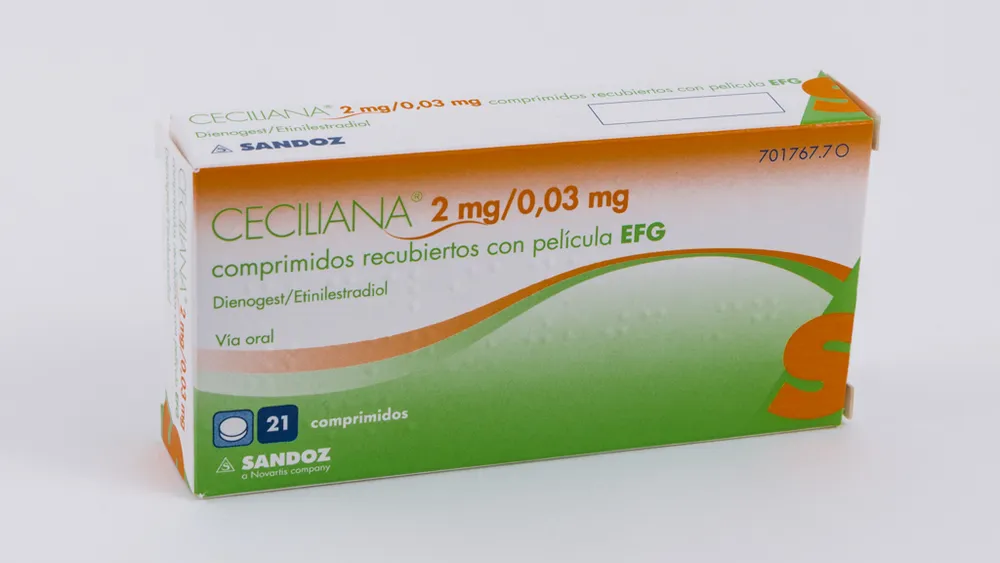
Table of Contents
Package leaflet: Information for the user
Introduction
Package leaflet: information for the user
Ceciliana 2 mg/0.03 mg film-coated tablets EFG
dienogest/ethinylestradiol
Important things you need to know about combined hormonal contraceptives (CHCs):
- They are one of the most reliable reversible contraceptive methods if used correctly.
- They slightly increase the risk of developing a blood clot in veins and arteries, especially during the first year or when restarting a combined hormonal contraceptive after a break of 4 weeks or more.
- Be alert and consult your doctor if you think you may be experiencing symptoms of a blood clot (see section 2 “Blood clots”).
Read this entire leaflet carefully before starting to take this medicine, as it contains important information for you.
- Keep this leaflet, as you may need to refer to it again.
- If you have any questions, consult your doctor or pharmacist.
- This medicine has been prescribed for you only and must not be given to other people, as it may harm them.
- If you experience any adverse effects, consult your doctor or pharmacist, even if they are effects not listed in this leaflet. See section 4.
Contents of the leaflet:
-
What Ceciliana is and what it is used for
-
What you need to know before taking Ceciliana
-
How to take Ceciliana
-
Possible side effects
-
How to store Ceciliana
-
Contents of the pack and other information
1. What Ceciliana is and what it is used for
This medicine is used for:
- preventing pregnancy (contraceptive pill),
- treatment of moderate to severe acne in women who are willing to use a contraceptive pill after failure of adequate topical or oral antibiotic therapy.
It contains a small amount of female hormones, a progestogen (dienogest) and an oestrogen (ethinylestradiol).
Contraceptive pills containing two hormones are known as "combined" pills or combined oral contraceptives.
Oral contraceptive pills (taken by mouth) are a highly effective method of birth control. If taken regularly (without missing tablets), the chance of becoming pregnant is very low.
In women with increased effects of male hormones, the "androgenic effect" leads to the development of acne; these symptoms improved with the use of Ceciliana.
2. What you need to know before starting to take Ceciliana
General considerations
Before starting to use Ceciliana, you must read the information about blood clots in section 2. It is particularly important that you read about the symptoms of a blood clot (see section 2 “Blood clots”).
Before you can start taking Ceciliana, your doctor will ask you some questions about your personal medical history and that of your close relatives. Your doctor will also measure your blood pressure and, depending on your individual situation, may carry out additional tests.
This leaflet describes several situations in which you should stop taking Ceciliana, or in which the effectiveness of Ceciliana is reduced. In such situations, you should not have sexual intercourse without using additional non-hormonal contraceptive precautions, such as a condom or another barrier method. Do not use rhythm or temperature methods. These methods are unreliable because contraceptive pills alter the usual changes in body temperature and cervical mucus that occur during the menstrual cycle.
Ceciliana, like other oral hormonal contraceptives, does not protect against HIV infection (AIDS) or other sexually transmitted infections.
If you have acne, it will usually start to improve within 3 to 6 months after starting treatment, and may continue to improve even after 6 months. You should consult your doctor about the need to continue treatment 3 or 6 months after starting, and then have regular check-ups to assess whether treatment should be extended.
Do not take Ceciliana
You must not use Ceciliana if you have any of the conditions listed below. Inform your doctor if you have any of the conditions listed below. Your doctor will discuss with you which alternative form of contraception would be most suitable.
-
If you are allergic to ethinylestradiol, dienogest, or any of the other ingredients of this medicine (listed in section 6). Allergic reactions may manifest, for example, as itching, rash, or swelling.
-
If you have (or have ever had) a blood clot in a blood vessel in your legs (deep vein thrombosis, DVT), in your lungs (pulmonary embolism, PE), or in other organs.
-
If you know you have a disorder affecting blood clotting: for example, protein C deficiency, protein S deficiency, antithrombin III deficiency, factor V Leiden, or antiphospholipid antibodies.
-
If you require surgery or will be immobile for a long time (see section “Blood clots”).
-
If you have ever had a heart attack or stroke.
-
If you have (or have ever had) angina pectoris (a condition causing severe chest pain and may be the first sign of a heart attack) or transient ischaemic attack (TIA, temporary stroke-like symptoms).
-
If you have any of the following conditions that may increase your risk of forming a clot in the arteries:
-
Severe diabetes with blood vessel damage.
-
Very high blood pressure.
-
Very high levels of fat in the blood (cholesterol or triglycerides).
-
A condition called hyperhomocysteinemia.
-
If you have (or have ever had) a type of migraine known as “migraine with aura”.
-
If you smoke.
-
If you have, have had, or are suspected of having a cancer that may be influenced by your sex hormones (for example, breast cancer or genital organ cancers).
-
If you have or have had a liver tumour (benign or malignant).
-
If you have or have had liver disease, or if your liver blood values are not normalized (also in cases of Rotor syndrome and Dubin-Johnson syndrome).
-
If you have any type of vaginal bleeding of unknown cause.
-
If you are pregnant or suspect you might be pregnant.
-
If you have hepatitis C and are taking medicines containing ombitasvir/paritaprevir/ritonavir and dasabuvir, glecaprevir/pibrentasvir, or sofosbuvir/velpatasvir/voxilaprevir (see also section “Other medicines and Ceciliana”).
If any of the above situations occur while you are taking Ceciliana for the first time, you must stop taking this medicine immediately and inform your doctor. In the meantime, you must use a non-hormonal contraceptive method. For more information, see section “Warnings and precautions”.
Additional information about other user groups
Children and adolescents
Ceciliana is not intended for women (girls) who have not yet started menstruating.
Use in older women
Ceciliana is not intended for postmenopausal women.
Hepatic impairment
Do not take Ceciliana if you have liver disease. See also “Do not take Ceciliana” and “Warnings and precautions”.
Renal impairment
Consult a doctor. Available data do not indicate the need to modify the use of Ceciliana.
Warnings and precautions
When you should be especially careful with Ceciliana
When should you consult your doctor? Seek urgent medical attention
For a description of the symptoms of these serious side effects, see “How to recognize a blood clot”. |
If a woman uses the combined oral contraceptive pill and is experiencing any of the conditions listed below, close monitoring may be necessary.
Tell your doctor if you have any of the following conditions
If any of these conditions develop or worsen while you are using Ceciliana, you must also inform your doctor:
- if you smoke,
- if you have diabetes mellitus,
- if you are overweight,
- if you have hypertension,
- if you have Crohn's disease or ulcerative colitis (chronic inflammatory bowel disease),
- if you have systemic lupus erythematosus (SLE; a disease affecting your body's natural defense system),
- if you have hemolytic uremic syndrome (HUS; a blood clotting disorder causing kidney failure),
- if you have sickle cell anemia (an inherited red blood cell disorder),
- if you have high levels of fat in the blood (hypertriglyceridemia) or a known family history of this condition. Hypertriglyceridemia has been associated with an increased risk of pancreatitis (inflammation of the pancreas),
- if you require surgery or will be immobile for a prolonged period (see section 2 “Blood clots”),
- if you have recently given birth, as your risk of developing blood clots is higher. You should ask your doctor when you can start taking Ceciliana after childbirth,
- if you have inflammation of veins beneath the skin (superficial thrombophlebitis),
- if you have varicose veins,
- if you have heart valve disorders or heart rhythm abnormalities,
- if any of your close relatives have had a blood clot (thrombosis in the leg, in the lung—pulmonary embolism—or elsewhere), heart attack, or stroke at an early age;
- if you have migraine,
- if you have epilepsy (see "Other medicines and Ceciliana"),
- if a close relative has had breast cancer,
- if you have liver or gallbladder disease,
- if you have or have had conditions that first appeared or worsened during pregnancy or previous use of sex hormones (e.g., hearing loss, a blood disorder called porphyria, blistering skin rash during pregnancy known as herpes gestationis, a nervous system disorder called Sydenham's chorea),
- if you have yellowish-brown patches on the skin, especially on the face (chloasma); in such cases, avoid exposure to sunlight or ultraviolet radiation,
- if you have hereditary angioedema: estrogens may trigger angioedema symptoms. You must consult your doctor immediately if you experience symptoms of angioedema such as swelling of the face, tongue and/or pharynx and/or difficulty swallowing, or hives together with breathing difficulties.
- you must consult your doctor immediately if you experience symptoms of angioedema such as swelling of the face, tongue and/or throat and/or difficulty swallowing, or hives together with difficulty breathing. If you have hereditary angioedema, medications containing estrogens may induce or worsen angioedema symptoms.
If any of these conditions or diseases appear for the first time, recur, or worsen while you are taking the pill, contact your doctor.
BLOOD CLOTS
Using a combined hormonal contraceptive like Ceciliana increases your risk of developing a blood clot compared to not using one. Rarely, a blood clot can block blood vessels and cause serious problems.
Blood clots can form:
- in veins (called “venous thrombosis”, “venous thromboembolism” or VTE),
- in arteries (called “arterial thrombosis”, “arterial thromboembolism” or ATE).
Recovery from blood clots is not always complete. Rarely, there may be serious long-term effects, and very rarely, they can be fatal.
It is important to remember that the overall risk of a harmful blood clot due to Ceciliana is small.
HOW TO RECOGNIZE A BLOOD CLOT
Seek urgent medical assistance if you notice any of the following signs or symptoms.
Are you experiencing any of these signs? | What might you be suffering from? |
| Deep vein thrombosis |
If you are unsure, consult a doctor, as some of these symptoms, such as cough or shortness of breath, may be mistaken for a milder condition like a respiratory infection (e.g., a "common cold"). | Pulmonary embolism |
Symptoms occurring more frequently in one eye:
| Retinal vein thrombosis (blood clot in the eye). |
| Heart attack. |
Sometimes stroke symptoms may be brief, with almost immediate and complete recovery, but you should still seek urgent medical attention as you may be at risk of another stroke. | Stroke |
| Blood clots blocking other blood vessels. |
BLOOD CLOTS IN A VEIN
What can happen if a blood clot forms in a vein?
- The use of combined hormonal contraceptives has been associated with an increased risk of blood clots in veins (venous thromboembolism). However, these adverse effects are rare. They occur more frequently during the first year of using a combined hormonal contraceptive.
- If a blood clot forms in a vein of the leg or foot, it may cause deep vein thrombosis (DVT).
- If a blood clot travels from the leg and lodges in the lung, it may cause a pulmonary embolism.
- Very rarely, a clot may form in a vein of another organ such as the eye (retinal vein thrombosis).
When is the risk of developing a blood clot in a vein higher?
The risk of developing a blood clot in a vein is higher during the first year you take a combined hormonal contraceptive. The risk may also be higher if you restart taking a combined hormonal contraceptive (the same medication or a different one) after a break of 4 weeks or more.
After the first year, the risk decreases, but it is always somewhat higher than if you were not taking a combined hormonal contraceptive.
When you stop taking Ceciliana, your risk of developing a blood clot returns to normal within a few weeks.
What is the risk of developing a blood clot?
The risk depends on your natural risk of VTE and the type of combined hormonal contraceptive you are taking.
The overall risk of developing a blood clot in the leg or lung (DVT or PE) with Ceciliana is small.
- Among 10,000 women who do not use a combined hormonal contraceptive and who are not pregnant, about 2 will develop a blood clot in one year.
- Among 10,000 women who use a combined hormonal contraceptive containing levonorgestrel, norethisterone, or norgestimate, about 5–7 will develop a blood clot in one year.
- Among 10,000 women who use a combined hormonal contraceptive containing dienogest and ethinylestradiol, such as Ceciliana, approximately 8 to 11 women will develop a blood clot in one year.
- Your risk of developing a blood clot will depend on your personal history (see “Factors that increase your risk of a blood clot” below).
Risk of developing a blood clot in one year | |
Women who do not use a combined hormonal pill/patch/ring and who are not pregnant | About 2 out of 10,000 women |
Women who use a combined oral contraceptive pill containing levonorgestrel, norethisterone or norgestimate | Between 5 and 7 out of 10,000 women |
Women who use Ceciliana | Between 8 and 11 out of 10,000 women |
Factors that increase your risk of a blood clot in a vein
The risk of having a blood clot with Ceciliana is small, but certain conditions increase the risk. Your risk is higher:
- If you are overweight (body mass index or BMI above 30 kg/m²).
- If any of your close relatives have had a blood clot in the leg, lung, or another organ at a young age (i.e., before the age of approximately 50). In this case, you may have an inherited blood clotting disorder.
- If you require surgery or will be immobile for a long time due to injury or illness, or if your leg is in a cast. You may need to stop taking Ceciliana several weeks before surgery or while you are less mobile. If you need to stop taking Ceciliana, ask your doctor when you can start taking it again.
- As you get older (especially over about 35 years of age).
- If you have given birth within the last few weeks.
The risk of developing a blood clot increases the more of these conditions you have.
Air travel (more than 4 hours) may temporarily increase the risk of a blood clot, especially if you have any of the other risk factors listed above.
It is important to inform your doctor if you have any of the above conditions, even if you are unsure. Your doctor may decide that you need to stop taking Ceciliana.
If any of the above conditions change while you are using Ceciliana—for example, a close relative experiences a thrombosis without a known cause or you gain significant weight—inform your doctor.
BLOOD CLOTS IN AN ARTERY
What can happen if a blood clot forms in an artery?
As with a blood clot in a vein, a clot in an artery can cause serious problems. For example, it can cause a heart attack or stroke.
Factors that increase your risk of a blood clot in an artery
It is important to note that the risk of heart attack or stroke while using Ceciliana is very small, but it may increase:
- With age (over about 35 years).
- If you smoke. When using a combined hormonal contraceptive like Ceciliana, you are advised to stop smoking. If you are unable to stop smoking and are over 35 years old, your doctor may advise you to use a different type of contraceptive.
- If you are overweight.
- If you have high blood pressure.
- If any of your close relatives have had a heart attack or stroke at a young age (under 50 years). In this case, you may also have an increased risk of heart attack or stroke.
- If you or any of your close relatives have high levels of fat in the blood (cholesterol or triglycerides).
- If you suffer from migraines, especially migraines with aura.
- If you have a heart condition (valve disorders, heart rhythm disorder called atrial fibrillation).
- If you have diabetes.
If you have one or more of these conditions, or if any of them are particularly severe, your risk of developing a blood clot may be further increased.
If any of the above conditions change while you are using Ceciliana—for example, you start smoking, a close relative experiences a thrombosis without a known cause, or you gain significant weight—inform your doctor.
The "pill" and cancer
A slightly increased frequency of breast cancer has been observed in women taking contraceptive pills, but it is unknown whether this is caused by the treatment.
These findings may be due to the fact that women taking the combined pill were examined by a doctor more frequently. The risk of breast cancer gradually decreases after stopping the combined hormonal contraceptive. It is important to regularly check your breasts and inform your doctor if you notice any lumps.
In rare cases, benign liver tumors and, even more rarely, malignant liver tumors have been reported in users of contraceptive pills. These tumors may occasionally cause potentially life-threatening internal bleeding. Inform your doctor immediately if you experience severe abdominal pain.
The most important risk factor for cervical cancer is persistent infection with human papillomavirus (HPV).
Some studies suggest that prolonged use of hormonal contraceptives is a risk factor for developing cervical cancer in women. However, it is unclear to what extent this risk is increased due to sexual behavior or other factors such as human papillomavirus.
The tumors mentioned above can cause a potentially life-threatening condition or death.
Psychiatric disorders
- Some women using hormonal contraceptives such as Ceciliana have reported depression or a depressed mood. Depression can be severe and may sometimes lead to suicidal thoughts. If you experience mood changes or depressive symptoms, contact your doctor for medical advice as soon as possible.
Bleeding between periods
During the first few months of taking Ceciliana, you may experience unexpected bleeding or spotting between regular periods. You may also need sanitary protection. Continue taking the tablets as usual. Irregular bleeding usually stops once your body gets used to the pill (usually after 3 months of use).
Inform your doctor if this bleeding continues for several months or if it reappears after stopping.
What to do if no bleeding occurs during the tablet-free interval
If you have taken the tablets correctly, have not vomited or had severe diarrhea, and have not taken any other medications, it is very unlikely that you are pregnant. Continue taking Ceciliana as usual.
If you did not take the tablets correctly before the first missed withdrawal bleed or if you miss two consecutive withdrawal bleeds, you may be pregnant. Inform your doctor immediately. Start the next pack only if you are certain you are not pregnant. In the meantime, use non-hormonal contraception (see "General considerations").
Other medicines and Ceciliana
Always inform your doctor about any medicines or herbal products you are using. Also inform any other doctor or dentist who prescribes you another medicine (or the pharmacist) that you are using Ceciliana. They can tell you whether you need to take additional contraceptive precautions (e.g., condoms), and if so, for how long, or whether you should change the use of another medicine you need.
Some medicines:
- may affect the blood levels of Ceciliana,
- may make it less effective in preventing pregnancy,
- may cause unexpected bleeding.
These include medicines used to treat:
- epilepsy (e.g., phenytoin, barbiturates, primidone, carbamazepine, oxcarbazepine, topiramate, and felbamate),
- tuberculosis (e.g., rifampicin),
- some medicines used to treat HIV and Hepatitis C infection (such as protease inhibitors and non-nucleoside reverse transcriptase inhibitors like ritonavir, nevirapine, efavirenz),
- fungal infections (e.g., griseofulvin, azole antifungals such as itraconazole, voriconazole, fluconazole),
- bacterial infections (macrolide antibiotics, e.g., clarithromycin, erythromycin),
- certain heart conditions, high blood pressure (calcium channel blockers, e.g., verapamil, diltiazem),
- joint diseases: arthritis, osteoarthritis (etoricoxib),
- some herbal supplements containing St. John's Wort (Hypericum perforatum),
- grapefruit juice.
Ceciliana may affect the effectiveness of other medicines, e.g.,
- lamotrigine,
- cyclosporine,
- melatonin,
- midazolam,
- theophylline,
- tizanidine.
Do not use Ceciliana if you have Hepatitis C and are taking medications containing ombitasvir/paritaprevir/ritonavir and dasabuvir, glecaprevir/pibrentasvir, or sofosbuvir/velpatasvir/voxilaprevir, as these medications may cause increases in blood parameters measuring liver function (increase in liver enzyme ALT).
Your doctor will prescribe another type of contraceptive before starting treatment with these medications.
Ceciliana can be restarted approximately 2 weeks after completing this treatment. See section “Do not take Ceciliana.”
Consult your doctor or pharmacist before taking any medicine. Consult your doctor or pharmacist if you are taking, have recently taken, or might need to take any other medicine. They may advise you on additional protective measures while taking other medicines together with Ceciliana.
Laboratory tests
If you need to have a blood test, inform your doctor or laboratory staff that you are taking a contraceptive, as this medicine may affect the results of certain tests.
Pregnancy, breastfeeding, and fertility
If you are pregnant or breastfeeding, think you might be pregnant, or plan to become pregnant, consult your doctor or pharmacist before taking this medicine.
Pregnancy
Do not use Ceciliana during pregnancy. Before starting Ceciliana, it must be confirmed that you are not pregnant. If you become pregnant while taking this medicine, stop taking Ceciliana and consult your doctor immediately.
Breastfeeding
Do not use Ceciliana while breastfeeding, as it may reduce milk production, and small amounts of the active ingredient may pass into breast milk. You should use a non-hormonal contraceptive method while breastfeeding.
Driving and using machines
No studies have been conducted on the effect on the ability to drive or use machines.
Ceciliana contains lactose
This medicine contains lactose. If your doctor has informed you that you have an intolerance to certain sugars, consult with him before taking this medicine.
3. How to take Ceciliana
Follow exactly the instructions for administration of this medicine given by your doctor or pharmacist. If in doubt, consult your doctor or pharmacist again.
Each Ceciliana blister contains 21 film-coated tablets. The day of the week on which each tablet should be taken is printed on the blister. Take the tablet at approximately the same time every day; if necessary, with a little liquid. Follow the direction of the arrows each day until you have taken all 21 tablets. You will take no tablets for the next 7 days. Menstruation (withdrawal bleeding) should occur during these 7 days. This usually begins 2 to 3 days after taking the last Ceciliana tablet.
Start a new blister on the eighth day, whether or not you have stopped bleeding. This means you should begin each blister on the same day of the week, and withdrawal bleeding should occur approximately on the same day each month.
With correct use of combined oral contraceptives, failure is about 1% per year. If a tablet is missed or taken incorrectly, the failure rate may increase.
When to start taking Ceciliana
If you have not used any contraceptive "pill" in the previous month
Start on the first day of your menstrual cycle (the first day of menstruation as Day 1), taking the tablet marked with the correct day of the week on the blister. Continue with the following days in the correct order. This way, Ceciliana acts immediately and no additional contraceptive method is necessary.
If you start taking Ceciliana between Day 2 and Day 5, use an additional barrier contraceptive method during the first 7 days of taking the "pill".
Switching from a combined hormonal contraceptive or a combined vaginal ring or contraceptive patch
You may start taking Ceciliana the day after taking the last tablet from the blister of your previous contraceptive (meaning there will be no tablet-free interval). If your previous pack also contained tablets without active ingredients (inactive tablets), you may start taking Ceciliana the day after taking the last active tablet (if you are unsure whether the tablets are active, consult your doctor or pharmacist). You may start later, but no later than the day after the tablet-free days of your previous pill pack have ended (or after taking the last inactive tablet of your previous pill). In the case of a patch or vaginal ring, you should preferably start taking Ceciliana on the day the patch or ring is removed, and no later than the day the next application would have been due.
If you follow these instructions, no additional contraceptive method is necessary.
Switching from a progestogen-only method (progestogen-only pill, injection, implant, progestogen-releasing intrauterine system)
You may stop taking the mini-pill at any time and start taking Ceciliana the next day at the usual time. However, if you have sexual intercourse, use an additional contraceptive method (barrier method) during the first 7 days of use.
From an injectable, implant, or IUS, start taking Ceciliana on the day you would normally have received the next injection or on the day the implant or IUD is removed. However, if you have sexual intercourse, use an additional contraceptive method (barrier method) during the first 7 days of taking the tablets.
After giving birth
If you have recently given birth, your doctor may recommend that you start taking Ceciliana after your first period. However, in some cases hormonal contraception may be started earlier—consult your doctor. If, after giving birth, you have had sexual intercourse before starting Ceciliana, you must first ensure you are not pregnant or wait until your next menstrual bleeding.
If you are breastfeeding and wish to start taking Ceciliana, speak with your doctor.
After an abortion or miscarriage
Speak with your doctor about the possibility of taking Ceciliana.
If you take more Ceciliana than you should
No serious reactions have been reported from taking too many Ceciliana tablets.
If you take several tablets at once, you may experience symptoms such as nausea, vomiting, or vaginal bleeding. Even girls who have not yet menstruated but have accidentally taken this medicine may experience such bleeding.
If you discover a child has taken Ceciliana, consult your doctor.
If you have taken more Ceciliana than you should, contact your doctor, pharmacist, or call the Toxicology Information Service at 91 562 04 20 immediately, indicating the medicine and the amount taken.
If you forget to take Ceciliana
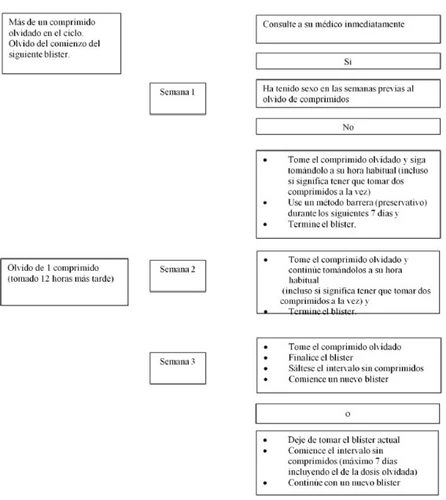
Depending on the day of the cycle when a tablet is forgotten, additional contraceptive measures such as a barrier method (e.g., condom) may be required. Take the tablets as described below. Refer to the diagram below for further details. If in doubt, contact your doctor.
- If less than 12 hours have passed since you missed the tablet, the contraceptive effect of Ceciliana is not reduced. Take the missed tablet as soon as you remember, then continue taking the following tablets at the usual time.
- If more than 12 hours have passed since you missed the tablet, protection against pregnancy is not guaranteed. The more consecutive tablets you miss, the higher the risk of pregnancy. There is a particularly high risk of pregnancy if you forget a tablet at the beginning or end of the blister. Therefore, follow the rules below (see also the missed tablet diagram below).
- You have missed more than one tablet
Contact your doctor.
Do not take more than 2 tablets in one day to make up for missed doses.
If you have missed taking any tablets and do not experience withdrawal bleeding during the first normal tablet-free interval, pregnancy should be considered. In this case, you should speak with your doctor before starting the next blister.
Follow the instructions below if you forget to take a tablet:
If you forget to take a tablet in Week 1:
If you forget to start a new blister or forget to take a tablet within the first 7 days, there is a risk you may be pregnant (if you have had sexual intercourse within the 7 days before missing a tablet). Inform your doctor before starting a new pack. See also the diagram below.
If you have not had sexual intercourse before missing the tablet, take the missed tablet as soon as you remember (even if this means taking two tablets at once) and take the next tablet at the usual time. Use additional contraceptive precautions (barrier method: condom) for the next 7 days.
If you forget to take a tablet in Week 2:
Take the missed tablet as soon as you remember (even if this means taking two tablets at once) and take the next tablet at the usual time. The reliability of the pill is maintained and no additional contraceptives are necessary.
If you forget to take a tablet in Week 3:
If you follow either of the two options described below, no additional contraceptive measures are necessary:
Option 1: Take the missed tablet as soon as possible (even if this means taking two tablets at once). Then continue taking the tablets at the usual time. You must start the next pack immediately after taking the last tablet of the current pack, i.e., without a tablet-free interval between blisters. Withdrawal bleeding is unlikely until the end of the second blister, but you may experience spotting or intermenstrual bleeding during the days you are taking the tablets.
or
Option 2: You must immediately stop taking tablets from the current blister. In this case, you must maintain a tablet-free period of up to 7 days, including the day you forgot the tablet, and then continue with tablets from the next blister.
Missed dose diagram
If you vomit or have severe diarrhea
If you experience gastrointestinal disturbances such as vomiting or diarrhea within 4 hours after taking a tablet, the active ingredient may not be completely absorbed into your body. In such cases, follow the instructions applicable when a tablet is missed within 12 hours of the usual time. If you wish to avoid deviating from your usual time, take a replacement tablet from another blister. If gastrointestinal symptoms persist for several days or are recurrent, use a barrier contraceptive method (e.g., condom) and inform your doctor.
If you discontinue treatment with Ceciliana
You may stop taking Ceciliana at any time. If you do not wish to become pregnant, consult your doctor about other reliable contraceptive methods.
If you stop taking Ceciliana because you wish to become pregnant, it is generally recommended to wait until you have had a natural period before trying to conceive. This will allow you to calculate the expected date of delivery more easily.
If you wish to delay withdrawal bleeding (your period)
If you wish to delay your period, continue immediately with the next blister of Ceciliana after taking the last tablet of the current blister. You may take as many tablets from the next blister as desired, up to the end of the second blister. To start your period, simply stop taking them. While taking the second blister, you may experience bleeding or intermenstrual spotting. The usual Ceciliana regimen resumes after the normal 7-day tablet-free interval.
If you wish to change the first day of your period
If you take the tablets as instructed, you will always have your menstrual period approximately on the same days every four weeks. If you need to change this day, you may shorten (but never lengthen) the next tablet-free interval by as many days as desired. For example, if your monthly period usually starts on Friday and you wish it to start on Tuesday (i.e., 3 days earlier), you should start the next blister 3 days earlier than usual. The shorter the tablet-free interval (i.e., 3 days or less), the greater the chance that you will not have withdrawal bleeding and may experience bleeding or spotting during the next blister.
If you have any further questions about the use of this medicine, consult your doctor or pharmacist.
4. Possible adverse effects
Like all medicines, this medicine can cause adverse effects, although not everyone will experience them. If any adverse effect worsens or if you experience any not listed in this leaflet, consult your doctor.
All women who take combined hormonal contraceptives have an increased risk of developing blood clots in veins (venous thromboembolism, VTE) or blood clots in arteries (arterial thromboembolism, ATE). For further information, see section 2, “What you need to know before taking Ceciliana”.
Serious adverse effects
The serious adverse reactions associated with the use of the pill, as well as related symptoms, are described in the following sections: “What you need to know before taking Ceciliana”, “Blood clots”, and “The pill and cancer”.
Please read these sections of the leaflet for detailed information and contact your doctor if necessary.
Contact a doctor immediately if you experience symptoms of angioedema such as swelling of the face, tongue and/or throat and/or difficulty swallowing, or hives, together with difficulty breathing (see also section “Warnings and precautions”).
Other possible adverse effects
The following adverse effects may occur with the use of dienogest/ethinylestradiol:
Common (may affect up to 1 in 10 people):
- headache,
- breast pain, including chest discomfort and breast tenderness.
Uncommon (may affect up to 1 in 100 people):
- genital inflammation (vaginitis/vulvovaginitis), fungal vaginal infections (candidiasis, vulvovaginal infections),
- increased appetite,
- depressed mood,
- dizziness,
- migraine,
- increased or decreased blood pressure, in rare cases increased diastolic blood pressure (decrease in value),
- abdominal pain (including upper and lower abdominal pain, discomfort/bloating),
- nausea, vomiting, and diarrhoea,
- acne,
- hair loss (alopecia),
- skin itching (including erythema with skin spots),
- itching (sometimes affecting the whole body),
- irregular menstrual bleeding including heavy bleeding (menorrhagia), light bleeding (hypomenorrhea), irregular bleeding (oligomenorrhea), and absence of bleeding (amenorrhea),
- spotting (vaginal bleeding and metrorrhagia),
- painful menstruation (dysmenorrhea), pelvic pain,
- breast enlargement and swelling, breast oedema,
- vaginal discharge,
- ovarian cysts,
- pelvic pain,
- fatigue including weakness, fatigue, and general malaise,
- changes in weight (increase, decrease, or fluctuation).
Rare (may affect up to 1 in 1,000 people):
- inflammation of the fallopian tubes or ovaries,
- cervical inflammation (cervicitis),
- urinary tract infection, bladder infection (cystitis),
- breast infection (mastitis),
- fungal infections (such as Candida), viral infections, cold sores,
- flu, bronchitis, respiratory tract infections, sinusitis,
- asthma,
- rapid breathing (hyperventilation),
- benign uterine neoplasms (fibroids),
- benign neoplasms in breast adipose tissue (mammary lipoma),
- anaemia,
- allergic reactions (hypersensitivity),
- development of male characteristics (virilization),
- severe loss of appetite (anorexia),
- depression,
- mental disorders,
- insomnia,
- sleep disturbances,
- aggression,
- ischaemic stroke (reduced or interrupted blood flow to the brain),
- cerebrovascular accident (vascular disorders in the brain),
- change in muscle tone – dystonia (muscle disorder causing abnormal posture or movement),
- dry or irritated eyes,
- visual disturbances,
- oscillopsia (visual disturbance causing objects to appear to move), or other vision disorders,
- sudden hearing loss,
- tinnitus,
- dizziness,
- deafness,
- cardiovascular disorders (disorders of blood flow to the heart),
- rapid heartbeat (tachycardia),
- blood clots in a vein or artery, for example:
- in a leg or foot (i.e., deep vein thrombosis),
- in a lung (i.e., pulmonary embolism),
- heart attack,
- stroke,
- symptoms of mini-stroke or transient stroke, known as transient ischaemic attack (TIA),
- blood clots in the liver, stomach/intestine, kidneys, or eyes,
- increased diastolic blood pressure (the lowest blood pressure value reached between two heartbeats),
- orthostatic hypotension (dizziness or fainting upon standing up after sitting or lying down),
- hot flushes,
- varicose veins,
- venous disorders, vein pain,
- asthma,
- deep breathing,
- gastritis,
- intestinal inflammation,
- indigestion (dyspepsia),
- skin reactions,
- skin disorders including allergic skin reaction, neurodermatitis/atopic dermatitis, eczema, psoriasis,
- excessive sweating,
- chloasma (golden-brown pigment spots, so-called “pregnancy mask”, especially on the face),
- pigmentary disorders / increased pigmentation,
- seborrhoea (oily skin),
- dandruff,
- hirsutism (male-pattern hair growth),
- orange-peel skin,
- spider veins (blood vessels in a web-like pattern with a central red spot on the skin),
- back pain,
- bone and muscle discomfort,
- muscle pain,
- pain in arms and legs,
- abnormal cell growth on the surface of the cervix (cervical dysplasia),
- pain or cysts in uterine appendages (fallopian tubes and ovaries),
- cysts in the breasts,
- fibrocystic breast disease (benign breast growths),
- pain during sexual intercourse (dyspareunia),
- milk secretion from the breast (galactorrhoea),
- menstrual disorders,
- chest pain,
- peripheral oedema (fluid retention in the body),
- flu-like illness,
- inflammation.
Adverse reactions reported with the use of the pill for which the exact frequency is unknown include: mood changes, increased or decreased sexual desire (libido), intolerance to contact lenses, urticaria, skin disorders such as erythema nodosum or erythema multiforme, milk secretion from the breast, fluid retention.
The likelihood of developing a blood clot may be higher if you have other conditions that increase this risk (see section 2 for more information about conditions that increase the risk of blood clots and symptoms of a blood clot).
Description of selected adverse reactions
Below are listed very rare adverse reactions or those with delayed onset that may occur or worsen with combined oral contraceptives (see sections “Do not take Ceciliana” and “What you need to know before taking Ceciliana”).
Tumours
- The frequency of breast cancer diagnosis among users of combined oral contraceptives is very slightly increased. Since breast cancer is rare in women under 40 years of age, this increase is low in relation to the overall risk of breast cancer. Causality related to the use of combined oral contraceptives is unknown.
- Liver tumours (benign and malignant).
Other disorders
- Women with hypertriglyceridaemia (elevated blood fats resulting in increased risk of pancreatitis when using combined oral contraceptives).
- Hypertension.
- Onset or worsening of disorders whose association with the use of COCs is not conclusive: jaundice and/or pruritus related to cholestasis (blocked bile flow); gallstone formation; a metabolic disorder called porphyria; systemic lupus erythematosus (a chronic autoimmune disease); haemolytic uraemic syndrome (a disease involving blood clots); a neurological disorder called Sydenham's chorea; herpes gestationis (a type of skin disorder occurring during pregnancy); hearing loss related to otosclerosis.
- In women with hereditary angioedema (characterized by sudden swelling of eyes, mouth, throat, etc.), externally administered oestrogens may cause or worsen angioedema symptoms.
- Alterations in liver function.
- Changes in glucose tolerance or effects on peripheral insulin resistance.
- Crohn’s disease, ulcerative colitis.
- Chloasma (brown or yellowish skin patches).
Interactions
Unexpected bleeding and/or reduced contraceptive effectiveness may result from interactions between other medicines and oral contraceptives (e.g., St. John’s wort, medicines for epilepsy, tuberculosis, HIV infection, and other infections). See also “Other medicines and Ceciliana”.
Reporting of adverse effects
If you experience any adverse effect, talk to your doctor or pharmacist, even if it is a possible adverse effect not listed in this leaflet. You can also report them directly via the Spanish Pharmacovigilance System for Human Medicines: https://www.notificaram.es. By reporting adverse effects, you can help provide more information on the safety of this medicine.
More about the contraceptive pill
The combined pill may also provide non-contraceptive health benefits.
Your menstrual bleeding may become lighter and shorter. This may result in a lower risk of anaemia. Menstrual pain may be reduced or disappear completely.
In addition, users of pills containing 50 micrograms of ethinylestradiol (high-dose pill) have been reported to have a lower incidence of certain serious conditions. These include benign breast diseases, ovarian cysts, pelvic infections (pelvic inflammatory disease), ectopic pregnancy (fetus developing outside the uterus), and cancers of the endometrium (uterine lining) and ovaries. This may also apply to the use of low-dose pills, although so far it has only been confirmed for endometrial and ovarian cancers.
5. Storage of Ceciliana
Keep this medicine out of the sight and reach of children.
Do not use this medicine after the expiry date stated on the outer packaging and on the blister after CAD/EXP. The expiry date refers to the last day of the month indicated.
Do not store above 30°C.
Keep the blister in the outer packaging to protect it from light.
Medicines must not be disposed of via wastewater or household waste. Dispose of unused medicines and their packaging at the SIGRE Point in your pharmacy. If you are unsure, please ask your pharmacist how to dispose of unused medicines and packaging. This will help protect the environment.
6. Contents of the pack and other information
Composition of Ceciliana
-
The active substances are dienogest and ethinylestradiol. Each film-coated tablet contains 2 mg of dienogest and 0.03 mg of ethinylestradiol.
-
The other components are:
-
Tablet core: lactose monohydrate, magnesium stearate, maize starch, and povidone.
-
Tablet coating: (containing an Aquarius coating system): hypromellose 2910, macrogol 400 (PEG), and titanium dioxide.
Appearance of the product and contents of the pack
Ceciliana are white, round, biconvex film-coated tablets.
Ceciliana is available in packs containing 21, 3x21, and 6x21 film-coated tablets.
Only certain pack sizes may be marketed.
Marketing Authorization Holder and Manufacturer
Marketing Authorization Holder
Sandoz Farmacéutica, S.A.
Centro Empresarial Parque Norte
Edificio Roble
C/ Serrano Galvache, 56
28033 Madrid
Spain
Manufacturer
Laboratorios León Farma, S.A.
La Vallina s/n
Polígono Industrial Navatejera
24193 Villaquilambre, León
Spain
Local representative
SHIONOGI, S.L.
C/ Serrano 45, 3rd floor
28001 Madrid
Spain
Date of the most recent review of this summary: December 2021
Detailed and up-to-date information on this medicinal product is available on the website of the Spanish Agency of Medicines and Health Products (AEMPS) http://www.aemps.gob.es/