Carvedilol Teva 6.25 mg tablets EFG
Spain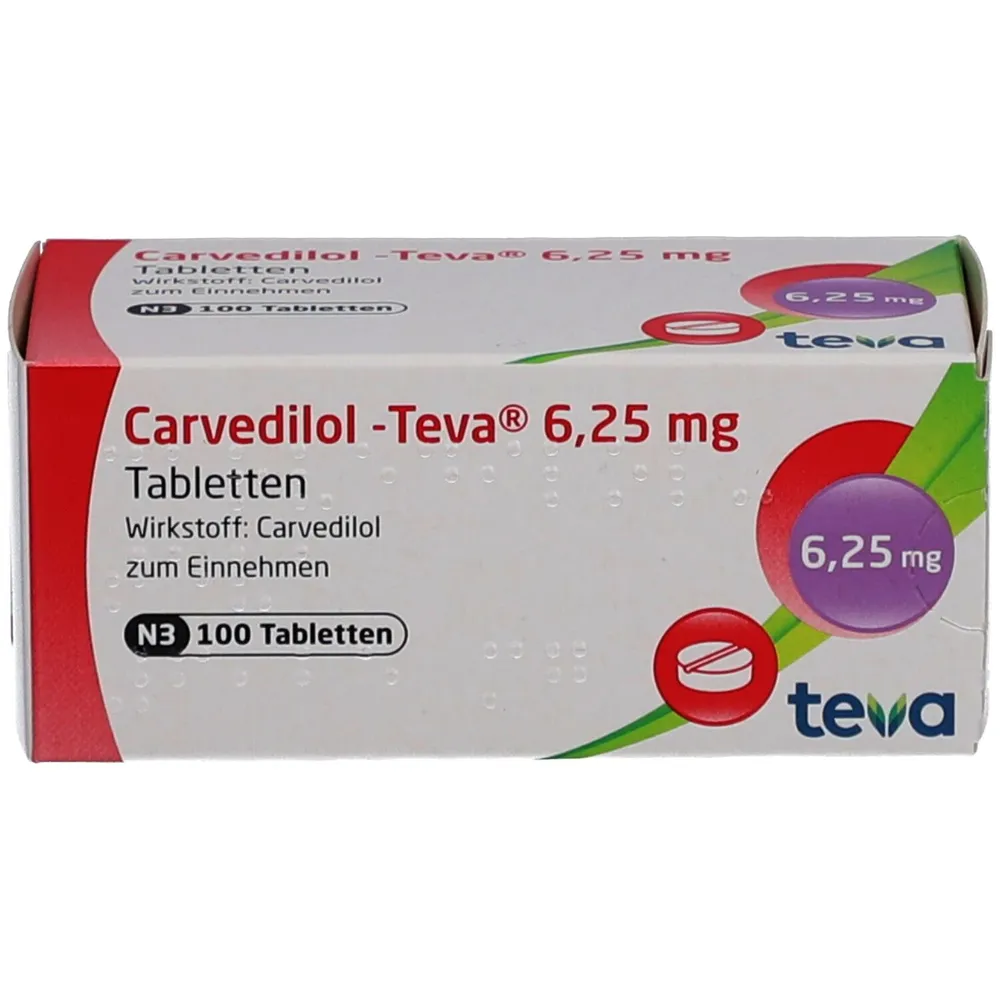
Table of Contents
- Patient Information Leaflet
- Introduction
- 1. What Carvedilol Teva tablets are and what they are used for
- 2. What you need to know before taking Carvedilol Teva tablets
- 3. How to take Carvedilol Teva tablets
- 4. Possible adverse effects
- 5. Storage of Carvedilol Teva tablets
- 6. Package contents and other information
Patient Information Leaflet
Introduction
Patient Information Leaflet
Carvedilol Teva 6.25 mg Tablets EFG
carvedilol
Read the entire patient information leaflet carefully before you start taking this medicine, as it contains important information for you.
|
Package leaflet:
- What Carvedilol Teva tablets are and what they are used for.
- What you need to know before taking Carvedilol Teva tablets.
- How to take Carvedilol Teva tablets.
- Possible side effects.
- How to store Carvedilol Teva tablets.
- Contents of the pack and other information.
1. What Carvedilol Teva tablets are and what they are used for
Carvedilol belongs to a group of medicines known as beta-blockers. Beta-blockers cause blood vessels to relax and widen, and slow down the heart rate, resulting in a slower heartbeat and reduced blood pressure.
Carvedilol tablets are used to:
- Treat angina pectoris.
- Control high blood pressure.
- Carvedilol tablets may also be used in combination with other therapies to treat heart failure.
2. What you need to know before taking Carvedilol Teva tablets
Do not take Carvedilol Teva tablets if
- you are allergic (hypersensitive) to carvedilol or to any of the other ingredients of this medicine (listed in section 6),
- you have a history of asthma or other lung diseases unless you have first consulted your doctor or pharmacist,
- you have heart problems (e.g., "heart block" or unstable heart failure), as carvedilol may not be suitable for some people with certain types of heart conditions,
- you have an unusually slow heart rate (< 50 beats per minute),
- you have very low blood pressure (systolic blood pressure below 85 mmHg), which sometimes causes dizziness, fainting, or lightheadedness upon standing,
- you are taking verapamil, diltiazem, or other medicines used to treat heart rhythm disorders (antiarrhythmics) by injection or infusion (via drip),
- you have problems with acid levels in your body (metabolic acidosis),
- you have severe liver problems,
- you have acute pulmonary embolism (a blood clot in the lungs causing chest pain and difficulty breathing),
- you have Prinzmetal's angina (coronary artery spasms),
- you have heart failure caused by a respiratory disease (cor pulmonale),
- you have untreated pheochromocytoma (a tumor of the adrenal medulla),
- you are taking MAO inhibitors (except MAO-B inhibitors) (medicines used to treat depression and other neurological and psychiatric disorders),
- you are breastfeeding.
Warnings and precautions
Talk to your doctor before starting this medicine.
Your doctor will prescribe carvedilol with special caution if you:
- have diabetes, as it may mask the usual symptoms of low blood sugar,
- have heart failure accompanied by
- low blood pressure,
- reduced blood and oxygen supply to the heart (ischaemic heart disease) and hardening of the arteries (atherosclerosis),
- and/or kidney problems,
- have Raynaud's syndrome or peripheral vascular disease causing cold hands and feet,
- have thyroid problems,
- have previously experienced severe allergic reactions or are undergoing desensitization therapy for allergies (e.g., to bee or wasp stings). Carvedilol may increase your sensitivity to allergens and the risk of severe anaphylactic reactions. Additionally, while taking Carvedilol, medicines used to treat allergic (anaphylactic) reactions, such as adrenaline (epinephrine), may be less effective,
- have psoriasis (thickened skin patches),
- have low blood pressure upon standing (orthostatic hypotension),
- have certain heart rhythm disorders (first-degree atrioventricular [AV] block),
- have acute inflammatory heart disease,
- have narrowing of heart valves or the outflow tract,
- have end-stage peripheral arterial disease,
- have labile or secondary hypertension,
- are being treated simultaneously with other antihypertensive medicines (alpha1-receptor antagonists or alpha2-receptor agonists),
- are being treated simultaneously with medicines used to treat heart failure (digitalis glycosides) or heart rhythm disorders (e.g., verapamil, diltiazem),
- are about to undergo anaesthesia and major surgery,
- wear contact lenses, as carvedilol may cause dry eyes,
- have clearly abnormally slow heartbeats (pulse below 55 beats/minute).
Severe skin reactions
Severe skin reactions (e.g., toxic epidermal necrolysis or Stevens-Johnson syndrome) have occurred in patients taking carvedilol. See section 4.
Withdrawal syndrome
Treatment with Carvedilol must not be stopped abruptly. This is particularly important for patients with heart disease caused by reduced blood flow in the coronary vessels. Instead, the dose should be gradually reduced over a period of 2 weeks.
Children and adolescents
There is insufficient data on the efficacy and safety of carvedilol in children and adolescents under 18 years of age. Therefore, carvedilol should not be used in this patient group.
Elderly patients
Elderly patients may be more sensitive to carvedilol and should be monitored more closely.
Other medicines and Carvedilol Teva tablets
Tell your doctor or pharmacist if you are taking, have recently taken, or might need to take any other medicines. This includes over-the-counter medicines and herbal remedies. This is because carvedilol may affect how some medicines work. Also, some medicines may affect how carvedilol works.
Inform your doctor if you are taking any of the following medicines:
- other medicines used particularly for the heart or high blood pressure:
- antiarrhythmics, e.g., amiodarone
- calcium channel blockers, e.g., amlodipine, diltiazem, verapamil, nifedipine
- digitalis glycosides, e.g., digoxin
- nitrates, e.g., glyceryl trinitrate
- guanethidine, reserpine, methyldopa
- clonidine
- monoamine oxidase inhibitors (used to treat depression), e.g., moclobemide
- barbiturates, e.g., amobarbital (used to treat insomnia)
- phenothiazines, e.g., prochlorperazine (used to control nausea and vomiting)
- antidepressants, e.g., amitriptiline, fluoxetine (used to treat depression)
- cyclosporine or tacrolimus (used to prevent organ transplant rejection)
- insulin or oral medicines for diabetes
- non-steroidal anti-inflammatory drugs (NSAIDs), e.g., ibuprofen (used for pain, stiffness, and painful inflammation of bones, joints, and muscles)
- corticosteroids (used to reduce inflammation), e.g., beclomethasone
- oestrogen therapy (used as contraceptives or hormone replacement therapy)
- rifampicin (used to treat tuberculosis)
- cimetidine (used to treat ulcers)
- ketoconazole (used to treat fungal infections)
- haloperidol (used in psychiatric disorders)
- erythromycin (an antibiotic used for bacterial infections)
- sympathomimetics (used for the nervous system), e.g., ephedrine, or beta-agonist bronchodilators
- ergotamine (used to treat migraine)
- neuromuscular blocking agents (muscle relaxants used in anaesthesia), e.g., atracurium besilate
- vasodilating agents (these medicines widen blood vessels)
- guanfacine (used to treat high blood pressure)
If you need to be anaesthetised for surgery, inform the hospital doctor or dentist that you are taking carvedilol tablets.
Carvedilol Teva tablets with food, drinks and alcohol
You should avoid taking carvedilol at the same time or close to grapefruit or grapefruit juice during initiation of treatment. Grapefruit and grapefruit juice may increase the amount of the active substance carvedilol in your blood and possibly cause unpredictable side effects.
You should also avoid excessive alcohol consumption at the same time or close to taking carvedilol, as alcohol may affect its action.
Pregnancy and breastfeeding
If you are pregnant, breastfeeding, think you may be pregnant, or plan to become pregnant, consult your doctor or pharmacist before using this medicine. Do not take this medicine unless your doctor has instructed you to do so.
Treatment with beta-receptor blockers should be discontinued 48 to 72 hours before the expected delivery. If this is not possible, the newborn must be monitored during the first 48–72 hours of life.
It is unknown whether carvedilol passes into human breast milk. For this reason, breastfeeding mothers should not breastfeed while taking carvedilol.
Driving and using machines
Carvedilol may reduce your level of alertness and you may feel dizzy during treatment with carvedilol. This is more likely at the beginning of treatment or when changing your treatment, and when drinking alcohol. If affected, do not drive or operate machinery.
Carvedilol Teva tablets contain lactose
If your doctor has informed you that you have an intolerance to certain sugars, consult him before taking this medicine.
3. How to take Carvedilol Teva tablets
Follow exactly the instructions for the administration of Carvedilol Teva tablets provided by your doctor. If in doubt, consult your doctor or pharmacist.
- The tablets should preferably be taken with a glass of water.
- The tablet may be divided into equal doses.
- Your doctor may monitor you at the start of treatment or if your dose is increased. This may affect urine and blood test results.
The recommended dose is:
Hypertension
- Adults: The usual starting dose is 12.5 mg once daily for the first two days; thereafter, the recommended dose is 25 mg once daily. If necessary, your doctor may gradually increase the dose. The maximum single dose is 25 mg and the maximum daily dose is 50 mg.
- Elderly patients: The usual starting dose is 12.5 mg once daily. If necessary, your doctor may increase your dose.
Angina pectoris
- Adults: The usual starting dose is 12.5 mg twice daily for two days; thereafter, the recommended dose is 25 mg twice daily. If necessary, your doctor may gradually increase the dose. The maximum daily dose is 50 mg twice daily.
- Elderly patients: The usual starting dose is 12.5 mg twice daily for two days; thereafter, the recommended dose is 25 mg twice daily, which is the maximum daily dose.
Heart failure
The tablets should be taken with food to reduce the risk of a drop in blood pressure upon standing, which may cause dizziness, fainting, or lightheadedness.
- Adults: The initial dose is 3.125 mg twice daily for 2 weeks. Your doctor may gradually increase the dose up to 25 mg twice daily. The maximum dose is 25 mg twice daily for patients weighing less than 85 kg. Patients weighing more than 85 kg may take a maximum dose of 50 mg twice daily.
Renal impairment
If you have kidney problems, your doctor may prescribe lower doses.
Elderly patients
Your doctor may monitor you if you are elderly.
Use in children and adolescents (under 18 years of age)
Carvedilol Teva tablets are not recommended for use in children and adolescents under 18 years of age.
If you take more Carvedilol Teva tablets than you should
If you (or someone else) ingest too many tablets or suspect a child has taken any tablets, contact your doctor immediately or go to the nearest hospital emergency department. An overdose may cause low blood pressure (resulting in weakness and trembling), wheezing, vomiting, very slow heart rate, heart failure, breathing difficulties, and loss of consciousness. You may also contact the Toxicology Information Service; Telephone 91 562 04 20.
If you forget to take Carvedilol Teva tablets
If you forget to take a dose, take it as soon as you remember, provided that your next dose is not due soon. Do not take a double dose to make up for forgotten doses.
If you stop taking Carvedilol Teva tablets
Treatment should not be stopped abruptly, as adverse effects may occur. If discontinuation is necessary, your doctor will gradually reduce your dose.
If you have any questions about the use of this medicine, ask your doctor or pharmacist.
4. Possible adverse effects
Like all medicines, this medicine can cause adverse effects, although not everyone will experience them.
If you experience any of the following serious adverse effects, contact your doctor immediately or go to the hospital emergency department:
Severe allergic reactions (very rare frequency)
Signs may include sudden swelling of the throat, face, lips, and mouth. This may make breathing or swallowing difficult.
Chest pain (uncommon frequency), accompanied by difficulty breathing, sweating, and a feeling of discomfort.
Urinating less frequently (frequent) with swelling of the legs, indicating renal failure and a decline in kidney function in patients with diffuse vascular disease and/or impaired renal function.
Very low blood sugar levels (hypoglycaemia) (frequent) in people with diabetes, which may lead to seizures or loss of consciousness.
Skin reactions
Very rarely, serious skin conditions (such as erythema multiforme, Stevens-Johnson syndrome, and toxic epidermal necrolysis) may occur. These may present as red rashes, often associated with blisters, on the skin or mucous membranes such as inside the mouth, genital areas, or eyelids. Initially, they may appear as circular lesions, often with central blisters, which may progress to widespread skin peeling and may be life-threatening. These serious skin reactions are usually preceded by headache, fever, and body aches (flu-like symptoms).
Other adverse effects:
Very common (may affect more than 1 in 10 people):
- dizziness
- headache
- heart problems
- feeling tired or weak
- low blood pressure (feeling dizzy or lightheaded)
Common (may affect up to 1 in 10 people):
- respiratory tract infections (bronchitis), lungs (pneumonia), nose and throat
- urinary tract infections
- anaemia
- weight gain
- increased cholesterol (fat) in the blood
- loss of blood sugar control in people with diabetes
- depression, depressed mood
- faintness
- vision problems, dry eyes, eye irritation
- slow heart rate
- swelling of hands, ankles or feet
- circulation problems, fluid retention
- feeling faint or dizzy when standing up (due to low blood pressure)
- worsening of cold extremities in patients with Raynaud's disease or circulation problems
- breathing problems
- fluid accumulation in the lungs (pulmonary edema)
- asthma and breathing difficulties in patients prone to airway narrowing in the form of spasms
- feeling unwell, stomach pain, vomiting, indigestion
- diarrhoea
- pain in the hands, feet
- changes in urination
- pain
Uncommon (may affect up to 1 in 100 people):
- difficulty sleeping, nightmares
- hallucinations, confusion
- feeling of weakness or fainting
- tingling or numbness
- heart problems, chest pain
- constipation
- skin problems (rash, itching, dry skin spots, psoriasis, psoriasis-like rash)
- impotence (difficulty achieving or maintaining an erection)
Rare (may affect up to 1 in 1,000 people):
- decrease in the number of platelets in the blood (causing unexplained unusual bleeding or bruising)
- nasal congestion
- dry mouth
Very rare (may affect up to 1 in 10,000 people):
- low white blood cell count in your blood
- allergic reactions
- psychosis
- changes in liver function (detected by tests)
- difficulty controlling urination (incontinence in women)
Frequency not known (cannot be estimated from available data):
- hair loss
The pharmacological class of beta-receptor blockers may unmask latent diabetes.
Excessive sweating (hyperhidrosis) may occur.
You should inform your doctor if your symptoms worsen, as you may need to adjust the dose of other medicines or of Carvedilol.
Reporting of adverse effects
If you experience any adverse effect, talk to your doctor or pharmacist, even if it is a possible adverse effect not listed in this leaflet. You can also report them directly via the Spanish Pharmacovigilance System for Human Medicines: https://www.notificaram.es. By reporting adverse effects, you can help provide more information on the safety of this medicine.
5. Storage of Carvedilol Teva tablets
Keep this medicine out of the sight and reach of children.
Do not store above 25°C.
Do not use Carvedilol Teva tablets after the expiry date stated on the packaging after EXP. The expiry date refers to the last day of the month indicated. An expiry abbreviation (e.g., EXP) may appear on the blister and carton.
Medicines must not be disposed of via wastewater or household waste. Dispose of unused medicines and their containers at the SIGRE collection point at your pharmacy. If you have any doubts, ask your pharmacist how to dispose of medicines and containers you no longer need. This will help protect the environment.
6. Package contents and other information
Composition of Carvedilol Teva 6.25 mg tablets
The active substance is carvedilol.
Each 6.25 mg tablet contains 6.25 mg of the active substance carvedilol.
The other components (excipients) are: lactose monohydrate, povidone, crospovidone, anhydrous colloidal silica and magnesium stearate. The tablets contain the following colouring agents:
- 6.25 mg tablets: yellow iron oxide (E172).
Appearance of the product and contents of the container
Carvedilol Teva tablets are round, flat, scored on one side and engraved on the other side with “CVL” at the top. Additionally:
The 6.25 mg tablets are light yellow and have “T2” at the bottom.
Available in packs of 14, 28, 30, 50, 56 and 100 tablets.
Only certain pack sizes may be marketed.
Marketing Authorisation Holder and Manufacturer
Marketing Authorisation Holder:
Teva Pharma, S.L.U.
C/ Anabel Segura 11, Edificio B, 1st floor
28108 Alcobendas, Madrid (Spain)
Manufacturer
Teva Operatios Poland Sp. Z.o.o.,
Mogilska 80 Str, 31-546 Kraków
Poland
Or
Pharmachemie B.V.
Swensweg 5, PO Box 552, 2003 RN, Haarlem,
The Netherlands
Or
Teva Pharmaceutical Works Private Limited Company
Pallagi Street 13, Debrecen
H-4042, Hungary
Or
TEVA PHARMACEUTICALS CR S.R.O
Sokolovska 651/136A, Business park Futurama (Prague)
18000 - Czech Republic
This medicinal product is authorised in the Member States of the European Economic Area under the following names:
Germany: Carvedilol-Teva 6.25mg Tabletten
Belgium: Carvedilol Teva 6.25mg Tabletten
Denmark: Carvedilol Teva 6.25 mg Tabletter
Slovakia: Carvedilol-Teva 6.25 mg
Spain: Carvedilol Teva 6.25mg comprimidos EFG
Hungary: Carvol 6.25mg tabletta
Italy: Carvedilolo Ratiopharm compresse 6.25 mg
Portugal: Carvedilol Teva 6.25mg Comprimidos
Date of the most recent revision of this leaflet: December 2025