Carvedilol Cinfamed 6.25 mg tablets EFG
Spain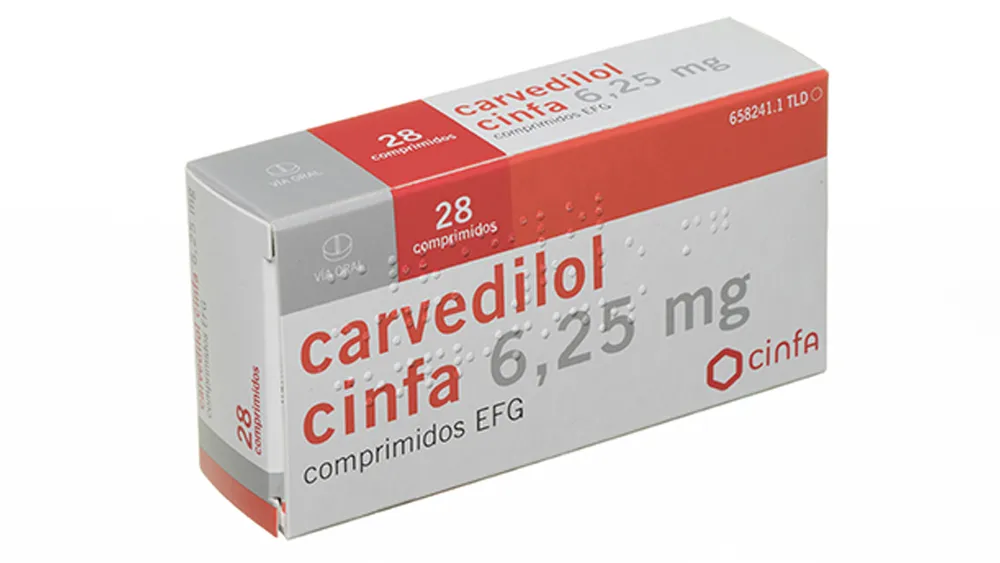
Table of Contents
- Package leaflet: Information for the user
- Introduction
- 1. What Carvedilol cinfamed is and what it is used for
- 2. What you need to know before starting to take Carvedilol Cinfamed
- 3. How to take Carvedilol Cinfamed
- 4. Possible adverse effects
- 5. Storage of Carvedilol Cinfamed
- 6. Contents of the pack and other information
Package leaflet: Information for the user
Introduction
Package leaflet: information for the user
Carvedilol Cinfamed 6.25mg tablets EFG
Read all of this leaflet carefully before you start taking this medicine because it contains important information for you.
- Keep this leaflet as you may need to read it again.
- If you have any questions, ask your doctor or pharmacist.
- This medicine has been prescribed for you only and you should not give it to other people, even if they have the same symptoms as you, because it could harm them.
- If you experience any adverse effects, consult your doctor or pharmacist, even if they are adverse effects not listed in this leaflet. See section 4.
Contents of the leaflet
- What Carvedilol Cinfamed is and what it is used for
- What you need to know before taking Carvedilol Cinfamed
- How to take Carvedilol Cinfamed
- Possible adverse effects
- How to store Carvedilol Cinfamed
- Contents of the pack and other information
1. What Carvedilol cinfamed is and what it is used for
This medicine contains carvedilol as the active ingredient, which belongs to a group of medicines known as alpha and beta receptor blockers. Carvedilol has antioxidant, antihypertensive (blood pressure-lowering), vasodilatory, and antianginal properties. It also reduces cardiac output and has beneficial effects on blood circulation in the heart.
This medicine is indicated for the treatment of:
- Symptomatic congestive heart failure (the heart has lost some of its ability to pump blood), moderate to severe in severity, of ischemic or non-ischemic origin.
- Essential hypertension (high blood pressure).
- Ischemic heart disease (reduced blood and oxygen supply to the heart).
2. What you need to know before starting to take Carvedilol Cinfamed
Do not take Carvedilol Cinfamed:
- If you are allergic to carvedilol or to any of the other ingredients of this medicine (listed in section 6).
- In cases of decompensated heart failure classified as NYHA Class IV (inability of the heart to perform its pumping function both during physical activity and at rest).
- Chronic obstructive pulmonary disease (COPD) with obstructed bronchi (difficulty breathing).
- If your liver is not functioning properly.
- Bronchial asthma.
- Heart disease involving second- or third-degree atrioventricular (A-V) block (unless a permanent pacemaker has been implanted).
- If your heart beats slowly (less than 50 beats per minute).
- Heart failure (or shock, a condition in which the heart is so damaged it cannot supply sufficient blood to the body's organs).
- Heart disease involving sinoatrial node block.
- Very low blood pressure (systolic pressure less than 85 mmHg).
Warnings and precautions
Talk to your doctor or pharmacist before starting to take this medicine.
Inform your doctor if you have any of the following conditions:
- Any lung disease.
- Diabetes.
- Any heart disease.
- If you are taking other medicines for the heart, especially if you are taking any of the following: digitalis (which increases the force of the heartbeat), diuretics (which increase urine output), ACE inhibitors (antihypertensive medicines), calcium antagonists (antihypertensive medicines), or antiarrhythmics (which affect heart rhythm).
- Thyroid problems.
- Allergies and if you are receiving treatment for them.
- Circulatory problems or Raynaud's phenomenon.
- If you are scheduled for surgery, inform your doctor that you are being treated with carvedilol.
- If you have a condition called phaeochromocytoma.
- Psoriasis (a skin disease).
- Prinzmetal's angina (chest pain occurring at rest without obvious causes).
- If you are undergoing surgery with anaesthesia. Inform the anaesthetist.
- If you wear contact lenses. Carvedilol may reduce tear production.
- If you have severe skin reactions (e.g. toxic epidermal necrolysis, Stevens-Johnson syndrome).
Like all medicines with beta-blocking activity, you must not stop treatment with this medicine abruptly. The dose should be gradually reduced according to your doctor's instructions.
Use in athletes
This medicine contains carvedilol, which may lead to a positive result in doping control tests.
Taking Carvedilol Cinfamed with other medicines
Inform your doctor or pharmacist if you are currently using, have recently used, or might need to use any other medicines.
This is very important because taking several medicines at the same time may increase or decrease their effects. Therefore, do not take this medicine with any other medicine unless your doctor has approved it.
Please note that these instructions may also apply to medicines taken previously or that may be taken in the future.
It is important to inform your doctor if you are taking or have recently taken any of the following medicines:
- Fluoxetine and paroxetine (medicines for depression).
- Cyclosporine (a medicine used to prevent transplant rejection).
- Digoxin, verapamil, diltiazem, and antiarrhythmic medicines (used to treat heart and blood pressure problems).
- Amiodarone (a medicine used to treat certain heart problems).
- Certain painkillers such as aspirin and ibuprofen (NSAIDs).
- Other blood pressure medicines, barbiturates, phenothiazines, tricyclic antidepressants, vasodilators, and alcohol.
- Medicines for diabetes (including insulin and oral antidiabetics).
- Clonidine (a medicine used to control blood pressure or migraine).
- Rifampicin (a medicine used to treat infections).
- Cimetidine (a medicine used to treat stomach problems).
- Inducers or inhibitors of hepatic metabolism (medicines that alter the elimination of other medicines from the body).
- Monoamine oxidase inhibitors (medicines for depression).
- β-agonist bronchodilators (medicines used to improve breathing, such as in asthma).
Taking Carvedilol Cinfamed with food and drink
You should avoid alcohol during treatment with this medicine, as it may alter its effects.
Your doctor or pharmacist will advise you on the meals with which it is recommended to take this medicine.
Pregnancy and breastfeeding
If you are pregnant or breastfeeding, think you might be pregnant, or plan to become pregnant, consult your doctor before using this medicine.
The use of this medicine is not recommended during pregnancy and breastfeeding.
Carvedilol may cause fetal death in utero and premature delivery. In addition, adverse effects may occur in the fetus and newborn. After birth, the newborn has an increased risk of heart and lung problems.
Carvedilol passes into breast milk; therefore, its use is not recommended during breastfeeding.
Driving and using machines
This medicine may occasionally impair your ability to drive or operate machinery. This is especially likely when starting or changing treatment and when taking the medicine together with alcohol.
Carvedilol Cinfamed contains lactose
If your doctor has diagnosed you with an intolerance to certain sugars, consult with him before taking this medicine.
3. How to take Carvedilol Cinfamed
Follow exactly the administration instructions for this medicine as indicated by your doctor. If in doubt, consult your doctor or pharmacist again.
Essential hypertension:
Adults:
Oral use. The recommended starting dose is 12.5 mg once daily for the first two days. Then, the recommended dose is 25 mg once daily. If necessary, your doctor may increase your dose (at intervals of at least two weeks) up to 50 mg once daily or divided into two daily doses of 25 mg each.
Elderly patients:
Oral use. The recommended starting dose is 12.5 mg once daily, which is usually sufficient. If the response is not adequate, your doctor will adjust your dose (at intervals of at least two weeks).
Ischemic heart disease:
Adults:
Oral use. The recommended starting dose is 12.5 mg twice daily (total 25 mg per day) for the first two days. Then, the recommended dose is 25 mg twice daily (total 50 mg per day). If necessary, your doctor may increase your dose (at intervals of at least two weeks) up to 100 mg once daily or divided into two daily doses of 50 mg each.
Elderly patients:
Oral use. The maximum recommended dose for elderly patients is 50 mg administered in divided doses (twice daily).
Treatment of symptomatic congestive heart failure
Adults and elderly:
Oral use. Your doctor will individually determine the dose you should take, closely monitoring you during dose escalation.
If you are already taking medications for heart conditions (digitalis) or blood pressure control (diuretics and/or ACE inhibitors), your doctor will adjust the doses of these medications before starting treatment with this medicine.
In any case, the recommended starting dose for treatment of symptomatic congestive heart failure is 3.12 mg twice daily (total 6.25 mg per day) for two weeks. If this dose is well tolerated, it may subsequently be increased (at intervals of at least two weeks) to 6.25 mg twice daily (total 12.5 mg per day).
Your doctor may later prescribe higher doses (after at least two weeks) of this medicine.
If you weigh less than 85 kg, the maximum recommended dose is 25 mg twice daily (total 50 mg per day). If you weigh more than 85 kg, the maximum recommended dose is 50 mg twice daily (100 mg per day).
Your doctor will inform you about the duration of your treatment with this medicine.
As a general rule, regardless of your condition, discontinuation of this medicine should be gradual over several days, reducing the dose by half every three days.
Use in children and adolescents
This medicine is not recommended for use in children and adolescents under 18 years of age due to insufficient data on safety and efficacy.
Instructions for correct administration
Take the tablets with sufficient liquid, such as a glass of water.
If you have congestive heart failure (your heart has lost some of its ability to pump blood and you may experience shortness of breath, weakness, and fluid accumulation), you should take this medicine with food to help avoid dizziness upon standing.
Remember to take your medicine.
If you take more Carvedilol Cinfamed than you should
If you take more Carvedilol Cinfamed than prescribed, contact your doctor immediately or go to the nearest hospital. Bring the medicine with you.
In case of overdose or accidental ingestion, contact the Toxicology Information Service, Telephone 91 562.04.20.
If you forget to take Carvedilol Cinfamed
Do not take a double dose to make up for missed doses.
If you stop taking Carvedilol Cinfamed
Treatment with this medicine must not be stopped abruptly, especially if you have ischemic heart disease, a condition in which the heart does not pump blood properly. Your doctor will gradually reduce your dose over several days until you completely stop taking this medicine.
If you have any further questions about the use of this medicine, ask your doctor or pharmacist.
4. Possible adverse effects
Like all medicines, this medicine can cause adverse effects, although not everyone will experience them.
Adverse effects are classified as: very common (may affect more than 1 in 10 people), common (may affect up to 1 in 10 people), uncommon (may affect up to 1 in 100 people), rare (may affect up to 1 in 1,000 people), very rare (may affect up to 1 in 10,000 people), and frequency not known (cannot be estimated from available data).
Infections and infestations
Common: Bronchitis, pneumonia, upper respiratory tract infections, urinary tract infections
Disorders of the nervous system
Very common: Headache, dizziness, and weakness, which are usually mild and occur mainly at the beginning of treatment.
Common: Presyncope, syncope (fainting), especially at the beginning of treatment.
Uncommon: Paresthesia (tingling sensation).
Psychiatric disorders
Common: Depressed mood, depression.
Uncommon: Sleep disorders.
Cardiac disorders
Very common: Worsening of heart failure (the heart has lost some of its ability to pump blood).
Common: Bradycardia (decreased heart rate), fluid overload, increased blood volume in the body.
Uncommon: Atrioventricular (AV) block (heart problems), and angina pectoris (chest pain).
Vascular disorders
Very common: Low blood pressure.
Common: Postural hypotension (dizziness upon standing or changing body position), peripheral circulatory disorders (cold hands and feet), worsening of symptoms in patients with intermittent claudication (increased leg pain when walking) or Raynaud's phenomenon (reduced blood flow to fingers, toes, ears, and nose), hypertension.
Respiratory, thoracic and mediastinal disorders
Common: Asthma and breathing difficulties in predisposed patients, fluid accumulation in the lungs.
Rare: Nasal congestion.
Gastrointestinal disorders
Common: Gastrointestinal discomfort with symptoms such as nausea, diarrhea, and abdominal pain, indigestion, vomiting.
Uncommon: Constipation.
Rare: Dry mouth.
Skin and subcutaneous tissue disorders
Uncommon: Skin reactions (e.g. allergic rash, dermatitis, urticaria, itching, psoriasis, lichen planus-type skin lesions).
Frequency not known: Hair loss, serious skin adverse reactions (e.g. toxic epidermal necrolysis, Stevens-Johnson syndrome).
Blood and lymphatic system disorders
Common: Decreased number of red blood cells in the blood (anemia).
Rare: Reduced number of platelets in the blood (thrombocytopenia).
Very rare: Reduced number of white blood cells in the blood (leukopenia).
Hepatobiliary disorders
Very rare: Changes in serum transaminases (changes in blood levels of certain liver enzymes).
Eye disorders
Common: Reduced tear production (dry eye), eye irritation, vision disturbances.
Renal and urinary disorders
Common: Acute renal failure (kidneys not functioning properly) and kidney function disorders in patients with diffuse vascular disease and/or impaired kidney function.
Rare: Problems with urination.
Frequency not known: Urinary incontinence in women (resolves upon discontinuation of the medication).
Immune system disorders
Very rare: Allergic reactions.
Musculoskeletal and connective tissue disorders
Common: Limb pain.
Reproductive system and breast disorders
Uncommon: Impotence.
Metabolism and nutrition disorders
Common: Worsening of blood sugar control in diabetic patients (hyperglycemia, hypoglycemia), weight gain, increased blood cholesterol.
Frequency not known: Latent diabetes mellitus may become apparent, or existing diabetes may worsen.
General disorders and administration site conditions
Very common: Fatigue.
Common: Pain, edema (fluid retention, swelling of legs, ankles, and feet).
If you consider any of the adverse effects you experience to be severe, or if you notice any adverse effect not listed in this leaflet, inform your doctor or pharmacist.
Reporting of adverse effects
If you experience any type of adverse effect, consult your doctor, pharmacist, or nurse, even if it is a possible adverse effect not listed in this leaflet. You may also report them directly through the Spanish Pharmacovigilance System for Human Medicinal Products: https://www.notificaram.es. By reporting adverse effects, you can help provide more information on the safety of this medicine.
5. Storage of Carvedilol Cinfamed
Keep out of sight and reach of children.
Do not store above 30°C. Store in the original container to protect from moisture.
Do not use this medicine after the expiry date stated on the packaging after EXP. The expiry date refers to the last day of the month indicated.
Medicines must not be disposed of via wastewater drains or household waste. Dispose of unused medicines and their containers at a SIGRE collection point at your pharmacy. If you are in doubt, ask your pharmacist how to dispose of containers and medicines you no longer need. This will help protect the environment.
6. Contents of the pack and other information
Composition of Carvedilol Cinfamed
- The active substance is carvedilol. Each tablet contains 6.25 mg of carvedilol.
- The other components are: Core: microcrystalline cellulose, monohydrate lactose, povidone, crospovidone, colloidal anhydrous silica, magnesium stearate (E470b); Coating: titanium dioxide (E-171), polydextrose, hypromellose, triethyl citrate, macrogol 8000.
Appearance of the product and contents of the pack
Carvedilol Cinfamed tablets are white oval film-coated tablets, scored on both sides and marked with "6.25" on one side.
This medicine is available in PVC/Aclar/Al blisters, in packs of 28 or 500 tablets.
Marketing Authorisation Holder and Manufacturer
Marketing Authorisation Holder
Laboratorios Cinfa, S.A.
Carretera Olaz-Chipi, 10. Polígono Industrial Areta
31620 Huarte (Navarra) – Spain
Manufacturers:
ROVI Pharma Industrial Services, S.A.
Vía Complutense, 140
Alcalá de Henares
28805 (Madrid)
Spain
Or
Laboratorios Cinfa, S.A.
Carretera Olaz-Chipi, 10. Polígono Industrial Areta
31620 Huarte (Navarra) – Spain
Date of the most recent revision of this leaflet: June 2016
Detailed and up-to-date information on this medicine is available on the website of the Spanish Agency for Medicines and Health Products (Agencia Española de Medicamentos y Productos Sanitarios - AEMPS) at http://www.aemps.gob.es/.
You can access detailed and up-to-date information about this medicine by scanning with your mobile phone (smartphone) the QR code included in the leaflet and packaging. You may also access this information at the following internet address:
https://cima.aemps.es/cima/dochtml/p/65885/P_65885.html
QR code to: https://cima.aemps.es/cima/dochtml/p/65885/P_65885.html