Carvedilol Aristo 25 mg tablets EFG
Spain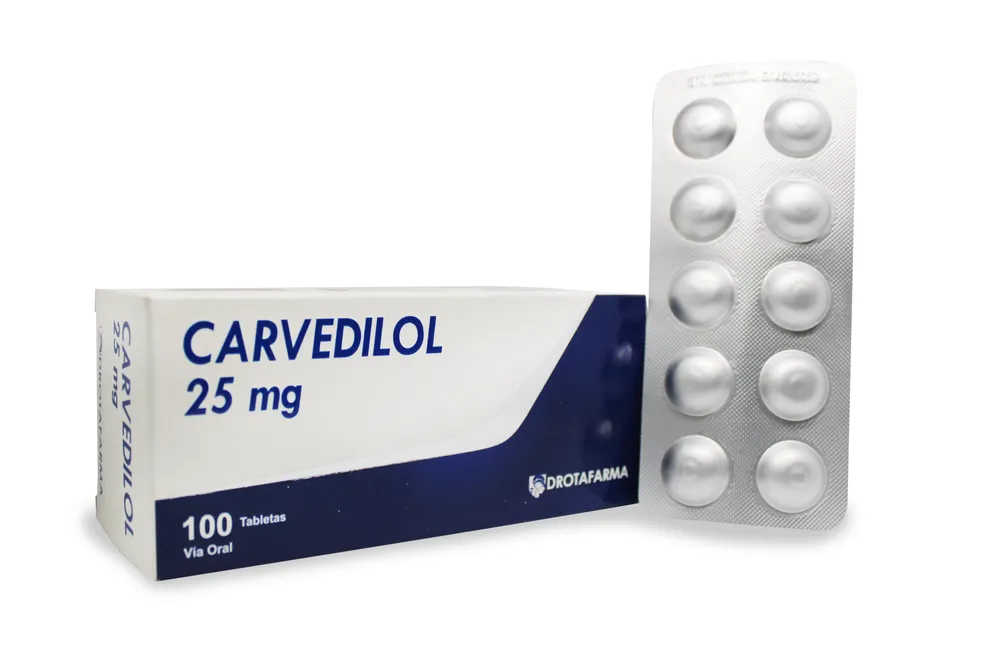
Table of Contents
- Package leaflet: Information for the user
- Introduction
- 1. What Carvedilol Aristo is and what it is used for
- 2. What you need to know before taking Carvedilol Aristo
- 3. How to take Carvedilol Aristo
- 4. Possible adverse effects
- 5. Storage of Carvedilol Aristo
- 6. Contents of the pack and other information
Package leaflet: Information for the user
Introduction
Package leaflet: information for the patient
Carvedilol Aristo 25 mg tablets EFG
Read the entire leaflet carefully before you start taking this medicine, because it contains important information for you.
- Keep this leaflet, as you may need to read it again.
- If you have any questions, ask your doctor or pharmacist.
- This medicine has been prescribed for you only and must not be given to other people, even if they have the same symptoms as you, because it may harm them.
- If you experience any adverse effects, consult your doctor or pharmacist, even if they are adverse effects not listed in this leaflet. See section 4.
Contents of the leaflet:
- What Carvedilol Aristo is and what it is used for
- What you need to know before taking Carvedilol Aristo
- How to take Carvedilol Aristo
- Possible side effects
- How to store Carvedilol Aristo
- Contents of the pack and other information
1. What Carvedilol Aristo is and what it is used for
Each tablet contains carvedilol as the active substance, which is an agent that blocks alpha and beta receptors and also possesses antioxidant properties. Additionally, it has complementary effects such as vasodilation, reduction of cardiac output, antihypertensive effects (lowering of blood pressure), antianginal properties, and favorable effects on blood circulation at the heart level.
Carvedilol Aristo is indicated for the treatment of moderate to severe symptomatic congestive heart failure (the inability of the heart to perform its pumping function), whether of ischemic or non-ischemic origin.
2. What you need to know before taking Carvedilol Aristo
Do not take Carvedilol Aristo:
- If you are allergic to the active substance or to any of the other ingredients of this medicine (listed in section 6).
- If you have decompensated heart failure of NYHA class IV (inability of the heart to perform its pumping function during physical activity and, in most cases, even at rest) requiring intravenous inotropic agents (medications that increase the heart's pumping strength).
- If you have chronic obstructive pulmonary disease with a bronchospastic component (a chronic lung disease causing breathing difficulties) and are receiving oral or inhaled treatment.
- If you have clinically manifest hepatic dysfunction (liver abnormalities).
- If you have asthma.
- If you have second- or third-degree AV block (heart block).
- If you have severe bradycardia (less than 50 heartbeats per minute).
- In case of cardiogenic shock (heart failure).
- In case of sinoatrial disease (including sinoatrial block).
- In case of severe hypotension (systolic blood pressure less than 85 mmHg).
Warnings and precautions
Consult your doctor or pharmacist before starting Carvedilol Aristo.
- If you have diabetes mellitus (elevated blood sugar).
- If you have congestive heart failure and risk factors (hypotension, ischemic heart disease, diffuse vascular disease, or underlying renal insufficiency), as your doctor will need to monitor your kidney function during the dose titration phase.
Treatment with Carvedilol Aristo must not be stopped abruptly, especially in patients with ischemic heart disease. Discontinuation of Carvedilol Aristo should be gradual over several days, preferably by reducing the dose by half every three days.
- Carvedilol Aristo should be administered with caution if you are suspected of having Prinzmetal's vasospastic angina (angina caused by coronary spasms), as well as if you have severe peripheral circulatory disorders. Rarely, worsening of symptoms has been observed in patients with angina pectoris (chest pain).
- If you are undergoing surgery, you must inform your doctor that you are being treated with carvedilol.
- If you have psoriasis (a skin disease that can be caused by multiple factors).
- If you have phaeochromocytoma (a disorder of the adrenal glands) not adequately controlled by alpha-blockade.
- If you have thyroid disorders.
- If you have a history of severe hypersensitivity reactions (severe allergies) or are undergoing desensitization therapy (treatment for such severe allergies).
Consult your doctor even if any of the above conditions have occurred to you in the past.
Children and adolescents
The efficacy and safety of Carvedilol Aristo in children have not been established.
Taking Carvedilol Aristo with other medicines
Inform your doctor or pharmacist if you are taking, have recently taken, or might need to take any other medicines.
This is extremely important, as taking multiple medications simultaneously may enhance or weaken their effects. Therefore, you must not take Carvedilol Aristo with any other medicine unless authorized by your doctor.
Carvedilol may interact with antihypertensives (medications to lower blood pressure), clonidine (a medication to lower blood pressure), antiarrhythmics (medications for heart rhythm disorders), digitalis (a medication for impaired heart function), calcium antagonists (verapamil or diltiazem), sedatives or tranquilizers, antidepressants, narcotics, anesthetics, alcohol, migraine and asthma medications, nonsteroidal anti-inflammatory drugs, the antibiotic rifampicin, and cimetidine.
It may also enhance or diminish the effect of medications used to lower blood sugar levels, such as insulin or oral antidiabetics. Therefore, your doctor may need to adjust your antidiabetic dose and/or modify your dietary regimen.
Taking Carvedilol Aristo with food and drinks
You should avoid consuming alcohol during treatment with Carvedilol Aristo, as it may alter its effects. Your doctor or pharmacist will advise you on the recommended food intake when taking this medicine.
Pregnancy and breastfeeding
If you are pregnant or breastfeeding, think you may be pregnant, or plan to become pregnant, consult your doctor or pharmacist before using this medicine.
Pregnancy
There is insufficient experience with carvedilol in pregnant women; therefore, your doctor will assess the benefit-risk balance of administering carvedilol.
Breastfeeding
Since carvedilol is excreted in breast milk, its use during breastfeeding is not recommended.
Driving and using machines
Individual reactions affecting alertness may occur (e.g., patients' ability to drive vehicles or operate machinery). This is particularly evident at the beginning of treatment or when changing treatment, as well as when combined with alcohol.
Use in athletes
Athletes should be informed that this medicine contains a component that may result in a positive analytical finding in doping controls.
This medicine contains lactose. If your doctor has informed you that you have an intolerance to certain sugars, consult with him or her before taking this medicine.
3. How to take Carvedilol Aristo
Follow exactly the instructions for use of this medicine given by your doctor or pharmacist. If in doubt, please consult your doctor or pharmacist again.
Remember to take your medicine.
The tablets should be taken with sufficient liquid, such as a glass of water.
If you have congestive heart failure, you must take Carvedilol Aristo with food to slow its absorption rate and thereby reduce the incidence of orthostatic effects (dizziness upon standing).
If you do not have congestive heart failure, it is not necessary to take Carvedilol Aristo with food.
The recommended dose is:
Essential hypertension
Starting dose: 12.5 mg once daily.
Maintenance dose: 25 mg once daily.
If necessary, the dose may be increased at intervals of at least two weeks up to a maximum dose of 50 mg once daily (or administered in two divided doses).
This regimen is the same for both adult and elderly patients.
Long-term treatment of ischaemic heart disease
Starting dose: 12.5 mg twice daily.
Maintenance dose: 25 mg twice daily.
If necessary, the dose may be increased at intervals of at least two weeks up to a maximum dose of 50 mg twice daily.
The maximum recommended dose for elderly patients is 25 mg daily, administered in two divided doses.
Symptomatic congestive heart failure
The dose must be individually determined, and you must be closely monitored by your doctor during dose escalation. You must strictly follow your doctor's instructions regarding how to take this medicine.
If you are taking other medications, your doctor must determine your treatment regimen.
If you have previously been taking lower doses of Carvedilol Aristo and your doctor has prescribed continuation of treatment with Carvedilol Aristo, the recommended dose is 1 tablet (25 mg) twice daily for two weeks.
Your doctor will advise you on the duration of your treatment with Carvedilol Aristo. Do not stop treatment earlier than advised, especially if you have ischaemic heart disease. Discontinuation of Carvedilol Aristo should be gradual over several days, or by reducing the dose by half every three days.
If you are taking other medications, your doctor must determine your treatment regimen.
If you take more Carvedilol Aristo than you should
Contact your doctor or pharmacist immediately, or call the Toxicology Information Service at telephone: 91 562 04 20, indicating the medicine and the amount taken.
If you forget to take Carvedilol Aristo
Do not take a double dose to make up for forgotten doses.
Instead, continue with your usual dosing schedule and consult your doctor.
If you stop taking Carvedilol Aristo
If you have any further questions about the use of this medicine, ask your doctor or pharmacist.
4. Possible adverse effects
Like all medicines, this medicine may cause adverse effects, although not everyone experiences them.
The adverse effects observed are as follows:
Central nervous system: Occasionally headache, dizziness, and fatigue; isolated cases of depressive state, sleep disorders, and paresthesia (tingling, numbness, pricking sensations).
Cardiovascular system: Occasionally edema, hypotension (reduction in blood pressure), postural hypotension, bradycardia (decreased heart rate); isolated cases of syncope, A-V block (cardiac rhythm disturbances), and heart failure during the dose escalation phase; disturbances in peripheral circulation (cold extremities); worsening of symptoms in patients with intermittent claudication or Raynaud's disease.
Respiratory system: Occasionally nasal congestion; in patients predisposed to it, asthma/dyspnea.
Gastrointestinal system: Occasionally nausea, abdominal pain, diarrhea; very rarely constipation and vomiting.
Hematology: Occasionally thrombocytopenia (reduction in the number of platelets in peripheral blood).
Metabolism: Occasionally hyperglycemia; in patients with pre-existing diabetes mellitus, weight gain, and hypercholesterolemia (increased blood cholesterol).
Isolated cases of allergic skin reactions, alterations in serum transaminases, leukopenia, limb pain, and decreased tear production have also been reported.
Isolated cases of visual disturbances, acute renal failure, and renal function abnormalities have also been reported in patients with diffuse vascular disease or impaired renal function.
The frequency of adverse effects is not proportional to the dose, except for dizziness, visual disturbances, and bradycardia.
If you experience any adverse effect not described in this leaflet, consult your doctor or pharmacist.
Reporting of adverse effects
If you experience any type of adverse effect, consult your doctor or pharmacist, even if it is a possible adverse effect not listed in this leaflet. You may also report them directly through the national reporting system: www.notificaRAM.es. By reporting adverse effects, you can help provide more information on the safety of this medicine.
5. Storage of Carvedilol Aristo
Keep this medicine out of the sight and reach of children.
Do not store above 30°C. Protect from light.
Do not use this medicine after the expiry date stated on the packaging after EXP. The expiry date is the last day of the month indicated.
Medicines must not be disposed of via wastewater or household waste. Dispose of unused containers and medicines at the SIGRE collection point at your pharmacy. If you have any doubts, ask your pharmacist how to dispose of containers and medicines you no longer need. This will help protect the environment.
6. Contents of the pack and other information
Composition of Carvedilol Aristo
- The active substance in Carvedilol Aristo 25 mg tablets is carvedilol.
- The other components are: monohydrate lactose, microcrystalline cellulose, crospovidone, povidone K 30, anhydrous colloidal silica, magnesium stearate.
Appearance of the product and contents of the pack
Carvedilol Aristo 25 mg are white, round, convex, scored tablets for oral administration.
Packs containing 28 tablets.
Marketing Authorization Holder and Manufacturer
Marketing Authorization Holder:
Aristo Pharma Iberia, S.L.
C/ Solana, 26
28850 Torrejón de Ardoz
Madrid - Spain
Manufacturer:
SALUTAS PHARMA GMBH
Otto Von Guericke Alle, 1 (Barleben)
D-39179 - Germany
OR
Laboratorios Medicamentos Internacionales S.A. (Medinsa)
C/Solana, 26
28850 – Torrejon de Ardoz
Madrid
This leaflet was approved in July 2004
Detailed and up-to-date information on this medicine is available on the website of the Spanish Agency of Medicines and Health Products (AEMPS): http://www.aemps.gob.es/