Cariban 10 mg/10 mg modified-release hard capsules
Spain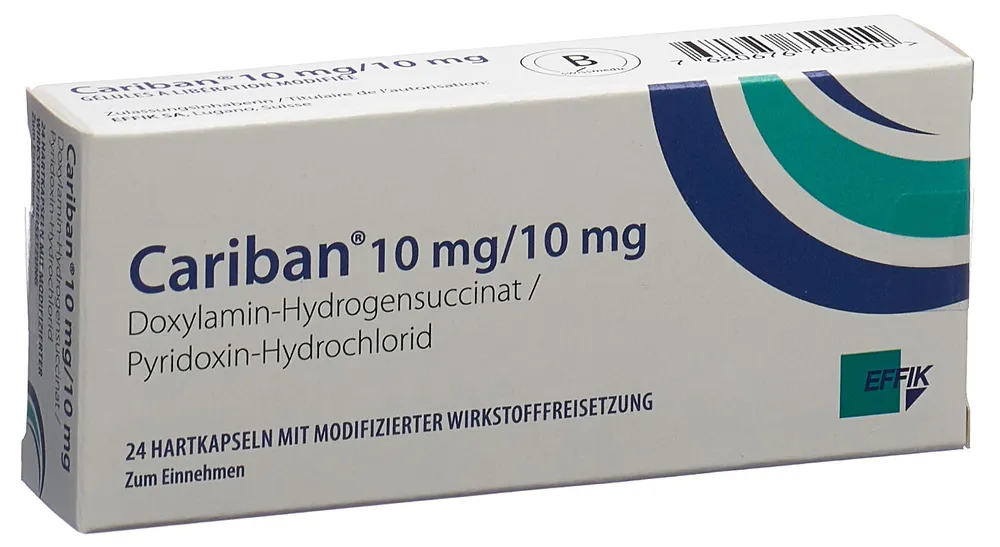
Table of Contents
- Package leaflet: Information for the user
- Introduction
- 1. What Cariban is and what it is used for
- 2. What you need to know before starting to take Cariban
- 3. How to take Cariban
- 4. Possible adverse effects
- 5. Storage of Cariban 10 mg/10 mg modified-release hard capsules
- 6. Contents of the pack and other information
Package leaflet: Information for the user
Introduction
Package leaflet: information for the user
Cariban 10 mg/10 mg modified-release hard capsules
Doxylamine succinate / Pyridoxine hydrochloride
Read this entire leaflet carefully before you start taking this medicine, because it contains important information for you.
-
Keep this leaflet, as you may need to read it again.
- If you have any questions, ask your doctor or pharmacist.
-
This medicine has been prescribed for you only, and you must not give it to other people, even if they have the same symptoms as you, because it may harm them.
- If you experience any adverse effects, consult your doctor or pharmacist, even if they are adverse effects not listed in this leaflet. See section 4.
Contents of the leaflet:
- What Cariban is and what it is used for
- What you need to know before taking Cariban
- How to take Cariban
- Possible side effects
- How to store Cariban
- Contents of the pack and other information
1. What Cariban is and what it is used for
This medicine belongs to the group of drugs known as antiemetics and antinauseants, and is indicated for the symptomatic treatment of nausea and vomiting in pregnancy in adults.
Cariban contains two components ('active substances'): 'doxylamine succinate' and 'pyridoxine hydrochloride'. Doxylamine succinate belongs to the group of antihistamine medicines. Pyridoxine hydrochloride is also known as Vitamin B6.
2. What you need to know before starting to take Cariban
Do not take Cariban:
- If you are allergic to doxylamine, pyridoxine, or any of the other components of this medicine listed in section 6.
- If you are hypersensitive to antihistamines (antiallergic agents) derived from ethanolamine (such as diphenhydramine or carbinoxamine).
- If you are taking antidepressants such as monoamine oxidase inhibitors (MAOIs), since Cariban may intensify and prolong adverse effects on the nervous system.
- If you are taking strong inhibitors of CYP450 isoenzymes.
- If you have porphyria (a very rare metabolic disorder).
- If you have hereditary fructose intolerance, glucose-galactose malabsorption, or sucrase-isomaltase deficiency.
- If you have vomiting due to other causes.
Warnings and precautions
Consult your doctor or pharmacist before starting to take Cariban.
You should consult a doctor before taking this medicine if you have:
- Glaucoma (increased eye pressure),
- Peptic ulcer (erosion of the stomach or beginning of the intestine with narrowing of the digestive tract), pyloroduodenal obstruction (difficulty passing food from the stomach to the intestine), or obstruction of the bladder neck (urinary tract disease), urinary obstruction (difficulty urinating),
- Thyroid dysfunction,
- Heart disease and high blood pressure, as Cariban may worsen the condition,
- QT interval prolongation (a heart condition),
- Asthma and other respiratory disorders, such as chronic bronchitis (persistent inflammation of the bronchi), pulmonary emphysema (a lung disease that makes breathing difficult), or chronic obstructive pulmonary disease (COPD), as Cariban may worsen the condition,
- Kidney and/or liver disease,
- Epilepsy, as it may worsen the condition,
- Low potassium levels in the blood or other electrolyte imbalances.
Cariban may cause photosensitivity reactions; therefore, sun exposure is not recommended during treatment.
Cariban may mask symptoms affecting your ears (such as vertigo); therefore, you should consult your doctor if you are taking other medicines that may have similar effects. Be aware of any signs of abuse or dependence on this treatment. If you have any substance use disorder (alcohol, medicines, or others), speak with your doctor.
Cariban contains pyridoxine hydrochloride (vitamin B6); therefore, additional intake from diet or vitamin B6 supplements should be monitored.
Cariban may worsen symptoms of dehydration and heat stroke due to reduced sweating.
After taking Cariban, you may feel drowsy. If this occurs, do not perform other activities requiring full attention unless your doctor tells you otherwise.
Children and adolescents
There are no data available on the safety and efficacy of Cariban in individuals under 18 years of age.
Use of Cariban with other medicines
Inform your doctor or pharmacist if you are using, have recently used, or might need to use any other medicines.
Cariban should not be taken together with the following medicines:
- Anticholinergics such as medicines for depression or Parkinson’s disease, monoamine oxidase inhibitors (MAOIs) (medicines for depression), neuroleptics (medicines for mental disorders), atropine-like medicines for treating spasms, or disopyramide (for treating certain heart problems), as toxicity may be enhanced.
- Central nervous system depressants (e.g., barbiturates, hypnotics, sedatives, anxiolytics, opioid-type analgesics, antipsychotics, procarbazine, or sodium oxybate).
- Antihypertensives (medicines for treating high blood pressure) with central nervous system effects such as guanabenz, clonidine, or methyldopa.
- Other medicines that cause ototoxicity (ear toxicity), such as carboplatin or cisplatin (medicines for treating cancer), chloroquine (a medicine for treating or preventing malaria), and certain antibiotics (medicines for treating infections) such as erythromycin or injectable aminoglycosides, as Cariban could mask the toxic effects of these medicines; therefore, you should have your hearing checked periodically.
- Medicines that reduce the elimination of other drugs, such as azole derivatives or macrolides, as they could increase the effect of Cariban.
- Certain diuretics (medicines that increase urine output).
- Medicines with effects on the heart, such as those used to treat arrhythmias (heart rhythm problems), certain antibiotics, certain antimalarial drugs, certain antihistamines, certain medicines used to lower blood lipids (fats), or certain neuroleptics (medicines for treating mental disorders).
- Medicines that cause photosensitization reactions (exaggerated skin reaction when exposed to sunlight), such as certain antiarrhythmics (amiodarone, quinidine), certain antibiotics (tetracyclines, fluoroquinolones, azithromycin, erythromycin, among others), certain antidepressants (imipramine, doxepine, amitriptyline), certain antifungals (griseofulvin), antihistamines (promethazine, chlorpheniramine, diphenhydramine, among others), certain nonsteroidal anti-inflammatory drugs (piroxicam, naproxen, among others), certain antivirals (amantadine, ganciclovir), and certain diuretics (furosemide, chlorothiazide), as additive photosensitizing effects may occur.
- Levodopa, as the pyridoxine contained in Cariban may reduce its effect.
- Medicines for treating epilepsy (phenobarbital, phenytoin), as pyridoxine may reduce their blood levels.
- Medicines such as hydroxyzine, isoniazid, or penicillamine, as together with pyridoxine they may increase the need for vitamin B6.
Interference with diagnostic tests
This medicine may alter the following laboratory tests: false negative results in skin tests using allergenic extracts (allergy tests). It is advisable to discontinue treatment several days before undergoing such tests.
Taking Cariban with food, drinks, and alcohol
A delay in the action of Cariban may occur when capsules are taken with food.
It is not advisable to consume alcoholic beverages during treatment with Cariban, as they may enhance the medicine's toxicity. See section 3 How to take Cariban.
Pregnancy and breastfeeding:
Cariban is indicated for use in pregnant women.
The use of Cariban during breastfeeding is not recommended.
Driving and using machines:
Cariban may cause drowsiness in some patients; therefore, situations requiring alertness—such as driving vehicles or operating machinery—should be avoided, at least during the first few days of treatment, until you know how it affects you.
Cariban contains sucrose:
This medicine contains sucrose. If your doctor has informed you of an intolerance to certain sugars, consult him before taking this medicine.
3. How to take Cariban
Follow exactly the administration instructions for this medicine as given by your doctor. If in doubt, consult your doctor again.
The recommended dose is 2 capsules at bedtime if nausea and vomiting occur in the morning (Day 1). If this dose controls the symptoms, continue taking 2 capsules. However, if symptoms persist until the afternoon of Day 2, the patient should continue with the usual dose of 2 capsules at bedtime (Day 2) and on Day 3 take 3 capsules (1 capsule in the morning and 2 capsules at bedtime). If these 3 capsules do not adequately control symptoms on Day 3, the patient may take 4 capsules starting from Day 4 (1 capsule in the morning, 1 capsule in mid-afternoon, and 2 capsules at bedtime).
The maximum daily dose is 4 capsules (1 in the morning, 1 in mid-afternoon, and 2 at bedtime).
The capsules must be swallowed whole, without chewing, on an empty stomach, with a sufficient amount of liquid, preferably water.
Use in children and adolescents
Safety and efficacy have not been established in individuals under 18 years of age.
If you take more Cariban than you should
If you have taken more Cariban than you should, consult your doctor or pharmacist immediately.
Possible poisoning would be recognized by neurological disturbances such as agitation, hallucinations, or intermittent seizures, which in extreme cases could lead to decreased vital activity and coma. If any of these symptoms occur, appropriate treatment will be initiated.
In case of overdose or accidental ingestion, contact the Toxicology Information Service. Telephone 91 562 04 20.
If you forget to take Cariban:
If you forget to take a dose of Cariban, take it as soon as possible. However, if it is almost time for the next dose, skip the missed dose and continue with your regular dosing schedule. Do not take a double dose to make up for a missed dose.
4. Possible adverse effects
Like all medicines, Cariban may produce adverse effects, although not everyone experiences them.
The adverse effects of Cariban are generally mild and transient, being more common during the first days of treatment.
Common adverse effects (may affect 1 in 10 people): somnolence and effects such as dry mouth, constipation, blurred vision, urinary retention, or increased bronchial secretion.
Uncommon adverse effects (may affect 1 in 100 people): asthenia (weakness, fatigue), peripheral edema (swelling of arms and legs), nausea, vomiting, diarrhea, skin rash, tinnitus (ringing in the ears), orthostatic hypotension (decrease in blood pressure due to postural changes), diplopia (double vision), glaucoma, confusion, or photosensitivity reactions.
Rare adverse effects (may affect up to 1 in 1,000 people): agitation, tremor, seizures, or blood disorders such as hemolytic anemia.
Other adverse effects of unknown frequency (frequency cannot be estimated from available data): tachycardia (faster heart rate), dizziness, or dyspnea.
Reporting of adverse effects
If you experience any type of adverse effect, consult your doctor or pharmacist, even if it is a possible adverse effect not listed in this leaflet. You may also report them directly through the Spanish Pharmacovigilance System for Human Medicines (www.notificaRAM.es). By reporting adverse effects, you can help provide more information on the safety of this medicine.
5. Storage of Cariban 10 mg/10 mg modified-release hard capsules
Store below 25°C.
Keep this medicine out of the sight and reach of children.
Do not use this medicine after the expiry date stated on the container. The expiry date refers to the last day of the month indicated.
Medicines should not be disposed of via wastewater or household waste. Ask your pharmacist how to dispose of medicines and containers you no longer need. This will help protect the environment.
6. Contents of the pack and other information
Composition of Cariban
- The active substances are doxylamine succinate 10 mg and pyridoxine hydrochloride 10 mg.
- The other components are:
- The capsules contain: sucrose, corn starch, shellac, povidone, talc, methacrylic acid-methyl methacrylate copolymer, and anhydrous colloidal silica.
- The capsule shell is composed of gelatin, indigo carmine (E132), quinoline yellow (E104), and titanium dioxide (E171).
Appearance of the product and contents of the pack
Cariban is available in carton packs containing 24, 36, or 48 green capsules in PVC/PVdC-aluminum or PVC/PVdC/PVC-aluminum blisters, with 12 capsules in each blister.
Marketing Authorization Holder:
Italfarmaco, S.A.
San Rafael, 3
28108 Alcobendas, Madrid (Spain)
Tel: 91 657 23 23
Manufacturer:
LABORATORIOS INIBSA, S.A.
Carretera de Sabadell a Granollers, km 14.5
08185 Lliçà de Vall - Barcelona (Spain)
or
ITALFARMACO S.p.A.
Viale Fulvio Testi, 330 – 20126 Milan (Italy)
or
LACER, S.A.
C/ Boters, 5 – Parc Tecnològic del Vallès
08290 Cerdanyola del Vallès (Barcelona) – Spain
Date of the most recent revision of this package leaflet: April 2024