Carbocal D 600 mg/400 IU tablets
Spain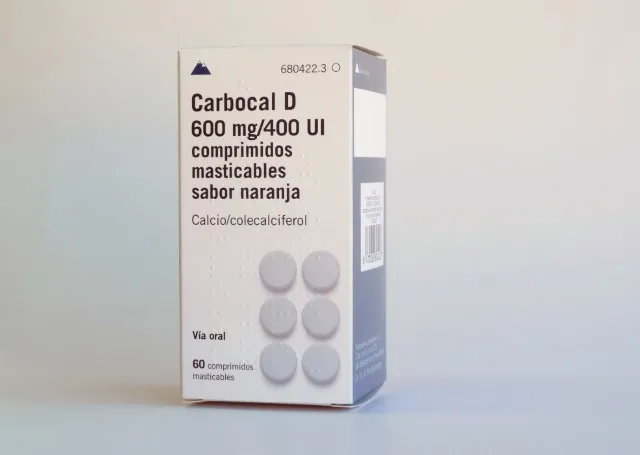
Table of Contents
Package leaflet: Information for the user
Introduction
Package leaflet: information for the user
Carbocal D 600 mg/400 IU tablets
calcium/colecalciferol
Read all of this leaflet carefully before you start taking this medicine, because it contains important information for you.
-
Keep this leaflet. You may need to read it again.
-
If you have any questions, ask your doctor or pharmacist.
-
This medicine has been prescribed for you only. Do not give it to others, even if they have the same symptoms as you. It may harm them.
- If you experience any side effects, talk to your doctor or pharmacist, even if they are side effects not listed in this leaflet. See section 4.
Contents of the leaflet
-
What Carbocal D is and what it is used for
-
What you need to know before taking Carbocal D
-
How to take Carbocal D
-
Possible side effects
-
Storage of Carbocal D
-
Contents of the pack and other information
1. What Carbocal D is and what it is used for
Carbocal D belongs to a group of medicines known as combinations of calcium with vitamin D.
Carbocal D is indicated in states of calcium and vitamin D deficiency and in the treatment of postmenopausal, senile, or corticosteroid-induced osteoporosis in adults.
2. What you need to know before taking Carbocal D
Do not take Carbocal D
- if you are allergic to calcium, colecalciferol (vitamina D3), or any of the other components of this medicine (listed in section 6),
- if you have high levels of calcium in your blood or calcium in your urine,
- if you have severe kidney disease,
- if you have kidney stones,
- if you have been immobilized for a long time and have elevated calcium levels in your blood or calcium in your urine.
Warnings and precautions
Talk to your doctor or pharmacist before you start taking Carbocal D.
Inform your doctor if you have any of the following conditions before taking Carbocal D:
- if you are taking other medicines containing vitamin D. In this case, your daily intake of this vitamin will need to be calculated,
- if you have a disease called sarcoidosis, as you will need to take this medicine with caution due to a possible increase in vitamin D metabolism,
- if you have kidney disease, as this may alter vitamin D metabolism,
- if treatment with Carbocal D is expected to be very long, as your urine calcium levels should then be monitored,
- if you are receiving treatment with vitamin D, as it is important in these cases that your blood levels of calcium and phosphorus are monitored.
Children
Carbocal D must not be used in children.
Other medicines and Carbocal D
Inform your doctor or pharmacist if you are taking, have recently taken, or might need to take any other medicines.
Carbocal D may interact with other medicines, such as:
- oral tetracyclines, as their effects may be reduced when taken together with Carbocal D; therefore, an interval of at least three hours should be observed,
- bisphosphonates or sodium fluoride, as their effects may be reduced when taken together with Carbocal D; therefore, an interval of at least two hours should be observed,
- anticonvulsants and barbiturates, as they may reduce the effectiveness of vitamin D when taken with Carbocal D,
- cardiac glycosides, as their combination with Carbocal D may pose a risk of cardiac arrhythmias,
- thiazide diuretics, as taking them with Carbocal D may increase your blood calcium levels,
- levothyroxine, as calcium may reduce its absorption; therefore, an interval of at least four hours should be observed,
- quinolone antibiotics, as calcium may interfere with their absorption; these medicines should therefore be taken either two hours before or six hours after taking Carbocal D.
Taking Carbocal D with food and drink
If you take this medicine together with foods or drinks containing oxalic acid (a compound found in spinach and rhubarb), phytic acid (found in wholemeal bread and cereals), or phosphorus (found in foods such as milk), interactions may occur. Therefore, it is recommended not to take this medicine within 2 hours after consuming such foods.
Pregnancy and breastfeeding
If you are pregnant or breastfeeding, think you may be pregnant, or are planning to become pregnant, consult your doctor or pharmacist before using this medicine.
If you are pregnant or breastfeeding, you must consult your doctor before starting treatment with this medicine, as you should under no circumstances take more than one tablet per day.
The use of Carbocal D is not recommended during pregnancy or breastfeeding.
Driving and using machines
The effect of Carbocal D on the ability to drive and operate machinery is negligible or none.
During treatment with this medicine, you may safely drive and operate machinery.
Important information about some of the components of Carbocal D
This medicine contains partially hydrogenated soya oil. Do not use this medicine if you are allergic to peanuts or soya.
This medicine contains sucrose. If your doctor has informed you that you have an intolerance to certain sugars, consult him before taking this medicine.
3. How to take Carbocal D
Follow exactly the instructions for use of this medicine as given by your doctor. If in doubt, consult your doctor or pharmacist again.
Carbocal D tablets are administered orally.
The recommended dose is 1 to 2 tablets (1,500–3,000 mg calcium carbonate, 400–800 IU vitamin D) per day, preferably after meals.
The tablets should be swallowed whole or split, with a glass of water. The score line is intended only for splitting the tablet if you have difficulty swallowing it whole.
Remember to take your medicine.
Your doctor will determine the duration of treatment with Carbocal D. Do not stop the treatment prematurely, as the intended effects will not be achieved.
If you think that the effect of Carbocal D is too strong or too weak, inform your doctor or pharmacist.
If you take more Carbocal D than you should
In case of overdose or accidental ingestion, consult your doctor or pharmacist immediately, or call the Toxicology Information Service at 91 562 04 20, indicating the medicine and the amount ingested. It is recommended to bring the medicine container and package leaflet to the healthcare professional.
If you forget to take Carbocal D
If you forget to take your tablets, take the missed dose as soon as possible, then resume your regular dosing schedule.
If it is almost time for your next dose, do not take the missed dose; simply take the next dose at the regular time.
Do not take a double dose to make up for missed doses.
If you stop treatment with Carbocal D
Take Carbocal D as prescribed. Do not stop treatment with this medicine without first consulting your doctor.
If you have any further questions about the use of this medicine, ask your doctor or pharmacist.
4. Possible adverse effects
Like all medicines, this medicine can cause adverse effects, although not everyone experiences them.
The possible adverse effects are listed below, grouped according to their frequency of occurrence.
Uncommon (may affect up to 1 in 100 people):
- increased levels of calcium in blood and urine.
Rare (may affect up to 1 in 1,000 people):
- constipation, flatulence, nausea, diarrhoea, and abdominal pain,
- itching, redness, or abnormal skin texture.
If you consider any of the adverse effects you experience to be severe, or if you notice any adverse effect not listed in this leaflet, inform your doctor or pharmacist.
Reporting of adverse effects
If you experience any type of adverse effect, consult your doctor or pharmacist, even if it is a possible adverse effect not listed in this leaflet. You may also report them directly through the Spanish Pharmacovigilance System for Human Medicinal Products: www.notificaram.es. By reporting adverse effects, you can help provide more information on the safety of this medicine.
5. Storage of Carbocal D
Keep this medicine out of the sight and reach of children.
This medicine requires no special storage conditions.
Do not use this medicine after the expiry date stated on the container. The expiry date refers to the last day of the month indicated.
Medicines must not be disposed of via wastewater or household waste. Dispose of unused medicines and their containers at a SIGRE collection point at your pharmacy. If you are unsure, ask your pharmacist how to dispose of medicines and containers you no longer need. This will help protect the environment.
6. Contents of the pack and other information
Composition of Carbocal D
-
The active substances are: calcium carbonate and colecalciferol (Vitamin D3). Each tablet contains 1,500 mg of calcium carbonate (equivalent to 600 mg of calcium) and 400 IU of colecalciferol (Vitamin D3) (equivalent to 0.01 mg).
-
The other components (excipients) are: silicon dioxide, sucrose, hydrolyzed bovine gelatin, partially hydrogenated soybean oil, DL-alpha-tocopherol, corn starch, pregelatinized starch (from corn), sodium starch glycolate type A (from potato), povidone, sodium lauryl sulfate, and magnesium stearate.
Nature of the product and pack contents
Carbocal D 600 mg/400 IU tablets are presented as white, oblong, scored tablets for oral administration.
The tablets are packed in opaque white high-density polyethylene (HDPE) bottles with a polyethylene cap and safety seal, packed in a cardboard outer container.
Pack sizes of 60 tablets are available.
Marketing Authorization Holder and Manufacturer
Marketing Authorization Holder
Farmasierra Laboratorios, S.L.
Ctra. de Irún, km 26,200
28706, San Sebastián de los Reyes
Madrid, Spain
Manufacturer
Farmasierra Manufacturing, S.L.
Ctra. de Irún, km 26,200
28706, San Sebastián de los Reyes
Madrid, Spain
Date of the most recent review of this leaflet:
Detailed information on this medicine is available on the website of the Spanish Agency for Medicines and Health Products (AEMPS) (http://www.aemps.gob.es/).