Capsaicin 0.75 mg/g cream
Spain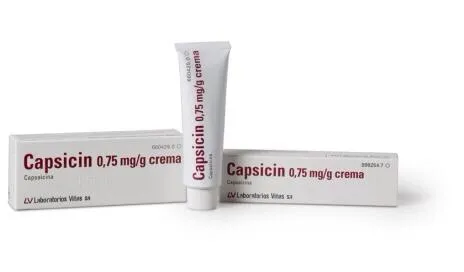
Table of Contents
Package leaflet: Information for the user
Introduction
Package leaflet information for the user
Capsicin 0.75 mg/g cream
Capsaicin
Read all of this leaflet carefully before you start using this medicine, because it contains important information for you.
- Keep this leaflet. You may need to read it again.
- If you have any questions, ask your doctor or pharmacist.
- This medicine has been prescribed for you only and must not be given to other people, even if they have the same symptoms as you, since it could harm them.
- If you experience any adverse effects, talk to your doctor or pharmacist, even if they are not listed in this leaflet. See section 4.
Leaflet contents
- What Capsicin is and what it is used for
- What you need to know before using Capsicin
- How to use Capsicin
- Possible side effects
- How to store Capsicin
- Contents of the pack and other information
1. What Capsicin is and what it is used for
Capsicin is a cream medication for topical use, whose active ingredient, capsaicin, is a locally-acting analgesic agent.
This medicine is indicated for the relief of moderate to severe pain in painful diabetic neuropathy that interferes with daily activities and has not responded to other treatments.
2. What you need to know before using Capsicin
Do not use Capsicin
If you are allergic to capsaicin or to any of the other ingredients of this medicine (listed in section 6).
Warnings and precautions
Consult your doctor or pharmacist before starting to use Capsicin.
- This treatment should be initiated and supervised by the specialist managing the diabetic patient.
- This medicine is for external cutaneous use only. Avoid contact with eyes and mucous membranes.
- Do not use Capsicin on damaged skin or open wounds.
- Contact with the eyes or other mucous membranes may cause a burning sensation. If this occurs, rinse the area thoroughly with plenty of cold water.
- If pain persists or worsens after the first 2 weeks of treatment, or disappears and reappears a few days later, or if excessive irritation occurs, discontinue treatment and consult your doctor.
- Do not apply heat or tight bandages to the treated area. Do not use for prolonged periods or over large areas.
Other medicines and Capsicin
Inform your doctor or pharmacist if you are using, have recently used, or might need to use any other medicines.
Possible interactions of Capsicin with other topical medicines are unknown.
As this is a topical product, interactions with systemic medicines are not expected.
Pregnancy and breastfeeding
If you are pregnant or breastfeeding, think you may be pregnant, or are planning to become pregnant, consult your doctor or pharmacist before using this medicine.
If you are pregnant, your doctor will determine whether it is appropriate to start this treatment.
Likewise, if you are breastfeeding, your doctor will also decide whether it is appropriate to start treatment with this medicine.
Driving and using machines
Capsicin does not affect the ability to drive or operate machinery.
Capsicin contains propylene glycol, cetyl alcohol, benzyl alcohol, methylparaben sodium salt (E-219), and propylparaben (E-216)
This medicine contains 70 mg of propylene glycol per gram of cream.
It may cause local skin reactions (such as contact dermatitis) due to cetyl alcohol.
This medicine contains 12 mg of benzyl alcohol per gram of cream. Benzyl alcohol may cause allergic reactions and moderate local irritation.
It may cause allergic reactions (possibly delayed) due to methylparaben sodium salt (E-219) and propylparaben (E-216).
3. How to use Capsicin
Follow exactly the administration instructions for this medicine as given by your doctor. If in doubt, consult your doctor or pharmacist again.
Capsicin is a medicine intended for cutaneous use only, applied externally. It should be applied to the painful areas of the skin.
Adults and elderly
- Apply the smallest amount of cream necessary to cover the affected area of skin.
- Spread the cream with a gentle massage until it is completely absorbed, taking care that no residue remains.
- Always wash your hands thoroughly with cold water and soap immediately after each application. Unless specifically instructed by your doctor, avoid applying the cream near the eyes or on mucous membranes (e.g., mouth).
- When treating the hands, do not wash them for at least 30 minutes after application. During this time, avoid touching your eyes, mouth, or other sensitive areas.
- It is important to apply the cream 3 or 4 times daily. The duration of treatment is 8 weeks, after which your doctor will determine whether to discontinue or continue treatment.
- Your doctor will indicate the duration of your treatment with Capsicin.
Use in children
Not recommended.
If you use more Capsicin than you should
Acute intoxication is practically impossible with proper use of the medicine.
In case of overdose, accidental ingestion, or contact with the eyes, consult your doctor or pharmacist immediately or call the Toxicology Information Service at telephone number 91 562 04 20, indicating the medicine and the amount used.
If you forget to use Capsicin
Do not apply a double amount to make up for missed doses. Continue treatment with the recommended dosage.
If you stop treatment with Capsicin
If you discontinue treatment, consult your doctor or pharmacist.
If you have any further questions about the use of this medicine, ask your doctor or pharmacist.
4. Possible adverse effects
Like all medicines, this medicine may cause adverse effects, although not everyone will experience them.
During the first days of treatment, a burning or stinging sensation on the skin at the application site may occur in approximately 50% of cases. This known reaction is due to the pharmacological action of capsaicin, which releases substance P from peripheral nerve endings and accumulates it at the synapse. The sensation usually diminishes or disappears over time as treatment continues at the recommended dose, without the need to discontinue therapy. Its duration and intensity are variable but may be prolonged if Capsicin is applied less than 3 or 4 times a day. Hot water, excessive sweating, or occlusion may intensify this sensation. Other possible cutaneous adverse effects may include irritative erythema and dryness of the skin at the application site.
During treatment, sneezing, lacrimation, or cough (less than 2%) may also occur, but much less frequently, as a result of inhaling dried cream residue. Therefore, it is important to apply the smallest necessary amount of cream, avoid leaving any residue on the skin, and wash hands with cold water and soap after use.
Reporting of adverse effects
If you experience any type of adverse effect, consult your doctor or pharmacist, even if it is a possible adverse effect not listed in this leaflet. You may also report them directly through the Spanish Pharmacovigilance System for Human Medicines: https://www.notificaRAM.es. By reporting adverse effects, you can help provide more information on the safety of this medicine.
5. Storage of Capsicin
No special storage conditions are required.
Keep this medicine out of the sight and reach of children.
Do not use this medicine after the expiry date stated on the container after EXP. The expiry date is the last day of the month indicated.
Do not use this medicine if you notice any changes in the appearance of the cream.
Medicines must not be disposed of via wastewater or household waste. Dispose of containers and unused medicines at the SIGRE collection point at your pharmacy. If in doubt, ask your pharmacist how to dispose of containers and medicines you no longer need. This will help protect the environment.
6. Contents of the pack and other information
Composition of Capsicin
- The active substance is capsaicin. Each gram of cream contains 0.75 mg of capsaicin.
- The other components (excipients) are: isopropyl myristate, stearic acid, propylene glycol, glyceryl monomyristate, potassium hexadecyl hydrogen phosphate, cetostearyl alcohol, benzyl alcohol, diazolidinyl urea, methylparaben, sodium sulfite (E219), propylparaben (E216), and purified water.
Appearance of the product and contents of the container
Capsicin is presented as a white cream for topical use, in aluminum tubes of 30 and 50 grams.
Marketing Authorization Holder:
Laboratorios Viñas, S.A.
Provenza, 386
08025 – Barcelona
Spain
Manufacturer:
Laboratorios Viñas, S.A.
Torrent d’en Vidalet, 29
08012 - Barcelona
Spain
Laboratorios Viñas, S.A.
Polígono Industrial Can Rosés
Avenida Can Rosés, s/n
08191 Rubí - Spain
Date of the most recent revision of this leaflet: November 2020
Detailed and up-to-date information on this medicinal product is available on the website of the Spanish Agency of Medicines and Medical Devices (AEMPS) http://www.aemps.gob.es/