Capecitabine Accord 500 mg film-coated tablets EFG
Spain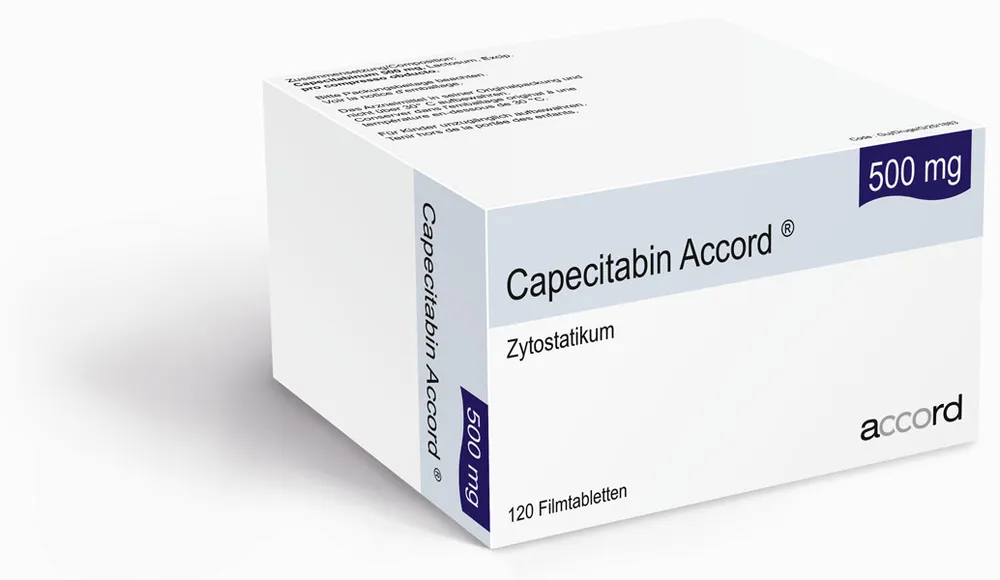
Table of Contents
- Package leaflet: Information for the user
- Introduction
- 1. What Capecitabina Accord is and what it is used for
- 2. What you need to know before taking Capecitabine Accord
- 3. How to take Capecitabine Accord
- 4. Possible adverse effects
- 5. Storage of Capecitabine Accord
- 6. Contents of the pack and other information
Package leaflet: Information for the user
Introduction
Package leaflet: information for the user
Capecitabine Accord 150 mg film-coated tablets EFG
Capecitabine Accord 300 mg film-coated tablets
Capecitabine Accord 500 mg film-coated tablets EFG
Capecitabine
Read the entire leaflet carefully before you start taking this medicine because it contains important information for you.
- Keep this leaflet; you may need to read it again.
- If you have any questions, ask your doctor or pharmacist.
- This medicine has been prescribed for you only; do not pass it on to others, even if they have the same symptoms as you, because it could be harmful to them.
- If you experience any adverse effects, consult your doctor or pharmacist, even if they are adverse effects not listed in this leaflet. See section 4.
Leaflet contents:
- What Capecitabine Accord is and what it is used for
- What you need to know before taking Capecitabine Accord
- How to take Capecitabine Accord
- Possible side effects
- How to store Capecitabine Accord
- Contents of the pack and other information
1. What Capecitabina Accord is and what it is used for
Capecitabina Accord belongs to a group of medicines known as "cytostatic agents", which stop the growth of cancer cells. Capecitabina Accord contains capecitabine and is not itself a cytostatic medicine. Only after being absorbed by the body does it transform into an active anti-cancer medicine (more so in tumour tissue than in normal tissue).
Capecitabina Accord is used to treat colon, rectal, gastric, or breast cancer. In addition, Capecitabina Accord is used to help prevent the recurrence of colon cancer after complete surgical removal of the tumour.
Capecitabina Accord may be used alone or in combination with other medicines.
2. What you need to know before taking Capecitabine Accord
Do not take Capecitabine Accord
-
if you are allergic to capecitabine or to any of the other ingredients of this medicine (listed in section 6). You must inform your doctor if you have any type of allergy or exaggerated reaction to this medicine,
-
if you have previously experienced severe reactions to therapy with fluoropyrimidines (a group of anticancer medicines such as fluorouracil),
-
if you are pregnant or breastfeeding,
-
if you have excessively low levels of white blood cells or platelets in your blood (leucopenia, neutropenia, or thrombocytopenia),
-
if you have severe liver or kidney problems,
-
if you know you have no activity of the enzyme dihydropyrimidine dehydrogenase (DPD) (complete DPD deficiency),
-
if you are being treated or have been treated within the last 4 weeks with brivudine as part of treatment for herpes zoster (shingles or herpes).
Warnings and precautions
Talk to your doctor or pharmacist before starting to take Capecitabine Accord if:
- you know you have partial deficiency of the enzyme dihydropyrimidine dehydrogenase (DPD),
- you are a relative of someone with partial or complete deficiency of the enzyme dihydropyrimidine dehydrogenase (DPD),
- you have liver or kidney problems,
- you have or have had heart problems (for example, irregular heartbeat) or chest, jaw, and back pain during physical exertion due to circulation problems,
- you have brain disorders (for example, cancer that has spread to the brain or nerve damage (neuropathy)),
- you have calcium imbalance (seen in blood tests),
- you have diabetes,
- due to severe nausea and vomiting you are unable to retain food or fluids,
- you have diarrhoea,
- you are or will be dehydrated,
- you have an imbalance of ions in your blood (electrolyte imbalance, seen in blood tests),
- you have a history of eye problems, as you may need additional eye monitoring,
- you have a severe skin reaction.
DPD deficiency: DPD deficiency is a genetic condition that usually does not cause health problems unless you are being treated with certain medicines. If you have DPD deficiency and take Capecitabine Accord, you have a higher risk of experiencing serious adverse effects (listed in section 4, Possible side effects). It is recommended that you be tested for DPD deficiency before starting treatment. If you have no enzyme activity, you must not take Capecitabine Accord. If you have reduced enzyme activity (partial deficiency), your doctor may prescribe a lower dose. Even if the test result for DPD deficiency is negative, serious and potentially life-threatening adverse effects may still occur.
Children and adolescents
Capecitabine Accord is not indicated for use in children and adolescents. Do not give Capecitabine Accord to children or adolescents.
Taking Capecitabine Accord with other medicines
Before starting treatment, tell your doctor or pharmacist if you are taking, have recently taken, or might need to take any other medicines. This is very important, as taking more than one medicine at the same time may increase or reduce their effects.
You must not take brivudine (an antiviral medicine used to treat herpes zoster or chickenpox) at the same time as receiving capecitabine treatment (including any rest period when you are not taking any capecitabine tablets). If you have taken brivudine, you must wait at least 4 weeks after stopping brivudine before starting capecitabine. See also the section “Do not take Capecitabina Accord”. |
You should also be very careful if you are taking any of the following medicines:
- medicines for gout (allopurinol),
- medicines to reduce blood clotting (coumarin, warfarin),
- medicines for seizures or tremors (phenytoin),
- a medicine used to treat cancer (interferon alfa),
- radiotherapy and certain medicines used to treat cancer (folinic acid, oxaliplatin and bevacizumab, cisplatin, irinotecan).
Taking Capecitabine Accord with food and drink
You should take Capecitabine Accord within 30 minutes after eating a meal.
Pregnancy, breast-feeding and fertility
If you are pregnant or breast-feeding, think you may be pregnant or are planning to become pregnant, consult your doctor or pharmacist before using this medicine.
You must not take Capecitabine Accord if you are pregnant or think you might be pregnant.
You must not breast-feed while taking Capecitabine Accord and for 2 weeks after your last dose.
If you are a woman who could become pregnant, you must use an effective method of contraception during treatment with Capecitabine Accord and for at least 6 months after the last dose.
If you are a male patient and your female partner could become pregnant, you must use an effective method of contraception during treatment with Capecitabine Accord and for at least 3 months after the last dose.
Driving and using machines
When taking Capecitabine Accord, you may feel dizzy, nauseous or tired. Therefore, Capecitabine Accord may affect your ability to drive or operate machinery. Do not drive if you feel dizzy, nauseous or tired after taking this medicine.
Capecitabine Accord contains lactose
If your doctor has informed you that you have an intolerance to certain sugars, consult your doctor before taking this medicine.
3. How to take Capecitabine Accord
Follow exactly the instructions given by your doctor or pharmacist for taking this medicine. If you are unsure, consult your doctor or pharmacist again.
Capecitabine Accord should only be prescribed by a physician experienced in the use of anticancer drugs.
Your doctor will prescribe the appropriate treatment schedule and dosage for you. The dose of Capecitabine Accord depends on your body surface area. This is calculated by measuring your height and weight. The usual dose for adults is 1,250 mg/m² body surface area twice daily (morning and evening). Below are two examples: a person weighing 64 kg and measuring 1.64 m has a body surface area of 1.7 m² and should take 4 tablets of 500 mg and 1 tablet of 150 mg twice daily. A person weighing 80 kg and measuring 1.80 m has a body surface area of 2.00 m² and should take 5 tablets of 500 mg twice daily.
Your doctor will tell you the dose you need to take, when to take it, and for how long you need to take it.
Your doctor may instruct you to take a combination of 150 mg and 500 mg tablets for each dose.
- Take the tablets in the morning and in the evening, as prescribed by your doctor.
- Take the tablets within 30 minutes after finishing breakfast or dinner, swallowing them whole with water. Do not crush or cut the tablets. If you are unable to swallow the Capecitabine Accord tablets whole, speak with your doctor or pharmacist.
- It is important that you take your medication exactly as prescribed by your doctor.
Capecitabine Accord tablets are generally administered for 14 consecutive days, followed by a 7-day rest period (during which no tablets are taken). This 21-day period constitutes one treatment cycle.
When used in combination with other medicines, the usual adult dose may be less than 1,250 mg/m² body surface area, and you may need to take the tablets for a different duration (e.g., every day, without a rest period).
If you take more Capecitabine Accord than you should:
If you take more Capecitabine Accord than prescribed, contact your doctor as soon as possible before taking your next dose.
You may experience the following adverse effects if you take too much capecitabine: dizziness, vomiting, diarrhea, intestinal or oral inflammation or ulceration, pain or bleeding in the intestine or stomach, or bone marrow suppression (reduction in certain types of blood cells). Inform your doctor immediately if you experience any of these symptoms.
If you forget to take Capecitabine Accord:
Do not take the missed dose. Do not take a double dose to make up for forgotten doses. Instead, continue with your regular dosing schedule and consult your doctor.
If you stop taking Capecitabine Accord:
Stopping treatment with capecitabine does not cause adverse effects.
However, if you are taking coumarin anticoagulants (e.g., phenprocoumon), discontinuation of capecitabine treatment may require your doctor to adjust your anticoagulant dose.
If you have any further questions about the use of this medicine, ask your doctor or pharmacist.
4. Possible adverse effects
Like all medicines, Capecitabine Accord can cause adverse effects, although not everyone experiences them.
STOP taking Capecitabine Accord immediately and contact your doctor if any of the following symptoms occur:
- Diarrhea: if you have 4 or more additional bowel movements than your normal daily number, or have nocturnal diarrhea.
- Vomiting: if you vomit more than once within a 24-hour period.
- Nausea: if you lose your appetite and your daily food intake is much less than usual.
- Stomatitis: if you have pain, redness, swelling, or sores in your mouth and/or throat.
- Hand-foot skin reaction: if you have pain, swelling, redness, or tingling in your hands and/or feet.
- Fever: if your temperature is 38°C or higher.
- Infection: if you show signs of infection caused by bacteria, viruses, or other organisms.
- Chest pain: if you have pain located in the center of your chest, especially if it occurs during physical exertion.
- Stevens-Johnson syndrome: if you develop painful red or purple skin rashes that spread, blisters, and other lesions starting in the mucous membranes (e.g., mouth and lips), particularly if you previously had photosensitivity, respiratory tract infections (e.g., bronchitis), and/or fever.
- DPD deficiency: if you have a known deficiency of DPD, you are at higher risk of early-onset toxicity and severe, potentially life-threatening or fatal adverse reactions caused by Capecitabine Accord (e.g., stomatitis, mucosal inflammation, diarrhea, neutropenia, and neurotoxicity).
- Angioedema: Seek immediate medical attention if you notice any of the following symptoms, as urgent medical treatment may be needed: swelling mainly affecting the face, lips, tongue, or throat making it difficult to swallow or breathe, itching, and rashes. These could be signs of angioedema.
If detected early, these adverse effects usually improve within 2 to 3 days after stopping the drug.
However, if these adverse effects persist, contact your doctor immediately.
Your doctor may advise you to resume treatment at a lower dose.
If severe stomatitis (sores in the mouth and/or throat), mucosal inflammation, diarrhea, neutropenia (increased risk of infections), or neurotoxicity occur during the first treatment cycle, you may have a DPD deficiency (see section 2: Warnings and precautions).
The hand-foot skin reaction may lead to loss of fingerprint, which could affect your identification through fingerprint analysis.
In addition, when capecitabine is used alone, the most common adverse effects that may affect more than 1 in 10 people are:
- abdominal pain
- skin reaction, dry skin, or itching
- fatigue
- loss of appetite (anorexia).
These adverse effects can be serious; therefore, always contact your doctor immediately when you start experiencing any adverse effect. Your doctor may advise reducing the dose and/or temporarily stopping treatment with Capecitabine Accord. This will help reduce the likelihood of the adverse effect continuing or becoming severe.
Other adverse effects are:
Frequent adverse effects (may affect up to 1 in 10 people) include:
- decrease in white or red blood cell counts (seen in blood tests)
- dehydration, weight loss
- insomnia, depression
- headache, drowsiness, dizziness, abnormal skin sensations (tingling or numbness), taste disturbances
- eye irritation, increased tearing, eye redness (conjunctivitis)
- inflammation of veins (thrombophlebitis)
- difficulty breathing, nosebleeds, cough, nasal discharge
- cold sores or other herpes infections
- lung or respiratory system infections (e.g., pneumonia or bronchitis)
- intestinal bleeding, constipation, upper abdominal pain, indigestion, gas (increased flatulence), dry mouth
- skin rash, mild hair loss (alopecia), skin redness, dry skin, itching (pruritus), skin color changes, skin peeling, skin inflammation, nail disorders
- tingling or numbness of the skin
- joint or limb pain, chest or back pain
- fever, swelling of the limbs, feeling unwell
- liver function problems (seen in blood tests) and increased bilirubin in blood (excreted by the liver)
Uncommon adverse effects (may affect up to 1 in 100 people) include:
- blood infection, urinary tract infection, skin infection, nose and throat infections, fungal infections (including oral), flu, gastroenteritis, dental abscess
- lumps under the skin (lipoma)
- decrease in blood cells including platelets, anemia (seen in blood tests)
- allergy
- diabetes, low blood potassium, malnutrition, increased blood triglycerides
- confusion, panic attacks, depression, reduced libido
- difficulty speaking, memory disturbances, loss of motor coordination, balance disorders, fainting, nerve damage (neuropathy), and sensory problems
- blurred or double vision
- dizziness, ear pain
- irregular heartbeat and palpitations (arrhythmias), chest pain, heart attack (infarction)
- blood clots in deep veins, high or low blood pressure, hot flushes, cold extremities, purple spots on the skin
- blood clots in the lung veins (pulmonary embolism), atelectasis, coughing up blood, asthma, shortness of breath during exercise
- intestinal obstruction, fluid accumulation in the abdomen, inflammation of the small or large intestine, stomach, or esophagus, lower abdominal pain, abdominal discomfort, gastric acid reflux (stomach contents coming back up), blood in stools
- jaundice (yellowing of the skin and eyes)
- skin ulcers and blisters, skin reaction to sunlight, redness of the palms, swelling or pain in the face
- swelling or numbness of joints, bone pain, muscle weakness or stiffness
- fluid accumulation in the kidneys, increased frequency of nighttime urination, incontinence, blood in urine, increased blood creatinine (a sign of kidney dysfunction)
- unusual vaginal bleeding
- swelling (edema), chills, and stiffness
Some of these adverse effects are more common when capecitabine is used together with other cancer treatments. Other adverse effects observed in this setting include:
Frequent adverse effects (may affect up to 1 in 10 people) include:
- decreased sodium, magnesium, or calcium in blood, increased blood glucose
- nerve pain
- ringing in the ears (tinnitus), hearing loss
- venous inflammation
- hiccups, voice changes
- mouth pain or altered/abnormal sensation, jaw pain
- sweating, night sweats
- muscle spasms
- difficulty urinating, blood or protein in urine, bruising or reaction at injection site (caused by injected medicines given simultaneously)
Rare adverse effects (may affect up to 1 in 1,000 people) include:
- narrowing or blockage of the tear duct (lacrimal duct stenosis)
- liver failure
- inflammation leading to impaired bile secretion or obstruction (cholestatic hepatitis)
- specific changes in the electrocardiogram (QT prolongation)
- certain types of arrhythmias (including ventricular fibrillation, torsade de pointes, and bradycardia)
- eye inflammation causing eye pain and possible vision problems
- skin inflammation causing scaly red patches due to an autoimmune disease
- angioedema (swelling mainly affecting face, lip, tongue, or throat, itching, and rashes)
Very rare adverse effects (may affect up to 1 in 10,000 people) are:
- severe skin reactions such as skin rashes, ulcers, and blisters that may involve ulcers in the mouth, nose, genitals, hands, feet, and eyes (red and swollen eyes)
Reporting of adverse effects
If you experience any adverse effect, talk to your doctor, pharmacist, or nurse, even if it is a possible adverse effect not listed in this leaflet. You can also report them directly through the national reporting system listed in Annex V.
By reporting adverse effects, you can help provide more information on the safety of this medicine.
5. Storage of Capecitabine Accord
Keep this medicine out of the sight and reach of children.
Do not use this medicine after the expiry date stated on the packaging after EXP.
For aluminum/aluminum blisters:
This medicine does not require any special storage conditions.
For PVC/PVDC/aluminum blisters (perforated unit doses):
Do not store above 30°C.
Medicines must not be disposed of via wastewater or household waste. Ask your pharmacist how to dispose of medicines and packaging that you no longer need. This will help protect the environment.
6. Contents of the pack and other information
Composition of Capecitabine Accord
- The active substance is capecitabine.
Each film-coated tablet contains 150 mg of capecitabine.
Each film-coated tablet contains 300 mg of capecitabine.
Each film-coated tablet contains 500 mg of capecitabine.
- The other components are:
Tablet core: anhydrous lactose, sodium croscarmellose, hypromellose, microcrystalline cellulose, magnesium stearate.
Tablet coating (for 150 mg): hypromellose, titanium dioxide (E171), yellow iron oxide, red iron oxide (E172), talc.
Tablet coating (for 300 mg): hypromellose, titanium dioxide (E171), talc.
Tablet coating (for 500 mg): hypromellose, titanium dioxide (E171), yellow iron oxide, red iron oxide (E172), talc.
Appearance of the product and contents of the pack
Capecitabine Accord 150 mg are light peach-coloured, film-coated, oblong, biconvex tablets, 11.4 mm in length and 5.3 mm in width, marked “150” on one side and plain on the other.
Capecitabine Accord 300 mg are white to off-white, film-coated, oblong, biconvex tablets, 14.6 mm in length and 6.7 mm in width, marked “300” on one side and plain on the other.
Capecitabine Accord 500 mg are peach-coloured, film-coated, oblong, biconvex tablets, 15.9 mm in length and 8.4 mm in width, marked “500” on one side and plain on the other.
Capecitabine Accord is available in blister packs containing 30, 60 or 120 film-coated tablets, or in perforated unit dose blister packs containing 30 x 1, 60 x 1 or 120 x 1 film-coated tablets.
Only certain pack sizes may be marketed.
Marketing Authorisation Holder
Accord Healthcare S.L.U.
World Trade Center, Moll de Barcelona, s/n,
Edifici Est, 6th floor,
08039 Barcelona,
Spain
Manufacturer
Accord Healthcare Limited
Sage House, 319 Pinner Road,
North Harrow,
Middlesex HA1 4HF
United Kingdom
Accord Healthcare Polska Sp. z o.o.,
ul. Lutomierska 50, 95-200 Pabianice, Poland
Accord Healthcare B.V.,
Winthontlaan 200,
3526 KV Utrecht,
The Netherlands
Date of the most recent revision of this leaflet
Detailed information on this medicine is available on the website of the European Medicines Agency: http://www.ema.europa.eu.