Canadiol 100 mg capsules
Spain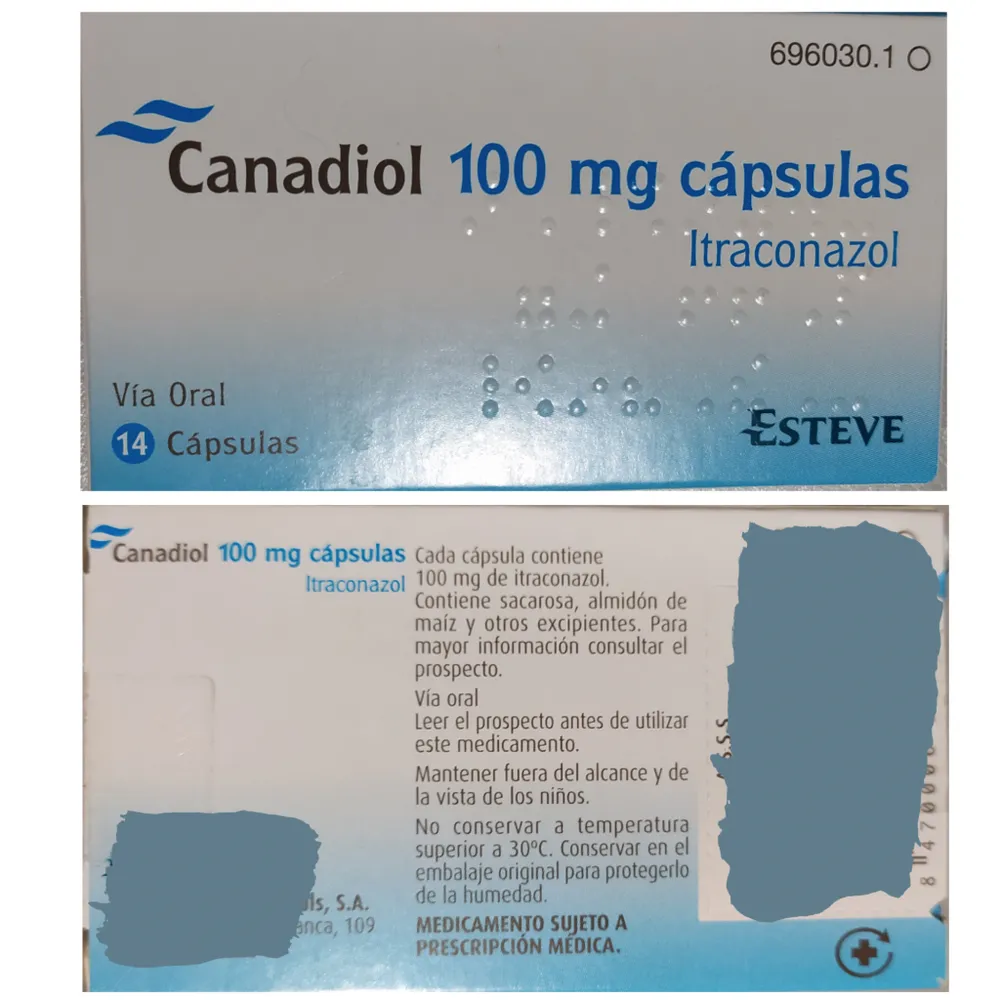
Table of Contents
- Patient Information Leaflet
- Introduction
- **CANADIOL 100 mg capsules**
- 1. What CANADIOL 100 mg capsules is and what it is used for
- 2. What you need to know before using CANADIOL 100 mg capsules
- 3. How to take CANADIOL 100 mg capsules
- 4. Possible adverse effects
- 5. Storage of CANADIOL 100 mg capsules
- 6. Package contents and additional information
Patient Information Leaflet
Introduction
Patient Information Leaflet
CANADIOL 100 mg capsules
itraconazole
Read the entire leaflet carefully before starting to take this medicine, as it contains important information for you.
-
Keep this leaflet, as you may need to read it again.
-
If you have any questions, consult your doctor or pharmacist.
-
This medicine has been prescribed for you only, and you should not give it to others, even if they have the same symptoms as you, as it may harm them.
-
If you experience any adverse effects, consult your doctor or pharmacist, even if they are adverse effects not listed in this leaflet. See section 4.
Leaflet contents
- What CANADIOL 100 mg capsules is and what it is used for
- What you need to know before taking CANADIOL 100 mg capsules
- How to take CANADIOL 100 mg capsules
- Possible side effects
- How to store CANADIOL 100 mg capsules
- Contents of the pack and other information
1. What CANADIOL 100 mg capsules is and what it is used for
CANADIOL belongs to a group of medicines called "antifungals". It is indicated for the treatment of fungal infections affecting the vagina, skin, mouth, eyes, nails, or internal organs.
2. What you need to know before using CANADIOL 100 mg capsules
Do not use CANADIOL 100 mg capsules
-
if you are allergic (hypersensitive) to itraconazole or to any of the other components of this medicine (listed in section 6).
-
if you have a condition called heart failure (also known as congestive heart failure or CHF). This medicine could worsen it. If your doctor determines you must take this medicine, contact him or her immediately if you experience shortness of breath, unexpected weight gain, swollen legs, unusual fatigue, or begin waking up at night.
-
if you are pregnant, think you might be pregnant, or could become pregnant (see section “Pregnancy”).
-
if you are of childbearing age, you must use adequate contraceptive measures to avoid becoming pregnant during treatment. Because this medicine may remain in the body for some time, you should continue contraceptive measures until your next menstrual period after completing treatment with this medicine.
-
CANADIOL capsules must not be used together with certain medicines. There are many medicines that interact with CANADIOL capsules; see section “Use of other medicines and CANADIOL capsules” and the list below.
Inform your doctor if you are taking any medicine before starting CANADIOL capsules.
Do not use CANADIOL capsules if you are taking certain medicines, or within 2 weeks after stopping CANADIOL capsules. The list below includes examples of medicines you must not take with CANADIOL capsules or within 2 weeks after stopping CANADIOL capsules:
Medicines used to treat heart, blood, or circulation problems
- aliskiren, eplerenone, lercanidipine, or nisoldipine (for hypertension)
- bepridil, ivabradine, or ranolazine (for angina)
- dabigatran or ticagrelor (for blood clots)
- disopyramide, dofetilide, dronedarone, or quinidine (for irregular heart rhythm)
- finerenone (for kidney problems in patients with type 2 diabetes)
- lomitapide, lovastatin, or simvastatin (to lower cholesterol)
- sildenafil (for pulmonary arterial hypertension)
Medicines to treat stomach problems or constipation
- cisapride (for stomach disorders)
- domperidone (for nausea and vomiting)
- naloxegol (for constipation caused by opioid painkillers)
Medicines to treat headaches, sleep, or mental health problems
- dihydroergotamine or ergotamine (ergot alkaloids used for migraines)
- midazolam (oral) or triazolam (for sedation or sleep induction)
- lurasidone, pimozide, quetiapine, or sertindole (for schizophrenia, bipolar disorder, or other mental health disorders)
Medicines to treat urinary problems
- darifenacin (for urinary incontinence)
- fesoterodine or solifenacin (for overactive bladder) when used in patients with certain kidney or liver problems
Medicines to treat allergies
- astemizole, mizolastine, or terfenadine (for allergies)
Medicines to treat erectile dysfunction and ejaculation problems
- avanafil (for erectile dysfunction)
- dapoxetine (for premature ejaculation)
- vardenafil (for erectile dysfunction) when used in men over 75 years of age
Other medicines containing:
- colchicine (for gout) when used in patients with kidney or liver problems
- ergometrine (ergonovine) or methylergometrine (methylergonovine), ergot alkaloids used after childbirth
- eliglustat (for Gaucher disease) when used in patients who cannot metabolize certain medicines
- halofantrine (for malaria)
- irinotecan (for cancer)
- isavuconazole (for fungal infections)
- ombitasvir, paritaprevir, ritonavir with or without dasabuvir (for hepatitis C)
- venetoclax (for chronic lymphocytic leukemia) when you first start taking venetoclax or when increasing doses at the beginning of treatment
- tacrolimus (for kidney problems related to lupus)
Remember: do not take any of the medicines listed above during the 2 weeks following your last dose of CANADIOL capsules.
This is not a complete list; inform your doctor if you are taking or plan to take any of these medicines or any other medicine.
Warnings and precautions
Take special care with CANADIOL 100 mg capsules
-
if you have heart problems, consult your doctor. Inform your doctor immediately if you develop shortness of breath, unexpected weight gain, leg swelling, unusual fatigue, or insomnia, as these may be symptoms of heart failure.
-
if you have liver problems. Your dose of this medicine may need to be adjusted. If any of the following symptoms occur during treatment with this medicine, stop taking it and contact your doctor immediately: loss of appetite, nausea, vomiting, fatigue, abdominal pain, jaundice (yellowing of the skin, eyes, mucous membranes, and secretions), dark urine, or pale stools. If you are undergoing treatment with CANADIOL capsules, your doctor will likely order regular blood tests, as liver disorders have occurred very rarely.
-
if you have kidney problems, consult your doctor. Your dose of this medicine may need to be adjusted.
-
consult your doctor or seek immediate medical attention if, while taking CANADIOL capsules, you experience a severe allergic reaction (characterized by severe skin rash, itching, hives, difficulty breathing, and/or swelling of the face).
-
stop taking this medicine and contact your doctor immediately if you become overly sensitive to sunlight.
-
stop taking CANADIOL capsules and contact your doctor immediately if you develop a serious skin disorder, such as widespread rash with skin peeling and blisters in the mouth, eyes, or genitals, or a rash with small pustules or blisters.
-
contact your doctor if you have neutropenia, AIDS, or have received an organ transplant. The dose of this medicine may need to be adjusted.
-
if you have had an allergic reaction to CANADIOL capsules or to another medicine used to treat fungal infections (medicines known as azoles), consult your doctor. A hypersensitivity reaction may include symptoms such as skin rash, itching, hives, shortness of breath, or difficulty breathing, and/or facial swelling. If you experience a severe allergic reaction, contact your doctor immediately.
-
if you have cystic fibrosis, consult your doctor before taking CANADIOL capsules.
-
stop taking CANADIOL capsules and contact your doctor immediately if you experience tingling, numbness, reduced sensation, weakness in the limbs, or other nerve problems in the arms and legs (neuropathy).
-
stop taking this medicine and contact your doctor immediately if you experience hearing problems. In very rare cases, temporary or permanent hearing loss has occurred.
-
inform your doctor if your vision becomes blurred or you see double, if you hear ringing in your ears, if you lose control of your urine, or if you urinate much more than usual.
-
this medicine is not recommended for elderly patients. It may only be prescribed by a doctor in exceptional cases.
Other medicines and CANADIOL capsules
Inform your doctor or pharmacist if you are taking, have recently taken, or might need to take any other medicine, including those obtained without a prescription.
There are medicines that must not be taken while you are taking CANADIOL capsules. These medicines are listed above under the heading “Do not use CANADIOL 100 mg capsules”.
The use of certain medicines with CANADIOL is not recommended.
Your doctor may decide that you should not take certain medicines at the same time as CANADIOL capsules or within 2 weeks after stopping them.
Examples of these medicines are:
Medicines to treat heart, blood, or circulation problems
- apixaban, edoxaban, rivaroxaban, or vorapaxar (for blood clots)
- atorvastatin (to lower cholesterol)
- felodipine (for hypertension)
- riociguat or tadalafil (for pulmonary hypertension)
Medicines to treat epilepsy, headaches, or mental health problems
- phenytoin, carbamazepine, or phenobarbital (antiepileptics)
- eletriptan (for migraines)
- St. John’s wort (Hypericum perforatum) (a herbal medicine used for mental health problems)
Medicines to treat urinary problems
- tamsulosin (for male urinary incontinence)
- tolterodine (for overactive bladder)
Medicines to treat cancer
- axitinib, bosutinib, cabazitaxel, cabozantinib, ceritinib, cobimetinib, crizotinib, dabrafenib, dasatinib, docetaxel, entrectinib, glasdegib, ibrutinib, lapatinib, nilotinib, olaparib, pazopanib, regorafenib, sunitinib, talazoparib, trabectedin, trastuzumab emtansine, venetoclax (when you are on a stable dose of venetoclax for chronic lymphocytic leukemia, or at any time during treatment for acute myeloid leukemia), or vinca alkaloids (e.g., vinflunine, vinorelbine)
Medicines to treat tuberculosis
- bedaquiline, isoniazid, rifabutin, or rifampicin (for tuberculosis)
Medicines to treat human immunodeficiency virus (HIV) or hepatitis
- efavirenz or nevirapine (for HIV/AIDS)
- elbasvir/grazoprevir, tenofovir alafenamide fumarate (TAF), tenofovir disoproxil fumarate (TDF) (for HIV or hepatitis)
Medicines used after organ transplantation
- everolimus, rapamycin (also known as sirolimus), temsirolimus
Medicines to treat benign prostatic hyperplasia
- alfuzosin, silodosin
Medicines to treat lung problems or allergies
- ciclesonide (for inflammation, asthma, and allergies)
- ebastine (for allergies)
- salmeterol (for asthma or chronic obstructive pulmonary disease, COPD)
Medicines to treat erectile dysfunction and ejaculation problems
- tadalafil or vardenafil (when used in men aged 75 years or younger) (for erectile dysfunction)
Other medicines containing:
- colchicine (for gout)
- fentanyl (for pain)
- lumacaftor/ivacaftor (for cystic fibrosis)
Remember: do not take any of the medicines listed above during the 2 weeks following your last dose of CANADIOL capsules.
This list is not complete, so inform your doctor if you are taking or plan to take any of these medicines or any other medicine.
Caution is required when using CANADIOL capsules with certain medicines.
You may have an increased risk of side effects, or the dose of CANADIOL capsules or the other medicine may need to be adjusted. Examples of these medicines are:
Medicines to treat heart, blood, or circulation problems
- bosentan (for pulmonary hypertension)
- calcium channel blockers such as dihydropyridines, including amlodipine, isradipine, nifedipine, nimodipine, or diltiazem (for hypertension)
- or verapamil (for hypertension)
- cilostazol (for circulatory problems)
- “coumarins” such as warfarin (for blood clots)
- digoxin (for atrial fibrillation)
- nadolol (for pulmonary hypertension or angina)
Medicines to treat stomach problems or diarrhea
- aprepitant or netupitant (for nausea and vomiting during cancer treatment)
- loperamide (for diarrhea)
- antacids such as aluminium, calcium, magnesium, or sodium bicarbonate; H2-receptor antagonists such as cimetidine, ranitidine; and proton pump inhibitors such as lansoprazol, omeprazole, rabeprazole (to treat stomach acid problems)
Medicines to treat sleep disorders or mental health problems
- alprazolam, brotizolam, buspirone, or midazolam (when injected intravenously) (for anxiety or sleep induction)
- zopiclone (for sleep induction)
- reboxetine or venlafaxine (for depression and anxiety)
- aripiprazole, cariprazine, haloperidol, or risperidone (for schizophrenia, bipolar disorder, or other mental health problems)
- galantamine (for Alzheimer’s disease)
- guanfacine (for attention deficit hyperactivity disorder)
Medicines to treat urinary problems
- imidafenacine, fesoterodine, oxybutynin, solifenacin (for overactive bladder)
Medicines to treat cancer
- bortezomib, brentuximab vedotin, busulfan, erlotinib, gefitinib, idelalisib, imatinib, nintedanib, panobinostat, pemigatinib, ponatinib, ruxolitinib, sonidegib, or oral tretinoin
Medicines to treat infections
- ciprofloxacin, clarithromycin, or erythromycin (for bacterial infections)
- delamanid (for tuberculosis)
- artemether-lumefantrine or quinine (for malaria)
- praziquantel (for worms and tapeworms)
Medicines to treat human immunodeficiency virus (HIV) or hepatitis
- cobicistat, boosted elvitegravir, maraviroc, ritonavir, darunavir boosted with ritonavir, fosamprenavir boosted with ritonavir, indinavir, or saquinavir (for HIV)
- glecaprevir/pibrentasvir (for hepatitis)
Medicines used after organ transplantation
- cyclosporine or tacrolimus
Medicines to treat benign prostatic hyperplasia
- dutasteride
Medicines to treat lung problems, allergies, or inflammatory conditions
- bilastine or rupatadine (for allergies)
- methylprednisolone or dexamethasone (oral or injectable medicines for asthma, allergies, or inflammatory conditions)
- budesonide or fluticasone (for asthma, allergies)
Medicines to treat erectile dysfunction and ejaculation problems
- sildenafil (for erectile dysfunction)
Medicines to treat pain
- alfentanil, buprenorphine, oxycodone, or sufentanil (for pain)
- meloxicam (for inflammation and joint pain)
Other medicines containing:
- alitretinoin (oral) (for eczema)
- cabergoline (for Parkinson’s disease)
- cannabis-based products, including medicines (for nausea and vomiting or muscle spasms in patients with multiple sclerosis)
- cinacalcet (for overactive parathyroid function)
- dienogest or ulipristal (contraceptives)
- eliglustat (for Gaucher disease) when used in patients who cannot metabolize certain medicines
- ivacaftor (for cystic fibrosis)
- methadone (for drug addiction)
- repaglinide or saxagliptin (for diabetes)
This list is not complete, so inform your doctor if you are taking or plan to take any of these medicines, or any other medicine, so appropriate measures can be taken.
Sufficient stomach acidity is required to ensure the absorption of CANADIOL capsules. Therefore, medicines that neutralize stomach acid should be taken at least two hours before or two hours after taking CANADIOL capsules. For the same reason, if you are taking medicines that regulate stomach acid production, take CANADIOL capsules with a cola drink (see section 3 “How to take CANADIOL 100 mg capsules”).
If in doubt, consult your doctor or pharmacist.
Taking CANADIOL 100 mg capsules with food and drinks
Take this medicine immediately after finishing one of your main meals.
If you are taking a medicine that regulates stomach acid production, it is recommended to take this medicine with a cola drink.
Pregnancy and breastfeeding
Pregnancy
Consult your doctor or pharmacist before using any medicine.
CANADIOL will not be used during pregnancy.
If you are of childbearing age and could become pregnant, consult your doctor. You must use effective contraception to ensure you do not become pregnant while taking this medicine. Because CANADIOL capsules may remain in the body for some time, you should continue contraceptive measures until your next menstrual period after completing treatment with this medicine (see section 2 “Do not take CANADIOL 100 mg capsules”).
Breastfeeding
Consult your doctor or pharmacist before using any medicine.
If you are breastfeeding, consult your doctor before taking CANADIOL, as small amounts of the medicine may pass into breast milk.
Driving and using machines
CANADIOL may sometimes cause dizziness, blurred/double vision, or hearing loss. If you experience any of these symptoms, do not drive or operate machinery.
Important information about some of the excipients in CANADIOL 100 mg capsules
This medicine contains less than 1 mmol of sodium (23 mg) per capsule; therefore, it is essentially “sodium-free”.
If your doctor has told you that you have an intolerance to certain sugars, consult him or her before taking this medicine.
3. How to take CANADIOL 100 mg capsules
Follow exactly the instructions for administration of CANADIOL capsules provided by your doctor. If you have any doubts, consult your doctor or pharmacist. Remember to take your medication as prescribed.
Your doctor will indicate how long you should take this medicine. Do not stop treatment prematurely.
If you think that the effect of the medicine is too strong or too weak, inform your doctor or pharmacist.
You should take CANADIOL capsules immediately after meals, as this improves absorption. Swallow the capsules whole with a little water. The number of capsules you need to take and the duration of treatment depend on the type of fungus and the location of the infection. Your doctor will tell you exactly how much CANADIOL capsules you should take.
There must be sufficient stomach acidity to ensure proper absorption of this medicine. Therefore, medications that neutralize stomach acidity should be taken either two hours after taking this medicine or two hours before taking CANADIOL capsules. For the same reason, if you are taking medications that regulate acid production in the stomach, take CANADIOL capsules together with a cola drink.
The following doses are the most common:
TYPE OF INFECTION | CAPSULES PER DAY | DURATION |
Vaginal infection | 2 capsules twice daily or 2 capsules once daily | 1 day 3 days |
Skin infection | 2 capsules once daily or 1 capsule once daily | 7 days 2 weeks |
If palms of hands or soles of feet are affected, 2 capsules twice daily for 7 days or 1 capsule once daily for 1 month may be required. | ||
Mouth infections | 1 capsule once daily | 2 weeks |
Eye infections | 2 capsules once daily | 3 weeks |
Internal infections | 1 to 4 capsules daily | longer periods |
? Nail infections: depending on your individual needs, your doctor will choose either a continuous or pulsed treatment.
- Continuous treatment for toenail infections:
TYPE OF INFECTION | CAPSULES PER DAY | DURATION |
Continuous treatment for nails | 2 capsules once daily | 3 months |
- Pulsed treatment for nails:
Two capsules twice daily for 1 week; then stop taking CANADIOL 100 mg capsules for 3 weeks. The cycle is then repeated—once for fingernails and twice for toenails (with or without infection in the fingernails). (See the following table)
Week 1 | Week 2 | Week 3 | Week 4 | Week 5 | Week 6 | Week 7 | Week 8 | Week 9 | Week 10 | |
Toenails, with or without fingernail involvement | Take 2 capsules twice daily | No treatment with CANADIOL capsules | Take 2 capsules twice daily | No treatment with CANADIOL capsules | Take 2 capsules twice daily | Interrupt treatment | ||||
Fingernails only | Take 2 capsules twice daily | No treatment with CANADIOL capsules | Take 2 capsules twice daily | Interrupt treatment |
In skin infections, lesions will disappear a few weeks after completing treatment. This is characteristic of fungal spots: the medicine eliminates the fungus itself, but the lesion does not disappear until new skin has grown.
Nail lesions will disappear 6 to 9 months after completing treatment, since the medicine only eliminates the fungus itself. The nail must regrow, which takes several months. Therefore, do not be concerned if you do not notice improvement during treatment: the medicine remains in your nails for several months and fulfills its purpose. Thus, you must stop treatment at the time indicated by your doctor, even if you do not see any improvement.
Internal organ infections: Higher doses and prolonged treatment may be required.
Always follow your doctor's instructions; he or she will adapt the treatment to your needs.
Use in Children
CANADIOL capsules should not be used in children. Only in exceptional cases may it be prescribed by a physician.
If you take more CANADIOL 100 mg capsules than you should
In case of overdose or accidental ingestion, contact your doctor or pharmacist immediately or call the Toxicology Information Service at telephone number 91 562 04 20, indicating the medication and amount taken.
In case of accidental overdose, your doctor will implement supportive measures. Itraconazole is not removed by hemodialysis. Specific antidotes are not known.
If you forget to take CANADIOL 100 mg capsules
If you forget to take your dose, take the next scheduled dose and continue treatment as directed by your doctor. Do not take a double dose to make up for missed doses.
If you stop taking CANADIOL 100 mg capsules
Do not interrupt treatment with CANADIOL without consulting your doctor, as symptoms of your illness may reappear or worsen.
If you have any further questions about the use of this product, ask your doctor or pharmacist.
4. Possible adverse effects
Like all medicines, CANADIOL 100 mg capsules may cause adverse effects, although not everyone will experience them.
If you consider any of the adverse effects you experience to be severe, or if you notice any adverse effect not listed in this leaflet, inform your doctor or pharmacist.
The adverse reactions listed below have been observed during the marketing of the medicine and in clinical trials.
Adverse reactions are classified according to frequency using the following convention:
Very common: affects more than 1 in 10 patients
Common: affects 1 to 10 in 100 patients
Uncommon: affects 1 to 10 in 1,000 patients
Rare: affects 1 to 10 in 10,000 patients
Very rare: affects less than 1 in 10,000 patients
Frequency not known: cannot be estimated from the available data
- Infections and infestations
Uncommon: sinusitis (irritation and swelling of the sinuses), upper respiratory tract infection, rhinitis (inflammation of the nasal mucosa causing watery mucus discharge and frequent sneezing)
? Blood and lymphatic system disorders
Rare: leukopenia
- Immune system disorders
Uncommon: exaggerated allergic and hypersensitivity reactions
Rare: anaphylactic (allergic) reactions, serum sickness (an allergic reaction occurring after injection of certain sera, characterized by urticaria, fluid accumulation, joint pain, fever, and extreme exhaustion), angioneurotic edema (swelling due to fluid accumulation that may affect the mouth and upper airways)
- Metabolism and nutrition disorders
Rare: increased triglycerides
- Endocrine disorders
Frequency not known: symptoms of elevated "aldosterone" hormone levels (such as high blood pressure or low potassium levels in blood), even though blood levels of "aldosterone" are normal or low
- Nervous system disorders
Common: headache
Rare: tremor, tingling sensation in the limbs (paresthesia), decreased sensation (hypoesthesia), unpleasant taste (dysgeusia)
? Eye disorders
Rare: visual disturbances (including blurred vision and double vision)
? Ear and labyrinth disorders
Rare: permanent or temporary hearing loss, subjective sensation of ringing in the ears (tinnitus)
- Cardiac disorders
Rare: congestive heart failure, decreased heart rate
- Respiratory, thoracic and mediastinal disorders
Rare: shortness of breath, difficulty breathing (dyspnea)
- Gastrointestinal disorders
Common: abdominal pain, nausea
Uncommon: vomiting, discomfort associated with meals, diarrhea and constipation, intestinal gas accumulation (flatulence)
Rare: pancreatitis (inflammation of the pancreas)
- Hepatobiliary disorders
Uncommon: abnormal liver function
Rare: elevated bilirubin levels in blood (hyperbilirubinemia), severe hepatotoxicity (including cases of very severe acute liver failure)
- Skin and subcutaneous tissue disorders
Uncommon: urticaria, rash, itching
Rare: toxic epidermal necrolysis (a serious skin disease characterized by skin rash, blisters, and peeling), Stevens-Johnson syndrome (severe erythema of the skin, mucous membranes, and eyes), a serious skin disorder (generalized rash with skin peeling and blisters in the mouth, eyes, and genitals, or rash with small pustules or blisters), erythema multiforme (a skin disease characterized by the appearance of vesicles, blisters, etc.), exfoliative dermatitis (a skin disease characterized by skin peeling), leukocytoclastic vasculitis (inflammation of blood vessel walls), alopecia (hair loss), photosensitivity (exaggerated skin response to sunlight)
? Renal and urinary disorders
Rare: increased frequency of urination
- Reproductive system and breast disorders
Uncommon: menstrual disorders
Rare: erectile dysfunction
- General disorders and administration site conditions
Rare: edema (fluid accumulation)
- Investigations
Rare: increased blood creatine phosphokinase (a parameter measuring liver function)
Description of specific adverse effects
Listed below are adverse effects associated with itraconazole reported in clinical trials of CANADIOL oral and/or intravenous solution, excluding the adverse effect "injection site reaction" as this effect is specific to the injectable route of administration.
Blood and lymphatic system disorders: granulocytopenia, thrombocytopenia (decrease in certain blood cells)
Immune system disorders: anaphylactoid reaction
Metabolism and nutrition disorders: hyperglycemia (increased blood sugar), hyperkalemia (increased blood potassium), hypokalemia (decreased blood potassium), hypomagnesemia (decreased blood magnesium)
Psychiatric disorders: feeling of confusion or disorientation
Nervous system disorders: peripheral neuropathy (peripheral nerve damage causing tingling, numbness, or weakness in the limbs), dizziness, somnolence
Cardiac disorders: heart failure, left ventricular failure, tachycardia (rapid heart rate)
Vascular disorders: high blood pressure (hypertension), low blood pressure (hypotension)
Respiratory, thoracic and mediastinal disorders: pulmonary edema, hoarseness, cough
Gastrointestinal disorders: gastrointestinal disorder
Hepatobiliary disorders: liver failure, hepatitis, jaundice (yellowing of the skin, eyes, mucous membranes, and secretions)
Skin and subcutaneous tissue disorders: red skin rash (erythematous exanthem), excessive sweating
Musculoskeletal and connective tissue disorders: muscle pain or weakness (myalgia), joint pain (arthralgia)
Renal and urinary disorders: renal failure, urinary incontinence (urine leakage)
General disorders and administration site conditions: excessive fluid accumulation in body tissues (generalized edema), fluid accumulation in the face (facial edema), chest pain, fever, pain, fatigue, chills
Investigations: increased alanine aminotransferase, increased aspartate aminotransferase, increased alkaline phosphatase in blood, increased lactate dehydrogenase in blood, increased blood urea, increased gamma-glutamyltransferase, increased liver enzymes, abnormal urine analysis
Adverse effects in the pediatric population
Based on data from clinical trials in pediatric patients, the most frequently reported adverse effects were: headache, vomiting, abdominal pain, diarrhea, abnormal liver function, low blood pressure, nausea, and urticaria.
In general, the nature of the adverse effects is similar to that observed in adult patients, although the incidence is higher in pediatric patients.
If you experience any of these adverse effects, consult your doctor.
If you consider any of the adverse effects you experience to be severe, or if you notice any adverse effect not listed in this leaflet, inform your doctor or pharmacist.
Reporting of adverse effects
If you experience any type of adverse effect, consult your doctor or pharmacist, even if it is a possible adverse effect not listed in this leaflet. You can also report them directly via the Spanish Pharmacovigilance System for Human Medicines: https://www.notificaram.es. By reporting adverse effects, you can help provide more information on the safety of this medicine.
5. Storage of CANADIOL 100 mg capsules
Keep out of the sight and reach of children.
Do not use CANADIOL after the expiry date stated on the packaging. The expiry date refers to the last day of the month indicated.
Do not store above 30°C. Keep in the original packaging to protect from moisture.
Medicines must not be disposed of via wastewater or household waste. Dispose of unused medicines and their packaging at the SIGRE collection point at your pharmacy. If you have any doubts, ask your pharmacist how to dispose of unused medicines and their packaging. This will help protect the environment.
6. Package contents and additional information
Composition of CANADIOL 100 mg capsules
- The active substance is itraconazole. Each capsule contains 100 mg of itraconazole.
- The other components are: sugar spheres (sucrose, corn starch), hypromellose and macrogol. The components of the capsule shell are: titanium dioxide (E171), indigo carmine sodium salt (E132), sodium erythrosine and gelatin.
Appearance of the product and contents of the container
CANADIOL 100 mg capsules are presented as pink and blue capsules containing 100 milligrams of itraconazole in packs of 7 and 14 capsules.
Marketing Authorization Holder and Manufacturer:
Marketing Authorization Holder
EstevePharmaceuticals, S.A.
Passeig de la Zona Franca, 109
08038 Barcelona
Spain
Manufacturer:
TOWA Pharmaceutical Europe, S.L.
Carrer de Sant Martí, 75-97
08107 Martorelles (Barcelona)
Spain
Date of the most recent revision of this leaflet: April 2025
Detailed information on this medicine is available on the website of the Spanish Agency of Medicines and Health Products (AEMPS) http://www.aemps.gob.es/