Camcevi 42 mg prolonged-release injectable suspension
Spain
Table of Contents
Patient Information Leaflet
Introduction
Patient Information Leaflet
CAMCEVI 42 mg prolonged-release injectable suspension
leuprorelin
Read the entire leaflet carefully before you start using this medicine, as it contains important information for you.
- Keep this leaflet as you may need to read it again.
- If you have any questions, consult your doctor, pharmacist, or nurse.
- If you experience any side effects, consult your doctor, pharmacist, or nurse, even if they are side effects not listed in this leaflet. See section 4.
Leaflet Contents
- What CAMCEVI is and what it is used for
- What you need to know before you are given CAMCEVI
- How CAMCEVI will be administered
- Possible side effects
- How to store CAMCEVI
- Contents of the pack and other information
1. What CAMCEVI is and what it is used for
The active substance in CAMCEVI is leuprorelin, a GnRH agonist (a synthetic version of a natural hormone known as gonadotropin-releasing hormone), which acts in the same way as the natural hormone to reduce levels of the sex hormone testosterone in the body.
Prostate cancer is hormone-sensitive, such as to testosterone. Reducing testosterone levels helps control the progression of the cancer.
CAMCEVI is used to treat adult men with:
- Metastatic hormone-dependent prostate cancer, and
- High-risk non-metastatic hormone-dependent prostate cancer in combination with radiotherapy.
2. What you need to know before you are given CAMCEVI
DO NOT use CAMCEVI:
- if you are a woman or a child under 18 years of age;
- if you are allergic to leuprorelin or to similar medicines that affect sex hormones (GnRH agonists). Your doctor will help you identify them, if necessary.
- if you are allergic to any of the other ingredients of this medicine (listed in section 6);
- after surgical removal of your testicles. This medicine cannot help reduce your testosterone levels if you do not have testicles;
- as a single treatment if you have symptoms related to pressure on the spinal cord or a tumour in the spine. In this case, CAMCEVI may only be used in combination with other prostate cancer medicines.
Warnings and precautions
Seek urgent medical assistance if you start experiencing:
-
sudden headache;
-
vomiting;
-
loss of vision or double vision;
-
loss of ability to move the eye muscles in the eye area;
-
altered mental status;
-
early signs of heart failure, including:
-
fatigue;
-
swelling in the ankles;
-
increased need to urinate at night;
-
more severe symptoms, such as shortness of breath, chest pain, and fainting.
These may be signs of a condition called pituitary apoplexy, which involves bleeding into the pituitary gland or inadequate blood supply to the pituitary gland at the base of the brain. Pituitary apoplexy can occur due to a tumour in the pituitary gland and may rarely occur after starting treatment. Most cases occur within 2 weeks of the first dose, and in some cases, within the first hour.
Severe skin reactions, including Stevens-Johnson syndrome/toxic epidermal necrolysis (SJS/TEN), have been reported in association with leuprorelin. Discontinue use of leuprorelin and seek immediate medical attention if you notice any of the symptoms related to these serious skin reactions described in section 4.
Talk to your doctor, pharmacist, or nurse before starting CAMCEVI if:
-
you develop cardiovascular symptoms such as rapid or irregular heartbeat. These rapid heartbeats may cause you to faint or have seizures;
-
you have any heart or vascular condition, including heart rhythm problems (arrhythmias), or if you are taking medicines to treat these conditions. The risk of heart rhythm problems may worsen with the use of CAMCEVI. Your doctor may monitor your heart with an electrocardiogram (ECG);
-
you have prostate cancer that has spread to the spine or brain. Your doctor will monitor you more closely during the first few weeks of treatment.
-
if you have diabetes mellitus (high blood glucose levels). CAMCEVI may worsen existing diabetes, and therefore, diabetic patients should have frequent blood glucose level tests.
-
you have fatty liver (a condition in which excess fat accumulates in the liver)
Talk to your doctor, pharmacist, or nurse during treatment with CAMCEVI if:
- you have a heart attack. Symptoms include chest pain, difficulty breathing, dizziness, and sweating;
- you have a stroke. Symptoms include drooping of the muscles on one side of the face, inability to raise the arms, and slurred speech;
- you suffer a bone fracture. Treatment with CAMCEVI may increase the risk of osteoporotic fractures (reduction in bone density);
- you have a seizure;
- you notice an increase in your blood sugar levels. Your doctor will monitor your blood glucose levels during treatment;
- you have difficulty urinating. You may have blocked urinary passages. Your doctor will monitor you closely during the first few weeks of treatment;
- you develop symptoms of spinal cord compression such as pain, numbness, or weakness in arms, hands, legs, or feet. Your doctor will monitor you closely during the first few weeks of treatment.
Problems you may experience during the first few weeks of treatment
During the first few weeks of treatment, there is usually a brief increase in the male sex hormone testosterone in the blood. This may cause a temporary worsening of disease-related symptoms and may also lead to new symptoms not previously experienced. These symptoms may include:
- bone pain;
- problems urinating, pain, numbness, or weakness in arms, hands, legs, or feet, or loss of bladder or sphincter control due to spinal cord compression;
- blood in the urine.
These symptoms usually improve with continued treatment. If they do not, contact your doctor.
You may be treated with another medicine before starting CAMCEVI to help reduce the initial rise in blood testosterone. You may also need to continue taking this other medicine for several weeks after starting CAMCEVI therapy.
If you do not improve with CAMCEVI
Some patients have tumours that are not sensitive to lower testosterone levels. Consult your doctor if it seems that CAMCEVI is not having the expected effect.
Other medicines and CAMCEVI
Tell your doctor or pharmacist if you are taking, have recently taken, or might need to take any other medicines.
CAMCEVI may interfere with some medicines used to treat heart rhythm problems (e.g.: quinidine, procainamide, amiodarone, sotalol, dofetilide, and ibutilide), or may increase the risk of heart rhythm problems when used with certain medicines such as methadone (used to relieve pain and as a heroin substitute in drug addiction treatment), moxifloxacin (an antibiotic), and antipsychotics used for serious mental illnesses.
Pregnancy and breastfeeding
This medicine is not for women.
Driving and use of machines
During treatment with CAMCEVI, you may experience tiredness, dizziness, and visual disturbances. If you experience any of these side effects, do not drive, operate tools, or use machinery.
3. How CAMCEVI will be administered to you
CAMCEVI is given as a single subcutaneous (under the skin) injection every six months, administered by your doctor or nurse.
This medicine should only be administered by a doctor or nurse, who will ensure that it is injected under the skin and not into a vein.
After injection, the medicine solidifies and then gradually releases leuprorelin into the body over a period of 6 months.
In combination with radiotherapy
For high-risk localised or locally advanced prostate cancer, this medicine should be used before or simultaneously with radiotherapy. High-risk localised means that the cancer is likely to spread outside the prostate to nearby tissues, thus becoming locally advanced cancer. Locally advanced means that the cancer has spread outside the pelvis to nearby tissues such as the lymph nodes.
Monitoring of your treatment
Your doctor will monitor your response to treatment with blood tests, including prostate-specific antigen (PSA).
If you are given more CAMCEVI than you should
Since the injection is administered by a doctor or appropriately trained staff, overdose is unlikely. If you are accidentally given too much medicine, your doctor will monitor you and implement any necessary additional treatment.
If you miss a dose of CAMCEVI
Speak with your doctor if you think your scheduled six-monthly administration of CAMCEVI has been missed.
Effects of stopping treatment with CAMCEVI
As a general rule, treatment of prostate cancer with CAMCEVI is long-term. Therefore, treatment should not be stopped too early, even if you notice symptom relief or symptoms disappear completely. If treatment is stopped prematurely, your symptoms may return. You should not discontinue treatment early without first discussing it with your doctor.
If you have any questions about the use of this medicine, consult your doctor, pharmacist, or nurse.
4. Possible adverse effects
Like all medicines, this medicine can cause adverse effects, although not everyone experiences them.
Seek urgent medical attention if you start experiencing:
-
sudden headache;
-
vomiting;
-
loss of vision or double vision;
-
loss of ability to move the eye muscles in the eye area;
-
altered mental status;
-
early signs of heart failure, including:
-
fatigue;
-
swelling in the ankles;
-
increased need to urinate at night;
-
more severe symptoms such as more labored breathing, chest pain, and fainting.
These may be signs of a condition called pituitary apoplexy, which involves bleeding into the pituitary gland or poor blood supply to the pituitary gland at the base of the brain. Pituitary apoplexy may occur due to a tumor in the pituitary gland and may rarely occur after starting treatment. Most cases occur within 2 weeks of the first dose, and in some cases, within the first hour.
Frequency not known (frequency cannot be estimated from available data)
- if you notice circular or target-shaped, reddish, non-elevated spots on the trunk, often with central blisters, skin peeling, or ulcers in the mouth, throat, nose, genitals, and eyes. These serious skin rashes may be preceded by fever and flu-like symptoms (Stevens-Johnson syndrome/toxic epidermal necrolysis).
- skin redness and itchy rash (toxic skin eruption)
- a skin reaction causing pimples or red spots on the skin, which may resemble targets, with a dark red center surrounded by rings of lighter red (erythema multiforme).
Initial adverse effects
During the first week of treatment, there is usually a brief increase in the male sex hormone, testosterone, in the blood. This may cause a temporary worsening of disease-related symptoms and the appearance of new symptoms not previously experienced. These symptoms may include:
- bone pain;
- problems urinating, pain, numbness or weakness in arms, hands, legs or feet, or loss of bladder or sphincter control, which may be symptoms of spinal cord compression;
- blood in the urine.
Your doctor may prescribe another medicine at the start of therapy to reduce some of these initial side effects (see also section 2, Problems you may experience during the first weeks of treatment).
Adverse effects at the injection site
After injection, you may experience the following adverse reactions around the injection site:
- burning and numbness immediately after injection (very common: may affect more than 1 in 10 people);
- pain, bruising, and tingling after injection (common: may affect up to 1 in 10 people);
- itching and hardening of the skin around the injection site (uncommon: may affect up to 1 in 100 people);
- skin damage or pain at the injection site (rare: may affect up to 1 in 1,000 people);
- dead tissue at the injection site (very rare: may affect up to 1 in 10,000 people).
These reactions are mild and do not last long. They occur only at the time of injection. If you experience any of these adverse effects, consult your doctor.
Very common adverse effects (may affect more than 1 in 10 people)
- hot flushes;
- bruising and/or redness of the skin;
- tiredness.
Common adverse effects (may affect up to 1 in 10 people)
- symptoms of the common cold (nasopharyngitis);
- nausea, diarrhea, inflammation of the stomach and intestines (gastroenteritis/colitis);
- itching;
- night sweats;
- joint pain, pain in arms and legs, muscle discomfort and pain;
- need to urinate more frequently than normal, even at night, difficulty urinating, pain when urinating, not urinating enough, or less frequent need to urinate;
- discomfort and/or swelling of the breasts, decreased testicle size, testicular pain, infertility, erectile dysfunction, reduction in penis size;
- episodes of exaggerated shivering with high fever (rigors), weakness, general malaise;
- changes in blood test results (prolonged bleeding time, changes in blood values, decreased red blood cells/low red blood cell count).
Uncommon adverse effects (may affect up to 1 in 100 people)
- urinary tract infection, local skin infection;
- worsening of diabetes mellitus;
- abnormal dreams, depression, decreased libido (sexual desire);
- dizziness, headache, partial or complete loss of sensation in part of the body, insomnia, abnormal changes in taste and/or smell;
- dizziness, loss of balance, and vertigo;
- changes in electrocardiogram results;
- QT interval prolongation;
- heart attack. Symptoms include chest pain, breathing difficulty, swelling, and sweating;
- high or low blood pressure;
- runny nose, shortness of breath;
- constipation, dry mouth, indigestion, symptoms of full stomach, stomach pain, belching, nausea, vomiting, burning sensation in the stomach (dyspepsia), vomiting;
- feeling of dampness and sweating;
- back pain, muscle cramps;
- bladder spasms, blood in urine, overactive bladder (need to urinate before the bladder is full), inability to urinate;
- breast enlargement, impotence, testicular problems (e.g., swelling, redness or high temperature in the scrotum, pain and discomfort in the pelvic region);
- drowsiness (lethargy), pain, fever;
- changes in blood test results, weight gain.
Rare adverse effects (may affect up to 1 in 1,000 people)
- abnormal involuntary movements;
- fainting, collapse;
- flatulence, belching;
- hair loss, skin pimples;
- breast pain.
Frequency not known (frequency cannot be estimated from available data)
- lung inflammation (interstitial lung disease);
- idiopathic intracranial hypertension (increased intracranial pressure around the brain characterized by headache, diplopia and other visual symptoms, tinnitus or ringing in one or both ears).
The following are serious allergic reactions reported with medicines belonging to the same group as CAMCEVI
- difficulty breathing or dizziness (rare).
The following adverse effects were reported with other medicines containing leuprolide
-
swelling of hands and feet (edema);
-
symptoms of pulmonary embolism (a blood clot in the blood vessels of the lungs), including chest pain, dyspnea, breathing difficulty, and coughing up blood;
-
notably rapid, strong, or irregular heartbeat;
-
muscle weakness;
-
chills;
-
skin rash;
-
poor memory;
-
visual impairment;
-
loss of muscle mass/muscle tissue loss after prolonged use;
-
a bone condition called osteoporosis, in which bones become fragile and brittle, increasing the risk of bone fractures.
The following adverse effect has been reported with medicines belonging to the same group as CAMCEVI
- seizures.
Reporting of adverse effects
If you experience any adverse effects, talk to your doctor, pharmacist, or nurse, even if they are adverse effects not listed in this leaflet. You can also report them directly through the national reporting system included in Appendix V. By reporting adverse effects, you can help provide more information on the safety of this medicine.
5. Storage of CAMCEVI
Keep this medicine out of the sight and reach of children.
Do not use this medicine after the expiry date stated on the container after EXP. The expiry date refers to the last day of the month indicated.
Store in a refrigerator (2 °C to 8 °C).
Keep in the original packaging to protect from light.
Before use, allow CAMCEVI to reach room temperature (15 °C to 25 °C). This takes approximately 15 to 20 minutes.
Medicines must not be disposed of via wastewater or household waste. Ask your pharmacist how to dispose of medicines and containers you no longer need. This will help protect the environment.
6. Contents of the pack and other information
Composition of CAMCEVI
- The active substance is leuprorelin. One pre-filled syringe with prolonged-release injectable suspension contains leuprorelin mesylate equivalent to 42 mg of leuprorelin.
- The other components are poly (D,L-lactide) and n-methylpyrrolidone.
Nature of the medicinal product and contents of the pack
CAMCEVI is a prolonged-release injectable suspension. The pre-filled syringe contains a viscous, opalescent suspension ranging in colour from whitish to pale yellow.
CAMCEVI is available in packs containing:
1 pre-filled syringe and 1 safety needle.
Marketing Authorisation Holder
Accord Healthcare S.L.U.
World Trade Center,
Moll de Barcelona, s/n,
Edifici Est 6th floor,
08039, Barcelona,
Spain
Manufacturer
Accord Healthcare Polska Sp. z.o.o.
Ul. Lutomierska 50
95-200, Pabianice
Poland
or
Accord Healthcare Single Member S.A.
64th Km National Road Athens, Lamia,
Schimatari, 32009
Greece
For further information about this medicinal product, please contact the local representative of the Marketing Authorisation Holder:
AT / BE / BG / CY / CZ / DE / DK / EE / ES / FI / FR / HR / HU / IE / IS / IT / LT / LV / LX / MT / NL / NO / PL / PT / RO / SE / SI / SK
Accord Healthcare S.L.U.
Tel: +34 93 301 00 64
EL
Win Medica Pharmaceutical S.A.
Tel: +30 210 74 88 821
Date of the most recent revision of this leaflet:
Detailed information on this medicinal product is available on the European Medicines Agency website: http://www.ema.europa.eu.
This information is intended for healthcare professionals only:
Follow the instructions carefully to ensure correct preparation of CAMCEVI prior to administration.
Important: Before use, CAMCEVI must be allowed to reach room temperature (15 °C to 25 °C). The use of gloves during administration is recommended.
CAMCEVI contains:
-
A blister containing:
-
one sterile pre-filled syringe;
- one sterile safety needle.
Assembled pre-filled syringe:
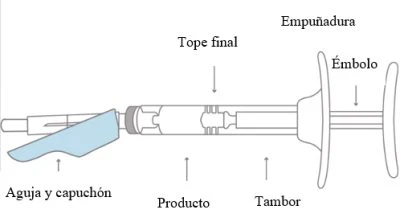
Step 1: Preparation of the medicine
| Allow to reach room temperature and inspect the contents
Do not use the medicine if the expiration date has passed.
|
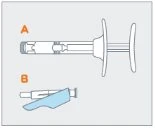
Step 2: Syringe Assembly
Attach the needle
|
|
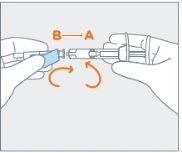
Step 3: Administration Procedure
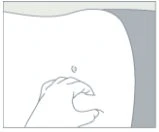
Prepare the injection site
|
Intra-arterial or intravenous injection must be strictly avoided. |
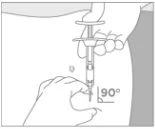
Administer the treatment
|
Step 4: Dispose of the needle and the prefilled syringe
Needle protection
|
Any unused medicinal product and all materials that have come into contact with it must be disposed of in accordance with local regulations. |


