Calmagrip Forte powder for oral solution
Spain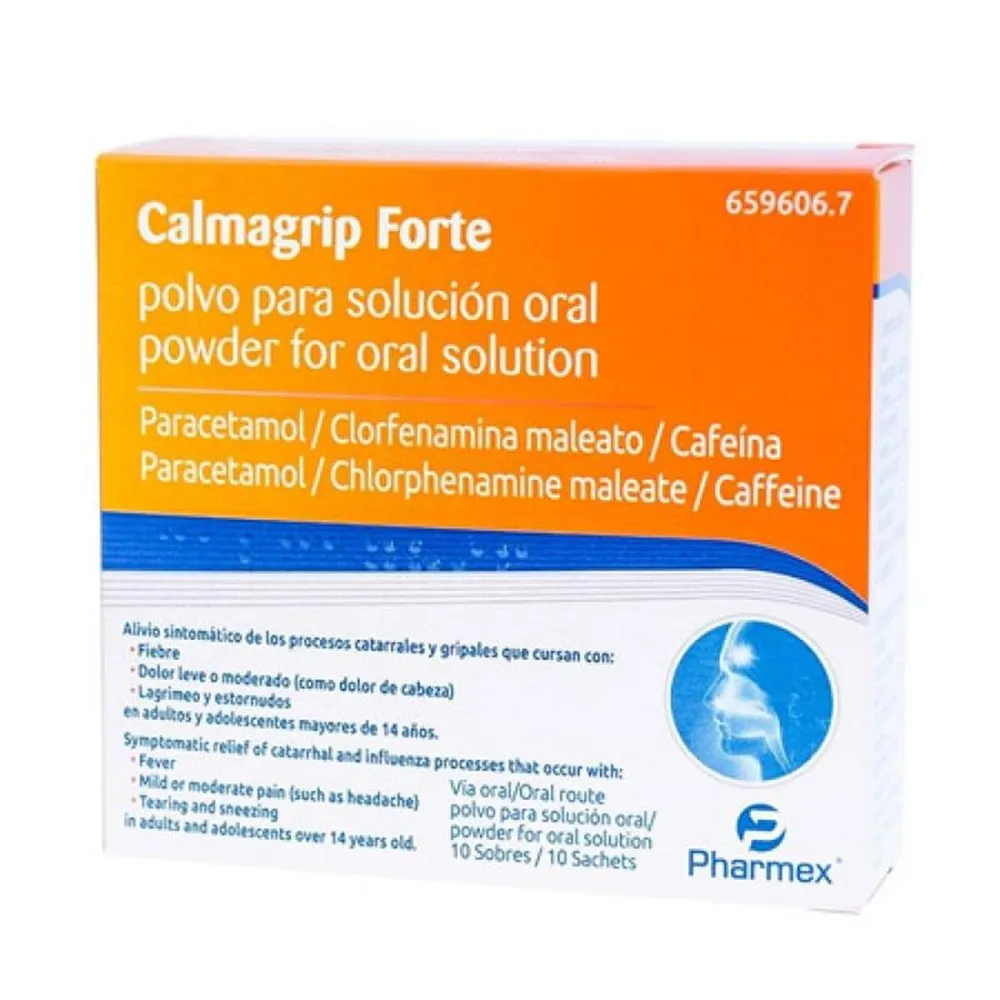
Table of Contents
- Package leaflet: Information for the user
- Introduction
- 1. What Calmagrip Forte is and what it is used for
- 2. What you need to know before taking Calmagrip Forte
- 3. How to take Calmagrip Forte
- 4. Possible adverse effects
- 5. Storage of Calmagrip Forte powder for oral solution
- 6. Contents of the pack and other information
Package leaflet: Information for the user
Introduction
Package leaflet: information for the user
Calmagrip Forte powder for oral solution
Paracetamol/caffeine/chlorpheniramine maleate
Read the entire leaflet carefully before you start taking this medicine, because it contains important information for you.
Always follow exactly the instructions for taking this medicine as described in this leaflet or as directed by your doctor or pharmacist.
- Keep this leaflet, as you may need to read it again.
- If you need advice or more information, consult your pharmacist.
- If you experience any adverse reactions, consult your doctor or pharmacist, even if they are reactions not listed in this leaflet. See section 4.
- You should consult a doctor if you worsen or do not improve after 5 days of treatment (3 days for fever and in adolescents).
Leaflet contents:
- What Calmagrip Forte is and what it is used for
- What you need to know before taking Calmagrip Forte
- How to take Calmagrip Forte
- Possible adverse effects
- How to store Calmagrip Forte
Pack contents and other information
1. What Calmagrip Forte is and what it is used for
Calmagrip Forte is a combination of paracetamol (an analgesic that reduces pain and fever), chlorpheniramine maleate (an antihistamine that relieves nasal discharge), and caffeine.
This medicine is indicated for the symptomatic relief of catarrhal and influenza-like conditions accompanied by fever, mild to moderate pain (such as headache), lacrimation, and sneezing, in adults and adolescents aged 14 years and older.
You should consult a doctor if symptoms worsen or do not improve after 5 days of treatment (3 days for fever and in adolescents).
2. What you need to know before taking Calmagrip Forte
Do not take Calmagrip Forte
- If you are allergic to the active substances or to any of the other components of this medicine (listed in section 6).
- If you have liver disease.
- If you have severe heart disease.
- If you suffer from anxiety (agoraphobia, panic attacks).
- Children under 14 years of age.
Warnings and precautions
Consult your doctor or pharmacist before taking Calmagrip Forte.
-
Do not exceed the recommended dose indicated in section 3, How to take Calmagrip Forte.
-
In chronic alcoholics, caution should be taken not to exceed 2 g of paracetamol per day (no more than 3 sachets per day).
-
In asthmatic patients sensitive to acetylsalicylic acid, consult your doctor before taking this medicine.
-
If you are sensitive to any antihistamine (used to relieve allergy symptoms, sleep difficulties, or travel-related nausea), you should consult your doctor, as you may also be sensitive to other antihistamines.
-
Patients with cardiac arrhythmias (abnormal heart rhythms), increased thyroid function (hyperthyroidism), or anxiety syndromes should reduce their caffeine intake; the maximum recommended dose is 4 sachets per day and only under medical supervision.
-
Patients with hypertension or insomnia should take this medicine with caution, as caffeine may worsen these conditions.
-
If you are diabetic, be aware that caffeine may increase blood sugar levels.
-
Patients sensitive to asthma medications such as aminophylline or theophylline may also be sensitive to caffeine and should not take this medicine.
-
Patients with anemia, heart, lung, or kidney disease, high blood pressure (hypertension), increased eye pressure (glaucoma), thyroid disorders (hyperthyroidism), prostate problems (prostatic hypertrophy), bladder neck obstruction, urinary retention, or acute asthma attacks should consult their doctor before taking this medicine.
-
If you have a stomach or intestinal ulcer, consult your doctor, as your condition may worsen when taking this medicine.
-
This medicine may cause drowsiness. Concomitant use with alcoholic beverages or barbiturates or tranquilizers should be avoided.
-
Children and elderly individuals may experience a paradoxical reaction characterized by hyperexcitability (nervousness, restlessness).
-
Elderly individuals may be more susceptible to dizziness, drowsiness, confusion, hypotension, or dry mouth. These are adverse effects that may occur with chlorpheniramine.
Use in children
Do not use in children under 14 years of age.
Other medicines and Calmagrip Forte
Inform your doctor or pharmacist if you are taking, have recently taken, or might need to take any other medicines.
Note that these instructions may also apply to medicines previously used or that may be used in the future.
-
Disulfiram, used in the treatment of alcohol dependence.
-
Sympathomimetics, medicines used as: antiasthmatics, vasoconstrictors (to raise blood pressure), in the treatment of hyperkinetic syndrome (hyperactive child syndrome), opioid withdrawal syndrome, or muscle spasticity.
Caffeine may enhance the tachycardic effects (increased heart rate) of these medicines.
-
Mexiletine, used to control heart rhythm disorders.
-
Medicines or beverages containing caffeine or other central nervous system stimulants.
-
Cimetidine, used as an antacid and antiulcer agent.
-
Antiasthmatics (theophylline, ephedrine).
-
Tricyclic antidepressants, maprotiline, lithium.
-
Monoamine oxidase inhibitors (MAOIs), used in the treatment of depression or Parkinson's disease.
-
Procarbazine, used in cancer treatment.
-
Iron.
-
Erythromycin (antibiotic).
-
Antihistamines, used to relieve allergy symptoms, sleep difficulties, and travel-related nausea.
The simultaneous use of this medicine with other medicines containing paracetamol should be avoided, as high doses may cause liver damage. Do not use more than one medicine containing paracetamol without consulting your doctor.
- Do not use with other analgesics (pain-relieving medicines) without consulting your doctor.
In particular, if you are taking any of the following medicines, a dose adjustment or discontinuation of treatment may be necessary:
-
Antibiotics (chloramphenicol).
-
Oral anticoagulants (acenocoumarol, warfarin).
-
Oral contraceptives and estrogen treatments.
-
Antiepileptics (lamotrigine, phenytoin or other hydantoins, phenobarbital, methylphenobarbital, primidone, carbamazepine).
-
Antituberculosis medicines (isoniazid, rifampicin).
-
Barbiturates (used as hypnotics, sedatives, and anticonvulsants).
-
Adsorbent (activated charcoal).
-
Cholestyramine (used to lower blood cholesterol levels).
-
Medicines used to treat gout (antigout agents) (probenecid and sulfinpyrazone).
-
Some diuretics used to increase urine elimination (loop diuretics such as furosemide).
-
Medicines used to relieve spasms or contractions of the stomach, intestine, and bladder (anticholinergics such as glycopyrronium, propantheline).
-
Metoclopramide and domperidone (used to prevent nausea and vomiting).
-
Propranolol, used to treat high blood pressure (hypertension) and heart rhythm disorders (cardiac arrhythmias).
-
Zidovudine (used in the treatment of patients infected with the human immunodeficiency virus, HIV).
-
Flucloxacillin (antibiotic), due to a serious risk of blood and fluid imbalance (metabolic acidosis with high anion gap), which requires urgent treatment and may occur particularly in cases of severe renal failure, sepsis (when bacteria and their toxins circulate in the blood, leading to organ damage), malnutrition, chronic alcoholism, or when maximum daily doses of paracetamol are used.
Interference with diagnostic tests
If you are scheduled for any diagnostic tests (including blood and urine tests, etc.), inform your doctor that you are taking this medicine, as it may alter test results.
It may interfere with blood uric acid tests.
This medicine may interfere with skin tests using allergens. It is recommended to stop taking this medicine at least three days before starting the tests and to inform your doctor.
Taking Calmagrip Forte with food, drinks, and alcohol
The use of Calmagrip Forte in patients who habitually consume alcohol (three or more alcoholic drinks – beer, wine, spirits – per day) may cause liver damage.
Simultaneous use of this medicine with beverages containing caffeine may cause nervousness, irritability, or insomnia.
Simultaneous use of this medicine with alcoholic beverages may result in an interaction with the antihistamine (chlorpheniramine) it contains, increasing sedative effects.
Pregnancy, breastfeeding, and fertility
If you are pregnant or breastfeeding, think you may be pregnant, or are planning to become pregnant, consult your doctor or pharmacist before using this medicine.
IMPORTANT FOR WOMEN
If you are pregnant or think you might be pregnant, consult your doctor before taking this medicine. Taking medicines during pregnancy can be harmful to the embryo or fetus and should be monitored by your doctor.
Breastfeeding
Consult your doctor or pharmacist before taking any medicine.
The active substances in Calmagrip Forte pass into breast milk. Women who are breastfeeding should avoid taking this medicine without first consulting their doctor.
Driving and using machines
Avoid activities requiring high concentration, such as driving or operating machinery that could be dangerous, as this medicine may cause drowsiness.
Important information about some of the components of Calmagrip Forte
This medicine contains sucrose. If your doctor has informed you of an intolerance to certain sugars, consult him before taking this medicine.
3. How to take Calmagrip Forte
Follow exactly the administration instructions for this medicine as given by your doctor or pharmacist. If in doubt, consult your doctor or pharmacist again.
Calmagrip Forte is taken orally.
The contents of the sachet should be dissolved in half a glass of water before taking.
Adults and children over 14 years of age: 1 sachet every 6–8 hours. Do not take more than 3 sachets in 24 hours (1 day).
Patients with kidney or liver disease: You must consult your doctor.
Patients over 65 years of age: You should consult your doctor before taking this medicine, as you may require lower doses due to increased sensitivity to the adverse effects of chlorpheniramine.
This medicine should only be taken when symptoms appear. As symptoms subside, treatment should be discontinued.
If fever lasts more than 3 days, or symptoms worsen or do not improve within 5 days, or new symptoms appear, stop treatment and consult your doctor.
Always use the lowest effective dose.
If you feel that the effect of Calmagrip Forte is too strong or too weak, inform your doctor or pharmacist.
If you take more Calmagrip Forte than you should
If you have taken more Calmagrip Forte than you should, contact your doctor or pharmacist immediately.
In case of overdose, seek urgent medical attention at a healthcare facility even if there are no symptoms, as these may not appear until up to 3 days after the overdose has occurred, even in cases of severe poisoning.
Symptoms of overdose may include: dizziness, vomiting, loss of appetite, dry mouth, difficulty urinating, drowsiness, insomnia, restlessness (nervous overstimulation), yellowing of the skin and eyes (jaundice), and abdominal pain.
Treatment of overdose is most effective when initiated within 4 hours after ingestion of the medicine.
Patients undergoing treatment with barbiturates or chronic alcoholics may be more susceptible to the toxicity of a paracetamol overdose.
In case of overdose or accidental ingestion, go immediately to a medical center or call the Toxicology Information Service, Telephone: 91 562 04 20, stating the name of the medicine and the amount ingested.
If you forget to take Calmagrip Forte
Do not take a double dose to make up for a missed dose.
If you stop treatment with Calmagrip Forte
If you have any further questions about the use of this medicine, ask your doctor or pharmacist.
4. Possible adverse effects
Like all medicines, this medicine may produce adverse effects, although not everyone experiences them.
Due to its paracetamol content, the following may occur rarely (in more than 1 out of 10,000 patients but less than 1 out of 1,000 patients): Kidney disorders, cloudy urine, allergic dermatitis (skin rash), jaundice (yellowing of the skin), blood disorders (agranulocytosis, leucopenia, neutropenia, thrombocytopenia, haemolytic anaemia), and hypoglycaemia (low blood sugar). Paracetamol may cause liver damage when taken at high doses or during prolonged treatment. Very rare cases of serious skin reactions have been reported.
During the period of use of chlorpheniramine, the following adverse effects have been observed, although their frequency cannot be precisely established:
Somnolence, sedation.
Dryness of mouth and throat (these effects are more likely to occur in elderly patients).
Gastrointestinal discomfort, nausea, vomiting, diarrhoea, constipation (these effects may be avoided by taking the medicine with milk or food).
Skin rashes.
Rarely, the following have been observed: blurred vision, confusion, urinary retention, difficulty or pain during urination (particularly in elderly patients), loss of appetite. A paradoxical effect of excitation, nervousness, and nightmares may also occur, which has been observed more frequently in children and elderly patients. Blood disorders, increased sweating, tachycardia.
During the period of use of caffeine, the following adverse effects have been observed, although their frequency cannot be precisely established:
Nervousness, restlessness, stomach or intestinal irritation, tachycardia.
Reporting of adverse effects
If you experience any type of adverse effect, consult your doctor or pharmacist, even if it is a possible adverse effect not listed in this leaflet. You may also report them via the national reporting system: Spanish Pharmacovigilance System for Human Medicines – www.notificaRAM.es.
5. Storage of Calmagrip Forte powder for oral solution
Keep this medicine out of the sight and reach of children.
Do not use this medicine after the expiry date stated on the packaging after EXP. The expiry date refers to the last day of the month indicated.
Do not store above 30 °C.
Medicines must not be disposed of via wastewater drains or household waste. Dispose of unused medicines and their containers at a SIGRE collection point (or any other medicine waste collection system) at your pharmacy. If in doubt, ask your pharmacist how to dispose of unused medicines and their containers. This will help protect the environment.
6. Contents of the pack and other information
Composition of Calmagrip Forte:
- The active substances are: 650 mg of paracetamol, 25 mg of caffeine, and 4 mg of chlorpheniramine maleate.
- The other components (excipients) are: anhydrous colloidal silica, anhydrous citric acid, sodium saccharin, sucrose (3.9 g), sodium cyclamate, and orange flavour.
Sodium saccharin and sodium cyclamate provide 18.8 mg of sodium.
Product appearance and contents of the pack
Calmagrip Forte is a yellowish-white powder for oral solution with an orange flavour. It is supplied in packs of 10 sachets.
Marketing Authorization Holder
PHARMEX ADVANCED LABORATORIES, S.L.
Ctra. A-431 Km.19
(Almodóvar del Río) -14720 -Spain
Manufacturer
ALCALÁ FARMA, S.L.
Avda. de Madrid, 82
28802 Alcalá de Henares (Madrid)
This leaflet was approved in May 2022
Detailed and up-to-date information on this medicine is available on the website of the Spanish Agency of Medicines and Health Products (AEMPS) http://www.aemps.gob.es /