Calcium chloride Braun 100 mg/ml solution for injection
Spain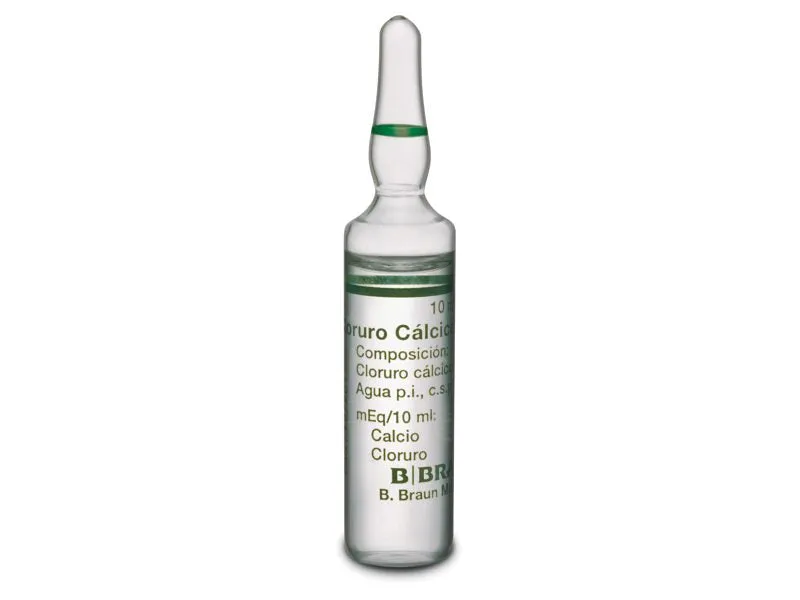
Table of Contents
- Package leaflet: Information for the user
- Introduction
- **Read the entire leaflet carefully before you start using this medicine**
- 1. What Cloruro de Calcio Braun 100 mg/ml is and what it is used for
- 2. Before using Calcium Chloride Braun 100 mg/ml
- 3. How to use Calcium Chloride Braun 100 mg/ml
- 4. Possible adverse effects
- 5. Storage of Calcium Chloride Braun 100 mg/ml
- 6. Additional information
Package leaflet: Information for the user
Introduction
Package leaflet: information for the user
Calcium Chloride Braun 100mg/ml
Injection solution
Read the entire leaflet carefully before you start using this medicine
- Keep this leaflet, as you may need to read it again.
- If you have any questions, consult your doctor or pharmacist.
- This medicine has been prescribed for you and should not be given to other people, even if they have the same symptoms, as it could harm them.
- If you consider any of the side effects you experience to be severe, or if you notice any side effects not listed in this leaflet, inform your doctor or pharmacist.
Leaflet contents:
- What Cloruro de Calcio Braun 100 mg/ml is and what it is used for
- Before using Cloruro de Calcio Braun 100 mg/ml
- How to use Cloruro de Calcio Braun 100 mg/ml
- Possible side effects
- Storage of Cloruro de Calcio Braun 100 mg/ml
- Additional information
1. What Cloruro de Calcio Braun 100 mg/ml is and what it is used for
Cloruro de Calcio Braun 100 mg/ml injection solution belongs to a group of medicines called calcium mineral supplements.
Cloruro de Calcio Braun 100 mg/ml is an injectable solution used in the treatment of calcium deficiency of any cause.
Cloruro de Calcio Braun 100 mg/ml is an injectable solution used as an adjunct in cardiac resuscitation, in the treatment of central nervous system depression due to hypermagnesemia (excess magnesium), and in the treatment of hyperkalemia (excess potassium).
2. Before using Calcium Chloride Braun 100 mg/ml
Do not use Calcium Chloride Braun 100 mg/ml:
-
If you are allergic (hypersensitive) to calcium chloride or any of the other components of Calcium Chloride Braun.
-
If you have:
-
high levels of calcium in the blood (hypercalcemia) or calcium in the urine (hypercalciuria)
-
kidney stones (calcium calculi)
-
chronic kidney disorders
-
elevated levels of vitamin D
-
toxicity due to medications for heart disorders known as cardiac glycosides, such as digoxin
-
water deficit (dehydration) or imbalance in electrolyte levels
-
diarrhea or gastrointestinal malabsorption
-
heart disorders.
Take special care with Calcium Chloride Braun 100 mg/ml:
Inform your doctor of any allergies or medical conditions you have or have had, especially:
- in cases of kidney, heart, or liver insufficiency
- when the body produces too much acid or the kidneys cannot eliminate enough acid from the body (metabolic acidosis)
- if you are receiving any product containing potassium.
Use with other medicines
Inform your doctor or pharmacist if you are using or have recently used any other medicines, including those obtained without a prescription.
The use of Calcium Chloride Braun 100 mg/ml with other medicines may alter the effectiveness of both treatments.
Inform your doctor or pharmacist if you are taking any of the following medicines:
- medicines containing calcium and magnesium
- medicines for the heart such as cardiac glycosides (e.g., digoxin)
- a type of diuretics called thiazides (e.g., hydrochlorothiazide), as they reduce calcium excretion in urine
- intravenous magnesium sulfate
- intravenous ceftriaxone (an antibiotic)
- a type of medicine called bisphosphonates, as calcium chloride reduces the absorption of these.
Your doctor will check the compatibility of this medicine before use.
Pregnancy and breastfeeding
Consult your doctor or pharmacist before using any medicine.
There are no studies on the effects of calcium chloride in pregnant women; your doctor will assess whether its use is advisable.
Calcium is excreted in breast milk, but there are no data on any effects on the infant.
3. How to use Calcium Chloride Braun 100 mg/ml
This medicine will always be administered by healthcare professionals directly into a vein through slow injection.
Your doctor will determine the dose and duration of your treatment with Calcium Chloride Braun 100 mg/ml.
If you are given more Calcium Chloride Braun 100 mg/ml than you should
This is unlikely to occur, as your doctor will decide the most appropriate dose for you.
If you were accidentally given too much Calcium Chloride Braun, it could cause:
loss of appetite, nausea and persistent vomiting, constipation, water deficit (dehydration), high blood pressure (hypertension), confusion, excessive thirst (polydipsia), excessive urine production (polyuria), muscle weakness or pain, bone pain, depression, kidney stones, and in severe cases, cardiac arrhythmias and coma.
In case of overdose or accidental ingestion, contact the Toxicology Information Service (telephone: 91.562 04 20) or consult your doctor or pharmacist. Bring this leaflet with you.
If you have any further questions about the use of this product, ask your doctor or pharmacist.
4. Possible adverse effects
Like all medicines, Cloruro de Calcio Braun 100 mg/ml may produce adverse effects, although not everyone will experience them.
Adverse reactions may occur if the solution is injected too rapidly, if it is used for a prolonged period of time, or if administered to patients with kidney disorders:
Nervous system disorders:
- dizziness, drowsiness
Cardiac disorders:
- irregular heartbeat
Skin and subcutaneous tissue disorders:
- skin redness and/or burning or warm sensation
Gastrointestinal disorders:
- nausea or vomiting
Vascular disorders:
- peripheral vasodilation (dilation of blood vessels) with mild decrease in blood pressure
General disorders and administration site conditions:
- sweating, tingling sensation
- skin redness, skin rash, or stinging at the injection site
Reporting of adverse effects
If you experience any type of adverse effect, consult your doctor or pharmacist, even if it is a possible adverse effect not listed in this leaflet. You may also report them directly through the Spanish Pharmacovigilance System for Human Medicines: www.notificaRAM.es. By reporting adverse effects, you can help provide more information on the safety of this medicine.
5. Storage of Calcium Chloride Braun 100 mg/ml
Keep out of the reach and sight of children.
No special storage conditions are required.
Do not use Calcium Chloride Braun 100 mg/ml after the expiry date stated on the container. The expiry date is the last day of the month indicated.
Medicines should not be disposed of via wastewater drains or household waste. Ask your pharmacist how to dispose of medicines and containers you no longer need. This will help protect the environment.
6. Additional information
Composition of Calcium Chloride Braun 100 mg/ml:
The Active Ingredient is: | Per 1 ml | Per 10 ml |
Calcium chloride hexahydrate | 100 mg | 1 g |
Per 10 ml | |
Cl- | 9.13 mEq |
Ca2+ | 9.13 mEq |
The other components are: water for injections.
Appearance of the product and contents of the pack
Calcium Chloride Braun 100 mg/ml Braun is supplied in 10 ml glass vials, in packs of 5 and 100 units.
Marketing Authorization Holder
B|BRAUN
- Braun Medical, S.A.
Ctra. de Terrassa, 121
08191-Rubí (Barcelona)
Spain
Manufacturer
B BRAUN MEDICAL S.A.
Ronda de los Olivares, Parcela II, Poligono Industrial Los Olivares
23009 Jaén (Jaén), Spain
This leaflet was approved in June 2015.
Detailed information on this medicinal product is available on the website of the Spanish Agency for Medicines and Health Products (AEMPS).
This information is intended for healthcare professionals only:
Dosing
Hypocalcemia
in adults: one 5 or 10 ml vial daily or on alternate days.
in children: 0.2 ml/kg body weight (maximum 1 to 10 ml)
In cardiac resuscitation: Must be injected into the ventricular cavity. Do not inject into the myocardium.
in adults: 2 to 4 ml administered rapidly.
in children: 0.2 ml/kg body weight (maximum 1 to 10 ml)
Magnesium intoxication
in adults: one 5 ml vial daily or on alternate days.
Hyperkalemia
in adults: Adjust dose by monitoring the ECG during administration.
in children: 0.2 ml/kg body weight (maximum 1 to 10 ml)
Instructions for correct administration:
Must be administered only by intracardiac route during cardiac resuscitation, or by slow intravenous route; and only by healthcare personnel.
Extravasation or intramuscular injection must be avoided. If this occurs, 5 to 10 ml of sterile physiological solution should be injected subcutaneously around the extravasated area, and warm compresses should also be applied, thereby preventing sclerosis.
When blood calcium concentration is high, simultaneous administration of calcium salts with potassium and sodium phosphate may increase the risk of calcium deposition in soft tissues.
When serum calcium concentration exceeds 12 mg/100 ml, immediate measures are required such as hydration, promotion of diuresis, and use of chelating agents, calcitonin, or corticosteroids. Serum calcium levels should be determined at frequent intervals to adjust the dose.
Calcium salts may reverse the effects of non-depolarizing neuromuscular blockers when administered simultaneously.
The solution should be inspected visually before use. The solution must be clear, free from precipitates, and the container must be intact. Do not administer if otherwise.