Cafergot 1 mg/100 mg tablets
Spain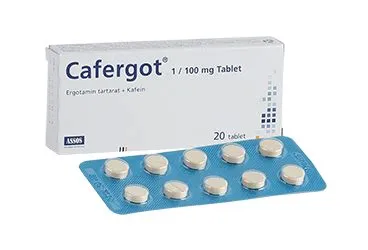
Table of Contents
Package leaflet: Information for the user
Introduction
Package leaflet: information for the user
Cafergot 1 mg/100 mg tablets
Ergotamine tartrate/caffeine
Read the entire leaflet carefully before you start taking this medicine, because it contains important information for you.
- Keep this leaflet, as you may need to read it again.
- If you have any questions, ask your doctor, pharmacist or nurse.
- This medicine has been prescribed for you only, and you should not give it to other people, even if they have the same symptoms as you, because it may harm them.
- If you experience any adverse effects, consult your doctor, pharmacist or nurse, even if they are adverse effects not listed in this leaflet. See section 4.
Leaflet contents:
- What Cafergot is and what it is used for
- What you need to know before taking Cafergot
- How to take Cafergot
- Possible adverse effects
- How to store Cafergot
- Contents of the pack and other information
1. What Cafergot is and what it is used for
Ergotamine, the active substance in Cafergot, belongs to a group of medicines known as ergot alkaloids. This substance constricts the dilated blood vessels in the brain responsible for the pain sensation, thereby stopping migraine attacks. Caffeine accelerates and increases the absorption of ergotamine in the body.
Cafergot is indicated for the treatment of acute migraine attacks with or without "aura" (i.e., visual, sensory, or language disturbances that some people experience shortly before an attack and which may also occur during and after the attack).
2. What you need to know before taking Cafergot
Do not take Cafergot
-
- If you are allergic to the active substance or to any of the other ingredients of this medicine (listed in section 6).
-
- If you have circulatory disorders, e.g. Raynaud's syndrome (a condition affecting blood supply to certain parts of the body, usually fingers and toes), hyperthyroidism, vascular disease reducing blood flow to arms and legs (occlusive vascular disease), heart disease due to reduced blood flow to the heart (ischaemic heart disease), poorly controlled hypertension, or systemic infection (sepsis or shock).
-
- If you have severe liver or kidney failure.
-
- If you have inflammatory disease of the temporal artery (the main artery of the head).
-
- If you suffer from migraines accompanied by neurological symptoms such as impaired balance, speech disturbances, visual disturbances, tingling sensations in fingers and toes and around the mouth (hemiplegic or basilar migraine).
-
- If you are pregnant or breastfeeding.
Warnings and precautions
Consult your doctor, pharmacist, or nurse before starting to take Cafergot:
-
- Cafergot is indicated only for the treatment of acute migraine attacks and not as a preventive treatment for migraine.
-
- Prolonged use of Cafergot or use at doses higher than recommended should be avoided, as excessive doses may cause vasospasm (constriction of arteries which may lead to cerebral or cardiac disorders). Long-term treatment may lead to pleural (membrane lining the lungs) or peritoneal (membrane lining the intestines) abnormalities, and more rarely, heart valve disorders, cardiac fibrosis, pulmonary fibrosis (a respiratory disease in which lung tissue becomes scarred), pleural fibrosis (a condition in which the tissue covering the lungs becomes thick and rigid), and ergotism (long-term poisoning by ergot alkaloids), including severe symptoms due to constriction of blood vessels, which could potentially result in death.
-
- Caution is recommended in patients with anaemia.
-
- Patients with rare hereditary disorders such as galactose intolerance or glucose-galactose malabsorption should not take this medicine.
-
- If symptoms such as tingling in the fingers or toes occur, stop treatment immediately and consult your doctor.
-
Patients with mild or moderate impairment of liver function should be monitored (by their doctor).
Children and adolescents
Cafergot is not recommended for children and adolescents under 18 years of age.
Use in the elderly
As this medicine contains ergotamine, caution is recommended in elderly patients, who are more likely to have vascular disease reducing blood flow to arms and legs, and thus are more susceptible to adverse effects related to reduced blood vessel diameter in the limbs compared to younger adults. The risk of reduced blood flow in the coronary vessels is also higher in elderly individuals.
Taking Cafergot with other medicines
Inform your doctor or pharmacist if you are taking, have recently taken, or might need to take any other medicine. The concomitant use of macrolide antibiotics (erythromycin, clarithromycin), tetracycline (an antibiotic used to treat bacterial infections), medicines for the treatment of HIV infection (e.g. ritonavir, indinavir, nelfinavir, amprenavir, delavirdine, saquinavir, atazanavir, and efavirenz), or antifungal medicines (e.g. ketoconazole, itraconazole, voriconazole) with Cafergot may lead to reduced blood flow, as they increase blood levels of ergotamine. Other medicines that may cause interactions include: medicines for heart conditions and high blood pressure such as propranolol, other preparations containing ergot alkaloids, nicotine (e.g. excessive smoking), and migraine treatments such as sumatriptan.
- There is an increased risk of vasospasm (arterial constriction that may lead to brain and heart disorders) when triptans such as almotriptan, frovatriptan, naratriptan, rizatriptan, sumatriptan, zolmitriptan, and eletriptan are used. An increased risk of hypertension may also occur.
- Fluoroquinolones (broad-spectrum antibiotics), mexiletine (used to treat irregular heartbeats), fluvoxamine (a medicine used for depression), and oral contraceptives may increase plasma exposure to caffeine. Interactions between caffeine and sympathomimetics (e.g. epinephrine) may lead to increased blood pressure.
- Moderate to weak CYP3A4 inhibitors such as cimetidine, fluvoxamine, grapefruit juice, quinupristin/dalfopristin, and zileuton may also increase exposure to ergotamine, and caution is required when using them concomitantly.
- Concomitant use of ergotamine with serotonin reuptake inhibitors (e.g. amitriptyline), including selective agents (e.g. sertraline), may lead to serotonin syndrome (a potentially life-threatening pharmacological reaction), and these should be used with caution.
- Drugs that are CYP3A4 inducers (e.g. nevirapine, rifampicin) may reduce the pharmacological effect of ergotamine.
- Quinupristin-dalfopristin (combination): risk of ergotism with possible necrosis (cell damage) of the extremities.
- Stiripentol: risk of ergotism with possible necrosis (cell damage) of the extremities.
- Dopaminergic ergot alkaloids (bromocriptine, cabergoline, pergolide, lisuride): risk of vasoconstriction (narrowing of blood vessels) and/or hypertensive crisis (severe increase in blood pressure that may lead to stroke).
- Alpha-sympathomimetics (oral and/or nasal) (ephedrine, midodrine, naphazoline, oxymetazoline, phenylephrine, synephrine, tetrahydrozoline, tuaminoheptane, tetryzoline): risk of vasoconstriction and/or hypertensive crisis.
- Concomitant use with reboxetine may cause increased high blood pressure.
- Enoxacin (fluoroquinolone): large increase in caffeine concentrations in the body, potentially leading to excitation and hallucinations.
- Fluoroquinolones (ciprofloxacin, norfloxacin): large increase in caffeine concentrations in the body, potentially leading to excitation and hallucinations.
Taking Cafergot with food, drinks, and alcohol
Cafergot may be taken with or without food.
Pregnancy, breastfeeding, and fertility
Do not take Cafergot if you are pregnant or breastfeeding.
If you think you may be pregnant or intend to become pregnant, consult your doctor or pharmacist before using this medicine.
In male rats treated orally with a combination of ergotamine and caffeine, fertility was not affected.
Driving and using machines
Patients with a history of dizziness or other cerebral disorders should not drive or operate machinery. Patients should not drive a vehicle or operate machinery if they experience visual disturbances.
This medicine may cause dizziness. Note that some symptoms such as drowsiness, dizziness, and weakness caused by the migraine attack itself may affect the ability to drive or use machinery.
Important information about some of the ingredients in Cafergot
Athletes should be informed that this medicine contains a component that may result in a positive doping test.
3. How to take Cafergot
Follow exactly the instructions for use of this medicine as given by your doctor or pharmacist. If in doubt, consult your doctor or pharmacist again.
Your doctor will determine the duration of your treatment with Cafergot. Do not stop treatment early without consulting your doctor.
Oral use.
Cafergot should be taken at the first signs of an attack.
Recommended dose:
Adults
If this is the first time you are taking Cafergot, a dose of 2 tablets is recommended. If the pain has not subsided within the first 30 minutes, you may take 1 additional tablet. This may be repeated at 30-minute intervals, without exceeding the maximum daily dose.
Subsequent attacks: depending on the doses required during previous attacks, the initial dose may be increased to 3 tablets. If necessary, additional doses of 1 tablet may be administered at 30-minute intervals until the maximum daily dose is reached.
Use in children and adolescents
Use in children and adolescents (under 18 years of age) is not recommended.
Maximum daily dose:
Adults: 6 mg of ergotamine tartrate = 6 tablets.
Maximum weekly dose:
Adults: 10 mg of ergotamine tartrate = 10 tablets.
If you take more Cafergot than you should
In case of overdose or accidental ingestion, inform your doctor or pharmacist immediately or contact the Toxicology Information Service at telephone number 91 562 04 20, stating the medication and the amount ingested. It is recommended to bring the package leaflet and the medicine container to the healthcare professional.
Symptoms caused by Cafergot overdose include: nausea, vomiting, drowsiness, confusion, tachycardia (increased heart rate), dizziness, numbness, tingling, and pain in the fingers of the hands and feet. Respiratory depression and coma may also occur.
If you forget to take Cafergot
Do not take a double dose to make up for missed doses.
If you stop treatment with Cafergot
If you have any further questions about the use of this medicine, ask your doctor, pharmacist, or nurse.
4. Possible adverse effects
Like all medicines, this medicine can cause adverse effects, although not everyone experiences them.
If you experience any of the following adverse effects, consult your doctor immediately:
- Severe allergic reactions such as rash or itching, swelling of the face, eyelids, lips, hives, difficulty breathing.
Other adverse effects:
Frequent: May affect up to 1 in 10 people
Dizziness, nausea and vomiting not related to migraine, and abdominal pain.
Uncommon: May affect up to 1 in 100 people
Numbness and tingling in fingers and toes, blue-colored skin, diarrhea, pain and weakness in arms and legs. Bluish discoloration of the skin due to poor blood circulation.
Rare: May affect up to 1 in 1,000 people
Increased or decreased heart rate, increased blood pressure, skin rash, facial swelling, hives, muscle pain, absence of pulse, and difficulty breathing, headache, dizziness, muscle spasms, ergotism (effect of long-term poisoning).
Very rare: May affect up to 1 in 10,000 people
Myocardial infarction (heart attack) or angina (chest pain), gangrene (death of body tissue due to lack of blood flow or bacterial infection).
Not known: Frequency cannot be estimated from available data
Endocardial fibrosis (a type of heart disorder in which the heart walls are stiff and the heart is unable to stretch and fill with blood properly), pleural fibrosis (a condition in which the tissue covering the lungs becomes thick and rigid), retroperitoneal fibrosis (a rare condition in which the ducts carrying urine from the kidneys to the bladder are blocked by masses located in the back of the abdominal cavity), rectal ulcer, anal ulcer, drug-induced headache.
Reporting of adverse effects:
If you experience any type of adverse effect, talk to your doctor, pharmacist, or nurse, even if it is a possible adverse effect not listed in this leaflet. You may also report them directly through the Spanish Pharmacovigilance System for Human Medicines: https://www.notificaram.es. By reporting adverse effects, you can help provide more information on the safety of this medicine.
5. Storage of Cafergot
Keep this medicine out of the sight and reach of children.
Store in the original packaging to protect from light.
Do not store above 25°C. Do not use this medicine after the expiry date stated on the packaging after EXP. The expiry date refers to the last day of the month indicated.
Medicines should not be disposed of via wastewater or household waste. Dispose of unused medicines and their containers at the SIGRE point at your pharmacy. If you are in doubt, ask your pharmacist how to properly dispose of medicines and containers you no longer need. This will help protect the environment.
6. Contents of the pack and other information
Composition of Cafergot
The active substances are ergotamine (DOE) tartrate 1 mg and anhydrous caffeine 100 mg.
The other tablet components are: tartaric acid, magnesium stearate, talc, corn starch, microcrystalline cellulose, yellow iron oxide (E172).
Appearance of the product and contents of the pack
Cafergot is presented as tablets. Cafergot is available in aluminum/PVC/PVDC blister packs containing 10 tablets. The score line is intended only to facilitate breaking and swallowing, not to divide the tablet into equal doses.
Marketing Authorisation Holder and Manufacturer
Marketing Authorisation Holder
Amdipharm Limited
Unit 17 Northwood House
Northwood Crescent
Northwood
Dublin 9
D09 V504
Ireland
Manufacturer
CENEXI
52 rue Marcel et Jacques Gaucher (Fontenay Sous Bois) - 94120 - France
For further information on this medicinal product, please contact the local representative of the Marketing Authorisation Holder:
Local representative
Advanz Pharma Spain S.L.U.
Paseo de la Castellana 135, 7th floor
28046 Madrid (Spain)
Tel. +34 900 834 889
[email protected]
Date of revision of this leaflet: July 2022
Detailed and up-to-date information on this medicinal product is available on the website of the Spanish Agency of Medicines and Health Products (AEMPS): http://www.aemps.gob.es/