Cabometyx 60 mg film-coated tablets
Spain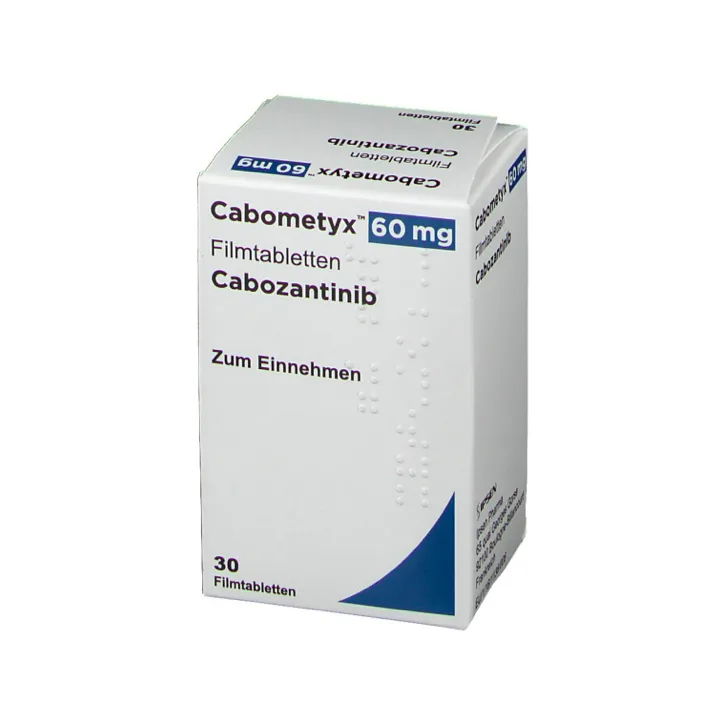
Table of Contents
Patient Information Leaflet
Introduction
Package leaflet: Information for the patient
CABOMETYX 20mg film-coated tablets
CABOMETYX 40mg film-coated tablets
CABOMETYX 60mg film-coated tablets
cabozantinib
Read the entire leaflet carefully before you start taking this medicine, as it contains important information for you.
- Keep this leaflet, as you may need to read it again.
- If you have any questions, ask your doctor or pharmacist.
- This medicine has been prescribed for you only and must not be given to other people, even if they have the same symptoms as you. It could harm them.
- If you experience any adverse effects, consult your doctor, even if the effects are not listed in this leaflet. See section 4.
Leaflet contents
- What CABOMETYX is and what it is used for
- What you need to know before taking CABOMETYX
- How to take CABOMETYX
- Possible side effects
- How to store CABOMETYX
- Contents of the pack and other information
1. What CABOMETYX is and what it is used for
What is CABOMETYX
CABOMETYX is an anticancer medicine that contains the active substance cabozantinib. It is used in adults to treat:
- advanced kidney cancer known as advanced renal cell carcinoma
- liver cancer when a specific anticancer medicine (sorafenib) is no longer able to stop the disease from progressing
- advanced neuroendocrine tumours: tumours originating in the pancreas, stomach, intestines, lung or other organs. It is given when patients with these tumours no longer respond to a previous treatment option.
CABOMETYX is also used to treat locally advanced or metastatic differentiated thyroid cancer, a type of cancer in the thyroid gland, in adults when radioactive iodine and anticancer medicines no longer stop the disease from progressing.
CABOMETYX may be given in combination with nivolumab for advanced kidney cancer. It is important that you also read the package leaflet for nivolumab. If you have any questions about these medicines, consult your doctor.
How CABOMETYX works
CABOMETYX blocks the action of proteins called receptor tyrosine kinases (RTKs), which are involved in cell growth and the development of new blood vessels that supply blood to these cells. These proteins may be present in high amounts in cancer cells, and by blocking their activity, this medicine can slow down the rate at which the tumour grows and help disrupt the blood supply that the cancer needs.
2. What you need to know before starting to take CABOMETYX
Do not take CABOMETYX
- if you are allergic to cabozantinib or to any of the other ingredients of this medicine (listed in section 6).
Warnings and precautions
Talk to your doctor or pharmacist before starting to take CABOMETYX:
- If you have high blood pressure.
- If you have or have had an aneurysm (a bulge and weakening of the wall of a blood vessel) or a tear in the wall of a blood vessel.
- If you have diarrhoea.
- If you have recently had significant bleeding.
- If you have had surgery within the last month (or if you have any scheduled), including dental surgery.
- If you have inflammatory bowel disease (such as Crohn’s disease, ulcerative colitis, diverticulitis, or appendicitis).
- If you have recently had a blood clot in your leg, a stroke, or a heart attack.
- If you have thyroid problems. Inform your doctor if you feel more tired than usual, feel colder than others, or have a deeper voice while taking this medicine.
- If you have liver or kidney disease.
Talk to your doctor if you have any of the conditions listed above.
You may need treatment, or your doctor may decide to adjust the dose of CABOMETYX or stop treatment completely. Also refer to section 4 “Possible side effects”.
You should also inform your dentist that you are taking this medicine. It is important for you to maintain good oral hygiene during treatment.
Children and adolescents
CABOMETYX is not recommended for use in children and adolescents. The effects of this medicine in patients under 18 years of age are unknown.
Other medicines and CABOMETYX
Tell your doctor or pharmacist if you are taking, have recently taken, or might take any other medicines, including those obtained without a prescription. This is because CABOMETYX may affect how other medicines work. Likewise, some medicines may affect how CABOMETYX works. This may require your doctor to adjust your dose(s). You should inform your doctor about all medicines, but especially if you are taking:
- Medicines to treat fungal infections, such as itraconazole, ketoconazole, and posaconazole
- Medicines used to treat bacterial infections (antibiotics), such as erythromycin, clarithromycin, and rifampicin
- Medicines for allergies, such as fexofenadine
- Medicines to treat angina (chest pain due to inadequate blood supply to the heart), such as ranolazine
- Medicines used to treat epilepsy or seizures, such as phenytoin, carbamazepine, and phenobarbital
- Herbal medicines containing St. John’s wort (Hypericum perforatum), sometimes used to treat depression or depression-related conditions such as anxiety
- Anticoagulant medicines such as warfarin and dabigatran etexilate
- Medicines to treat high blood pressure or other heart conditions, such as aliskiren, ambrisentan, dabigatran etexilate, digoxin, talinolol, and tolvaptan
- Medicines for diabetes, such as saxagliptin and sitagliptin
- Medicines used to treat gout, such as colchicine
- Medicines used to treat HIV or AIDS, such as efavirenz, ritonavir, maraviroc, and emtricitabine
- Medicines used to prevent transplant rejection (cyclosporine) and cyclosporine treatment regimens for rheumatoid arthritis and psoriasis
CABOMETYX with food
Avoid consuming grapefruit-containing products throughout the time you are taking this medicine, as they may increase the levels of this medicine in the blood.
Pregnancy, breastfeeding, and fertility
Pregnancy must be avoided during treatment with CABOMETYX. If you or your partner can become pregnant, you must use effective contraception methods during treatment and for at least four months after stopping treatment. Talk to your doctor about which contraceptive methods are appropriate while taking this medicine (see also “Other medicines and CABOMETYX”).
Consult your doctor if you or your partner become pregnant, or if you or your partner plan to become pregnant, during treatment with this medicine.
Talk to your doctor BEFORE starting this medicine if you or your partner are considering or have already planned to have a child after treatment ends. There is a possibility that treatment with this medicine could affect your fertility.
Women taking this medicine must stop breastfeeding during treatment and for at least four months after treatment has ended, as cabozantinib and/or its metabolites may be excreted in breast milk and could be harmful to the infant.
If you take this medicine while using oral contraceptives, the oral contraception may become ineffective. You should also use a barrier method of contraception (e.g. condom or diaphragm) while taking this medicine and for a minimum of 4 months after treatment ends.
Driving and using machines
Exercise caution when driving or operating machinery. Be aware that treatment with CABOMETYX may make you feel tired or weak and may affect your ability to drive and use machines.
CABOMETYX contains lactose
This medicine contains lactose (a type of sugar). If your doctor has informed you that you have an intolerance to certain sugars, consult with him before taking this medicine.
CABOMETYX contains sodium
This medicine contains less than 1 mmol (23 mg of sodium) per tablet; this is essentially “sodium-free”.
3. How to take CABOMETYX
Follow exactly the administration instructions for this medicine as given by your doctor or pharmacist. If in doubt, consult your doctor or pharmacist again.
Continue taking this medicine until your doctor decides to stop treatment. If you experience serious adverse effects, your doctor may decide to change the dose or stop treatment earlier than originally planned. Your doctor will tell you if a dose adjustment is necessary.
You must take CABOMETYX once daily. The usual dose is 60 mg; however, your doctor will decide the appropriate dose for you.
When this medicine is administered in combination with nivolumab for the treatment of advanced renal cell carcinoma, the recommended dose of CABOMETYX is 40 mg daily.
Do not take CABOMETYX with food.
Do not eat for at least 2 hours before and for 1 hour after taking this medicine.
Swallow the tablet with a full glass of water. Do not crush the tablets.
If you take more CABOMETYX than you should
If you have taken more of this medicine than you have been told to, speak to a doctor or go to hospital immediately. Take the tablets and this leaflet with you.
If you forget to take CABOMETYX
- If there are 12 or more hours until your next dose, take the missed dose immediately. Then take your next dose at the usual time.
- If there are less than 12 hours until your next dose, do not take the missed dose. Take your next dose at the usual time.
If you stop taking CABOMETYX
Stopping your treatment may interrupt the effect of your medicine. Do not stop treatment with this medicine unless you have discussed it with your doctor.
When this medicine is administered in combination with nivolumab, nivolumab will be given first, followed by CABOMETYX.
Refer to the nivolumab package leaflet to understand how this medicine is used. If you have any further questions about the use of this medicine, ask your doctor.
4. Possible adverse effects
Like all medicines, this medicine can cause adverse effects, although not everyone will experience them. If you experience adverse effects, your doctor may advise you to take CABOMETYX at a lower dose. Your doctor may also prescribe other medicines to help manage the adverse effects.
Contact your doctor immediately if you notice any of the following adverse effects, as you may require urgent medical treatment:
- Symptoms such as abdominal pain, nausea (feeling unwell), vomiting, constipation, or fever. These symptoms may be due to gastrointestinal perforation, a hole in the stomach or intestine, which can be life-threatening. Gastrointestinal perforation is common (may affect up to 1 in 10 people).
- Severe or uncontrollable bleeding with symptoms such as blood in vomit, black stools, blood in urine, headache, or coughing up blood. This is common (may affect up to 1 in 10 people).
- Drowsiness, confusion, or loss of consciousness. These may be due to liver problems, which are common (may affect up to 1 in 10 people).
- Swelling or difficulty breathing. These are very common (may affect more than 1 in 10 people).
- A wound that does not heal. This is uncommon (may affect 1 in 100 people).
- Seizures, headache, confusion, or difficulty concentrating. These may be signs of a condition called reversible posterior encephalopathy syndrome (RPES). RPES is uncommon (may affect 1 in 100 people).
- Pain in the mouth, teeth, and/or jaw, swelling or sores in the mouth, numbness or heaviness in the jaw, or a loose tooth. These may be symptoms of bone damage in the jaw (osteonecrosis). This is uncommon (may affect 1 in 100 people).
Other adverse effects with CABOMETYX when given alone may include:
Very common adverse effects (may affect more than 1 in 10 people)
- Anaemia (low levels of red blood cells that carry oxygen), low platelet count (cells that help blood to clot)
- Reduced thyroid activity, with symptoms such as fatigue, weight gain, constipation, feeling cold, and dry skin
- Decreased appetite, weight loss, altered sense of taste
- Decreased levels of magnesium, potassium, or calcium in the blood
- Decreased levels of the protein albumin in the blood (which transports substances such as hormones, medicines, and enzymes throughout the body)
- Headache, dizziness
- High blood pressure (hypertension)
- Bleeding
- Difficulty speaking, hoarseness (dysphonia), cough, and difficulty breathing
- Stomach problems such as diarrhoea, nausea, vomiting, constipation, indigestion, and abdominal pain
- Redness, swelling, or pain in the mouth or throat (stomatitis)
- Skin rash, sometimes with blisters, itching, pain in the hands or soles of the feet, rash
- Pain in arms, hands, legs, or feet, joint pain
- Feeling tired or weak, inflammation of the oral and gastrointestinal mucosa, swelling of arms and legs
- Weight loss
- Abnormal liver function tests (increased levels of liver enzymes aspartate aminotransferase, alanine aminotransferase, alkaline phosphatase)
Common adverse effects (may affect up to 1 in 10 people)
- Abscess (collection of pus with swelling and inflammation)
- Dehydration
- Decreased levels of phosphate or sodium in the blood
- Increased levels of potassium in the blood
- Increased levels of the waste product bilirubin in the blood (which may cause jaundice/yellowing of eyes or skin)
- Increased (hyperglycaemia) or decreased (hypoglycaemia) blood sugar levels
- Nerve inflammation (causing numbness, weakness, tingling, or burning in arms and legs)
- Ringing in the ears (tinnitus)
- Blood clots in veins, low blood pressure (hypotension)
- Blood clots in the lungs, inflammation of the nasal mucosa (allergic rhinitis)
- Inflammation of the pancreas, painful tear or abnormal connection between body tissues (fistula), gastroesophageal reflux disease (acid reflux from the stomach), haemorrhoids (piles), dry mouth, mouth pain, difficulty swallowing, flatulence
- Intense itching of the skin, alopecia (hair loss and thinner hair), dry skin, acne, change in hair colour, thickening of the outer layer of skin, skin redness
- Muscle spasms
- Protein in urine (detected in tests)
- Abnormal liver function tests (increased levels of the liver enzyme gamma-glutamyl transferase in blood)
- Abnormal kidney function tests (increased levels of creatinine in blood)
- Increased levels of the enzyme that breaks down fats (lipase) and the enzyme that breaks down starch (amylase)
- Increased levels of cholesterol or triglycerides in blood
- Low levels of white blood cells (important for fighting infection)
- Lung infection (pneumonia)
Uncommon adverse effects (may affect up to 1 in 100 people)
- Seizures, stroke
- Severe increase in blood pressure
- Blood clots in arteries
- Decreased bile flow from the liver
- Pain or burning sensation on the tongue (glossodynia)
- Heart attack
- Blood clot/embolus that has travelled through your arteries and become lodged
- Lung collapse with air leaking into the space between the lung and chest wall, often causing difficulty breathing (pneumothorax)
Frequency not known (proportion of affected people not known)
- Enlargement and weakening of a blood vessel wall or tear in the blood vessel wall (aneurysms and arterial dissections)
- Inflammation of blood vessels in the skin (cutaneous vasculitis)
The following adverse effects have been reported with CABOMETYX in combination with nivolumab:
Very common adverse effects (may affect more than 1 in 10 people)
- Upper respiratory tract infections
- Reduced thyroid activity; symptoms may include fatigue, weight gain, constipation, feeling cold, and dry skin
- Increased thyroid activity; symptoms may include rapid heartbeat, sweating, and weight loss
- Decreased appetite, altered sense of taste
- Headache, dizziness
- High blood pressure (hypertension)
- Difficulty speaking, hoarseness (dysphonia), cough, and difficulty breathing
- Stomach discomfort, including diarrhoea, nausea, vomiting, indigestion, abdominal pain, and constipation
- Redness, swelling, or pain in the mouth or throat (stomatitis)
- Skin rash, sometimes with blisters, itching, pain in the hands or soles of the feet, rash, or intense skin itching
- Joint pain (arthralgia), muscle spasm, muscle weakness, and muscle pain
- Protein in urine (detected in tests)
- Feeling tired or weak, fever, and oedema (swelling)
- Abnormal liver function tests (increased levels of liver enzymes aspartate aminotransferase, alanine aminotransferase, or alkaline phosphatase in blood, elevated blood levels of the waste product bilirubin)
- Abnormal kidney function tests (increased creatinine in blood)
- High (hyperglycaemia) or low (hypoglycaemia) blood sugar levels
- Anaemia (low levels of red blood cells (which carry oxygen), low levels of white blood cells (important for fighting infection), low platelet count (cells that help blood to clot))
- Elevated levels of the enzyme that breaks down fats (lipase) and the enzyme that breaks down starch (amylase)
- Decreased levels of phosphate
- Increased or decreased levels of potassium
- Decreased or increased levels of calcium, magnesium, or sodium in the blood
- Decreased body weight
Common adverse effects (may affect up to 1 in 10 people)
- Severe lung infection (pneumonia)
- Increase in certain white blood cells called eosinophils
- Allergic reaction (including anaphylactic reaction)
- Decreased secretion of hormones produced by the adrenal glands (glands located above the kidneys)
- Dehydration
- Nerve inflammation (causing numbness, weakness, tingling, or burning in arms and legs)
- Ringing in the ears (tinnitus)
- Dry eyes and blurred vision
- Changes in heart rhythm or rate, rapid heartbeat
- Blood clots in blood vessels
- Inflammation of the lungs (pneumonitis, characterized by cough and difficulty breathing), blood clots in the lung, fluid around the lungs
- Nosebleeds
- Inflammation of the colon (colitis), dry mouth, mouth pain, inflammation of the stomach (gastritis), and haemorrhoids (piles)
- Inflammation of the liver (hepatitis)
- Dry skin and skin redness
- Alopecia (hair loss and thinner hair), change in hair colour
- Inflammation of the joints (arthritis)
- Kidney failure (including sudden loss of kidney function)
- Pain, chest pain
- Increased levels of triglycerides in blood
- Increased levels of cholesterol in blood
Uncommon adverse effects (may affect 1 in 100 people)
- Allergic reactions related to nivolumab infusion
- Inflammation of the pituitary gland located at the base of the brain (hypophysitis), inflammation of the thyroid gland (thyroiditis)
- Temporary nerve inflammation causing pain, weakness, and paralysis in the limbs (Guillain-Barré syndrome); muscle weakness and fatigue without atrophy (myasthenic syndrome)
- Inflammation of the brain
- Inflammation of the eye (causing pain and redness)
- Inflammation of the heart muscle
- Blood clot/embolus that has travelled through your arteries and become lodged
- Inflammation of the pancreas (pancreatitis), intestinal perforation, burning or painful sensation on the tongue (glossodynia)
- Skin disease with thickened areas of red skin, often with silvery scales (psoriasis)
- Hives (itchy rash)
- Feeling of muscle weakness not caused by exercise (myopathy), jaw bone damage, painful tear or abnormal connection in body tissues (fistula)
- Inflammation of the kidney
- Lung collapse with air leaking into the space between the lung and chest wall, often causing difficulty breathing (pneumothorax)
Frequency not known (proportion of affected people not known)
- Inflammation of blood vessels in the skin (cutaneous vasculitis)
- Progressive destruction and loss of intrahepatic bile ducts and jaundice
Reporting of adverse effects
If you experience any adverse effect, talk to your doctor or pharmacist, even if it is a possible adverse effect not listed in this leaflet. You can also report them directly via the national reporting system listed in Appendix V. By reporting adverse effects, you can help provide more information on the safety of this medicine.
5. Storage of CABOMETYX
Keep this medicine out of the sight and reach of children.
Do not use this medicine after the expiry date stated on the blister, and on the label of the bottle and carton after EXP. The expiry date refers to the last day of the month indicated.
This medicine does not require any special storage conditions.
Medicines must not be disposed of via wastewater or household waste. Ask your pharmacist how to dispose of medicines and packaging that you no longer need. This will help protect the environment.
6. Contents of the container and other information
Composition of CABOMETYX
The active substance is (S)-cabozantinib malate.
CABOMETYX 20 mg film-coated tablets: each tablet contains (S)-cabozantinib malate, equivalent to 20 mg of cabozantinib.
CABOMETYX 40 mg film-coated tablets: each tablet contains (S)-cabozantinib malate, equivalent to 40 mg of cabozantinib.
CABOMETYX 60 mg film-coated tablets: each tablet contains (S)-cabozantinib malate, equivalent to 60 mg of cabozantinib.
The other components are:
- Tablet core: microcrystalline cellulose, anhydrous lactose, hydroxypropylcellulose, sodium croscarmellose, colloidal anhydrous silica, magnesium stearate. (see section 2 for lactose content)
- Film coating: hypromellose 2910, titanium dioxide (E171), triacetin, iron oxide yellow (E172)
Appearance of CABOMETYX and contents of the pack
CABOMETYX 20 mg film-coated tablets are yellow, round, and unscored, with the imprint « XL » on one side and « 20 » on the other.
CABOMETYX 40 mg film-coated tablets are yellow, triangular, and unscored, with the imprint « XL » on one side and « 40 » on the other.
CABOMETYX 60 mg film-coated tablets are yellow, oval-shaped, and unscored, with the imprint « XL » on one side and « 60 » on the other.
CABOMETYX is available in packs containing a plastic bottle with 30 film-coated tablets.
The bottle contains three silica gel desiccant containers and a polyester plug to prevent damage to the film-coated tablets. Keep these desiccant containers and the polyester plug in the bottle and do not swallow them.
Marketing Authorization Holder
Ipsen Pharma
70 rue Balard
75015 Paris
France
Manufacturer
Patheon France
40 Boulevard de Champaret
38300 Bourgoin Jallieu, France
Tjoapack Netherlands B.V.
Nieuwe Donk 9
4879 AC Etten-Leur
The Netherlands
Rottendorf Pharma GmbH
Ostenfelderstrasse 51 – 61
D-59320 Ennigerloh, Germany
Further information on this medicinal product is available upon request by contacting the local representative of the Marketing Authorization Holder.
Belgium/Belgium/Belgium, Luxembourg/Luxembourg Ipsen NV Belgium /Belgium/Belgium Tel/Tel: + 32 9 243 96 00 | Italy Ipsen SpA Tel: + 39 02 39 22 41 |
| Latvia Ipsen Pharma representative office Tel: +371 67622233 |
Czech Republic Ipsen Pharma, s.r.o. Tel: + 420 242 481 821 | Lithuania Ipsen Pharma SAS Lithuania branch Tel. + 370 700 33305 |
Denmark, Norway, Finland, Sweden, Iceland Sweden/Sweden/Sweden Tlf/Puh/Tel/Sími: +46 8 451 60 00 | Hungary IPSEN Pharma Hungary Kft. Tel.: +36 1 555 5930 |
Germany, Austria Ipsen Pharma GmbH Germany Tel.: +49 89 2620 432 89 | Netherlands Ipsen Farmaceutica B.V. Tel: + 31 (0) 23 554 1600 |
Estonia Centralpharma Communications OÜ Tel: +372 60 15 540 | Poland Ipsen Poland Sp. z o.o. Tel.: + 48 22 653 68 00 |
Greece, Cyprus, Malta Ipsen Monooprosopi EPE Greece Tel: + 30 -210 984 3324 | Portugal Ipsen Portugal - Produtos Farmacêuticos S.A. Tel: + 351 21 412 3550 |
Spain Ipsen Pharma, S.A.U. Tel: + 34 936 858 100 | Romania Ipsen Pharma România SRL Tel: + 0 (021) 231 27 20 |
France Ipsen Pharma Tél: + 33 1 58 33 50 00 | Slovenia PharmaSwiss d.o.o. Tel: + 386 1 236 47 00 |
Croatia Bausch Health Poland sp. z.o.o. Zagreb branch Tel: +385 1 6700 750 | Slovakia Ipsen Pharma, organizational unit Tel: + 420 242 481 821 |
Ireland, United Kingdom (Northern Ireland) Ipsen Pharmaceuticals Limited. Tel: +44 (0)1753 62 77 77 |
Date of the most recent review of this leaflet:
Other sources of information
Detailed information on this medicine is available on the website of the European Medicines Agency: http://www.ema.europa.eu.