Bylvay 200 micrograms hard capsules
SpainTable of Contents
Patient Information Leaflet
Introduction
Package leaflet: Information for the patient
Bylvay 200 microgram hard capsules
Bylvay 400 microgram hard capsules
Bylvay 600 microgram hard capsules
Bylvay 1200 microgram hard capsules
odevixibat
This medicinal product is subject to additional monitoring, which will enable rapid detection of new safety information. You can help by reporting any adverse reactions you may experience. Information on how to report adverse reactions is provided at the end of section 4.
Read this entire leaflet carefully before you start taking this medicine, as it contains important information for you.
- Keep this leaflet, as you may need to read it again.
- If you have any questions, ask your doctor or pharmacist.
- This medicine has been prescribed for you only. Do not give it to others, even if they have the same symptoms as you, as it may harm them.
- If you experience any adverse reactions, consult your doctor or pharmacist, even if they are reactions not listed in this leaflet (see section 4).
Leaflet contents
- What Bylvay is and what it is used for
- What you need to know before taking Bylvay
- How to take Bylvay
- Possible side effects
- How to store Bylvay
- Contents of the pack and other information
1. What Bylvay is and what it is used for
Bylvay contains the active substance odevixibat. Odevixibat is a medicine that increases the elimination from the body of substances called bile acids. Bile acids are components of a digestive fluid known as bile, which is produced by the liver and secreted into the intestine. Odevixibat blocks the mechanism that normally reabsorbs them from the intestine after they have performed their function. This allows them to be removed from the body through the faeces.
Bylvay is used to treat progressive familial intrahepatic cholestasis (PFIC) in patients aged 6 months and older. PFIC is a liver disease caused by the accumulation of bile acids (cholestasis) that worsens over time and is often accompanied by severe itching.
2. What you need to know before taking Bylvay
Do not take Bylvay
- if you are allergic to odevixibat or to any of the other ingredients of this medicine (listed in section 6)
Warnings and precautions
Talk to your doctor or pharmacist before taking Bylvay:
- if you have been diagnosed with complete absence or loss of function of the bile acid export pump protein;
- if you have severe liver dysfunction;
- if you have reduced gastric or intestinal motility, or reduced circulation of bile acids between the liver, bile, and small intestine due to medications, surgical procedures, or diseases other than PFIC, as the effect of odevixibat may be reduced in these cases.
Consult your doctor if you experience diarrhea while taking Bylvay. Patients with diarrhea are advised to drink sufficient fluids to prevent dehydration.
Elevated liver enzyme levels may be observed during treatment with Bylvay in liver function tests. Before starting Bylvay, your doctor will measure your liver function to assess how well your liver is working. Your doctor will perform regular monitoring of your liver function.
Before and during treatment, your doctor may also monitor your blood levels of vitamin A, D, and E, as well as your INR (International Normalized Ratio, which measures your risk of bleeding).
Children
The use of Bylvay is not recommended in infants under 6 months of age, as it is not known whether the medicine is safe and effective in this age group.
Taking Bylvay with other medicines
Inform your doctor or pharmacist if you are taking, have recently taken, or might need to take any other medicines.
Treatment with odevixibat may affect the absorption of fat-soluble vitamins, such as vitamins A, D, and E, and of certain medications.
Pregnancy and breastfeeding
If you are pregnant or breastfeeding, think you may be pregnant, or plan to become pregnant, consult your doctor before using this medicine.
Bylvay is not recommended during pregnancy or in women of childbearing potential who are not using contraceptive methods.
It is not known whether odevixibat passes into breast milk and could affect the breastfed infant. Your doctor will help you decide whether to discontinue breastfeeding or avoid treatment with Bylvay, taking into account the benefits of breastfeeding for the infant and the benefits of Bylvay for the mother.
Driving and using machines
The effect of Bylvay on the ability to drive and operate machinery is negligible or none.
3. How to take Bylvay
Follow exactly the instructions for use of this medicine as given by your doctor or pharmacist. If in doubt, consult your doctor or pharmacist again.
Treatment should be initiated and supervised by a physician experienced in the treatment of progressive liver disease with reduced bile flow.
The dose of Bylvay depends on your body weight. Your doctor will calculate the correct number of capsules and their concentration that you should take.
The recommended dose is
- 40 micrograms of odevixibat per kilogram of body weight once daily
- If the medicine is not working well enough after 3 months, your doctor may increase the dose to 120 micrograms of odevixibat per kilogram of body weight (up to a maximum of 7,200 micrograms once daily).
Different doses are not recommended in adults.
Method of administration
Take the capsules once daily in the morning, with or without food.
All capsules may be swallowed whole with a glass of water, or they may be opened and the contents sprinkled onto food or into an age-appropriate liquid (e.g., breast milk, formula milk, or water).
The larger capsules (200 and 600 micrograms) are designed to be opened and their contents sprinkled onto food or into an age-appropriate liquid, but they may also be swallowed whole. The smaller capsules (400 and 1,200 micrograms) are designed to be swallowed whole, but they may also be opened and their contents sprinkled onto food or into an age-appropriate liquid.
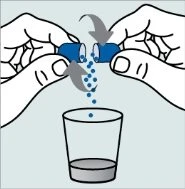
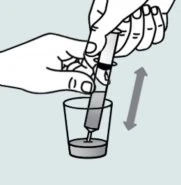
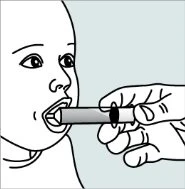
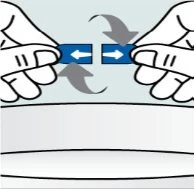
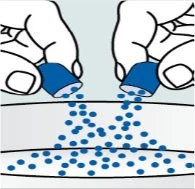
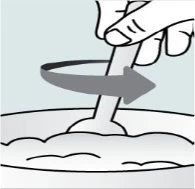
Detailed instructions on how to open the capsules and sprinkle the contents onto food or into a liquid can be found at the end of this leaflet.
If the medicine has not improved your condition after 6 months of continuous daily treatment, your doctor will recommend an alternative treatment.
If you take more Bylvay than you should
Inform your doctor if you think you have taken too much Bylvay.
Possible symptoms of overdose include diarrhea and stomach or intestinal problems.
If you forget to take Bylvay
Do not take a double dose to make up for the missed dose. Take the next dose at your usual time.
If you stop taking Bylvay
Do not stop taking Bylvay without first talking to your doctor.
If you have any further questions about the use of this medicine, ask your doctor or pharmacist.
4. Possible adverse effects
Like all medicines, this medicine may cause adverse effects, although not everybody gets them.
Adverse effects may occur with the following frequencies:
Very common (may affect more than 1 in 10 people)
- diarrhea, including diarrhea with bloody stools, soft stools
- vomiting
- abdominal pain
Common (may affect up to 1 in 10 people)
- increased liver size
Reporting of adverse effects
If you experience any type of adverse effect, consult your doctor or pharmacist, even if it is a possible adverse effect not listed in this leaflet. You can also report them directly through the national reporting system included in Appendix V. By reporting adverse effects, you can help provide more information on the safety of this medicine.
5. Storage of Bylvay
Keep this medicine out of the sight and reach of children.
Do not use this medicine after the expiry date stated on the carton and vial after EXP. The expiry date is the last day of the month indicated.
Store in the original packaging to protect from light. Do not store above 25 °C.
Medicines must not be disposed of via wastewater or household waste. Ask your pharmacist how to dispose of medicines and packaging you no longer need. This will help protect the environment.
6. Contents of the pack and other information
Composition of Bylvay
- The active substance is odevixibat.
Each Bylvay 200 microgram hard capsule contains 200 micrograms of odevixibat (as sesquihydrate).
Each Bylvay 400 microgram hard capsule contains 400 micrograms of odevixibat (as sesquihydrate).
Each Bylvay 600 microgram hard capsule contains 600 micrograms of odevixibat (as sesquihydrate).
Each Bylvay 1 200 microgram hard capsule contains 1 200 micrograms of odevixibat (as sesquihydrate).
The other components are:
- Capsule contents
Microcrystalline cellulose
Hypromellose
Capsule shell
Bylvay 200 microgram and 600 microgram hard capsules
Hypromellose
Titanium dioxide (E171)
Yellow iron oxide (E172)
Bylvay 400 microgram and 1 200 microgram hard capsules
Hypromellose
Titanium dioxide (E171)
Yellow iron oxide (E172)
Red iron oxide (E172)
Printing ink
Shellac
Propylene glycol
Black iron oxide (E172)
Appearance of the product and pack contents
Bylvay 200 microgram hard capsules:
Size 0 (21.7 mm × 7.64 mm) capsules with an opaque ivory cap and an opaque white body; printed with "A200" in black ink.
Bylvay 400 microgram hard capsules:
Size 3 (15.9 mm × 5.82 mm) capsules with an opaque orange cap and an opaque white body; printed with "A400" in black ink.
Bylvay 600 microgram hard capsules:
Size 0 (21.7 mm × 7.64 mm) capsules with opaque ivory cap and body; printed with "A600" in black ink.
Bylvay 1 200 microgram hard capsules:
Size 3 (15.9 mm × 5.82 mm) capsules with opaque orange cap and body; printed with "A1200" in black ink.
Bylvay hard capsules are supplied in a plastic bottle with a polypropylene closure, security seal, and child-resistant cap. Pack size: 30 hard capsules.
Marketing Authorisation Holder
Ipsen Pharma
70 rue Balard
75015 Paris
France
Manufacturer
Almac Pharma Services Limited
Seagoe Industrial Estate
Portadown, Craigavon
County Armagh
BT63 5UA
United Kingdom (Northern Ireland)
For further information about this medicinal product, please contact the local representative of the Marketing Authorisation Holder:
Belgium/Belgium/Belgium/Luxembourg/Luxembourg Ipsen NV Belgium/Belgium/Belgium Tel/Tel: +32 9 243 96 00 | Italy Ipsen SpA Tel: +39 02 39 22 41 |
| Latvia Ipsen Pharma representative office Tel: +371 67622233 |
| Lithuania Ipsen Pharma SAS Lithuania branch Tel: +370 700 33305 |
Denmark, Norway, Finland, Sweden, Iceland Institut Produits Synthèse (IPSEN) AB Sweden/Finland/Iceland Tlf/Puh/Tel/Sími: +46 8 451 60 00 | Hungary IPSEN Pharma Hungary Kft. Tel.: +36 1 555 5930 |
Germany, Austria Ipsen Pharma GmbH Germany Tel: +49 89 2620 432 89 | Netherlands Ipsen Farmaceutica B.V. Tel: +31 (0) 23 554 1600 |
Estonia Centralpharma Communications OÜ Tel: +372 60 15 540 | Poland Ipsen Poland Sp. z o.o. Tel.: +48 22 653 68 00 |
Greece, Cyprus, Malta Ipsen Monoprosope EPE Greece Tel: +30 210 984 3324 | Portugal Ipsen Portugal - Produtos Farmacêuticos S.A. Tel: +351 21 412 3550 |
Spain Ipsen Pharma, S.A.U. Tel: +34 936 858 100 | Romania Ipsen Pharma România SRL Tel: +40 21 231 27 20 |
France Ipsen Pharma Tél: +33 1 58 33 50 00 | Slovenia Swixx Biopharma d.o.o. Tel: +386 1 2355 100 |
Croatia Swixx Biopharma d.o.o. Tel: +385 1 2078 500 | Slovakia Ipsen Pharma, organizational unit Tel: +420 242 481 821 |
Ireland, United Kingdom (Northern Ireland) Ipsen Pharmaceuticals Limited Tel: +44 (0)1753 62 77 77 |
Date of the most recent review of this leaflet:
This medicine has been authorised under "exceptional circumstances". This type of approval means that, due to the rarity of the disease, it has not been possible to obtain complete information about this medicine.
The European Medicines Agency will review any new information about this medicine annually, and this leaflet will be updated when necessary.
Other sources of information
Detailed information on this medicine is available on the website of the European Medicines Agency: http://www.ema.europa.eu.
There are also links to other websites about rare diseases and orphan medicines.
Instructions
Instructions for opening the capsules and sprinkling the contents onto food:
Step 1. Place a small amount of soft food in a bowl (2 tablespoons/30 ml of yoghurt, apple sauce, banana or carrot purée, chocolate pudding, rice pudding, or oatmeal). The food should be at room temperature or colder.
| Step 2:
|
| Step 3:
|
| Step 4:
|
|
Instructions for opening the capsules and sprinkling the contents into a suitable liquid for the age:
Do not administer the medicine through a baby bottle or a feeding cup, as the granules will not pass through the opening. The granules will not dissolve in liquids.
Contact your pharmacy if you do not have an appropriate oral syringe to administer the medicine at home.
| Step 1:
|
| |
| Step 2:
|
Step 3:
| |
| Step 4:
|
|