Bupropion Sandoz 150 mg modified-release tablets EFG
Spain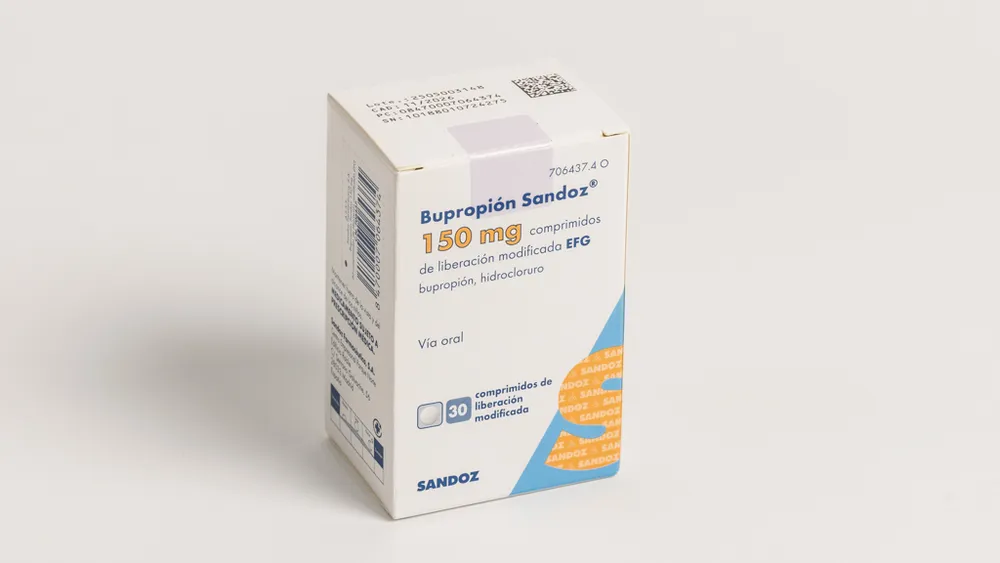
Table of Contents
Package leaflet: Information for the user
Introduction
Package leaflet: Information for the user
Bupropion Sandoz 150 mg prolonged-release tablets EFG
bupropion hydrochloride
Read the entire leaflet carefully before you start taking this medicine because it contains important information for you.
- Keep this leaflet as you may need to read it again.
- If you have any questions, ask your doctor or pharmacist.
- This medicine has been prescribed for you only, and you should not give it to other people, even if they have the same symptoms as you, because it could harm them.
- If you experience any adverse effects, consult your doctor or pharmacist, even if they are effects not listed in this leaflet. See section 4.
Leaflet contents
- What Bupropion Sandoz is and what it is used for
- What you need to know before taking Bupropion Sandoz
- How to take Bupropion Sandoz
- Possible side effects
- How to store Bupropion Sandoz
- Contents of the pack and other information
1. What Bupropion Sandoz is and what it is used for
Bupropion Sandoz is a medicine used to treat depression. It works on certain substances in the brain called noradrenaline and dopamine, which are related to depression.
2. What you need to know before taking Bupropion Sandoz
Do not take Bupropion Sandoz:
- if you are allergic to bupropion or to any of the other ingredients of this medicine (listed in section 6),
- if you are taking other medicines containing bupropion,
- if you have been diagnosed with epilepsy or have a history of seizures,
- if you have a brain tumor,
- if you are undergoing treatment for alcohol withdrawal or withdrawal from any medication associated with withdrawal risk, in particular:
- sedatives , sleep-inducing medicines or muscle relaxants with active substances whose names end in "azepam",
- or similar sedatives,
- if you have a chronic severe liver disease characterized by degeneration and thickening of liver tissue,
- if you have an eating disorder or have had one, such as bulimia or anorexia nervosa,
- if you have taken or have been taking other medicines for depression called monoamine oxidase inhibitors (MAOIs).
At least 14 days must elapse between stopping certain monoamine oxidase inhibitors (called irreversible MAOIs) and starting treatment with bupropion. For some monoamine oxidase inhibitors (called reversible MAOIs), a 24-hour interval is considered sufficient. If in doubt, consult your doctor.
Warnings and precautions
Talk to your doctor before starting bupropion if:
- you regularly drink large amounts of alcohol.
See previous section “Do not take Bupropion Sandoz” if you have undergone abrupt alcohol withdrawal,
- you have diabetes being treated with insulin or oral tablets,
- you have suffered a serious head injury or have a history of head trauma. Bupropion has been shown to cause seizures (convulsions) in 1 out of every 1000 people. This side effect is more likely in individuals in the groups mentioned above. If you experience a seizure during treatment, you must stop taking bupropion. Do not take any further doses and consult your doctor.
- you suffer from mood swings (bipolar disorder) or mental health problems, as bupropion could trigger an episode of this condition. Patients should be monitored before treatment due to the risk of disorders involving episodes of elevated or agitated mood,
- you are taking other antidepressant medicines, as using these together with Bupropion Sandoz may cause serotonin syndrome, a potentially life-threatening condition (see “Other medicines and Bupropion Sandoz” in this section),
- you have mild to moderate kidney or liver dysfunction.
Patients with hepatic or renal impairment will be monitored by the doctor for possible side effects. Do not use bupropion if you have the severe liver disease listed in the sixth point under "Do not take Bupropion Sandoz".
- you require a urine test. Inform your doctor that you are taking bupropion, as it may interfere with urine tests for detecting other drugs,
- Brugada syndrome. If you have a condition called Brugada syndrome (a rare inherited disorder affecting heart rhythm) or if there has been cardiac arrest or sudden death in your family.
Serious skin reactions
Serious skin reactions associated with bupropion have been reported, such as Stevens-Johnson syndrome (SJS), toxic epidermal necrolysis (TEN), drug reaction with eosinophilia and systemic symptoms (DRESS), and acute generalized exanthematous pustulosis (AGEP). Stop taking bupropion and seek immediate medical attention if you notice any symptoms related to these serious skin reactions described in section 4.
If any of the above situations apply to you, speak again with your doctor before taking bupropion. He or she may decide to monitor you more closely or recommend an alternative treatment.
Bupropion has been observed to cause seizures. This adverse effect is more likely to occur in people:
- affected by a condition listed in the first three points under "Warnings and precautions" in section 2, or
- taking a medicine listed in the second of the twelve points under "Other medicines and Bupropion Sandoz" in section 2.
All patients should be evaluated for risk factors. Stop taking Bupropion Sandoz and inform your doctor immediately if you experience seizures during treatment.
Thoughts of harming yourself or suicide are associated with depression. These may increase at the beginning of treatment with medicines for depression, as they take time to become effective—usually about two weeks, but sometimes longer.
This is more likely to happen if:
- you have previously had such thoughts,
- you are a young adult.
Studies have shown an increased risk of suicidal behavior in psychiatric patients under 25 years of age treated with antidepressants.
If you have thoughts of harming yourself or of suicide at any time, contact your doctor or go to hospital immediately. Talk to a close family member or friend about your depression and ask them to read this leaflet. Ask them to inform you if they think your depression is worsening or if changes in your behavior occur.
Children under 18 years of age
Bupropion is not recommended for this age group.
In children, there is an increased risk of suicidal thoughts and attempts when being treated with antidepressants.
Other medicines and Bupropion Sandoz
Tell your doctor or pharmacist if you are taking, have recently taken, or might need to take any other medicines.
The following medicines may interact with or be affected by bupropion, although the list is not exhaustive. Inform your doctor if you are taking any of these medicines so that your treatment can be adjusted if necessary:
- certain medicines for the treatment of depression or Parkinson's disease called monoamine oxidase inhibitors (MAOIs). Refer to the last point in the section "Do not take Bupropion Sandoz" in section 2.
- medicines for the treatment of depression, such as amitriptiline, fluoxetine, paroxetine, dosulepin, desipramine, imipramine, citalopram, escitalopram, venlafaxine, or medicines for the treatment of mental illnesses such as clozapine, risperidone, thioridazine, olanzapine, which may interact with antidepressants and may cause changes in mental state (e.g., agitation, hallucinations, coma) and other effects such as body temperature above 38°C, increased heart rate, unstable blood pressure, exaggerated reflexes, muscle rigidity, lack of coordination, and/or gastrointestinal symptoms (e.g., nausea, vomiting, diarrhea).
- if you are taking other medicines for depression or other mental illnesses,
- theophylline: a medicine used to treat asthma and other respiratory diseases,
- tramadol: a medicine used to treat pain,
- sedatives. Refer to the fifth point under "Do not take Bupropion Sandoz" in section 2 if you plan to stop taking sedatives,
- medicines to prevent and treat malaria, such as mefloquine, chloroquine,
- stimulants or other medicines used to control weight or appetite,
- steroids, taken orally or by injection,
- antibiotics with active substances whose names end in "oxacin",
- antihistamines that may cause drowsiness: used to treat allergies, sleep disorders or colds; or to prevent and treat nausea and vomiting,
- medicines for the treatment of diabetes,
- levodopa, amantadine: medicines used to treat Parkinson's disease,
- orphenadrine: a medicine used to treat painful muscle tension,
- carbamazepine, phenytoin, valproate: medicines used to treat epilepsy and certain pain conditions,
- medicines that affect the body's ability to metabolize bupropion,
- certain medicines used to treat cancer, such as cyclophosphamide, ifosfamide,
- ticlopidine, clopidogrel: medicines used to inhibit blood clotting, mainly used to prevent stroke,
- medicines for high blood pressure, heart conditions or other diseases, with active substances whose names end in "lol", such as metoprolol, beta-blockers,
- propafenone, flecainide: medicines used to treat heart rhythm disorders,
- nicotine patches: medicines used to stop smoking,
- ritonavir, efavirenz: medicines used to treat HIV infection,
- tamoxifen: a medicine used to treat breast cancer.
Inform your doctor if you are taking tamoxifen, as it may be necessary to switch to another treatment for depression.
- digoxin, a medicine for the heart.
Inform your doctor if you are taking digoxin. He or she may consider adjusting the dose.
- metamizole, a medicine for fever, severe acute pain, and chronic pain.
If any of these situations apply, speak with your doctor immediately before taking bupropion. Your doctor will evaluate the benefits and risks of taking bupropion.
Taking Bupropion Sandoz with alcohol
It is not recommended to consume alcohol (beer, wine, or spirits) while taking bupropion. Alcohol may affect how bupropion works, and when used together, it may rarely affect your nerves or mental state. Some people report being more sensitive to alcohol while taking bupropion.
If you currently drink large amounts of alcohol, do not stop abruptly, as you may be at risk of experiencing a seizure.
Talk to your doctor about alcohol consumption and abstinence before taking bupropion.
Pregnancy and breastfeeding
Do not take bupropion if you are pregnant, think you may be pregnant, or plan to become pregnant unless prescribed by your doctor. Consult your doctor or pharmacist before using this medicine. Some studies have reported an increased risk of birth defects, particularly heart defects, in babies whose mothers took bupropion. It is not known whether this is due to bupropion use.
Bupropion components may pass into breast milk. Consult your doctor or pharmacist if you are breastfeeding before taking bupropion.
Driving and using machines
Do not drive or operate tools or machinery if bupropion causes you dizziness or drowsiness.
Bupropion Sandoz contains sodium
This medicine contains less than 1 mmol of sodium (23 mg) per modified-release tablet; hence, it is essentially “sodium-free”.
3. How to take Bupropion Sandoz
Follow exactly the instructions for the use of this medicine as given by your doctor or pharmacist. If in doubt, consult your doctor or pharmacist again.
The recommended dose is
1 tablet of 150 mg once daily.
Your doctor may increase the dose to 300 mg once daily if your depression does not improve after several weeks.
Patients with renal or hepatic impairment
The recommended dose is 1 tablet of 150 mg once daily if you have mild to moderate renal or hepatic impairment.
Do not use bupropion if you have severe liver disease as stated in point six "Do not take Bupropion Sandoz" in section 2.
Method of administration
Take the tablets whole, in the morning with a glass of water. The tablets may be taken with or without food.
Do not take bupropion more than once a day.
The tablet is film-coated and releases the medicine slowly into your body. Sometimes you may notice what looks like a tablet in your stools. This is the empty tablet film coating that has passed through your body.

 Do not chew, crush, or divide the tablets, because doing so may lead to overdose, as the medicine would be released too quickly into your body. This increases the risk of adverse effects, including seizures (convulsions).
Duration of treatment
Your doctor will determine how long you should take bupropion.
It may take some time before you start to feel better and achieve the full effect, sometimes weeks or months. Speak regularly with your doctor about your symptoms to determine how long you should continue treatment. Your doctor may advise you to continue taking bupropion even after you start to feel better, to prevent depression from returning.
If you take more Bupropion Sandoz than you should
If you take more tablets than prescribed, contact your doctor or go to the nearest hospital, as this may increase the risk of experiencing epileptic seizures or convulsions.
You may also contact your pharmacist immediately or call the Toxicology Information Service at: 91 562 04 20, indicating the medicine and the amount taken.
If you forget to take Bupropion Sandoz
If you miss a dose, wait and take the next dose at the usual time. Do not take a double dose to make up for missed doses.
If you stop taking Bupropion Sandoz
Do not stop treatment with bupropion or reduce the dose without first consulting your doctor.
If you have any further questions about the use of this medicine, ask your doctor or pharmacist.
4. Possible adverse effects
Like all medicines, this medicine can cause adverse effects, although not everyone experiences them.
Serious adverse effects
Inform your doctor immediately if you experience any of the following adverse effects.
Epileptic seizures or convulsions
Approximately 1 in 1,000 people taking bupropion are at risk of having a seizure (an epileptic attack or convulsion). This risk is higher if you take more tablets than prescribed, if you are taking certain medicines, or if you have a higher than usual risk of seizures. If you have any doubts, ask your doctor.
Consult your doctor if you have a seizure. Do not take any more tablets.
Allergic reactions
Some people may have allergic reactions to bupropion. These include:
- redness or skin rash (urticaria) and skin hives,
- unusual wheezing in the chest or difficulty breathing,
- swelling of the eyelids, lips or tongue,
- pain in muscles or joints,
- fainting or collapse.
Consult your doctor immediately if you experience an allergic reaction. Do not take any more tablets.
Allergic reactions may last for a long time. If your doctor prescribes any medication for this, make sure you complete the full course of treatment.
Serious skin reactions
Stop using bupropion and seek immediate medical attention if you notice any of the following symptoms:
- Very rare: Non-elevated reddish spots, target-like or circular rashes on the torso, often with central blisters, skin peeling, and ulcers in the mouth, throat, nose, genitals, and eyes. These serious skin reactions may be preceded by fever and flu-like symptoms (Stevens-Johnson syndrome).
- Frequency not known: Extensive areas with blisters and widespread skin peeling, occurring as a severe form of the serious skin reaction described above (toxic epidermal necrolysis).
- Frequency not known: Widespread rash, high fever, and swollen lymph nodes (DRESS syndrome or drug hypersensitivity syndrome). The onset of this syndrome is usually delayed (between 2 and 6 weeks after starting treatment).
- Frequency not known: A widespread, red, scaly rash with bumps under the skin and blisters, accompanied by fever. Symptoms usually appear at the beginning of treatment (acute generalized exanthematous pustulosis, AGEP).
Cutaneous lupus eruption or worsening of lupus symptoms
Frequency not known: cannot be estimated from available data in people taking bupropion.
Lupus is an immune system disorder that affects the skin and other organs. If you experience lupus flares, skin rash or lesions (especially in sun-exposed areas) while taking Bupropion Sandoz, contact your doctor immediately, as treatment may need to be discontinued.
Acute Generalized Exanthematous Pustulosis (AGEP)
Frequency not known: cannot be estimated from available data in people taking bupropion. Symptoms of AGEP include a rash with pus-filled pimples/blisters.
If you develop a rash with pus-filled pimples/blisters, contact your doctor immediately, as treatment may need to be discontinued.
Other adverse effects
Very common adverse effects: may affect more than 1 in 10 people:
- difficulty sleeping. Make sure you take bupropion in the morning,
- headache,
- dry mouth,
- dizziness and vomiting.
Common adverse effects: may affect up to 1 in 10 people:
- fever, dizziness, itching, sweating, and skin rash (sometimes due to allergic reactions),
- unsteadiness, tremor, weakness, fatigue, chest pain,
- feeling anxious or agitated,
- stomach pain or digestive discomfort (constipation), changes in taste perception, loss of appetite (anorexia),
- increased blood pressure (sometimes severe), flushing,
- sensation of ringing in the ears, vision disturbances.
Uncommon adverse effects: may affect up to 1 in 100 people:
- feeling depressed (see also section 2 “Take special care with Bupropion Sandoz”, under “suicidal thoughts and worsening of depression”),
- confusion,
- difficulty concentrating,
- rapid heartbeat,
- weight loss.
Rare adverse effects: may affect up to 1 in 1,000 people:
- seizures.
Very rare adverse effects: may affect up to 1 in 10,000 people:
- palpitations, fainting,
- muscle contractions, muscle stiffness, uncontrolled movements, problems walking or with coordination,
- restlessness, irritability, hostility, aggressiveness, nightmares, tingling or numbness, memory loss,
- yellowing of the skin or whites of the eyes (jaundice), which may be associated with increased liver enzymes, hepatitis,
- severe allergic reactions; skin rash together with joint and muscle pain,
- changes in blood sugar levels,
- increased or decreased frequency of urination,
- urinary incontinence (involuntary urination, urine leakage),
- worsening of psoriasis (plaques of thickened or reddened skin),
- unusual hair loss or thinning (alopecia),
- feelings of unreality or strangeness (depersonalization); seeing or hearing things that are not there (hallucinations); feeling or believing in unreal things (illusions); severe distrust (paranoia),
- Dizziness upon standing due to low blood pressure (postural hypotension).
Adverse effects of unknown frequency: cannot be estimated from available data:
- decrease in blood sodium (hyponatremia),
- thoughts of self-harm or suicide during treatment with bupropion or shortly after stopping treatment (see section 2, “What you need to know before starting Bupropion Sandoz”). If you have these thoughts, contact your doctor or go immediately to a hospital,
- loss of touch with reality and inability to think or judge clearly (psychosis); other symptoms may include hallucinations and/or illusions,
- sudden and intense feeling of fear (panic attack),
- stuttering,
- reduction in the number of red blood cells (anaemia), white blood cells (leucopenia), and platelets (thrombocytopenia),
- changes in mental state (e.g., agitation, hallucinations, coma) and other effects such as body temperature above 38°C, increased heart rate, unstable blood pressure, exaggerated reflexes, muscle rigidity, lack of coordination and/or gastrointestinal disturbances (e.g., nausea, vomiting, diarrhoea), while taking Bupropion Sandoz together with medicines used to treat depression (such as paroxetine, citalopram, escitalopram, fluoxetine and venlafaxine).
Reporting of adverse effects
If you experience any adverse effect, consult your doctor or pharmacist, even if it is a possible adverse effect not listed in this leaflet. You may also report them directly via the Spanish Pharmacovigilance System for Human Medicines: https://www.notificaram.es. By reporting adverse effects, you can help provide more information on the safety of this medicine.
5. Storage of Bupropion Sandoz
Keep this medicine out of the sight and reach of children.
Do not use this medicine after the expiry date stated on the bottle after EXP/CAD. The expiry date refers to the last day of the month indicated.
Do not store above 25°C.
Keep in the original packaging to protect from light and moisture.
Medicines must not be disposed of via wastewater or household waste. Dispose of unused medicines and their containers at the SIGRE collection point at your pharmacy. If in doubt, ask your pharmacist how to dispose of medicines and containers you no longer need. This will help protect the environment.
6. Contents of the pack and other information
Composition of Bupropion Sandoz:
-
The active substance is bupropion hydrochloride. Each modified-release tablet contains 150 mg of bupropion hydrochloride.
-
The other components are: povidone, hydrochloric acid, sodium stearyl fumarate, ethylcellulose, hydroxypropylcellulose, methacrylic acid and ethyl acrylate copolymer (1:1) type A, colloidal anhydrous silica, macrogol 1500, triethyl citrate, hypromellose, macrogol 400 and macrogol 8000.
Appearance of the product and contents of the pack
White to slightly yellowish, round, biconvex tablets, smooth on both sides.
Pack sizes:
10, 30 and 90 modified-release tablets.
The modified-release tablets are packed in opaque white bottles closed with child-resistant screw caps. The bottles contain two desiccant sachets, which must not be ingested: one contains granules of activated carbon and silica gel, and the other contains granules of silica gel and an oxygen absorber.
Pack sizes:
500 modified-release tablets.
The modified-release tablets are packed in opaque white bottles. The bottles contain two desiccant sachets, which must not be ingested: one contains granules of activated carbon and silica gel, and the other contains granules of silica gel and an oxygen absorber.
Only certain pack sizes may be marketed.
Marketing Authorisation Holder and Manufacturer
Marketing Authorisation Holder
Sandoz Farmacéutica, S.A.
Centro Empresarial Parque Norte
Edificio Roble
C/ Serrano Galvache, 56
28033 Madrid
Spain
Manufacturer
Lek Pharmaceuticals d.d.
Verovškova 57
1526 Ljubljana
Slovenia
or
Lek Pharmaceuticals d.d.
Trimlini 2D, 9220
Lendava
Slovenia
or
Lek S.A.
Ul. Domaniewska 50 C
02-672 Warszawa
Poland
or
Salutas Pharma GmbH
Otto-von-Guericke-Allee 1,
39179 Barleben
Germany
or
S.C. Sandoz, S.R.L.
Str. Livezeni nr. 7A
RO-540472 Targu-Mures
Romania
Date of the most recent revision of the package leaflet: 03/2026
This medicinal product is authorised in the European Economic Area member states under the following names:
Finland: Bupropion Sandoz 150 mg säädellysti vapauttavat tabletit
Sweden: Bupropion Sandoz 150 mg tablett med modifierad frisättning
Germany: Bupropion – 1 A Pharma 150 mg Tabletten mit veränderter Wirkstofffreisetzung
Netherlands: Bupropion HCl Sandoz retard 150 mg, tabletten met gereguleerde afgifte
Belgium: Bupropion Sandoz 150 mg tabletten met gereguleerde afgifte
Detailed information on this medicinal product is available on the website of the Spanish Agency of Medicines and Health Products (AEMPS) (http://www.aemps.gob.es/).