Budesonide PulmicTan 200 micrograms/inhalation suspension for inhalation in pressurized container
Spain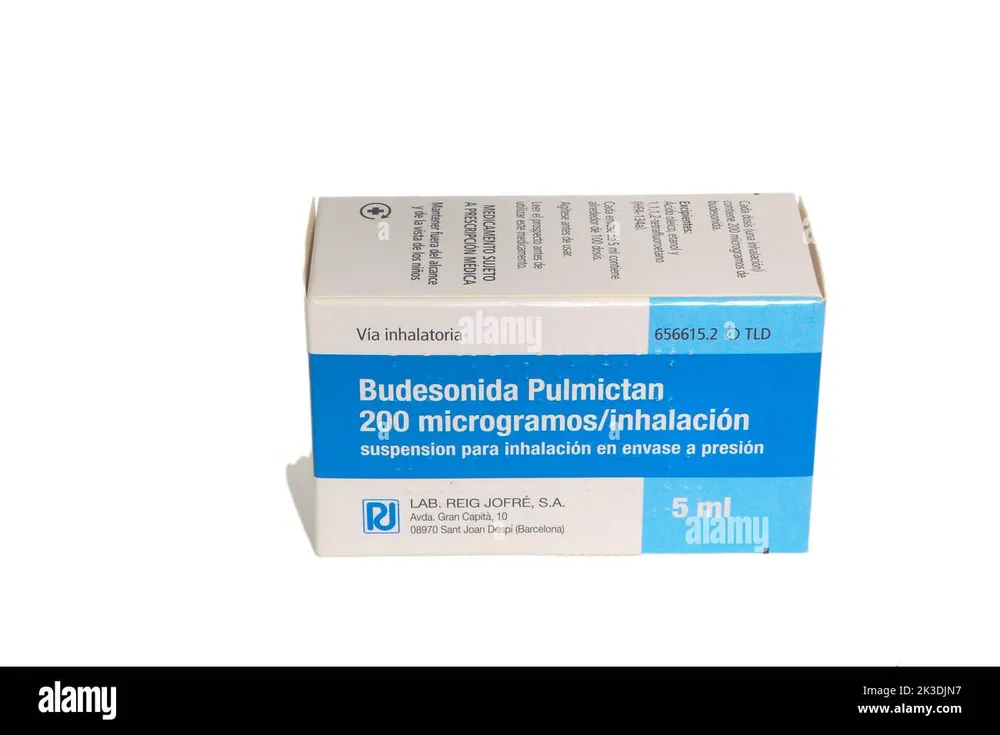
Table of Contents
- Patient Information Leaflet
- Introduction
- 1. What Budesonida Pulmictan 200 micrograms/inhalation is and what it is used for
- 2. What you need to know before using Budesonida Pulmictan 200 micrograms/inhalation
- 3. How to use Budesonide Pulmictan 200 micrograms/inhalation
- 4. Possible adverse effects
- 5. Storage of Budesonida Pulmictan 200 micrograms/inhalation
- 6. Contents of the pack and other information
Patient Information Leaflet
Introduction
Patient Information Leaflet
BUDESONIDE PULMICTAN 200 micrograms/inhalation
pressurised inhalation suspension
Read the entire leaflet carefully before you start using this medicine, as it contains important information for you.
- Keep this leaflet, as you may need to read it again.
- If you have any questions, ask your doctor, pharmacist or nurse.
- This medicine has been prescribed for you only, and you should not give it to other people, even if they have the same symptoms, as it may harm them.
- If you experience any adverse effects, consult your doctor, pharmacist or nurse, even if they are adverse effects not listed in this leaflet. See section 4.
Leaflet Contents
- What Budesonide Pulmictan 200 micrograms/inhalation is and what it is used for.
- What you need to know before using Budesonide Pulmictan 200 micrograms/inhalation.
- How to use Budesonide Pulmictan 200 micrograms/inhalation.
- Possible side effects.
- How to store Budesonide Pulmictan 200 micrograms/inhalation.
- Contents of the pack and other information.
1. What Budesonida Pulmictan 200 micrograms/inhalation is and what it is used for
Budesonida Pulmictan 200 micrograms/inhalation contains the active substance budesonide. Budesonide belongs to a group of medicines called glucocorticoids, which are used to reduce inflammation.
Asthma is caused by inflammation of the airways. Budesonide reduces and prevents this inflammation.
Budesonida Pulmictan 200 micrograms/inhalation is used for the treatment of asthma. It should be used regularly as directed by your doctor.
By inhaling through the inhaler at the same time as you release a dose, the medicine reaches the lungs through the inhaled air.
2. What you need to know before using Budesonida Pulmictan 200 micrograms/inhalation
Do not use Budesonida Pulmictan 200 micrograms/inhalation
- If you are allergic to budesonide or to any of the components of Budesonida Pulmictan 200 micrograms/inhalation.
Inform your doctor so that your medication can be changed to another one.
Warnings and precautions
Consult your doctor or pharmacist before starting to use Budesonida Pulmictan 200 micrograms/inhalation.
Inform your doctor if:
-
you are taking or have recently taken any other medicines, including those obtained without a prescription.
-
you have ever had an unusual reaction to Budesonida Pulmictan 200 micrograms/inhalation (budesonide) or to any of its components, or to other medicines.
-
you have or have had pulmonary tuberculosis.
-
you have ever had liver problems.
-
you have an untreated bacterial, viral, or fungal infection in your mouth, airways, or lungs.
-
your doctor has prescribed Budesonida Pulmictan 200 micrograms/inhalation and you are still undergoing treatment with corticosteroid tablets, your doctor may gradually reduce the dose of these tablets (over a period of weeks or months) and may eventually discontinue the previous treatment.
In this case, some symptoms may temporarily reappear, such as runny nose, hives, or muscle and joint pain. If any of these symptoms concern you, or if you experience others such as headache, fatigue, nausea, or vomiting, contact your doctor.
Contact your doctor if you experience blurred vision or other visual disturbances.
Rinse your mouth with water after each inhalation to prevent fungal infection in the mouth.
Budesonida Pulmictan 200 micrograms/inhalation has been prescribed for the maintenance treatment of asthma. However, it will not relieve an acute asthma attack once it has started.
Other medicines and Budesonida Pulmictan 200 micrograms/inhalation
Inform your doctor or pharmacist if you are using or have recently used any other medicines, including those obtained without a prescription.
Some medicines may increase the effects of Budesonida Pulmictan 200 micrograms/inhalation, so your doctor will closely monitor you if you are taking these medicines (including some used for HIV: ritonavir, cobicistat).
Inform your doctor if you are using:
- nasal medications containing corticosteroids
- corticosteroid tablets
- antifungal medications containing ketoconazole and itraconazole
- cimetidine (a medicine for stomach acidity)
Pregnancy, breastfeeding, and fertility
If you are pregnant or breastfeeding, think you may be pregnant, or plan to become pregnant, consult your doctor or pharmacist before using this medicine.
This medicine will only be administered during pregnancy or breastfeeding when, in the physician's judgment, the expected benefit to the mother outweighs any possible risk to the fetus.
Driving and using machines
Budesonida Pulmictan 200 micrograms/inhalation does not affect your ability to drive or use tools or machinery.
Warning for athletes
Athletes are advised that this medicine contains a component that may produce a positive result in doping control tests.
Budesonida Pulmictan 200 micrograms/inhalation contains ethanol
This medicine contains 0.33% ethanol (alcohol); this small amount corresponds to 0.20 mg/dose.
3. How to use Budesonide Pulmictan 200 micrograms/inhalation
Follow exactly the administration instructions for this medicine provided by your doctor or pharmacist. If in doubt, consult your doctor or pharmacist again.
Your doctor has indicated the duration of your treatment with Budesonide Pulmictan 200 micrograms/inhalation. Do not stop treatment before your doctor tells you to. Do not take more doses than your doctor has prescribed. Consult your doctor if you have any questions about your treatment.
Method of use and route of administration
Before starting treatment, you must understand how the inhaler works. It is important that you read the information included in the section “Instructions for correct administration of the medicine” regarding preparation, use, and cleaning of the inhaler, and follow the instructions carefully.
Remember to always rinse your mouth with water after each inhalation.
The dose of Budesonide Pulmictan 200 micrograms/inhalation must be individualized. Your doctor will adjust the dose and prescribe the lowest dose that controls your asthma symptoms. Follow your doctor’s instructions carefully.
Use in adults
Recommended usual dose in adults: 1 inhalation (200 micrograms) – 8 inhalations (1,600 micrograms) per day, divided into 2–4 doses.
Recommended usual dose in elderly patients: the same dose as in adults.
Use in children and adolescents
Recommended usual dose in children aged 7 years and older: 1 inhalation (200 micrograms) – 4 inhalations (800 micrograms) per day, divided into 2–4 doses.
Recommended usual dose in children aged 2–7 years: 1 inhalation (200 micrograms) – 2 inhalations (400 micrograms) per day, divided into 2–4 doses.
Administration of Budesonide Pulmictan 200 micrograms/inhalation in children must be supervised by an adult to ensure that the dose is correctly administered and in accordance with the doctor’s instructions.
You may notice an improvement in symptoms even on the first day of treatment with Budesonide Pulmictan 200 micrograms/inhalation, although it may take 1 to 2 weeks to achieve full effect. Therefore, it is important that you continue using Budesonide Pulmictan 200 micrograms/inhalation even when you feel well.
In addition to preventive Budesonide Pulmictan 200 micrograms/inhalation, you may also need a reliever bronchodilator:
Budesonide will NOT stop an asthma attack once it has started. Therefore, it is essential that you always have a fast-acting reliever bronchodilator (a beta2 agonist) available in case of acute asthma symptoms.
If you use a reliever inhaler (a beta2 agonist), you should inhale it before Budesonide Pulmictan 200 micrograms/inhalation (preventive).
Worsening of asthma symptoms during treatment:
Consult your doctor as soon as possible if:
- Your wheezing (breathing difficulty) or chest pain worsens during treatment
- You need to use your reliever inhaler more often than before
- Your reliever inhaler does not relieve your symptoms as effectively as before
Your asthma may be worsening, and you may require additional treatment.
Instructions for correct administration of the medicine
Preparation of the inhaler for use:
Remove the white cap. If this is a new inhaler or has not been used for several days, shake the aerosol and release one puff to ensure proper functioning of the inhaler. If the inhaler is used regularly, proceed to the usage instructions.
Using the inhaler
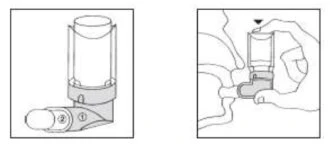
Inhalation with aerosol alone
- Check that the aerosol is properly assembled with the plastic mouthpiece (1). Shake the device and remove the white cap (2).
- Hold the canister inverted between your thumb and index finger. Place the mouthpiece in your mouth and seal your lips around it.
- Breathe out deeply (through your nose), then inhale deeply through your mouth while pressing the canister between your fingers to release a single dose.
- Remove the device from your mouth and hold your breath for several seconds. Breathe out slowly and store the canister by replacing the cap (2).
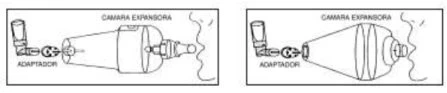
Inhalation with spacer chamber
- Check that the aerosol is properly assembled with the plastic applicator. Shake the device and remove the white cap.
- If necessary, attach the adapter to the mouthpiece of the applicator.
- Attach the adapter, or directly the applicator, to the end of the spacer chamber.
- Hold the spacer chamber with the mouthpiece facing your mouth. Press the canister between your thumb and index finger to release the dose into the chamber.
- Breathe out deeply, then place the spacer mouthpiece into your mouth and seal your lips around it.
- Inhale deeply through your mouth. Hold your breath for about ten seconds before exhaling through the spacer mouthpiece.
- Inhale deeply again to ensure complete inhalation of the administered dose. Hold your breath for several seconds, then exhale.
- Detach the aerosol from the spacer and adapter, and store the canister by replacing the white cap.
Cleaning
The actuator-mouthpiece must be cleaned regularly (at least once a week).
- Remove the actuator from the aerosol and rinse it thoroughly with water.
- Store it with the cap in place to protect it from dust and dirt.
If you use more Budesonide Pulmictan 200 micrograms/inhalation than you should
If you use a single dose of Budesonide Pulmictan 200 micrograms/inhalation higher than prescribed, harmful effects are unlikely. However, if you have used excessive amounts of Budesonide Pulmictan 200 micrograms/inhalation over a long period (months), adverse effects may occur. In such a case, consult your doctor or pharmacist immediately.
In case of overdose or accidental ingestion, contact the Toxicology Information Service. Telephone 91 562 04 20.
If you forget to use Budesonide Pulmictan 200 micrograms/inhalation
If you forget to take a dose of Budesonide Pulmictan, do not take a double dose to make up for the missed dose. Continue your treatment as prescribed by your doctor.
If you stop treatment with Budesonide Pulmictan 200 micrograms/inhalation
Do not stop treatment with Budesonide Pulmictan 200 micrograms/inhalation without consulting your doctor. If you stop using the medicine abruptly, your asthma may worsen.
If you have any further questions about the use of this medicine, ask your doctor, pharmacist, or nurse.
4. Possible adverse effects
Like all medicines, this medicine can cause adverse effects, although not everyone will experience them.
Common adverse effects: may affect up to 1 in 10 people
- Mild throat irritation
- Difficulty swallowing
- Cough
- Fungal infection of the mouth and throat (thrush)
To prevent the above-mentioned adverse effects, you may rinse your mouth and throat with water or brush your teeth after each dose. Do not swallow the rinse water; spit it out.
Uncommon adverse effects: may affect up to 1 in 100 people
- Anxiety
- Depression
- Cataracts
- Blurred vision
- Muscle spasms and tremors
Rare adverse effects: may affect up to 1 in 1,000 people
- Too little or too much cortisol in the blood
- Underactive adrenal gland (a gland near the kidneys)
- Skin rash, itching, bruising
- Dysphonia
- Anxiety, nervousness
- Growth retardation and behavioral changes in children
Rare acute allergic reaction:
If, shortly after taking a dose, you experience itching, rash, skin redness, swelling of the eyelids, lips, face or throat, wheezing, low blood pressure or collapse, take the following action:
- Stop taking Budesonida Pulmictan 200 micrograms/inhalation
- Seek immediate medical advice
Immediate shortness of breath after dose:
Rarely, inhaled medicines may cause an increase in wheezing and shortness of breath (bronchospasm) immediately after dosing. If this occurs:
- Stop taking Budesonida Pulmictan 200 micrograms/inhalation
- Take a fast-acting bronchodilator immediately
- Seek immediate medical advice
Very rare adverse effects: may affect up to 1 in 10,000 people
- Glaucoma
- Decreased bone density (weakening of the bones)
Adverse effects with unknown frequency (cannot be estimated from the available data):
- Sleep disturbances
- Aggressive reactions
- Increased motor activity (difficulty staying still)
- Irritability
These effects are more likely to occur in children.
If you were previously being treated with corticosteroid tablets, switching to inhaled corticosteroid treatment may cause the appearance of certain symptoms such as fatigue, abdominal pain, weakness or vomiting. If these symptoms occur, consult your doctor immediately.
If you think you may be experiencing any of these adverse effects, or if you are concerned about the possibility of experiencing them, consult your doctor or pharmacist.
Reporting of adverse effects
If you experience any type of adverse effect, consult your doctor or pharmacist, even if it is a possible adverse effect not listed in this leaflet. You may also report them directly via the Spanish Pharmacovigilance System for Human Medicinal Products: www.notificaram.es. By reporting adverse effects, you can help provide more information on the safety of this medicine.
5. Storage of Budesonida Pulmictan 200 micrograms/inhalation
Keep this medicine out of the sight and reach of children.
The container holding your medicine is pressurized. The valve must not be damaged, and the container must not be exposed to high temperatures or direct sunlight. Also, do not pierce, break, or burn the container, even when it is empty.
Do not refrigerate or freeze. Store below 30 °C. The container must never be exposed to temperatures above 50 °C.
Store with the valve pointing downward.
Always replace the protective cap over the mouthpiece after using the inhaler.
Do not use Budesonida Pulmictan 200 micrograms/inhalation after the expiry date stated on the container. The expiry date refers to the last day of the month indicated.
Medicines must not be disposed of via wastewater or household waste. Return unused containers and unused medicines to the SIGRE Point at your pharmacy. Ask your pharmacist how to dispose of containers and medicines you no longer need. This helps protect the environment.
6. Contents of the pack and other information
Composition of Budesonida Pulmictan 200 micrograms/inhalation
The active substance in Budesonida Pulmictan 200 micrograms/inhalation is budesonide. Each dose (1 inhalation) contains 200 micrograms of budesonide.
The other components (excipients) are: oleic acid, ethanol and 1,1,1,2-tetrafluoroethane (HFA 134a).
200 mcg/10 ml:
- This medicinal product contains fluorinated greenhouse gases.
- Each inhaler contains 14.03 g of HFA-134a, equivalent to 0.02007 tonnes of CO2 (global warming potential GWP = 1430).
200 mcg/5 ml:
- This medicinal product contains fluorinated greenhouse gases.
- Each inhaler contains 7.93 g of HFA-134a, equivalent to 0.01134 tonnes of CO2 (global warming potential GWP = 1430).
Nature of the product and contents of the pack
Budesonida Pulmictan 200 micrograms/inhalation is a suspension for inhalation delivered via a pressurised container.
Each 5 ml container contains approximately 100 doses.
Each 10 ml container contains approximately 200 doses.
There are two concentrations of Budesonida Pulmictan in pressurised containers: Budesonida Pulmictan 200 micrograms/inhalation and Budesonida Pulmictan Infantil 50 micrograms/inhalation.
Marketing Authorisation Holder and Manufacturer:
Marketing Authorisation Holder:
LABORATORIO REIG JOFRÉ, S.A.
Avda. Gran Capità, 10
08970 – Sant Joan Despí
Barcelona, Spain
Manufacturer:
LABORATORIO REIG JOFRÉ, S.A.
Avda. Gran Capità, 10
08970 – Sant Joan Despí
Barcelona, Spain
OR
GENETIC S.P.A.
Contrada Canfora, Fisciano, Salerno
Italy
Date of the most recent revision of this leaflet: November 2025
Detailed and up-to-date information on this medicinal product is available on the website of the Spanish Agency for Medicines and Health Products (AEMPS) http://www.aemps.gob.es/