Budesonide Easyhaler 200 mcg inhalation powder
Spain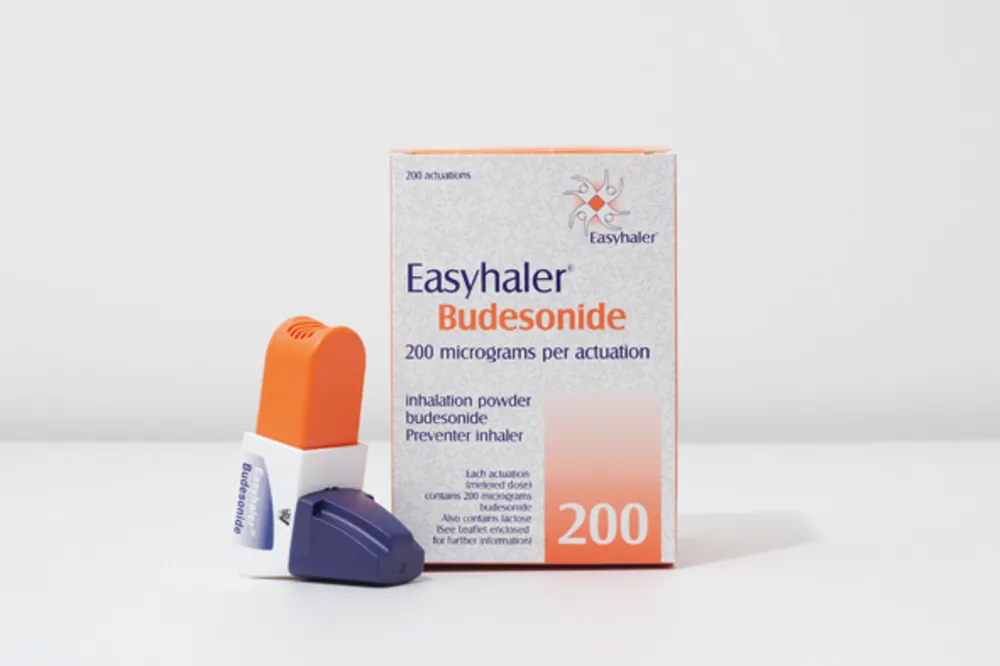
Instructions for Use
Package leaflet: Information for the user
Introduction
[QR code to https://cima.aemps.es/info/66669]
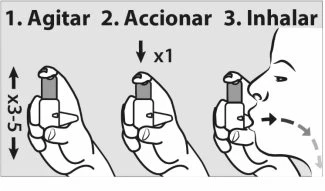
To view the instructions for use of Easyhaler, scan this code or go to https://cima.aemps.es/info/66669
Package leaflet: information for the user
Budesonide Easyhaler 200 micrograms/dose powder for inhalation
Read the entire leaflet carefully before you start using this medicine, because it contains important information for you.
-
Keep this leaflet, as you may need to read it again.
-
If you have any questions, ask your doctor, pharmacist, or nurse.
-
This medicine has been prescribed for you only, and you should not give it to other people even if they have the same symptoms as you, because it may harm them.
-
If you experience any adverse effects, consult your doctor, pharmacist, or nurse, even if these are effects not listed in this leaflet. See section 4.
Contents of the leaflet
- What Budesonide Easyhaler is and what it is used for
- What you need to know before using Budesonide Easyhaler
- How to use Budesonide Easyhaler
- Possible side effects
- How to store Budesonide Easyhaler
- Contents of the pack and other information
1. What Budesonide Easyhaler is and what it is used for
The active substance in Budesonide Easyhaler is budesonide. Budesonide powder is presented in an inhaler. When you inhale through the mouthpiece, the powder enters your lungs with the inhaled air. Budesonide works by reducing and preventing swelling and inflammation in your lungs.
Budesonide Easyhaler is a medicine known as a "preventer". It is used to prevent asthma symptoms. It belongs to a group of medicines called corticosteroids.
Budesonide will NOT stop an asthma attack once it has already started. Therefore, you must always have a fast-acting bronchodilator "reliever" (a beta2 agonist) available.
The effect of budesonide begins after a few days of treatment and reaches its maximum effect after several weeks. Take Budesonide Easyhaler regularly to prevent asthmatic inflammation. Continue taking this medicine regularly as directed in the instructions for use, even if you have no symptoms.
2. What you need to know before using Budesonida Easyhaler
Do not use Budesonida Easyhaler if you are allergic to:
- budesonide or
- any of the other ingredients of this medicine (listed in section 6), which includes lactose (containing small amounts of milk proteins)
Inform your doctor so that your medication can be changed to an alternative.
Warnings and precautions
Talk to your doctor before starting to use Budesonida Easyhaler if you have:
-
pulmonary tuberculosis
-
an untreated bacterial, viral, or fungal infection in your mouth, airways, or lungs
-
severe liver problems
Contact your doctor if you experience blurred vision or other visual disturbances.
Rinse your mouth with water after each inhalation to help prevent fungal infection in the mouth.
Budesonida Easyhaler is not recommended for use in children under 6 years of age.
Other medicines and Budesonida Easyhaler
Inform your doctor or pharmacist if you are taking, have recently taken, or might need to take any other medicines, including those obtained without a prescription.
Some medicines may increase the effects of Budesonida Easyhaler, and your doctor may consider close monitoring if you are taking these medicines (including certain treatments for HIV/AIDS: ritonavir, cobicistat).
Tell your doctor if you are using:
- nasal medicines containing corticosteroids
- corticosteroid tablets
- antifungal medicines containing ketoconazole or itraconazole
Pregnancy and breastfeeding
If you are pregnant, breastfeeding, think you may be pregnant, or are planning to become pregnant, consult your doctor before using this medicine. It is important for both mother and fetus to maintain appropriate asthma treatment during pregnancy. As with any other medicine taken during pregnancy, the benefit of administering budesonide to the mother should be weighed against any potential risk to the fetus. The lowest effective dose of budesonide should be used to maintain adequate asthma control.
Driving and using machines
There are no indications that Budesonida Easyhaler may affect the ability to drive or operate machinery.
Budesonida Easyhaler inhalation powder contains a small amount of lactose, which is unlikely to cause problems even if you have lactose intolerance. If your doctor has informed you that you have an intolerance to certain sugars, consult with them before using this medicine.
Lactose contains small amounts of milk proteins, which may cause an allergic reaction.
3. How to use Budesonide Easyhaler
Follow exactly the instructions for using this medicine as given by your doctor. If you are unsure, consult your doctor or pharmacist again.
Your doctor has prescribed the dose and duration of treatment with Budesonide Easyhaler that is most suitable for you. Carefully follow your doctor's instructions.
Switching from oral corticosteroid tablets to Budesonide Easyhaler:
Consult your doctor if you are taking oral corticosteroid tablets (for example, cortisone tablets) to treat your asthma. Your doctor may gradually reduce the number of tablets until treatment is eventually stopped within a few weeks. If you do not feel well during this transition period, consult your doctor, but do not stop using Budesonide Easyhaler.
Use in adults (including elderly) and adolescents (12 to 17 years of age):
- 1–2 inhalations in the morning and at night, or once daily at night.
Use in children aged 6 to 11 years:
- 1–2 inhalations in the morning and at night, or once daily at night.
During treatment, your doctor will adjust your dose and prescribe the lowest dose that controls your asthma symptoms (maintenance dose).
If Budesonide Easyhaler is prescribed for a child, ensure that he/she can use it correctly.
In addition to preventive treatment with Budesonide Easyhaler, you may also need a reliever bronchodilator:
Budesonide will not stop an asthma attack once it has started. Therefore, it is essential that you always have a fast-acting reliever bronchodilator (a beta2 agonist) available to treat acute asthma symptoms.
If you use a reliever inhaler (a beta2 agonist), you should inhale it before using Budesonide Easyhaler (preventer).
Worsening asthma symptoms during treatment:
Consult your doctor as soon as possible if:
- Your wheezing (breathing difficulty) or chest tightness worsens during treatment
- You need to use your reliever inhaler more often than before
- Your reliever inhaler does not relieve your symptoms as effectively as before
Your asthma may be worsening and you may require additional treatment.
If you use more Budesonide Easyhaler than you should:
If you take a higher dose of Budesonide Easyhaler than recommended or more doses than prescribed, consult your doctor as soon as possible. You should continue using Budesonide Easyhaler unless your doctor tells you otherwise.
It is important to take your dose exactly as advised by your doctor or pharmacist. Do not increase or decrease your dose without medical advice.
If you forget to use Budesonide Easyhaler:
If you forget to take a dose, take it as soon as you remember, or simply take the next dose at the scheduled time. Take the medicine at the same time each day.
Do not take a double dose to make up for a missed dose.
If you stop using Budesonide Easyhaler:
Do not stop treatment with Budesonide Easyhaler without consulting your doctor. If you stop using the medicine abruptly, your asthma may worsen.
If you have any further questions about the use of this medicine, ask your doctor, pharmacist, or nurse.
Instructions on how to use the inhaler are located at the end of the leaflet.
4. Possible adverse effects
Like all medicines, this medicine can cause adverse effects, although not everyone will experience them.
Frequent (may affect up to 1 in 10 people):
Throat irritation, difficulty swallowing, cough, fungal infection in the mouth and throat (thrush). If you experience any of these adverse effects, do not stop using Budesonide Easyhaler. Consult your doctor.
To prevent the adverse effects mentioned above, you may rinse your mouth and throat with water after each dose. Do not swallow the rinse water; spit it out.
Uncommon (may affect up to 1 in 100 people):
Anxiety, depression, cataracts, blurred vision, muscle spasms, and tremors.
Rare (may affect up to 1 in 1,000 people):
Too little or too much cortisol in the blood. Underactive adrenal gland (a gland near the kidneys). Skin rashes, itching, bruising, dysphonia (hoarseness), anxiety, and restlessness. Growth retardation in children. Behavioural changes, especially in children.
Rare acute allergic reaction:
If, shortly after taking a dose, you experience itching, rash, skin redness, swelling of the eyelids, lips, face or throat, wheezing, low blood pressure or collapse, take the following action:
- Stop taking Budesonide Easyhaler
- Seek immediate medical advice
Immediate shortness of breath after the dose:
Rarely, inhaled medicines may cause an increase in wheezing and shortness of breath (bronchospasm) immediately after the dose. If this happens:
- Stop taking Budesonide Easyhaler
- Take a fast-acting bronchodilator immediately
- Seek immediate medical advice
Very rare (may affect up to 1 in 10,000 people):
Glaucoma. Decreased bone mineral density (weakening of the bones).
Frequency not known (cannot be estimated from the available data):
Sleep disturbances, aggressive reactions, increased motor activity (difficulty staying still), and irritability. These effects are more likely in children.
If you think you may be experiencing any of these rare adverse effects, or if you are concerned about the possibility of experiencing them, consult your doctor.
Reporting of adverse effects
If you experience any adverse effect, talk to your doctor or pharmacist, even if it is a possible adverse effect not listed in this leaflet. You can also report them directly via the Spanish Pharmacovigilance System for Human Medicines: www.notificaram.es. By reporting adverse effects, you can help provide more information on the safety of this medicine.
5. Storage of Budesonide Easyhaler
Keep this medicine out of the sight and reach of children.
Before first use: store in the original packaging.
After opening the aluminium bag: store below 30°C and protect from moisture. You may use a protective cover with your Easyhaler.
Replace Budesonide Easyhaler with a new one after 6 months from opening the aluminium bag. Write down the date it was opened to help you remember. ______________
If Budesonide Easyhaler becomes damp, replace it with a new one.
Do not use this medicine after the expiry date stated on the label and on the packaging.
Medicines must not be disposed of via wastewater or household waste. Return any unused medicines and their containers to the SIGRE point at your pharmacy. Ask your pharmacist how to dispose of medicines and containers you no longer need. This will help protect the environment.
6. Contents of the pack and other information
Composition of Budesonide Easyhaler
- The active substance is budesonide.
- The other component is lactose monohydrate (which contains milk proteins).
Nature of the product and contents of the pack
White or almost white powder.
Budesonide Easyhaler 200 micrograms/dose powder for inhalation
- 120 doses
- 200 doses + protective cap
- 200 doses
- 2 x 200 doses
- 600 doses (3 x 200 doses)
Some pack sizes may not be marketed.
Marketing Authorization Holder:
Orion Corporation
Orionintie 1
FI-02200 Espoo
Finland
Manufacturer:
Orion Corporation Orion Pharma
Orionintie 1
FI-02200 Espoo
Finland
Local representative:
Orion Pharma S.L.
Telephone: +349 159 9 86 01
This medicinal product is authorized in the Member States of the European Economic Area under the following names:
Finland, Hungary, Germany | Budesonid Easyhaler |
Spain | Budesonida Easyhaler |
Belgium, Poland | Budesonide Easyhaler |
Slovenia | Budesonid Orion Easyhaler |
Netherlands | Budesonide Orion Easyhaler |
United Kingdom | Easyhaler Budesonide |
Norway, Sweden, Denmark, Czech Republic, Slovakia, Estonia, Lithuania, Latvia, Malta | Giona Easyhaler |
Date of the most recent review of this leaflet: 02/2026
Detailed information on how to use this medicine is available by scanning this QR code (also included on the outer packaging and label) with your smartphone. The same information is also available on the following website: https://cima.aemps.es/info/66669
[QR Code ahttps://cima.aemps.es/info/66669 ]
Detailed information about this medicine is available on the website of the Spanish Agency of Medicines and Medical Devices (AEMPS) http://www.aemps.gob.es/
How to use the Easyhaler inhaler About your Easyhaler inhaler Budesonide Easyhaler may be different from other inhalers you have used before. For this reason, it is very important that you use it correctly; otherwise, you may not receive the proper dose of medication. This could make you feel unwell or mean your asthma is not being adequately treated. Your doctor, nurse, or pharmacist will show you how to correctly use your inhaler. Make sure you understand how to use the inhaler properly. If you are unsure, please contact your doctor, nurse, or pharmacist again. As with all inhalers, caregivers must ensure that children prescribed Budesonide Easyhaler use the correct inhalation technique as described below. You may also use the instructional video available at https://cima.aemps.es/info/66669 First use of the Easyhaler
|
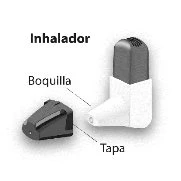
HOW TO USE CORRECTLY
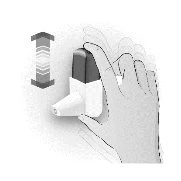
Step 1: SHAKE
| SHAKE x 3 – 5
| Important points to remember
|
Step 2: ACTUATE
| ACTUATE x 1
| Important points to remember
|
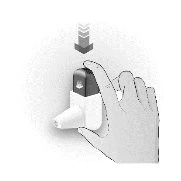
Step 3: INHALATION
| INHALATION
| Important points to remember
|
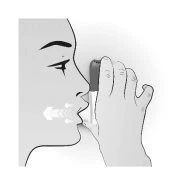
If you need to take a second inhalation, repeat steps 1 to 3: Shake-Actuate-Inhale.
After using the inhaler:
- Replace the cap on the mouthpiece. This will prevent the inhaler from being accidentally activated.
- After inhaling, rinse your mouth with water and then spit it out. This reduces the risk of fungal infection and hoarseness.
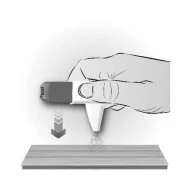
How to empty the powder from the mouthpiece If you have accidentally actuated the inhaler, if you have actuated it more than once, or if you have exhaled into the inhaler, empty the mouthpiece.
|
|
Cleaning your Easyhaler inhaler
Keep the inhaler dry and clean. If necessary, clean the outer part of the mouthpiece with a dry cloth. Do not use water: the powder inside the Easyhaler inhaler is sensitive to moisture.
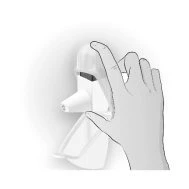
Using the Easyhaler with a protective cover You may use a protective cover with your Easyhaler. This may enhance the product's durability. The first time you place the inhaler into the protective cover, make sure the cap covers the mouthpiece of the inhaler, as this will prevent the inhaler from being accidentally activated. You can use the inhaler without removing it from the protective cover. Follow the instructions given above: 1. Shake - 2. Activate - 3. Inhale. Remember to:
|
|
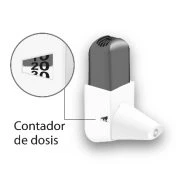
When to start using a new inhaler The inhaler has a dose counter that shows the number of doses (inhalations) remaining in your inhaler. The dose counter moves every 5 actuations. When the dose counter starts turning red, 20 doses remain. If you do not yet have a new Easyhaler, contact your doctor for a new prescription. When the indicator reaches 0 (zero), you must replace the inhaler. If you use a protective cover, you may keep it and insert the new inhaler. |
|
Remember
|
If you have any further questions about the use of this medicine, ask your doctor or pharmacist.
Similar Medications
-
Budesonide Easyhaler 100 micrograms inhalation powder
Form: powder for inhalation
Active substance Dosage BUDESONIDE 25,7 mg Manufacturer: Orion Corporation
-
Budesonide Easyhaler 400 micrograms powder for inhalation
Form: powder for inhalation
Active substance Dosage BUDESONIDE 25,7 mg Manufacturer: Orion Corporation
-
Novopulm Novolizer 200 micrograms powder for inhalation
Form: powder for inhalation
Active substance Dosage BUDESONIDE 200 µg Manufacturer: Viatris Healthcare Limited
-
Novopulm Novolizer 400 micrograms powder for inhalation
Form: powder for inhalation
Active substance Dosage BUDESONIDE 400 µg Manufacturer: Viatris Healthcare Limited
-
Pulmicort Turbuhaler 100 micrograms/inhalation powder for inhalation
Form: powder for inhalation
Active substance Dosage BUDESONIDE 100 µg Manufacturer: Astrazeneca Farmaceutica Spain S.A.
-
Pulmicort Turbuhaler 200 micrograms/inhalation powder for inhalation
Form: powder for inhalation
Active substance Dosage BUDESONIDE 200 µg Manufacturer: Astrazeneca Farmaceutica Spain S.A.
-
Pulmicort Turbuhaler 400 micrograms/inhalation powder for inhalation
Form: powder for inhalation
Active substance Dosage BUDESONIDE 400 µg Manufacturer: Astrazeneca Farmaceutica Spain S.A.
This page has been machine-translated and may contain inaccuracies. The original data is available in the manufacturing country's language.
Last data check: May 18, 2026 · Data source: CIMA — AEMPS