Budesonide Aldo-Union 50 microgram/puff inhalation suspension in pressurized container
Spain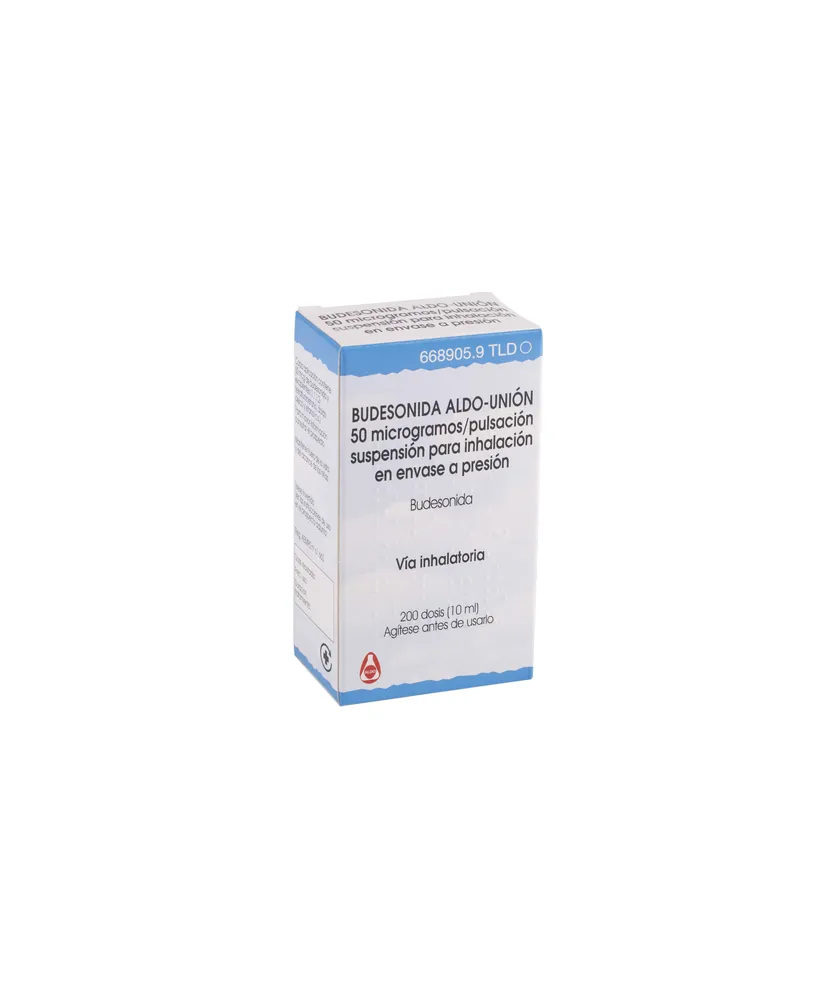
Table of Contents
- Package leaflet: Information for the user
- Introduction
- 1. What Budesonida Aldo-Unión 50 micrograms is and what it is used for
- 2. What you need to know before starting to use Budesonida Aldo-Unión 50 micrograms
- ***Warnings and precautions***
- 3. How to use Budesonida Aldo-Unión 50 micrograms
- ***Use in children and adolescents***
- 4. Possible adverse effects
- 5. Storage of Budesonide Aldo-Unión 50 micrograms
- 6. Contents of the pack and other information
Package leaflet: Information for the user
Introduction
Package leaflet: information for the user
Budesonida Aldo-Unión 50 micrograms/dose
inhalation suspension in pressurised container
Read the entire leaflet carefully before you start using this medicine, because it contains important information for you.
- Keep this leaflet, as you may need to read it again.
- If you have any questions, consult your doctor, pharmacist or nurse.
- This medicine has been prescribed for you only, and you should not give it to other people, even if they have the same symptoms as you, because it may harm them.
- If you experience any adverse effects, consult your doctor, pharmacist or nurse, even if these adverse effects are not listed in this leaflet. See section 4.
Contents of the leaflet
- What Budesonida Aldo-Unión 50 micrograms is and what it is used for
- What you need to know before using Budesonida Aldo-Unión 50 micrograms
- How to use Budesonida Aldo-Unión 50 micrograms
- Possible side effects
- How to store Budesonida Aldo-Unión 50 micrograms
- Contents of the pack and other information
1. What Budesonida Aldo-Unión 50 micrograms is and what it is used for
Budesonide is a non-halogenated corticosteroid effective in the treatment of asthma due to its anti-inflammatory properties.
It is indicated for:
- Treatment of bronchial asthma in patients who have not previously responded to therapy with bronchodilators and/or antiallergic agents.
2. What you need to know before starting to use Budesonida Aldo-Unión 50 micrograms
Do not use Budesonida Aldo-Unión 50 micrograms:
- If you are allergic to the active substance or to any of the other ingredients of this medicine (listed in section 6).
Warnings and precautions
Consult your doctor or pharmacist before starting to use Budesonida Aldo-Unión 50 micrograms.
Take special care with this medicine:
- if you have fungal or viral respiratory infections or pulmonary tuberculosis.
- if you have previously been treated with oral corticosteroids: switching from oral corticosteroid therapy to inhaled budesonide must be done with particular caution, mainly due to the slow recovery of the hypothalamic-pituitary-adrenal (HPA) axis function, previously impaired by oral corticosteroid treatment. This recovery may take several months. During this transition period, you may experience a recurrence of your original symptoms (rhinitis, eczema) or feel tired, have headaches, muscle or joint pain, and occasionally nausea and vomiting. In such cases, additional symptomatic treatment should be provided.
This medicine is intended solely as maintenance therapy and must not be used to treat acute asthma attacks (sudden episodes of breathlessness and wheezing).
Do not stop treatment with budesonide abruptly.
Be aware of the possibility of paradoxical bronchospasm, with increased wheezing ("whistling sounds") after administration. If wheezing occurs suddenly after using this medicine, stop using it immediately and consult your doctor, as you may need to change your treatment.
Contact your doctor if you experience blurred vision or other visual disturbances.
Important information about some of the components of Budesonida Aldo-Unión 50 micrograms:
Athletes should be informed that this medicine contains a component that may result in a positive analytical finding in doping controls.
Other medicines and Budesonida Aldo-Unión 50 micrograms
Inform your doctor or pharmacist if you are taking, have recently taken, or might need to take any other medicines.
Some medicines may increase the effects of budesonide, so your doctor will closely monitor you if you are taking these medicines (including certain HIV medications: ritonavir, cobicistat).
Pregnancy, breastfeeding and fertility
If you are pregnant or breastfeeding, think you may be pregnant, or plan to become pregnant, consult your doctor or pharmacist before using this medicine.
This medicine should only be administered during pregnancy or breastfeeding when, in the physician's judgment, the expected benefit to the mother outweighs any possible risk to the fetus.
Driving and using machines
No effects on the ability to drive or operate machinery have been reported.
Budesonida Aldo-Unión 50 micrograms contains ethanol:
This medicine contains 0.5 mg of alcohol (ethanol) per inhalation. The amount per inhalation of this medicine is equivalent to less than 1 ml of beer or 1 ml of wine. The small amount of alcohol contained in this medicine does not produce any noticeable effect.
3. How to use Budesonida Aldo-Unión 50 micrograms
Remember to use your medicine.
Always follow exactly the instructions for administration given by your doctor or pharmacist. If in doubt, consult your doctor or pharmacist again.
This medicine is administered by inhalation.
Dosage should be individualized.
Unless your doctor has given you different instructions, follow the dosage regimen below:
Use in adults
Adults: 200–1600 micrograms daily, divided into 2–4 administrations.
Use in children and adolescents
Children aged 2–7 years: 200–400 micrograms daily, divided into 2–4 doses.
Children from 7 years of age onwards: 200–800 micrograms daily, divided into 2–4 doses.
Once the desired clinical effect has been achieved, your doctor may gradually reduce your dose to the lowest amount needed to control symptoms.
If you feel that the effect of this medicine is too strong or too weak, inform your doctor. Do not change your dose without first talking to your doctor.
Rinse your mouth with water after using the inhaler, but do not swallow. This will make it less likely that you experience adverse effects in the mouth or throat.
Instructions for correct administration of the medicine:
Before using the medicine, check the expiry date.
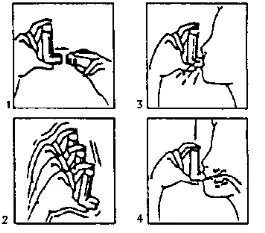 Remove the cap (fig. 1). If this is a new inhaler or has not been used for several days, shake the inhaler (fig. 2) and release one puff to ensure proper functioning. If the inhaler is used regularly, proceed to the following instructions:
- Shake the inhaler (fig. 2).
- Empty your lungs of as much air as possible.
- Place the inhaler in your mouth in the position shown in the drawing (fig. 3).
- Take as deep a breath as possible.
While inhaling, press down on the inhaler as indicated by the arrows in the drawing (fig. 4).
-
Remove the inhaler from your mouth and try to hold your breath for a few seconds.
-
Clean the mouthpiece of the inhaler regularly. To do this, remove the mouthpiece and wipe it with a cloth or paper towel.
-
Store with the cap on to protect it from dust and dirt.
Your doctor should check that you are able to use the inhaler correctly and that you coordinate inhalation with actuation. A spacer device may optionally be used to improve dose delivery and facilitate the medicine reaching the lungs.
The inhaler has a dose indicator visible through a small opening or window on the actuator, showing how many doses remain. On a new inhaler, the number “200” can be seen through the window, corresponding to the number of doses remaining in the inhaler. As the inhaler is used, the dose indicator rotates downward every 5–7 actuations until it reaches 0.
When approximately 40 doses remain, the indicator changes from green to red (see figure 5), as a reminder to consult your doctor about whether treatment should continue or if a new prescription is needed. Discard the inhaler once the indicator reaches “0”.
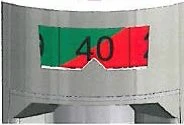
(figure 5)
If you use more Budesonida Aldo-Unión 50 micrograms than you should
It is important to take your dose exactly as prescribed by your doctor. Do not increase or decrease your dose without medical supervision.
Although no toxic symptoms are expected following overdose or accidental ingestion, if you have inhaled more Budesonida Aldo-Unión 50 micrograms than recommended, contact your doctor or pharmacist immediately.
In case of overdose or accidental ingestion, contact the Toxicology Information Service. Telephone 91 562 04 20.
If, under any unusual circumstances, symptoms such as edema, facial swelling, or moon face appear, inform your doctor immediately so that appropriate measures can be taken.
If you forget to use Budesonida Aldo-Unión 50 micrograms
Do not use a double dose to make up for a missed dose.
4. Possible adverse effects
Like all medicines, this medicine can cause adverse effects, although not everyone experiences them.
Occasionally, cases of mild throat irritation, cough, and hoarseness have been reported. In addition, cases of Candida superinfection in the oral, pharyngeal, and laryngeal cavities have been observed. In most cases, this responds to topical antifungal therapy, without the need to discontinue budesonide treatment. In rare cases, skin allergic reactions (urticaria, dermatitis) associated with the use of topical corticosteroids have been reported.
The possibility of paradoxical bronchospasm with increased wheezing after administration should be considered. If wheezing occurs suddenly after using this medicine, stop using it and consult your doctor immediately, as you may need to change your treatment.
Frequency not known (cannot be estimated from the available data):
Sleep disturbances, depression or feelings of anxiety, restlessness, nervousness, excitability, or irritability (these effects are more likely to occur in children), and blurred vision (see also section 2: Warnings and Precautions).
If you experience any adverse effects, consult your doctor, pharmacist, or nurse, even if they are adverse effects not listed in this leaflet.
Reporting of adverse effects
If you experience any type of adverse effect, consult your doctor or pharmacist, even if they are possible adverse effects not listed in this leaflet. You can also report them directly through the Spanish Pharmacovigilance System for Human Medicines: www.notificaRAM.es. By reporting adverse effects, you can help provide more information on the safety of this medicine.
5. Storage of Budesonide Aldo-Unión 50 micrograms
Keep this medicine out of the sight and reach of children.
Store below 30°C, protect from direct sunlight, and do not freeze or refrigerate.
The container holds a pressurized liquid. Do not expose to temperatures above 50°C. Do not pierce the container even when it appears to be empty.
Do not use this medicine after the expiry date stated on the carton after EXP:. The expiry date refers to the last day of the month indicated.
Medicines must not be disposed of via wastewater or household waste. Dispose of unused medicines and their containers at the SIGRE collection point at your pharmacy. If in doubt, ask your pharmacist how to dispose of medicines and containers you no longer need. This will help protect the environment.
6. Contents of the pack and other information
Composition of Budesonida Aldo-Unión 50 micrograms.
- The active substance is budesonide.
- The other components (excipients) are oleic acid, ethanol, and norflurane (HFA-134a).
This medicine contains fluorinated greenhouse gases.
Each inhaler contains 14.52 g of norflurane (HFA-134a), equivalent to 0.0208 tonnes of CO2 (global warming potential GWP = 1,430).
Nature and contents of the container
Budesonida Aldo-Unión 50 micrograms is presented as an inhalation suspension in a pressurised container with a dose indicator, in a 10 ml pack size allowing 200 actuations.
Marketing Authorisation Holder and Manufacturer
Laboratorio Aldo-Unión, S.L.
Baronesa de Maldá, 73
08950 Esplugues de Llobregat (Barcelona)
Spain
Date of the most recent review of this leaflet: September 2025
Detailed and up-to-date information on this medicine is available on the website of the Spanish Agency for Medicines and Health Products (AEMPS): http://www.aemps.gob.es