Budena 0.25 mg/ml suspension for inhalation by nebulizer
Spain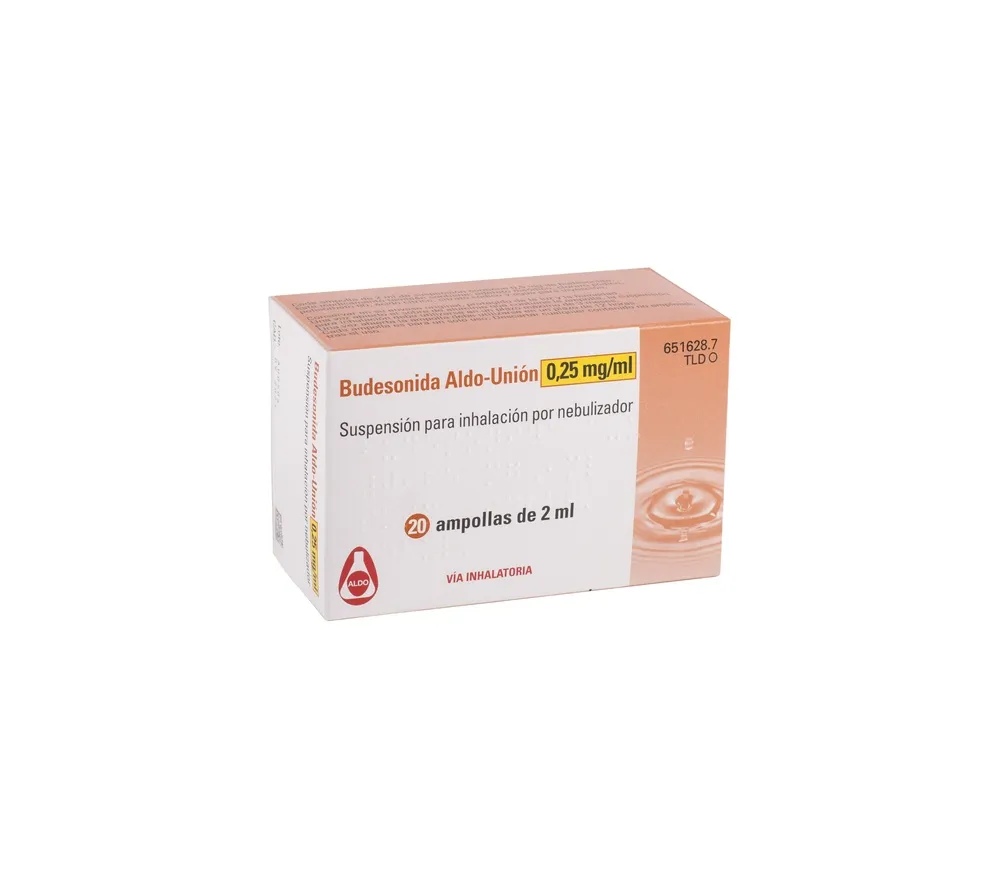
Table of Contents
- Package leaflet: Information for the user
- Introduction
- 1. What Budena is and what it is used for
- 2. What you need to know before starting to use Budena
- 3. How to use Budena
- ***If you use more Budena than you should***
- ***If you forget to use Budena***
- 4. Possible adverse effects
- 5. Storage of Budena
- 6. Contents of the pack and other information
Package leaflet: Information for the user
Introduction
Package leaflet: information for the user
Budena 0.25 mg/ml suspension for inhalation by nebuliser
Budesonide
Read the entire leaflet carefully before you start using this medicine, because it contains important information for you.
- Keep this leaflet, as you may need to read it again.
- If you have any questions, ask your doctor or pharmacist.
- This medicine has been prescribed for you only, and you should not give it to other people, even if they have the same symptoms as you, because it may harm them.
- If you experience any adverse effects, consult your doctor or pharmacist, even if they are adverse effects not listed in this leaflet. See section 4.
Leaflet contents
- What Budena is and what it is used for
- What you need to know before using Budena
- How to use Budena
- Possible side effects
- How to store Budena
- Contents of the pack and other information
1. What Budena is and what it is used for
Budena 0.25 mg/ml is a sterile suspension for inhalation via a nebulizer (inhalation device). When you breathe through the mouthpiece or mask, the medication reaches the lungs through the inhaled air.
Budena contains budesonide. Budesonide belongs to a group of medicines called glucocorticoids, which are used to reduce inflammation.
Asthma is caused by inflammation of the airways. Budesonide reduces and prevents this inflammation.
Budena is used for maintenance treatment of asthma and for the treatment of severe subglottic laryngitis requiring hospitalization. It should be used regularly as directed by your doctor.
2. What you need to know before starting to use Budena
Do not use Budena:
If you are allergic to budesonide or to any of the other ingredients of this medicine (listed in section 6).
Warnings and precautions
Talk to your doctor or pharmacist before starting to take budesonide if any of the following apply to you:
- If you have or have had pulmonary tuberculosis or any other recent infection.
- If you have ever had liver problems.
- If your doctor has prescribed budesonide and you are currently being treated with cortisone-type tablets, your doctor may gradually reduce (over a period of weeks or months) and possibly discontinue the previous treatment. In such cases, some symptoms such as runny nose, hives, or muscle and joint pain may temporarily reappear. If any of these symptoms concern you, or if you experience others such as headache, fatigue, nausea, or vomiting, contact your doctor.
- Budesonide has been prescribed for the maintenance treatment of asthma. However, it will not relieve an acute asthma attack once it has started.
- Contact your doctor if you experience blurred vision or other visual disturbances.
Children
- If used in children, your doctor will periodically monitor their growth, as this medicine may cause growth delay.
Talk to your doctor if you have any other health problems. Do not use this medicine for other conditions unless instructed by your doctor. Never give it to another person.
Not all nebulizers are suitable for use with budesonide. ULTRASONIC NEBULIZERS must NOT be used with Budena 0.25 mg/ml suspension for inhalation by nebulizer.
Use of Budena with other medicines:
Tell your doctor or pharmacist if you are taking, have recently taken, or might need to take any other medicines. This includes medicines obtained without a prescription and herbal remedies. Some medicines may increase the effects of budesonide, so your doctor will closely monitor you if you are taking these medicines. In particular, inform your doctor or pharmacist if you are taking any of the following medicines:
- Medicines to treat fungal infections (such as itraconazole and ketoconazole).
- Medicines for HIV (such as ritonavir or cobicistat).
- Cimetidine (a medicine for stomach acidity).
- Estrogens and steroid contraceptives.
Use in athletes
Athletes are advised that this medicine contains a component that may result in a positive doping test.
Pregnancy and breastfeeding
If you are pregnant or breastfeeding, think you may be pregnant, or plan to become pregnant, consult your doctor or pharmacist before using this medicine.
There is no evidence that budesonide may harm the mother or child when used during pregnancy or breastfeeding. However, you should contact your doctor as soon as possible if you become pregnant while being treated with budesonide.
Budesonide passes into breast milk, but in minimal amounts that have no effect on the breastfed infant.
Use in children
Budesonide must always be administered under adult supervision to ensure correct delivery of the medicine.
Driving and using machines
The influence of inhaled budesonide on the ability to drive and use machines is none or negligible.
3. How to use Budena
Follow exactly the instructions for administering this medicine as given by your doctor. If in doubt, consult your doctor or pharmacist again.
Method of use and route of administration
Budesonide is only to be used for inhalation via a nebulizer. Do not use ultrasonic nebulizers, as they are not suitable for administering this medicine. Before starting treatment, you must understand how to operate your nebulizer. It is important that you read the information included in the section “How to use Budena” and carefully follow the instructions.
Dosage, frequency of administration, and duration of treatment
The dose of budesonide should be individualized. Your doctor will adjust the dose and prescribe the lowest amount that controls your asthma or subglottic laryngitis symptoms. Carefully follow your doctor’s instructions.
Your doctor will advise you on the duration of treatment with budesonide. Do not stop treatment prematurely, as this could seriously worsen your condition. Do not take more doses than your doctor has prescribed.
If you feel that the effect of budesonide is too strong or too weak, inform your doctor or pharmacist.
Asthma
Recommended initial dose:
Children from 6 months of age: 0.25 – 1 mg per day. In very severe cases, or in children previously treated with cortisone-type tablets, a higher initial dose may be given (up to 2 mg daily, equivalent to 4 ampoules). Your doctor may later consider it necessary to adjust the dose. Daily doses of up to 1 mg (2 ampoules) may be administered as a single dose.
Adults and elderly: 1 – 2 mg per day (2 – 4 ampoules per day). In very severe cases, the dose may be increased up to 4 mg (8 ampoules). Your doctor may later consider it necessary to adjust the dose. Daily doses of up to 1 mg (2 ampoules) may be administered as a single dose.
Maintenance dose: Once your symptoms have improved, your doctor may decide to reduce your dose to the lowest level that keeps you symptom-free.
Budesonide may provide symptom relief within a few days of starting treatment, although it may take 2 to 4 weeks to achieve full effect. Therefore, it is important that you continue using budesonide even when you start feeling well.
Always remember that budesonide has been prescribed for the maintenance treatment of asthma. However, IT WILL NOT relieve an acute asthma attack once it has started.
Subglottic laryngitis
Infants and children: 2 mg per day (equivalent to 4 ampoules). This may be given as a single dose or as two 1 mg doses administered 30 minutes apart. Administration may be repeated every 12 hours for up to 36 hours or until your doctor considers your symptoms have improved.
How to use Budena 0.25 mg/ml suspension for inhalation by nebulizer
|
|
| |
| |
|
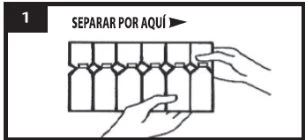
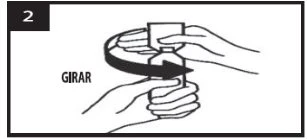
- Gently shake the reservoir once again and begin nebulization. During nebulization, breathe in the mist from the nebulized suspension slowly and deeply.
- When no more mist comes out of the mouthpiece or mask, the treatment is complete.
- After finishing, rinse your mouth with water (do not swallow the water) and brush your teeth. If you used a mask, wash your face thoroughly. It is important to do this to reduce the risk of certain side effects associated with this medicine.
- After each use, clean the nebulizer thoroughly. Wash the nebulizer reservoir, mouthpiece, or mask with warm water using a mild detergent, following the manufacturer's instructions. The nebulizer should be thoroughly rinsed and dried by connecting the reservoir to the compressor or air outlet.
Always follow the instructions provided by the nebulizer manufacturer. If you are unsure how to use the nebulizer, consult your doctor or pharmacist.
If you use more Budena than you should
If you use a single dose of budesonide that is higher than recommended, harmful effects are unlikely to occur. However, if you use excessive amounts of budesonide over a long period (months), adverse effects may appear. In such a case, contact your doctor or pharmacist immediately.
If you have used more budesonide than you should, consult your doctor, pharmacist, or call the Toxicology Information Service at telephone number 91 562 04 20, stating the name of the medicine and the amount taken. It is advisable to bring the medicine’s packaging and leaflet to the healthcare professional.
It is important that you use the dose indicated on the outer packaging (space reserved for the pharmacist) or the dose prescribed by your doctor. Do not increase or decrease your dose without consulting your doctor.
If you forget to use Budena
If you forget to take a dose of budesonide, do not use a double dose to make up for the missed dose. Continue with your regular treatment as prescribed by your doctor.
If you have any questions about the use of this medicine, ask your doctor or pharmacist.
4. Possible adverse effects
Like all medicines, this medicine may cause adverse effects, although not everyone will experience them. Adverse effects are usually not common during use of budesonide. However, inform your doctor if you experience any adverse effects that are bothersome or do not go away:
Common adverse effects: May affect up to 1 in 10 people
- Mild throat irritation.
- Cough.
- Hoarseness.
- Fungal infection of the mouth and throat.
Uncommon adverse effects: May affect up to 1 in 100 people
- Cataracts (loss of transparency of the eye's lens).
- Anxiety.
- Depression.
- Tremors.
- Muscle cramps.
- Blurred vision.
Rare adverse effects: May affect up to 1 in 1000 people
- Allergic-type reactions, including skin rash, contact dermatitis, urticaria, and angioedema (swelling of the face, lips and/or tongue with difficulty swallowing and breathing).
- Bruising of the skin.
- Behavioral changes (especially in children).
- Restlessness.
- Nervousness.
- As with other inhaled treatments, bronchospasm (i.e., contraction of the airways causing "wheezing") may rarely occur.
- Effects on the adrenal glands (small glands located near the kidneys).
- Growth retardation.
Adverse effects of unknown frequency that may occur
- Sleep disorders, hyperactivity, or aggressiveness.
- Glaucoma (increased intraocular pressure).
Inhaled corticosteroids may affect the body's normal production of steroid hormones, especially when high doses are used for prolonged periods. These effects include:
- changes in bone mineral density (reduced bone strength).
These effects are much less likely with inhaled corticosteroids than with oral corticosteroid tablets.
If you were previously treated with oral corticosteroids such as cortisone, switching to inhaled corticosteroid therapy may cause some symptoms such as fatigue, abdominal pain, weakness, or vomiting. If these symptoms occur, consult your doctor immediately.
Rarely, prolonged treatment with high doses may reduce growth velocity in children, particularly in patients previously treated with oral corticosteroids or who are especially sensitive.
Facial skin irritation has been observed in some cases when using a nebulizer with a facial mask. To prevent facial irritation, wash your face with water after using the mask.
If you think any of the adverse effects you experience are severe, or if you notice any adverse effects not listed in this leaflet, inform your doctor or pharmacist.
Reporting of adverse effects
If you experience any adverse effect, consult your doctor or pharmacist, even if it is a possible adverse effect not listed in this leaflet. You may also report them directly via the Spanish Pharmacovigilance System for Human Medicines: www.notificaRAM.es. By reporting adverse effects, you can help provide more information on the safety of this medicine.
5. Storage of Budena
Keep this medicine out of the sight and reach of children.
Do not use this medicine after the expiry date stated on the box or sachet after EXP. The expiry date refers to the last day of the month indicated.
Store the ampoules in their original packaging and inside the sachet, protected from light.
Once an ampoule has been opened, it must be used within a maximum of 24 hours. After this time, any unused portion must be discarded.
Once a sachet has been opened, the ampoules must be used within 3 months (it is advisable to write the opening date on the sachet to help you remember it).
Medicines must not be disposed of via wastewater or household waste. Dispose of containers and unused medicines at the Punto Sigre in your usual pharmacy or any other medicine waste collection system. If in doubt, ask your pharmacist how to dispose of containers and medicines you no longer need. This will help protect the environment.
6. Contents of the pack and other information
Composition of Budena
The active substance in Budena 0.25 mg/ml suspension for inhalation by nebulizer is budesonide. Each sterile 2 ml ampoule contains 0.50 mg of budesonide. The other components (excipients) are: disodium edetate, sodium chloride, polysorbate 80, anhydrous citric acid, sodium citrate, and water for injections.
Nature of the product and contents of the pack
Budena is supplied as 2 ml ampoules made of low-density polyethylene, containing a white or almost white suspension for nebulization (conversion into a fine mist for inhalation).
The ampoules are packed in strips of 5 ampoules in an aluminum sachet, which is then packaged into cardboard packs. Packs containing 20 ampoules are available.
Marketing Authorization Holder:
Laboratorio Aldo-Unión, S.L.
Baronesa de Maldá, 73
08950 Esplugues de Llobregat, Barcelona
Spain
Manufacturer:
Genetic S.p.A.
Nucleo Industriale, Contrada Canfora, 84084 Fisciano (SA)
Italy
Date of the most recent revision of this summary: June 2020
Detailed and up-to-date information on this medicine is available on the website of the Spanish Agency of Medicines and Medical Devices (AEMPS) http://www.aemps.gob.es/