Bronchitol 40 mg inhalation powder, hard capsules
Spain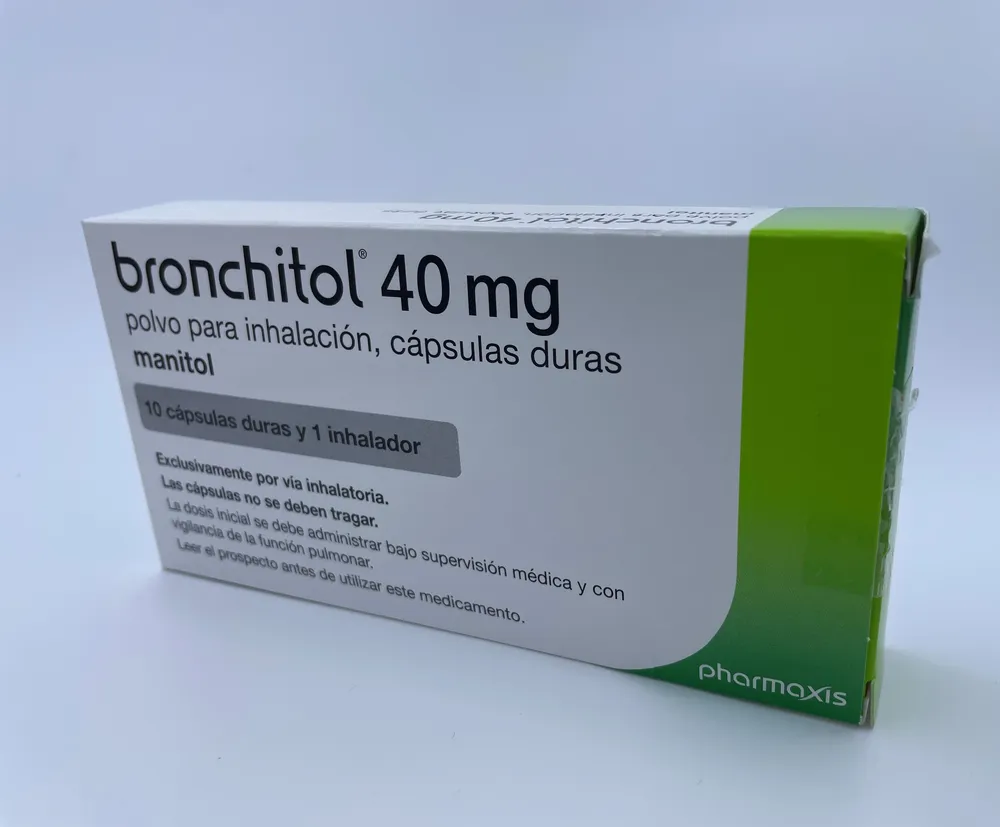
Table of Contents
Package leaflet: Information for the user
Introduction
PACKAGE LEAFLET: INFORMATION FOR THE USER
Bronchitol 40 mg inhalation powder, hard capsules
Mannitol
Read the entire leaflet carefully before you start using this medicine, as it contains important information for you.
- Keep this leaflet, as you may need to read it again.
- If you have any questions, consult your doctor or pharmacist.
- This medicine has been prescribed for you only, and you must not give it to other people, even if they have the same symptoms as you, because it could harm them.
- If you experience any adverse reactions, consult your doctor or pharmacist, even if they are adverse reactions not listed in this leaflet. See section 4.
Contents of this leaflet
- What Bronchitol is and what it is used for
- What you need to know before using Bronchitol
- How to use Bronchitol
- Possible side effects
- How to store Bronchitol
- Contents of the pack and other information
1. What Bronchitol is and what it is used for
What Bronchitol is
Bronchitol contains a medicine called mannitol, which is a mucolytic agent.
What Bronchitol is used for
Bronchitol is used in adults aged 18 years and older. In addition to using Bronchitol, the patient will continue taking their usual medication for cystic fibrosis as normal.
How Bronchitol works
Bronchitol is inhaled into the lungs to improve cystic fibrosis, an inherited disease affecting the glands in the lungs, intestines, and pancreas that secrete fluids such as mucus and digestive juices.
Bronchitol helps increase the amount of water present on the surface of the airways and in the mucus. This enables the lungs to clear mucus more easily. It also helps improve the condition of your lungs and your breathing. As a result, a "productive cough" may occur, which also helps remove mucus from the lungs.
2. What you need to know before starting to use Bronchitol
Do not use Bronchitol
- if you are allergic (hypersensitive) to mannitol.
- if you are sensitive to mannitol. Before you start using Bronchitol, your doctor will check whether your airways are too sensitive to mannitol. If you are too sensitive to mannitol, your airways may narrow and you may have difficulty breathing.
If any of the above situations apply to you (or if you are unsure), consult your doctor or pharmacist before using this medicine.
Warnings and precautions
Talk to your doctor or pharmacist before using this medicine
- if you have asthma;
- if you have ever coughed up blood or produced sputum with blood;
- if you have severe cystic fibrosis, especially if your lung function measured by forced expiratory volume in one second (FEV1) is usually below 30%,
Inhalation of drugs may cause chest tightness and wheezing, in some cases immediately after taking the medicine. Your doctor will assist you with your first dose of Bronchitol and will monitor your lung function before, during, and after administration. Your doctor may ask you to use other medications such as a bronchodilator before taking Bronchitol.
Inhalation of medication may also cause coughing, which may occur with Bronchitol. Consult your doctor if the cough does not go away or if you are concerned about it.
Children and adolescents
Bronchitol should not be used in children and adolescents under 18 years of age. This recommendation is due to limited available information in this patient group.
Taking Bronchitol with other medicines
Inform your doctor or pharmacist if you are taking, have recently taken, or might need to take any other medicines.
You may continue taking your cystic fibrosis medications while using Bronchitol, including inhaled antibiotics such as tobramycin and colistimethate sodium. If you have any doubts, consult your doctor or pharmacist before taking Bronchitol.
Pregnancy and breastfeeding
- If you are pregnant, think you may be pregnant, or plan to become pregnant, consult your doctor before using this medicine. You should not take this medicine if you are pregnant.
- If you are breastfeeding or plan to breastfeed, consult your doctor before using this medicine. It is unknown whether this medicine is excreted in breast milk.
Driving and using machines
Bronchitol is unlikely to affect your ability to drive or use tools or machines.
3. How to use Bronchitol
Follow exactly the instructions for administration of this medicine as given by your doctor. If in doubt, consult your doctor or pharmacist.
Always take your bronchodilator before using Bronchitol.
Recommended dose
Adults aged 18 years and over
Initial dose
Before prescribing Bronchitol, your doctor will assist you in taking your first dose of Bronchitol and will perform a lung function test at each step to check that you are not sensitive to mannitol. The initial dose is taken in four steps:
Step 1 – 1 capsule (40 mg)
Step 2 – 2 capsules (80 mg)
Step 3 – 3 capsules (120 mg)
Step 4 – 4 capsules (160 mg)
At the end of the initial dosing, you will have taken 10 capsules (400 mg), which corresponds to the normal dose.
Treatment dose (2-week packs)
-
- You must use Bronchitol every day.
- The normal dose is 10 capsules (400 mg) inhaled in the morning and 10 capsules inhaled in the evening.
- The evening dose should be administered at least 2 to 3 hours before going to bed.
- For best results, inhale the capsules consecutively, leaving as little time as possible between them.
Order for using this medicine
Use Bronchitol as part of your regular daily treatment routine. The suggested order is as follows, unless otherwise directed by your doctor:
- Use your bronchodilator
- Wait between 5 and 15 minutes
- Use Bronchitol before physiotherapy if this is part of your treatment routine.
- Dornase alfa (Pulmozyme) if this is part of your treatment routine
- Inhaled antibiotics if these are part of your treatment routine
How to use Bronchitol
- Bronchitol is inhaled as a powder from a capsule using the inhaler provided in the pack. It must only be inhaled and must not be administered by any other route.
- The capsules must not be swallowed.
- Only the powder contained in the capsules should be inhaled, using the inhaler supplied in the pack.
- Use a new inhaler each week.
- Load the ten capsules into the inhaler one at a time.
- Inhale the contents of each capsule using the inhaler, taking one or two breaths as needed.
For instructions on how to use the inhaler, see the end of the leaflet.
If you use more Bronchitol than you should
If you think you have taken an excessive amount of medicine, inform your doctor or pharmacist immediately. You may:
- feel that you cannot breathe;
- experience wheezing;
- cough excessively.
Your doctor will provide oxygen and medications to help you breathe.
If you forget to use Bronchitol
- If you miss a dose, use the inhaler as soon as you remember and continue as usual. However, if it is almost time for your next dose, skip the missed dose.
- Do not take a double dose to make up for forgotten doses.
If you stop using Bronchitol
If you stop treatment with Bronchitol, your symptoms may worsen. Do not stop using Bronchitol without first talking to your doctor, even if you feel better. Your doctor will advise you on how long you should use this medicine.
If you have any further questions about the use of this medicine, ask your doctor or pharmacist.
4. Possible adverse effects
Like all medicines, Bronchitol can cause adverse effects, although not everyone experiences them.
Stop using Bronchitol and consult a doctor immediately if you notice the following serious adverse effects:
-
- Difficulty breathing, which may be due to narrowing of the airways, worsening of asthma symptoms, or wheezing. These effects are common and may affect 1 in 10 people.
- Coughing up blood or presence of blood in sputum. This effect is common.
Inform your doctor immediately if you notice any of the following adverse effects:
- Severe cough. This effect is common.
- Worsening of symptoms. This effect is common.
Other adverse effects include:
Common (may affect more than 1 in 10 people)
- Cough
- Chest discomfort
- Headache
- Pain at the back of the mouth and throat, and discomfort when swallowing
- Vomiting, vomiting after coughing
Uncommon (may affect 1 in 100 people)
- Burning or painful sensation in the tongue
- Cystic fibrosis-related diabetes
- Chest and abdominal pain
- Voice changes
- Cold sweats
- Congestion
- Dehydration
- Decreased appetite
- Diarrhea
- Ear pain
- Feeling of fatigue
- Dizziness
- Nausea
- Feeling unwell
- Flu and fever
- Flatulence
- Stomach burning
- Hernia pain
- Hyperventilation
- Itching, skin rash, acne
- Joint stiffness and pain
- Morbid thoughts
- Mouth ulcers
- Respiratory infection
- Runny nose
- Sputum infection
- Throat irritation
- Difficulty sleeping
- Fungal infection in the mouth (thrush)
- Involuntary loss of urine
Reporting of adverse effects
If you experience any adverse effects, consult your doctor or pharmacist, even if they are adverse effects not listed in this leaflet. You may also report them directly through the national reporting system listed in Appendix V*. By reporting adverse effects, you can help provide more information on the safety of this medicine.
5. Storage of Bronchitol
Keep out of the sight and reach of children.
Do not use Bronchitol after the expiry date stated on the cardboard box and blister after "EXP". The expiry date refers to the last day of the month indicated.
Store below 30°C.
Store in the original packaging to protect from moisture.
Once removed from the blister, the capsule should be used immediately.
Medicines must not be disposed of via wastewater or household waste. Ask your pharmacist how to dispose of medicines and packaging that you no longer need. This will help protect the environment.
6. Contents of the pack and other information
Composition of Bronchitol
The active substance is mannitol. Each capsule contains 40 mg of mannitol. The mean inhaled dose per capsule is 32.2 milligrams of mann combustible.
Appearance of the product and contents of the pack
Bronchitol is a powder for inhalation in hard capsules. Bronchitol 40 mg powder for inhalation, hard capsules, is a white or almost white powder in transparent, colourless hard capsules with the imprint "PXS 40 mg". The powder is inhaled into the lungs using the inhaler supplied in the pack.
Each initial dose pack of Bronchitol contains 1 blister with 10 capsules and 1 inhaler. The initial dose pack is used for the initial dose assessment with your doctor.
Each 2-week treatment pack of Bronchitol contains 28 blisters with 10 capsules each (280 capsules in total) and 2 inhalers. The 2-week treatment pack is for therapeutic use.
Marketing Authorization Holder and Manufacturer Responsible
Pharmaxis Europe Limited, 108 Q House, Furze Road, Sandyford, Dublin 18, D18AY29, Ireland
Manufacturer Responsible
MIAS Pharma Limited, Suite 1, Stafford House, Strand Road, Portmarnock, Co. Dublin, D13WC83, Ireland or Arvato Supply Chain Solutions SE, Gottlieb-Daimler Straße 1, 33428 Harsewinkel, North Rhine-Westphalia, Germany.
You can request further information regarding this medicinal product by contacting the local representative of the Marketing Authorization Holder:
|
Belgium/Belgium/Belgium Pharmaxis Europe Limited Tel: +353 (0) 1431 9816 |
Lithuania Pharmaxis Europe Limited Tel: +353 (0) 1431 9816 |
|
Bulgaria Pharmaxis Europe Limited Tel: +353 (0) 1431 9816 |
Luxembourg/Luxembourg Pharmaxis Europe Limited Tel: +353 (0) 1431 9816 |
|
Czech Republic 4 Life Pharma CZ, s.r.o. Tel: +420 244 403 003 |
Hungary Pharmaxis Europe Limited Tel: +353 (0) 1431 9816 |
|
Denmark Chiesi Pharma AB Tlf: +46 8 753 35 20 |
Malta Pharmaxis Europe Limited Tel: +353 (0) 1431 9816 |
|
Germany Chiesi GmbH Tel: +49 (0) 40 897 240 |
Netherlands Pharmaxis Europe Limited Tel: +353 (0) 1431 9816 |
|
Estonia Pharmaxis Europe Limited Tel: +353 (0) 1431 9816 |
Norway Chiesi Pharma AB Tlf: +46 8 753 35 20 |
|
Greece Chiesi Hellas A.E.B.E. Tel: +30 210 617 97 63 |
Austria Pharmaxis Europe Limited Tel: +353 (0) 1431 9816 |
|
Spain Chiesi España, S.A.U. Tel: +34 93 494 8000 |
Poland IMED Poland Sp. z o.o. Tel: +48 22 663 43 10 |
|
France Pharmaxis Europe Limited Tel: +353 (0) 1431 9816 |
Portugal Pharmaxis Europe Limited Tel: +353 (0) 1431 9816 |
|
Croatia Pharmaxis Europe Limited Tel: +353 (0) 1431 9816 |
Romania Pharmaxis Europe Limited Tel: +353 (0) 1431 9816 |
|
Ireland Chiesi Limited Tel: +44 (0)161 488 5555 |
Slovenia Pharmaxis Europe Limited Tel: +353 (0) 1431 9816 |
|
Iceland Pharmaxis Europe Limited Sími: +353 (0) 1431 9816 |
Slovakia 4 Life Pharma SK, s.r.o. Tel: +420 244 403 003 |
|
Italy Chiesi Farmaceutici S.p.A Tel: +39 0521 2791 |
Finland/Sweden Chiesi Pharma AB Puh/Tel: +46 8 753 35 20 |
|
Cyprus Chiesi Hellas A.E.B.E. Tel: +30 210 617 97 63 |
Sweden Chiesi Pharma AB Tel: +46 8 753 35 20 |
|
Latvia Pharmaxis Europe Limited Tel: +353 (0) 1431 9816 |
United Kingdom Chiesi Limited Tel: +44 (0)161 488 5555 |
Date of the most recent review of this leaflet: MM/YYYY.
Other sources of information
Detailed information on this medicine is available on the European Medicines Agency website: http://www.ema.europa.eu. There are also links to other websites about rare diseases and orphan medicines.
------------------------------------------------------------------------------------------------------------------>
How to use the inhaler
The following diagram explains the parts of the inhaler. Bronchitol capsules can only be used with the inhaler supplied in the pack.
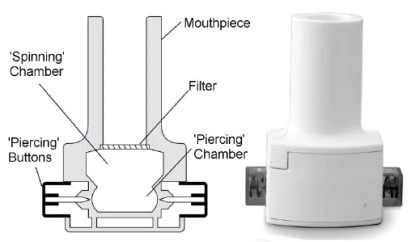
Spinning Chamber: Spinning chamber
Mouthpiece: Mouthpiece
Filter: Filter
Piercing Buttons: Piercing buttons
Piercing Chamber: Piercing chamber
Inhaler
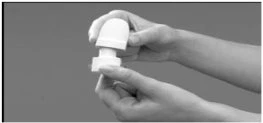
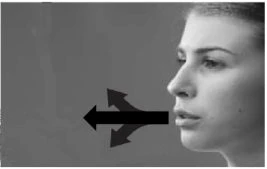
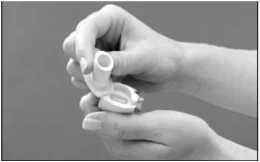
The following steps explain how to use the inhaler. For further information on how to care for it, see the end of these instructions.
|
|
|
|
|
|
|
|
| |
|
|
| |
|
|
|
|
| |
|

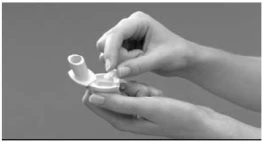
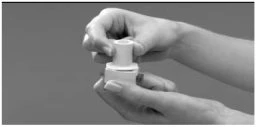

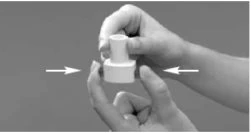 time: then, release them. Do it only once. If you pierce the capsule more than once, it may tear or break.
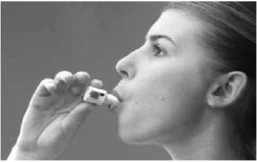 .
.
Additional information on inhaler care
- Keep the inhaler dry and make sure your hands are dry before using it.
- Never breathe or cough into the inhaler.
- Never disassemble the inhaler.
- Never place a capsule directly into the mouthpiece of the inhaler.
- Never leave a capsule inside the inhaler chamber.
- Use a new inhaler every week.
- If your inhaler breaks, use the second inhaler and speak with your doctor.
Cleaning the inhaler – Normally, the inhaler will deliver the correct dose of medication for 7 days without requiring cleaning. If cleaning is needed, follow the steps below:
- Make sure the inhaler is empty.
- Wash it with warm water, keeping the mouthpiece open.
- Drain by shaking until no large drops remain.
- Allow the inhaler to air-dry: lay it on its side with the mouthpiece open.
- Let it dry completely, which may take up to 24 hours. While it is drying, use the other inhaler.