Brintellix 15 mg film-coated tablets
Spain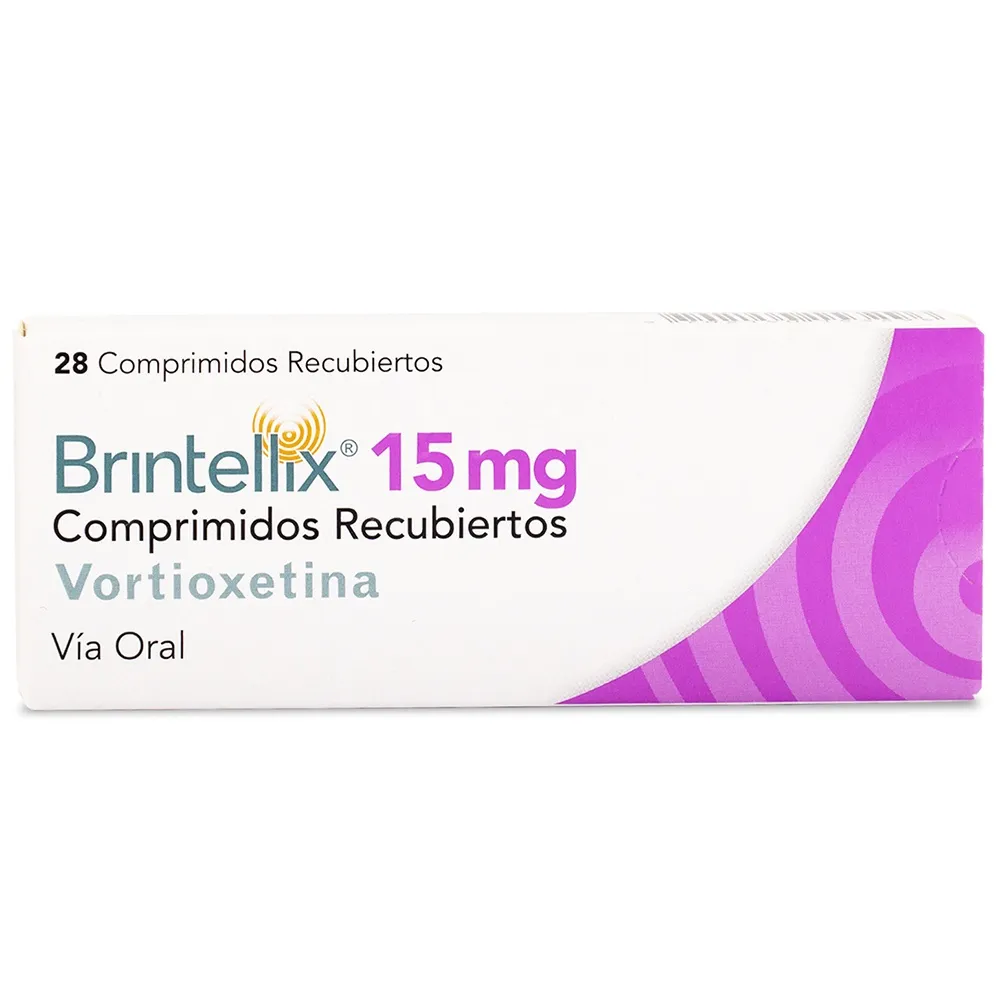
Table of Contents
Package leaflet: Information for the user
Introduction
Package leaflet: Information for the patient
Brintellix 15 mg film-coated tablets
vortioxetine
Read the entire leaflet carefully before you start taking this medicine, because it contains important information for you.
- Keep this leaflet, as you may need to read it again.
- If you have any questions, ask your doctor or pharmacist.
- This medicine has been prescribed for you only, and you should not give it to others, even if they have the same symptoms as you, because it may harm them.
- If you experience any adverse effects, consult your doctor or pharmacist, even if they are adverse effects not listed in this leaflet. See section 4.
Leaflet contents
- What Brintellix is and what it is used for
- What you need to know before taking Brintellix
- How to take Brintellix
- Possible side effects
- How to store Brintellix
- Contents of the pack and other information
1. What Brintellix is and what it is used for
Brintellix contains the active substance vortioxetine. It belongs to a group of medicines called antidepressants.
Brintellix is used to treat major depressive episodes in adults.
Brintellix has been shown to reduce the broad range of depressive symptoms, including sadness, inner tension (feeling of anxiety), sleep disturbances (reduced sleep), decreased appetite, difficulty concentrating, feelings of worthlessness, loss of interest in pleasurable activities, and feeling slowed down.
2. What you need to know before taking Brintellix
Do not take Brintellix:
- if you are allergic to vortioxetine or any of the other ingredients of this medicine (listed in section 6).
- if you are taking other antidepressant medicines known as monoamine oxidase inhibitors or selective MAO-A inhibitors. If you are in any doubt, consult your doctor.
Warnings and precautions
Talk to your doctor or pharmacist before taking Brintellix if:
- you are taking medicines with a so-called serotonergic effect, such as:
- tramadol and similar medicines (strong painkillers).
- sumatriptan and similar medicines, with active substance names ending in “-triptan” (used to treat migraine).
Taking these medicines together with Brintellix may increase the risk of serotonin syndrome. This syndrome may be associated with hallucinations, involuntary muscle jerks, rapid heartbeat, high blood pressure, fever, nausea, and diarrhea.
- you have had seizures.
Your doctor will treat you with caution if you have a history of seizures or suffer from unstable seizure disorders/epilepsy. Seizures are a potential risk with medicines used to treat depression. Treatment should be discontinued in any patient who experiences seizures or an increase in their frequency.
- you have previously experienced mania.
- you have a tendency to bleed or bruise easily, or if you are pregnant (see “Pregnancy, breastfeeding and fertility”).
- you have low levels of sodium in your blood.
- you are 65 years of age or older.
- you have severe kidney disease.
- you have severe liver disease, or a liver disease called cirrhosis.
- you have or have had increased intraocular pressure or glaucoma. If you experience eye pain and blurred vision during treatment, contact your doctor.
If you are being treated with antidepressants, including vortioxetine, you may also experience feelings of aggression, agitation, anger reactions, and irritability. If this occurs, you should consult your doctor.
Suicidal thoughts and worsening of your depression
If you are depressed and/or suffer from an anxiety disorder, you may occasionally have thoughts of harming yourself or taking your own life. These thoughts may increase when you first start taking antidepressants, as all these medicines require time to take effect—usually about two weeks, although in some cases it may take longer.
You are more likely to have these types of thoughts:
- if you have previously had thoughts of harming yourself or taking your own life.
- if you are a young adult.
Clinical trial data have shown an increased risk of suicidal behaviour in psychiatric patients under 25 years of age treated with an antidepressant.
If at any time you have thoughts of harming yourself or taking your own life, contact your doctor or go directly to a hospital. It may be helpful for you to inform a relative or close friend that you are depressed or have an anxiety disorder and ask them to read this leaflet. You may ask them whether they think your depression or anxiety disorder has worsened, or if they are concerned about changes in your behaviour.
Children and adolescents
Brintellix must not be used in paediatric patients (under 18 years of age) because its efficacy has not been demonstrated. The safety of Brintellix in children and adolescents aged 7 to 17 years is described in section 4.
Taking Brintellix with other medicines
Inform your doctor or pharmacist if you are taking, have recently taken, or might need to take any other medicines.
Tell your doctor if you are taking any of the following medicines:
- phenelzine, iproniazid, isocarboxazid, nialamide, tranylcypromine (medicines used to treat depression known as non-selective monoamine oxidase inhibitors); you must not take any of these medicines with Brintellix. If you have taken any of these medicines, you must wait 14 days before starting Brintellix. After stopping Brintellix, you must wait 14 days before taking any of these medicines.
- moclobemide (a medicine used to treat depression).
- selegiline, rasagiline (medicines used to treat Parkinson’s disease).
- linezolid (a medicine used to treat bacterial infections).
- medicines with serotonergic effect, for example, tramadol or similar medicines (strong painkillers) and sumatriptan and similar medicines with active substance names ending in “-triptan” (used to treat migraine). Taking these medicines with Brintellix may increase the risk of serotonin syndrome (see section Warnings and precautions).
- lithium (a medicine used to treat depression and mental disorders) or tryptophan.
- medicines known to cause low sodium levels.
- rifampicin (a medicine used to treat tuberculosis and other infections).
- carbamazepine, phenytoin (medicines used to treat epilepsy or other conditions).
- warfarin, dipyridamole, phenprocoumon, some antipsychotics, phenothiazines, tricyclic antidepressants, low-dose acetylsalicylic acid, and non-steroidal anti-inflammatory drugs (anticoagulants and medicines used to relieve pain). These may increase the tendency to bleed.
Medicines that increase the risk of seizures:
- sumatriptan and similar medicines with active substance names ending in “-triptan”.
- tramadol (a strong painkiller).
- mefloquine (a medicine used to prevent and treat malaria).
- bupropion (a medicine used to treat depression and also used to stop smoking).
- fluoxetine, paroxetine, and other medicines used to treat depression known as SSRIs/SNRIs, tricyclics.
- St. John’s wort (Hypericum perforatum) (a herbal remedy used to treat depression).
- quinidine (a medicine used to treat heart rhythm disorders).
- chlorpromazine, chlorprothixene, haloperidol (medicines used to treat mental disorders belonging to the groups known as phenothiazines, thioxanthenes, or butyrophenones).
Please speak with your doctor if you are taking any of the medicines listed above, as your doctor needs to know whether you are at risk of experiencing seizures.
If you undergo a urine drug test, taking Brintellix may cause a positive result for methadone when certain testing methods are used, even if you are not taking methadone. If this occurs, a more specific test can be performed.
Taking Brintellix with alcohol
Combining this medicine with alcohol is not recommended.
Pregnancy, breastfeeding and fertility
If you are pregnant or breastfeeding, think you may be pregnant, or are planning to become pregnant, consult your doctor before using this medicine.
Pregnancy
Brintellix must not be used during pregnancy unless your doctor considers it absolutely necessary.
If you take medicines to treat depression, including Brintellix, during the last 3 months of pregnancy, the following effects may occur in the newborn: breathing difficulties, bluish skin, seizures, changes in body temperature, feeding difficulties, vomiting, low blood sugar, rigid or floppy muscles, exaggerated reflexes, tremors, restlessness, irritability, lethargy, persistent crying, drowsiness, and sleep disturbances. If your baby shows any of these symptoms, contact your doctor immediately.
Ensure that your midwife and/or doctor knows that you are taking Brintellix. Medicines such as Brintellix, when taken during pregnancy—especially during the last 3 months—may increase the risk of a serious condition in the baby called persistent pulmonary hypertension of the newborn (PPHN), causing the baby to breathe faster and appear bluish. These symptoms usually begin within the first 24 hours after birth. If this happens to your baby, contact your midwife and/or doctor immediately.
If you take Brintellix in the late stages of pregnancy, there may be an increased risk of heavy vaginal bleeding shortly after delivery, especially if you have a history of bleeding disorders. Your doctor or midwife should be aware that you are taking Brintellix so they can advise you appropriately.
Breastfeeding
It is expected that Brintellix ingredients pass into breast milk. Brintellix must not be used during breastfeeding. Your doctor will decide whether you should discontinue breastfeeding or stop using Brintellix, taking into account the benefits of breastfeeding for the child and the benefits of treatment for you.
Driving and using machines
Brintellix has minor or no influence on the ability to drive or use machines. However, since side effects such as dizziness have been reported, caution is advised when performing such activities at the beginning of treatment with Brintellix or when changing dose.
Brintellix contains sodium
This medicine contains less than 1 mmol of sodium (23 mg) per tablet, i.e., essentially “sodium-free”.
3. How to take Brintellix
Follow exactly the instructions for use of this medicine as given by your doctor.
If in doubt, consult your doctor or pharmacist again.
The recommended dose of Brintellix is 10 mg of vortioxetine once daily in adults under 65 years of age. Your doctor may increase the dose up to a maximum of 20 mg of vortioxetine per day or reduce it to a minimum of 5 mg of vortioxetine per day, depending on your response to treatment.
For elderly patients aged 65 years or older, the initial dose is 5 mg of vortioxetine once daily.
Method of administration
Take one tablet with a glass of water.
The tablet may be taken with or without food.
Duration of treatment
Take Brintellix for as long as your doctor tells you to.
Continue taking Brintellix even though it may take some time before you start to feel improvement in your condition.
You should continue treatment for at least 6 months after you feel well again.
If you take more Brintellix than you should
If you take more Brintellix than prescribed, contact your doctor immediately or go to the nearest hospital emergency department. Take the container and any remaining tablets with you. Do this even if you do not experience any discomfort. Symptoms of overdose may include dizziness, nausea, diarrhoea, stomach discomfort, itching all over the body, drowsiness, and rubefaction (skin redness).
After ingestion of doses several times higher than the prescribed dose, seizures and a rare condition called serotonin syndrome have been reported.
If you forget to take Brintellix
Take the next dose at your usual time. Do not take a double dose to make up for missed doses.
If you stop taking Brintellix
Do not stop taking Brintellix without consulting your doctor.
Your doctor may decide to reduce your dose before you completely stop taking this medicine.
Some patients who have stopped taking Brintellix have experienced symptoms such as dizziness, headache, tingling sensations or electric shock-like sensations (especially in the head), inability to sleep, nausea or vomiting, feeling anxious, irritability or agitation, feeling tired or tremors. These symptoms may occur during the first week after stopping Brintellix.
If you have any further questions about the use of this medicine, ask your doctor or pharmacist.
4. Possible adverse effects
Like all medicines, this medicine may cause adverse effects, although not everyone experiences them.
The adverse effects observed were mostly mild or moderate and occurred during the first two weeks of treatment. These effects were generally transient and did not require discontinuation of treatment.
The following adverse effects have been observed with the frequencies indicated:
Very common: may affect more than 1 in 10 people
- nausea.
Common: may affect up to 1 in 10 people
- diarrhea, constipation, vomiting.
- dizziness.
- itching all over the body.
- abnormal dreams.
- increased sweating.
- indigestion.
Uncommon: may affect up to 1 in 100 people
- rubefaction (reddening of the skin).
- night sweats.
- blurred vision.
- involuntary tremors.
- hallucinations (seeing, hearing, or feeling things that are not there).
Rare: may affect up to 1 in 1,000 people
- dilated pupils (mydriasis), which may increase the risk of glaucoma (see section 2).
Frequency not known: cannot be estimated from the available data
- low levels of sodium in the blood (some symptoms may include feeling dizzy, weak, confused, drowsy, or very tired, or having nausea or vomiting; more severe symptoms include fainting, seizures, or falls).
- serotonin syndrome (see section 2).
- allergic reactions, which may be severe, and cause swelling of the face, lips, tongue, or throat; difficulty breathing or swallowing, and/or sudden drop in blood pressure (which may make you feel dizzy or lightheaded).
- hives.
- excessive or unexplained bleeding (including bruising, nosebleeds, gastrointestinal or vaginal bleeding).
- rash.
- sleep disorders (insomnia).
- agitation and aggression. If you experience these adverse effects, contact your doctor (see section 2).
- headache.
- increase in a hormone called prolactin in the blood.
- a constant need to move (akathisia).
- teeth grinding (bruxism).
- inability to open the mouth (trismus).
- restless legs syndrome (urge to move the legs to relieve
- painful or strange sensations, which often occur at night).
- abnormal milky discharge from the breast (galactorrhea).
An increased risk of sexual dysfunction has been reported with the 20 mg dose, and in some patients, this side effect occurred at lower doses.
An increased risk of bone fractures has been observed in patients taking this type of medicine.
Other adverse effects in children and adolescents
Adverse effects observed with vortioxetine in children and adolescents were similar to those observed in adults, except for abdominal pain-related events, which occurred more frequently than in adults, and suicidal ideation, which occurred more frequently in adolescents than in adults.
Reporting of adverse effects
If you experience any type of adverse effect, talk to your doctor or pharmacist, even if it is a possible adverse effect not listed in this leaflet. You can also report them directly through the national reporting system included in Appendix V. By reporting adverse effects, you can help provide more information on the safety of this medicine.
5. Storage of Brintellix
Keep this medicine out of the sight and reach of children.
Do not use this medicine after the expiry date stated on the packaging after EXP. The expiry date is the last day of the month indicated.
This medicine does not require any special storage conditions.
Medicines should not be disposed of via wastewater drains or household waste. Ask your pharmacist how to dispose of unused medicines and their packaging. This will help protect the environment.
6. Contents of the pack and other information
Composition of Brintellix
- The active substance is vortioxetine. Each film-coated tablet contains 15 mg of vortioxetine (as hydrobromide).
- The other components are mannitol (E421), microcrystalline cellulose, hydroxypropylcellulose, sodium starch glycolate (type A), magnesium stearate, hypromellose, Macrogol 400, titanium dioxide (E171), yellow iron oxide (E172), red iron oxide (E172).
Appearance of the product and contents of the pack
Film-coated tablet (tablet), orange-colored, almond-shaped (5 x 8.4 mm), engraved with “TL” on one side and “15” on the other.
Brintellix 15 mg film-coated tablets are available in blisters of 14, 28, 56, 56x1, 98, 98x1, 490 (5 x (98x1)) tablets and in containers of 100 and 200 tablets.
The pack sizes of 56x1, 98x1 and 490 film-coated tablets are provided in unit-dose blisters.
Some pack sizes may not be marketed.
Marketing Authorization Holder and Manufacturer
- Lundbeck A/S
Ottiliavej 9
2500 Valby
Denmark
You can request further information about this medicinal product by contacting the local representative of the Marketing Authorization Holder:
Belgium/Belgium/Belgium Lundbeck S.A./N.V. Tel/Tel: +32 2 535 7979 | Lithuania
Tel: +45 36301311(Denmark) |
Lundbeck Export A/S Representative Office Tel: +359 2 962 4696 | Luxembourg/Luxembourg Lundbeck S.A. Tél: +32 2 535 7979 |
Czech Republic Lundbeck Ceská republika s.r.o. Tel: +420 225 275 600 | Hungary Lundbeck Hungaria Kft. Tel: +36 1 4369980 |
Denmark Lundbeck Pharma A/S Tlf: +45 4371 4270 | Malta
Tel: +45 36301311 |
Germany Lundbeck GmbH Tel: +49 40 23649 0 | Netherlands Lundbeck B.V. Tel: +31 20 697 1901 |
Estonia Lundbeck Eesti AS Tel: +372 605 9350 | Norway
Tlf: +47 91 300 800 |
Greece Lundbeck Hellas S.A. Tel: +30 210 610 5036 | Austria Lundbeck Austria GmbH Tel: +43 1 253 621 6033 |
Spain Lundbeck España S.A. Tel: +34 93 494 9620 | Poland Lundbeck Poland Sp. z o.o. Tel.: +48 22 626 93 00 |
France Lundbeck SAS Tél: +33 1 79 41 29 00 | Portugal Lundbeck Portugal - Produtos Farmacêuticos, Unipessoal Lda Tel: +351 21 00 45 900 |
Croatia Lundbeck Croatia d.o.o. Tel.: +385 1 6448263 | Romania Lundbeck Romania SRL Tel: +40 21319 88 26 |
Ireland Lundbeck (Ireland) Limited Tel: +353 1 468 9800 | Slovenia Lundbeck Pharma d.o.o. Tel.: +386 2 229 4500 |
Iceland Vistor hf. Tel: +354 535 7000 | Slovakia Lundbeck Slovensko s.r.o. Tel: +421 2 5341 42 18 |
Italy Lundbeck Italia S.p.A. Tel: +39 02 677 4171 | Finland Oy H. Lundbeck Ab Puh/Tel: +358 2 276 5000 |
Cyprus Lundbeck Hellas A.E Tel.: +357 22490305 | Sweden
Tel: +46 4069 98200 |
Latvia
Tel: +45 36301311(Denmark) |
Date of the most recent revision of this leaflet: {MM/AAAA}
Other sources of information
Detailed information on this medicinal product is available on the website of the European Medicines Agency: http://www.ema.europa.eu.