Brimonidine Vir 2 mg/ml eye drops in solution
Spain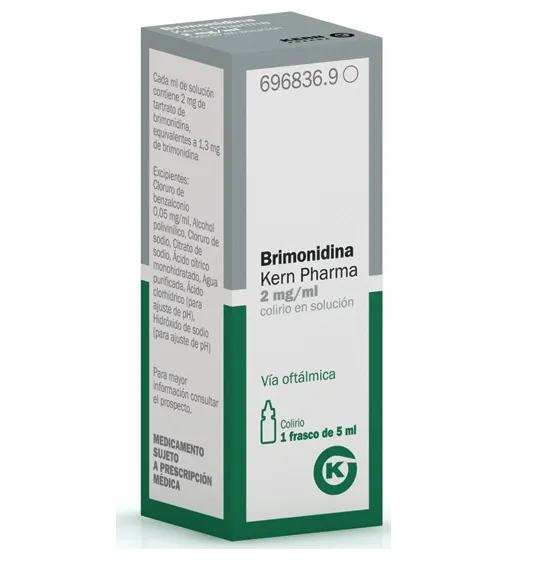
Table of Contents
Package leaflet: Information for the user
Introduction
Package leaflet: information for the user
Brimonidina Vir 2 mg/ml, eye drops solution
Brimonidine tartrate
Read the entire leaflet carefully before you start using this medicine, as it contains important information for you.
- Keep this leaflet as you may need to read it again.
- If you have any questions, ask your doctor or pharmacist.
- This medicine has been prescribed for you only and must not be given to other people, even if they have the same symptoms as you, since it could harm them.
- If you experience any side effects, consult your doctor or pharmacist, even if they are side effects not listed in this leaflet. See section 4.
Leaflet contents:
- What Brimonidina Vir is and what it is used for
- What you need to know before using Brimonidina Vir
- How to use Brimonidina Vir
- Possible side effects
- How to store Brimonidina Vir
- Contents of the pack and other information
1. What Brimonidina Vir is and what it is used for
The active ingredient in Brimonidina Vir is brimonidine tartrate, which reduces intraocular pressure.
Brimonidina Vir is a medicine used to reduce intraocular pressure. It can be used alone in patients in whom therapy with topical beta-blockers is contraindicated, or in combination with another eye drop, when intraocular pressure (IOP) cannot be sufficiently reduced in patients with open-angle glaucoma or ocular hypertension.
2. What you need to know before using Brimonidine Vir
Do not use Brimonidine Vir if:
- You are allergic (hypersensitive) to brimonidine or to any of the other components of this medicine (listed in section 6).
- In newborns/children (under 2 years of age).
- You are taking monoamine oxidase inhibitors or certain antidepressants. Inform your doctor if you are taking any medication to treat depression.
- You are breastfeeding.
Warnings and precautions
Talk to your doctor or pharmacist before starting Brimonidine Vir if:
- It is to be administered to children aged 2 to 12 years. The use of Brimonidine Vir is not recommended in children of this age group.
- You suffer from or have suffered from depression, reduced mental capacity, reduced blood supply to the brain, heart problems, disorders affecting blood supply to the extremities, or blood pressure disorders.
- You have or have had liver or kidney problems.
If you think any of these points apply to you, do not use Brimonidine Vir until you have consulted your doctor again.
Children and adolescents
The use of brimonidine is not recommended in children under 12 years of age. There are no studies demonstrating its safety and efficacy in children. This is particularly important in children under 2 years of age.
Use of other medicines with Brimonidine Vir
Inform your doctor or pharmacist if you are taking, have recently taken, or might need to take any other medicines, including those obtained without a prescription.
Tell your doctor if you are taking the following medicines:
- Painkillers, sedatives, opioids, barbiturates, or if you regularly consume alcohol.
- Anesthetics.
- Medicines for treating high blood pressure or heart conditions.
- Medicines that may affect your metabolism, such as chlorpromazine, methylphenidate, and reserpine.
- Medicines acting on the same receptor as Brimonidine Vir, for example, isoprenaline and prazosin.
- MAO inhibitors and other antidepressants.
- Medicines for any other illness, even if not related to your eye condition.
- Or if the dose of any of your medicines is changed.
These could affect your treatment with Brimonidine Vir.
Pregnancy and breastfeeding
If you are pregnant or breastfeeding, think you might be pregnant, or plan to become pregnant, consult your doctor or pharmacist before using this medicine.
Do not use Brimonidine Vir if you are breastfeeding.
Driving and use of machines
Brimonidine Vir may cause blurred or altered vision, especially at night or in low light conditions.
Brimonidine Vir may also cause drowsiness and/or fatigue in some patients.
Do not drive or operate machinery until these symptoms have resolved.
Brimonidine Vir contains benzalkonium chloride.
This preservative may cause eye irritation and is also known to discolor soft contact lenses. Therefore, avoid contact with soft lenses. If you wear soft contact lenses, remove them before using this eye drop and wait 15 minutes after instillation before reinserting them.
3. How to use Brimonidina Vir
Follow exactly the administration instructions for this medicine as indicated by your doctor. If in doubt, consult your doctor or pharmacist again.
Adults (including those aged 65 years and older)
The recommended usual dose is one drop into the affected eye or eyes twice daily, with a dosing interval of approximately 12 hours.
Children under 12 years of age
Brimonidina Vir must not be used in children under 2 years of age.
The use of Brimonidina Vir is not recommended in children between 2 and 12 years of age.
Instructions for use
Brimonidina Vir is supplied as eye drops. Always wash your hands before applying the eye drops. The package leaflet indicates how many drops you should use per dose. If you are using more than one ophthalmic medication, the medicines should be administered at intervals of at least 15 minutes between each.
Apply your eye drops as follows:
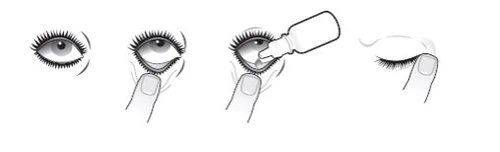
- Tilt your head backwards and look at the ceiling
- Gently pull down the lower eyelid until a small pocket is formed
- Hold the bottle upside down and squeeze until one drop enters each eye requiring treatment
- Keep the eye closed and press with your finger at the corner of the eye (inner corner of the eye) for one minute
Avoid letting the tip of the container touch the eye or any other surface.
Close the container immediately after use.
If you use more Brimonidina Vir than you should
Adults
Adverse reactions are the same as those known with Brimonidina Vir and have been reported in adults who have used more eye drops solution than recommended.
In cases where adults have accidentally ingested Brimonidina Vir, low blood pressure followed by a sharp rise in blood pressure has been reported. If this occurs, consult your doctor immediately.
Children
Cases of overdose in children who have accidentally ingested Brimonidina Vir have been reported. Symptoms include drowsiness, lethargy, low body temperature, pallor, and difficulty breathing. If you experience any of these symptoms, consult your doctor immediately.
Adults and children
In case of overdose or accidental ingestion of Brimonidina Vir, consult your doctor or pharmacist immediately or call the Toxicology Information Service at telephone number: 91 562 04 20, indicating the medicine and the amount ingested.
If you forget to use Brimonidina Vir
If you forget to use Brimonidina Vir, apply the missed dose as soon as you remember. If you do not remember the missed dose until shortly before the next dose is due, do not apply the missed dose; instead, apply the next dose at the scheduled time.
Do not use a double dose to make up for forgotten doses.
If you stop using Brimonidina Vir
To be effective, Brimonidina Vir must be used every day. Do not stop treatment with Brimonidina Vir without first consulting your doctor.
If you have any further questions about the use of this medicine, ask your doctor or pharmacist.
4. Possible adverse effects
Like all medicines, this medicine can cause adverse effects, although not everyone experiences them.
The following adverse effects have been reported:
Eye-related adverse effects
Very common (may affect more than 1 in 10 people):
- Eye irritation (redness, pain and burning, itching, sensation of a foreign body, follicular conjunctivitis), follicular conjunctivitis
- Blurred vision
- Allergic reaction in the eye.
Common (may affect between 1 and 10 in 100 people):
- Local eye irritation (redness and eyelid edema, conjunctival edema and discharge, eye pain and tearing)
- Light sensitivity
- Superficial damage and discoloration of the cornea
- Dry eye
- Conjunctival pallor
- Abnormal vision
- Conjunctivitis.
Very rare (affects 1–10 users in 1,000):
- Iritis (inflammation of the iris)
- Pupil constriction.
Frequency not known (frequency cannot be estimated from available data):
- Eyelid pruritus
Body-related adverse effects
Very common (may affect more than 1 in 10 people):
- Headache
- Dry mouth
- Fatigue/somnolence
Common (may affect between 1 and 10 in 100 people):
- Dizziness
- Cold-like symptoms
- Stomach and digestive symptoms
- Taste disturbance
- Systemic weakness.
Uncommon (may affect between 1 and 10 in 1,000 people):
- Depression
- Palpitations or arrhythmias
- Nasal dryness
- Systemic allergic reactions.
Rare (may affect between 1 and 10 in 10,000 people):
- Dyspnea (difficulty breathing)
Very rare (may affect fewer than 1 in 10,000 people):
- Insomnia
- Loss of consciousness
- Hypertension (high blood pressure)
- Hypotension (low blood pressure)
Frequency not known (frequency cannot be estimated from available data):
- Skin reactions including: facial swelling, skin redness, skin itching, rash, low blood pressure.
Reporting of adverse effects
If you experience any type of adverse effect, consult your doctor or pharmacist, even if they are possible adverse effects not listed in this leaflet. You may also report them directly via the Spanish Pharmacovigilance System for Human Medicines: https://www.notificaRAM.es. By reporting adverse effects, you can help provide more information on the safety of this medicine.
5. Storage of Brimonidine Vir
Keep this medicine out of the reach and sight of children.
Do not use Tarobrim after the expiry date stated on the pack and bottle after EXP. The expiry date refers to the last day of the month indicated.
Once the bottle has been opened, it may be stored for a maximum of 28 days.
This medicine does not require any special storage conditions.
Medicines should not be disposed of via wastewater or household waste. Dispose of unused containers and medicines at the SIGRE Point at your pharmacy. If you have any doubts, ask your pharmacist how to dispose of unused containers and medicines. This will help protect the environment.
6. Additional Information
Composition of Brimonidina Vir
The active substance is brimonidine tartrate.
1 ml of solution contains 2 mg of brimonidine tartrate, equivalent to 1.3 mg of brimonidine.
1 drop of solution contains 65.2 micrograms of brimonidine tartrate, equivalent to 43 micrograms of brimonidine.
The other components are: benzalkonium chloride, polyvinyl alcohol, sodium citrate, citric acid monohydrate, sodium chloride, purified water, hydrochloric acid (for pH adjustment), sodium hydroxide (for pH adjustment).
Appearance of Brimonidina Vir and contents of the pack
Eye drops in a clear, pale yellowish-green solution in a plastic bottle.
Each bottle contains 5 ml of eye drop solution.
Pack size: 1 bottle of 5 ml
Marketing Authorization Holder and Manufacturer
Marketing Authorization Holder
INDUSTRIA QUIMICA Y FARMACEUTICA VIR, S.A.
Laguna, 66-68-70. Poligono Industrial Urtinsa II
28923 Alcorcón (Madrid)
Spain
Manufacturer
JADRAN-GALENSKI LABORATORIJ d.d.
Svilno 20
51000 Rijeka,
Croatia
This medicinal product is authorized in the EEA Member States under the following names:
Denmark: Tarobrim, eye drops, solution
Spain: Brimonidina Vir 2 mg/ml, eye drops solution
Portugal: Tarobrim 2 mg/ml eye drops, solution
Date of the most recent revision of this leaflet: September 2016
Detailed information on this medicinal product is available on the website of the Spanish Agency for Medicines and Health Products (AEMPS) (http://www.aemps.gob.es/).