Brimonidine Viatri 2 mg/ml eye drops solution
Spain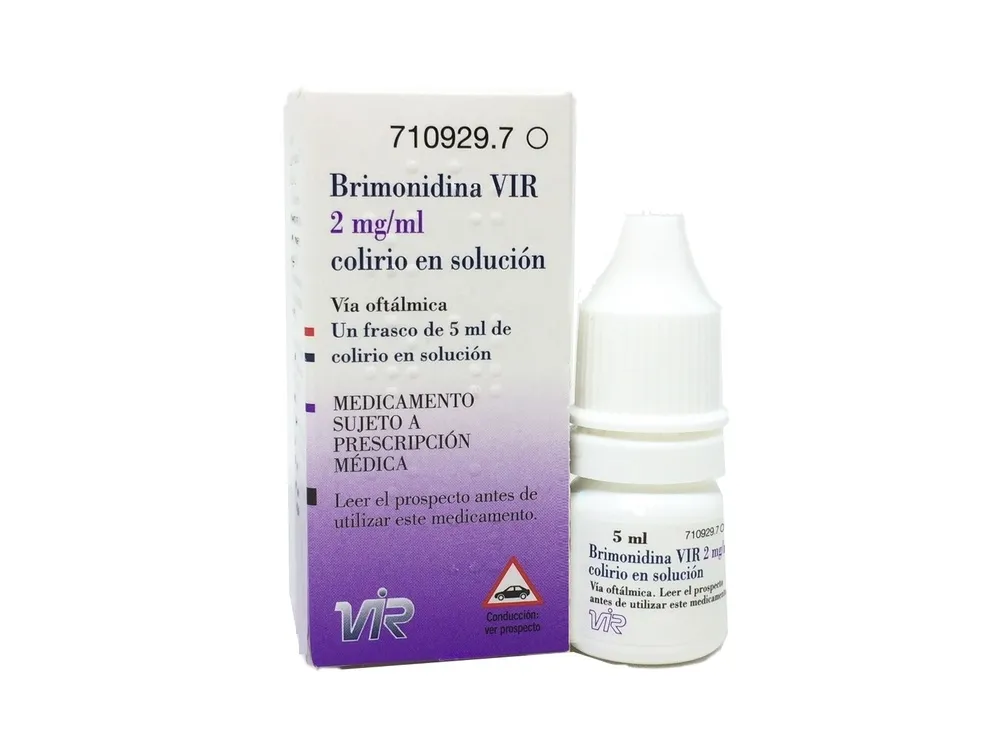
Table of Contents
Patient Information Leaflet
Introduction
Package leaflet: Information for the patient
Brimonidina Viatris 2 mg/ml eye drops solution
Brimonidine tartrate
Read the entire leaflet carefully before you start using this medicine, as it contains important information for you.
- Keep this leaflet, as you may need to read it again.
- If you have any questions, consult your doctor or pharmacist.
- This medicine has been prescribed for you only and must not be given to other people, even if they have the same symptoms as you, as it may harm them.
- If you experience any side effects, talk to your doctor or pharmacist, even if the side effects are not listed in this leaflet. See section 4.
Contents of the leaflet
- What Brimonidina Viatris is and what it is used for
- What you need to know before using Brimonidina Viatris
- How to use Brimonidina Viatris
- Possible side effects
- How to store Brimonidina Viatris
- Contents of the pack and other information
1. What Brimonidina Viatris is and what it is used for
Brimonidina Viatris contains the active substance brimonidine tartrate, which is used to reduce intraocular pressure (pressure inside the eye) in patients with open-angle glaucoma or ocular hypertension (fluid pressure inside the eye).
Brimonidina Viatris can be used alone or in combination with other medicines to reduce intraocular pressure.
2. What you need to know before using Brimonidina Viatris
Do not use Brimonidina Viatris:
- If you are allergic to brimonidine or to any of the other ingredients of this medicine (listed in section 6).
- If you are being treated with medicines classified as monoamine oxidase inhibitors (MAO inhibitors), used to treat depression or Parkinson's disease, for example, selegiline, phenelzine.
- If you are being treated with certain antidepressant medicines (such as tricyclic antidepressants, for example, clomipramine, amitriptyline or mianserin).
You should inform your doctor if you are taking any antidepressant medicine.
- If the patient is a neonate or a child (up to 2 years of age).
Warnings and precautions
Consult your doctor or pharmacist before starting to use Brimonidina Viatris
-
If you have any serious or unstable heart disease that is not responding to treatment.
-
If you suffer from depression.
-
If you have reduced blood supply affecting the brain (cerebral insufficiency) or the heart, for example, angina pectoris or blocked blood vessels.
-
If you experience drops in blood pressure causing dizziness and lightheadedness when standing up or getting up from a lying position (orthostatic hypotension).
-
If you suffer from constriction of blood vessels, mainly in the hands and arms (Raynaud's disease), or any inflammatory vascular disease with obstruction of blood vessels as a result of clotting (thromboangiitis obliterans).
-
If you have renal or hepatic impairment.
Children and adolescents
Do not administer brimonidine tartrate to newborns or children (from birth up to 2 years of age).
Brimonidine tartrate is generally not recommended in children (from 2 to 12 years of age) due to an increased risk of adverse effects (e.g., somnolence).
Other medicines and Brimonidina Viatris
Inform your doctor or pharmacist if you are using, have recently used, or might need to use any other medicines.
Do not use Brimonidina Viatris if you are being treated with MAO inhibitors (monoamine oxidase inhibitors), tricyclic antidepressants, or mianserin (see "Do not take").
Substances affecting the central nervous system (CNS): the effect of substances affecting the CNS (such as alcohol, barbiturates, for example, used in epilepsy like phenobarbital, opioids used for pain relief, for example, codeine, sedatives used to induce sleep, for example, diazepam, or anesthetics) may be increased by brimonidine tartrate.
Medicines for nervous system disorders (chlorpromazine, methylphenidate), antihypertensive medicines (reserpine): caution is recommended in patients treated with medicines that may affect the absorption and metabolism of adrenaline, noradrenaline, and so-called biogenic amines in the blood.
Antihypertensive agents, heart medicines: a slight decrease in blood pressure has been observed in some patients after administration of brimonidine tartrate. Caution is recommended if Brimonidina Viatris is used concomitantly with antihypertensive agents (used to treat high blood pressure) and/or heart medicines of the cardiac glycoside group.
Adrenergic receptor agonists or antagonists: caution is recommended if you are taking ?-adrenergic agonists, such as phenylephrine (e.g., eye drops, nasal sprays) or antagonists (e.g., isoprenaline or prazosin (which may be used to treat high blood pressure or other circulatory problems)).
Pregnancy and breastfeeding
If you are pregnant or breastfeeding, think you may be pregnant, or plan to become pregnant, consult your doctor or pharmacist before using this medicine.
Pregnancy
Studies to determine whether brimonidine tartrate is safe during pregnancy have not yet been conducted. Therefore, Brimonidina Viatris should be used with caution during pregnancy and only if the expected benefit to the mother justifies the potential risk to the fetus.
Breastfeeding
It is unknown whether brimonidine tartrate is excreted in breast milk. Brimonidina Viatris must not be administered to women who are breastfeeding.
Driving and using machines
Brimonidina Viatris may cause fatigue and/or somnolence. This may affect your ability to drive or operate machinery safely.
Brimonidina Viatris may cause blurred vision and/or altered vision, which may affect your ability to drive or use machines safely, especially at night or in low light and under poor lighting conditions.
Wait until these effects have subsided before driving or operating machinery.
Brimonidina Viatris contains benzalkonium chloride
This medicine contains 0.05 mg of benzalkonium chloride in each millilitre of eye drop solution. Benzalkonium chloride may be absorbed by soft contact lenses and may alter the colour of contact lenses. Remove contact lenses before using this medicine and wait 15 minutes before reinserting them.
Benzalkonium chloride may cause ocular irritation, especially if you have dry eye or other corneal diseases (the transparent layer at the front of the eye). Consult your doctor if you experience a foreign body sensation, stinging, or eye pain after using this medicine.
3. How to use Brimonidina Viatris
Follow exactly the instructions for administering this medicine as given by your doctor or pharmacist. Consult your doctor or pharmacist if you have any doubts.
It is very important to use Brimonidina Viatris for the length of time prescribed by your doctor.
If you think that the effect of Brimonidina Viatris is too strong or too weak, consult your doctor.
Adults (including elderly patients)
Unless your doctor has told you otherwise, the recommended dose is one drop in the affected eye or eyes, twice daily, with a dosing interval of approximately 12 hours.
Instructions for use
Brimonidina is a medicine for ophthalmic use. It must not be swallowed.
Always wash your hands before applying the eye drops.
Apply the drops as follows:
- Tilt your head backwards and look upwards.
- Gently pull down the lower eyelid until a small pocket is formed.
- Invert the bottle and squeeze it to release one drop into the eye.
Immediately after applying each drop, close your eye and press your finger against the tear duct (inner corner of the eye) for 1 minute. This helps reduce the absorption of brimonidine tartrate into your body.
If you are using more than one ophthalmic medicine, the medicines should be administered at least 5 to 15 minutes apart.
After use, immediately recap the bottle. Avoid touching the dropper tip to your eye or any other surface.
If you use more Brimonidina Viatris than you should
Adults
Adverse effects listed in section 4 of the package leaflet have been reported in adults who used more brimonidine tartrate than recommended in the eye.
In cases where adults accidentally swallowed brimonidine tartrate, low blood pressure was reported. In some patients, this was followed by a sharp increase in blood pressure.
Contact your doctor immediately if you have ingested brimonidine tartrate. The following adverse effects have been reported with other medicines that work in a similar way to brimonidine when taken orally: unusual weakness, vomiting, tiredness, decreased level of consciousness, slow heart rate, changes in heart rate, decreased pupil size, reduced muscle tone, breathing difficulties, low body temperature, and seizures.
Children
Cases of overdose in children who accidentally ingested brimonidine tartrate have been reported. Symptoms include temporary coma or reduced level of consciousness, tiredness, drowsiness, lethargy, slow heart rate, low body temperature, paleness, and difficulty breathing. If you experience any of these symptoms, contact your doctor immediately.
Adults and children
In case of overdose or accidental ingestion, contact your doctor or pharmacist immediately or call the Toxicology Information Service at telephone number: 91 562 04 20. Take the medicine container with you so the doctor knows what has been taken.
If you forget to use Brimonidina Viatris
If you forget to use Brimonidina Viatris, apply the missed dose as soon as you remember. However, if it is almost time for your next dose, skip the missed dose and continue with your next scheduled dose at the usual time. Do not use a double dose to make up for a missed dose.
Do not change the prescribed dose on your own.
If you stop using Brimonidina Viatris
Do not interrupt or stop treatment with Brimonidina Viatris without first consulting your doctor.
If you have any further questions about the use of this medicine, ask your doctor or pharmacist.
4. Possible adverse effects
Like all medicines, this medicine can cause adverse effects, although not everyone will experience them.
If you notice any of the following adverse effects, or a worsening of symptoms during treatment with brimonidine tartrate, contact your doctor or hospital immediately.
Very common: may affect more than 1 in 10 people
- Eye irritation, including allergic reactions (redness, pain, stinging, burning, itching, sensation of a foreign body in the eye).
Common: may affect up to 1 in 10 people
- Discoloration/staining of the cornea (the surface of the eye), blisters, swelling or serious damage (which may be observed by an ophthalmologist or cause discomfort or eye pain) on the surface of the eye (corneal erosion and spots).
Uncommon: may affect up to 1 in 100 people
- Allergic reactions, which may cause breathing difficulties, shortness of breath, swelling of the face, throat, or tongue.
Very rare: may affect up to 1 in 10,000 people
- Inflammation of the colored part of the eye, which may cause redness, blurred vision, changes in the shape of the pupils (black part of the eye), and headache (iritis).
Other adverse effects include:
Very common: may affect more than 1 in 10 people
- Redness, watering, and itching of the eyes with sticky discharge (conjunctivitis, which may be due to allergy or infection), blurred vision, swelling and redness of the eyelid (which may be due to allergy (blepharitis)), bumps on the surface of the eye that may be seen by an optician (conjunctival follicles).
- Headache, dry mouth, fatigue/somnolence.
Common: may affect up to 1 in 10 people
- Watery eyes, light sensitivity, damage to the front part of the eye (superficial corneal damage), dry eyes, abnormal vision.
- Upper respiratory tract symptoms, dizziness, stomach and intestinal pain, weakness, taste disturbance.
Uncommon: may affect up to 1 in 100 people
- Irregular heartbeat (including slow or fast heartbeat), depression, dry nose.
Rare: may affect up to 1 in 1,000 people
- Shortness of breath (dyspnea).
Very rare: may affect up to 1 in 10,000 people
- Reduction in pupil size (miosis).
- Syncope, increased blood pressure (hypertension), decreased blood pressure (hypotension), insomnia.
Frequency not known: frequency cannot be estimated from available data
- Skin reactions, including facial swelling, skin redness (which may be due to dilation of blood vessels), skin itching, rash, eyelid itching.
Other adverse effects in children and adolescents
Very common: may affect more than 1 in 10 children:
- Somnolence. This may affect more than 1 in 2 children.
Reporting of adverse effects:
If you experience any adverse effect, talk to your doctor or pharmacist, even if it is a possible adverse effect not listed in this leaflet. You can also report them directly via the Spanish Pharmacovigilance System for Human Medicines: https://www.notificaram.es. By reporting adverse effects, you can help provide more information on the safety of this medicine.
5. Storage of Brimonidina Viatris
Keep this medicine out of the sight and reach of children.
Do not use this medicine after the expiry date stated on the label and packaging following EXP. The expiry date is the last day of the month indicated.
This medicine does not require any special storage conditions.
After first opening, Brimonidina Viatris must be used within 28 days.
Medicines must not be disposed of via wastewater or household waste. Dispose of empty containers and unused medicines at the SIGRE Point at your pharmacy. If in doubt, ask your pharmacist how to dispose of containers and medicines you no longer need. This will help protect the environment.
6. Contents of the pack and other information
Composition of Brimonidina Viatris
- The active substance is: brimonidine tartrate. 1 ml of solution contains 2 mg of brimonidine tartrate, equivalent to 1.3 mg of brimonidine.
- The other components are: benzalkonium chloride (see section 2 “Brimonidina Viatris contains benzalkonium chloride”), polyvinyl alcohol, sodium chloride, sodium citrate, citric acid monohydrate, purified water, sodium hydroxide and hydrochloric acid for pH adjustment.
Appearance of the product and contents of the container
Brimonidina Viatris is a clear, slightly greenish-yellow solution.
It is available in a 5 ml plastic bottle with dropper cap, in pack sizes of 1, 3 or 6.
Only certain pack sizes may be marketed.
Marketing Authorization Holder
Viatris Limited
Damastown Industrial Park
Mulhuddart, Dublin 15
Dublin
Ireland
Manufacturer
Mylan SAS
117 Allée des Parcs
69800 Saint Priest
France
or
Famar A.V.E. Alimos Plant
63 Agiou Dimitriou str.
17456 – Alimos Attiki
Greece
For further information about this medicinal product, please contact the local representative of the Marketing Authorization Holder:
Viatris Pharmaceuticals, S.L.
C/ General Aranaz, 86
28027 - Madrid
Spain
This medicinal product is authorized in the Member States of the European Economic Area under the following names:
Austria: Brimonidin Arcana 2 mg/ml – Augentropfen
Denmark: Glaudin
Spain: Brimonidina Viatris 2 mg/ml colirio en solución
France: Brimonidine Viatris 0,2% (2 mg/ml), collyre en solution
Italy: Brimonidina Viatris Generics
Netherlands: Brimonidinetartraat Viatris 2 mg/ml, oogdruppels (oplossing)
Portugal: Brimonidina Viatris, 2 mg/mL, colirio solução
United Kingdom: Brimonidine tartrate 2 mg/ml eye drops, solution
Sweden: Glaudin 2 mg/ml ögondroppar, lösning
Date of the most recent revision of this leaflet: December 2021
Detailed and up-to-date information on this medicinal product is available on the website of the Spanish Agency of Medicines and Health Products (AEMPS) https://www.aemps.gob.es/