Brevibloc 10 mg/ml solution for infusion
Spain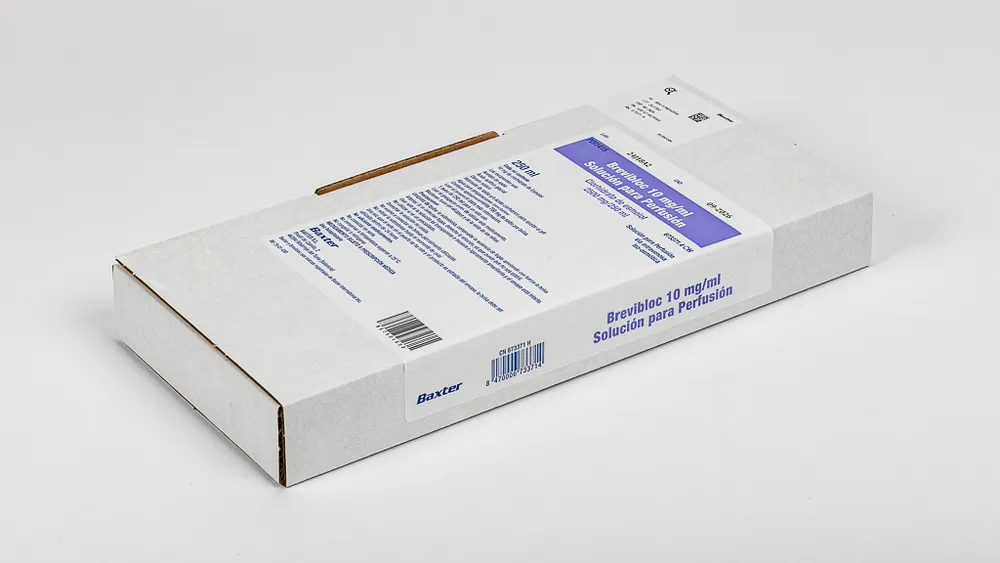
Table of Contents
Package leaflet: Information for the user
Introduction
Package leaflet: information for the user
Brevibloc 10 mg/ml solution for infusion
Esmolol hydrochloride
Read all of this leaflet carefully before you start using this medicine because it contains important information for you.
- Keep this leaflet as you may need to read it again.
- If you have any questions, ask your doctor, pharmacist or nurse.
- If you experience any side effects, talk to your doctor, pharmacist or nurse, including any side effects not listed in this leaflet.
In this leaflet, BREVIBLOC 10 mg/ml solution for infusion will be referred to as Brevibloc.
Contents of this leaflet:
- What Brevibloc is and what it is used for
- What you need to know before you are given Brevibloc
- How Brevibloc will be administered
- Possible side effects
- How to store Brevibloc
- Contents of the pack and other information
1. What Brevibloc is and what it is used for
Brevibloc contains a medicine called esmolol. It belongs to a group of medicines known as "beta-blockers". It works by controlling the rate and force of your heartbeats. It may also help you reduce your blood pressure.
It is used to treat the following:
- Heart rate problems, when the heartbeat is too fast
- Heart problems and high blood pressure occurring during or immediately after surgery.
2. What you need to know before using Brevibloc
Your doctor will not give you Brevibloc if:
- You are allergic (hypersensitive) to esmolol, any other beta-blocker medicine, or any of the other components of this medicine (listed in section 6). Symptoms of an allergic reaction include difficulty breathing, wheezing, rash, itching, or swelling of the face and lips.
- You have a very slow heart rate (less than 50 beats per minute).
- Your heart rate is high or alternates between high and low.
- You have what is known as "severe heart block"; this is a problem with the electrical impulses controlling your heart rate.
- You have low blood pressure.
- You have problems with blood flow to the heart.
- You have severe symptoms of heart failure.
- You are receiving or have recently received verapamil. Brevibloc must not be administered within 48 hours after your last dose of verapamil.
- You have an untreated glandular disease called phaeochromocytoma. Phaeochromocytoma occurs in the adrenal gland and can cause sudden high blood pressure, severe headaches, sweating, and increased heart rate.
- You have high blood pressure in the lungs (pulmonary hypertension).
- You have rapidly worsening asthma symptoms.
- You have high levels of acid in your body (metabolic acidosis).
Brevibloc will not be given to you if you have any of the above conditions. If you are unsure whether you have any of these conditions, speak with your doctor, pharmacist, or nurse before using Brevibloc.
Warnings and precautions
Talk to your doctor, pharmacist, or nurse before starting Brevibloc. Your doctor will exercise special caution with this medicine if:
- You are being treated for certain heart rhythm disorders called supraventricular arrhythmias and:
- you have other heart problems or
- you are taking other heart medications.
Using Brevibloc in this way may cause adverse reactions that could be fatal, including:
-
loss of consciousness
-
shock (if your heart is not pumping enough blood)
-
heart attack (cardiac arrest)
-
You develop low blood pressure (hypotension). This may be felt as dizziness or lightheadedness, especially when standing up. Low blood pressure usually improves within 30 minutes after stopping Brevibloc treatment.
-
You have a slow heart rate before treatment.
-
Your heart rate drops below 50 or 55 beats per minute. If this happens, your doctor may give you a lower dose or stop Brevibloc treatment.
-
You have heart failure.
-
You have a problem with the electrical impulses controlling your heart rate (heart block).
-
You have a glandular disease called phaeochromocytoma that has been treated with medicines known as "alpha receptor blockers".
-
You are being treated for high blood pressure (hypertension) caused by low body temperature (hypothermia).
-
You have narrowing of the airways or wheezing, such as those characteristic of asthma.
-
You have diabetes or low blood sugar levels. Brevibloc may enhance the effects of diabetes medications.
-
You develop skin problems, which may be caused by leakage of the solution around the injection site. If this occurs, your doctor will use a different vein for the injection.
-
You have a specific type of angina (chest pain) called "Prinzmetal's angina".
-
You have low blood volume. You may be more likely to develop low blood pressure (hypotension).
-
You have circulatory problems, such as pale fingers (Raynaud's disease) or pain, fatigue, and sometimes a painful burning sensation in the legs.
-
You have kidney problems. If you have kidney failure or require dialysis, your blood potassium levels may increase (hyperkalaemia), which can cause serious heart problems.
-
You have allergies or are at risk of anaphylactic reactions (severe allergic reactions). Brevibloc may worsen allergies and make them harder to treat.
-
You or a family member has psoriasis (the skin produces scales).
-
You have a condition called hyperthyroidism (overactive thyroid gland).
Dose adjustment is usually not necessary if you have liver problems.
If any of the above conditions apply to you (or if you are unsure), consult your doctor, pharmacist, or nurse before receiving this medicine. You may need a thorough examination and your treatment may need to be changed.
Using Brevibloc with other medicines
Tell your doctor, pharmacist, or nurse if you are taking, have recently taken, or might need to take any other medicines. This includes medicines you have bought without a prescription, including natural products and herbal remedies. Your doctor will check whether any of the medicines you are taking could alter the effect of Brevibloc.
In particular, inform your doctor, nurse, or pharmacist immediately if you are taking any of the following:
- Medicines that may lower blood pressure or slow the heart rate
- Medicines used to treat arrhythmia or chest pain (angina), such as verapamil and diltiazem. Brevibloc must not be administered within 48 hours after your last dose of verapamil.
- Medicines used to treat arrhythmia (such as quinidine, disopyramide, amiodarone) and heart failure (such as digoxin, digitoxin, cardiac glycosides)
- Nifedipine, used to treat chest pain (angina), high blood pressure, and Raynaud's disease
- Medicines used to treat diabetes, including insulin and oral diabetes medicines
- Medicines known as ganglion blockers (such as trimethaphan)
- Medicines used as painkillers, such as non-steroidal anti-inflammatory drugs (NSAIDs)
- Floctafénine, a painkiller
- Amisulpride, a medicine used to treat mental health problems
- Tricyclic antidepressants (such as imipramine and amitriptyline) or any other medicines for mental health conditions
- Barbiturates (such as phenobarbital, used to treat epilepsy) or phenothiazines (such as chlorpromazine, used to treat mental disorders)
- Clozapine, used to treat mental disorders
- Epinephrine, used to treat allergic reactions
- Medicines used to treat asthma
- Medicines used to treat colds or nasal congestion, known as nasal "decongestants"
- Reserpine, used to treat high blood pressure
- Clonidine, used to treat high blood pressure and migraine
- Moxonidine, used to treat high blood pressure
- Ergot derivatives, medicines commonly used to treat Parkinson's disease
- Warfarin, used as a blood thinner
- Morphine, a very strong painkiller
- Suxamethonium chloride (also known as succinylcholine or scoline) or mivacurium, commonly used as muscle relaxants during surgery. Your doctor should also exercise special caution when using Brevibloc during surgery, especially when anaesthetics and other treatments are administered.
If you are unsure whether any of the above apply to you, speak with your doctor, pharmacist, or nurse before using Brevibloc.
Monitoring while using Brevibloc
Long-term use of medicines like Brevibloc may reduce the force of your heartbeat.
Since Brevibloc is only used for a limited time, this is unlikely to happen to you. During treatment, you will be closely monitored, and Brevibloc treatment will be reduced or stopped if the strength of your heartbeat decreases.
Your doctor may also monitor your blood pressure while you are being treated with Brevibloc.
Pregnancy and breastfeeding
Consult your doctor or pharmacist before using any medicine.
You must not be given Brevibloc if you are pregnant or think you may be pregnant.
Tell your doctor if you are breastfeeding. Brevibloc may pass into breast milk and therefore must not be given if you are breastfeeding.
Important information about some of the ingredients of Brevibloc
Patients on low-sodium diets should be aware that this medicine contains 700 mg (30.45 mmol) of sodium per bag.
3. How Bevibloc will be administered to you
Recommended dose
Your doctor will decide the dose of medication you need and the duration of treatment.
Normally, Brevibloc will not be administered for more than 24 hours.
How Brevibloc is administered
Brevibloc is ready to use. It will be given to you as a slow injection (infusion) through a needle inserted into a vein in your arm.
Brevibloc must not be mixed with sodium bicarbonate or with any other medicine.
Treatment is administered in two steps.
- Step one: a higher dose is given over one minute. This will rapidly increase Brevibloc levels in your blood.
- Step two: a lower dose is given over four minutes.
- Steps one and two may be repeated and adjusted depending on how your heart responds. As soon as improvement is observed, step one (the higher dose) will be stopped and step two (the lower dose) will be reduced as necessary.
- When a stable condition is achieved, another heart medication may be given while the dose of Brevibloc is gradually reduced.
- If your heart rate or blood pressure increases during or after surgery, higher doses of Brevibloc may be given for a short period of time.
Elderly patients
Your doctor will start treatment with a lower dose.
Children
Brevibloc must not be given to children under 18 years of age.
If you receive too much Brevibloc
If Brevibloc is administered by a properly trained and qualified person, it is unlikely that you will receive an excessive dose. However, if this were to happen, your doctor will stop treatment with Brevibloc and, if necessary, provide additional treatment.
In case of overdose or accidental ingestion, contact the Toxicology Information Service, Telephone 915 620 420, indicating the medication and the amount administered.
If you think you have missed a dose of Brevibloc
If Brevibloc is administered by a properly trained and qualified person, it is unlikely that a dose will be missed. However, if you think a dose has been missed, speak to your doctor, pharmacist, or nurse as soon as possible.
If you stop using Brevibloc
Stopping treatment with Brevibloc suddenly may cause symptoms such as high heart rate (tachycardia) and high blood pressure (hypertension) to return. To avoid this, your doctor should stop treatment gradually. However, if you know you have coronary artery disease (which may be associated with angina or heart attack), your doctor must take special care when stopping treatment with Brevibloc.
If you have any questions about how to use this medicine, ask your doctor, nurse, or pharmacist
4. Possible adverse effects
Like all medicines, this medicine can cause adverse effects, although not everyone will experience them. Most adverse effects disappear within 30 minutes after stopping treatment with Brevibloc. The following adverse effects have been reported with Brevibloc:
If you notice any of the following effects, which may be serious, inform your doctor, nurse, or pharmacist. The infusion will also need to be stopped.
Very common (may affect more than 1 in 10 people)
- Drop in blood pressure, which can be quickly corrected by reducing the dose of Brevibloc or stopping treatment. Your blood pressure will be monitored frequently during treatment.
- Excessive sweating.
Common (may affect less than 1 in 10 people)
- Loss of appetite
- Feeling of anxiety or depression
- Dizziness
- Drowsiness
- Headache
- Tingling or prickling sensations
- Difficulty concentrating
- Feeling confused or agitated
- General malaise (nausea and vomiting)
- Feeling of weakness
- Feeling of tiredness (fatigue)
- Irritation and hardening of the skin at the site where Brevibloc was injected
Uncommon (may affect less than 1 in 100 people)
- Thought disturbances
- Sudden loss of consciousness
- Feeling of faintness or fainting
- Seizures (crises or convulsions)
- Speech disturbances
- Vision disturbances
- Low heart rate
- Problems with the electrical impulses controlling your heart rate
- Elevated pressure in the arteries of the lungs
- Inability of the heart to pump enough blood (heart failure)
- Irregular heartbeat, sometimes known as palpitations (ventricular extrasystoles)
- Heart rate disorder (nodal rhythm)
- Chest discomfort caused by reduced blood flow through the blood vessels of the heart muscle (angina pectoris)
- Poor circulation in arms or legs
- Pale or flushed appearance
- Fluid in the lungs
- Difficulty breathing or chest pressure making breathing difficult
- Wheezing
- Stuffy nose
- Auscultatory sounds
- Changes in taste
- Indigestion
- Constipation
- Dry mouth
- Stomach area pain
- Skin discoloration
- Redness of the skin
- Pain in muscles or tendons, including those surrounding the shoulder blades and ribs
- Urinary discomfort (urinary retention)
- Feeling of cold or elevated temperature (fever)
- Pain and swelling (edema) of the vein into which Brevibloc was injected
- Stinging sensation or bruising at the injection site
Rare (may affect less than 1 in 10,000 people)
- Severe reduction in heart rate (sinus arrest)
- Absence of electrical activity in the heart (asystole)
- Sensitive blood vessels with a red, warm area of skin (thrombophlebitis)
- Dead skin caused by leakage of solution around the injection site.
Frequency not known (the number of affected people is unknown)
- High levels of potassium in the blood (hyperkalemia)
- High levels of acid in the body (metabolic acidosis)
- High rate of heart contraction (accelerated idioventricular rhythm)
- Spasm of the heart artery
- Failure of normal blood circulation (cardiac arrest)
- Psoriasis (the skin produces scales)
- Swelling of the face, limbs, or tongue, or swelling of the throat (angioedema)
- Hives (urticaria)
- Inflammation of a vein or blistering at the infusion site.
Reporting of adverse effects
If you experience any type of adverse effect, consult your doctor or pharmacist, even if they are possible adverse effects not listed in this leaflet. You may also report them directly via the Spanish Pharmacovigilance System for Human Medicinal Products: https://www.notificaram.es. By reporting adverse effects, you can help provide more information on the safety of this medicine.
5. Storage of Brevibloc
- Keep this medicine out of the sight and reach of children.
- Do not use Brevibloc after the expiry date stated on the packaging after EXP. The expiry date refers to the last day of the month indicated.
- Do not remove the overpouch until the time of use.
- Do not store above 25°C.
- Do not refrigerate or freeze.
- The opened product is stable for 24 hours at 2°C–8°C. However, it should be used immediately after opening.
- Do not use Brevibloc if you observe particles or discoloration in the solution.
Medicines must not be disposed of via wastewater or household waste. Return unused medicines and their containers to the SIGRE Point (or any other medicine waste collection system) at your pharmacy. If in doubt, ask your pharmacist how to dispose of medicines and containers you no longer need. This will help protect the environment.
6. Contents of the pack and other information
Composition of Brevibloc
- The active substance is esmolol hydrochloride. One ml contains 10 mg of esmolol hydrochloride. A 250 ml bag contains 2500 mg of esmolol hydrochloride.
- The other components are: sodium acetate, glacial acetic acid, sodium chloride and sterile water (referred to as "water for injections"). Sodium hydroxide or hydrochloric acid may be added to ensure appropriate pH adjustment.
Appearance of Brevibloc and contents of the pack
Brevibloc is a sterile, clear, colourless or slightly yellow solution for intravenous infusion (slow injection). It is available in 250 ml plastic bags.
Marketing Authorisation Holder and Manufacturer
Marketing Authorisation Holder:
Baxter S.L.
Pouet de Camilo, 2
46394 Ribarroja del Turia (Valencia)
Manufacturer
Brevibloc in Viaflo bags is manufactured by
Vantive Manufacturing Limited
Moneen Road
Castlebar, Co. Mayo
F23 XR63, Ireland
Brevibloc in Intravia bags is manufactured by
Baxter SA
Boulevard René Branquart, 80
7860 Lessines
Belgium
This medicinal product is authorised in the European Economic Area and in the United Kingdom (Northern Ireland) under the following names:
CountryName
Belgium Brevibloc 10 mg/ml, solution for infusion
Cyprus Brevibloc 10 mg/ml Δι?λυμα για ενδοφλ?βια ?γχυση
Denmark Brevibloc infusionsvæske, opløsning
Finland Brevibloc 10 mg/ml infuusioneste, liuos
Germany Brevibloc 10 mg/ml Infusionslösung
Ireland Brevibloc Premixed 10 mg/ml, Solution for Infusion
Netherlands Brevibloc 10 mg/ml, oplossing voor infusie
Norway Brevibloc 10 mg/ml, Infusjonsvæske, oppløsning
Portugal Brevibloc Premixed 10 mg/ml, Solução para perfusão
Spain Brevibloc 10 mg/ml solución para perfusión
Sweden Brevibloc 10 mg/ml, Infusionsvätska, lösning
United Kingdom Brevibloc Premixed 10mg/ml, Solution for Infusion
(Northern Ireland)
Date of the most recent review of this leaflet: November 2022
Detailed and up-to-date information on this medicinal product is available on the website of the Spanish Agency of Medicines and Health Products (AEMPS) http://www.aemps.gob.es/
Baxter, Brevibloc, Intravia and Viaflo are registered trademarks of Baxter International Inc