Bramitob 300 mg/4 ml solution for inhalation by nebulizer
Spain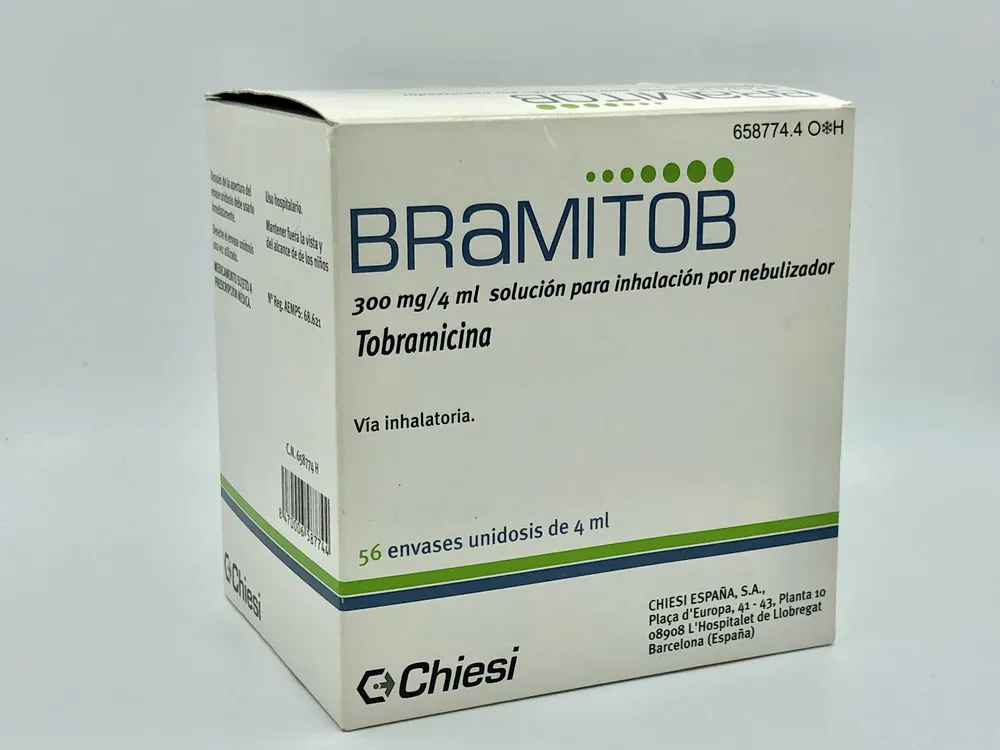
Table of Contents
Package leaflet: Information for the user
Introduction
Package leaflet: information for the user
Bramitob 300mg/4ml solution for inhalation by nebulizer
tobramycin
Read this entire leaflet carefully before you start using this medicine because it contains important information for you.
- Keep this leaflet, as you may need to read it again.
- If you have any questions, ask your doctor or pharmacist.
- This medicine has been prescribed for you only and must not be given to other people, even if they have the same symptoms as you, since it could harm them.
- If you experience any adverse effects, consult your doctor or pharmacist, even if they are adverse effects not listed in this leaflet. See section 4.
Contents of the leaflet
- What Bramitob is and what it is used for
- What you need to know before using Bramitob
- How to use Bramitob
- Possible side effects
- How to store Bramitob
- Contents of the pack and other information
1. What BRAMITOB is and what it is used for
Bramitob contains tobramycin, an antibiotic belonging to the aminoglycoside family, effective in treating infections caused by Pseudomonas aeruginosa.
Antibiotics are used to treat bacterial infections and are not effective against viral infections such as flu or the common cold.
It is important that you follow the dosage, dosing interval, and duration of treatment instructions provided by your doctor.
Do not store or reuse this medicine. If you have any antibiotic left over after completing treatment, return it to the pharmacy for proper disposal. Do not dispose of medicines via wastewater or household waste.
Bramitob is used to treat chronic respiratory infections in patients with cystic fibrosis caused by a type of bacteria called Pseudomonas. This medicine destroys the bacteria and helps improve breathing. Pseudomonas is a very common bacterium that infects nearly all patients with cystic fibrosis at some point in their lives. Some individuals do not acquire this infection until later in life, while others become infected at a very young age. If left untreated, the infection will continue to damage the lungs and lead to further complications. Bramitob is administered by inhalation, allowing tobramycin to reach the lungs directly and fight the bacteria causing the infection.
Bramitob is indicated only for patients over 6 years of age.
To achieve optimal results, you must use this medicine exactly as directed.
2. What you need to know before using Bramitob
Do not use Bramitob:
- If you are allergic to tobramycin or to any of the other components of this medicine (listed in section 6) or to any other aminoglycoside antibiotic.
- If you are taking any of the medicines mentioned in the section "Other medicines and Bramitob."
Warnings and precautions
Talk to your doctor or pharmacist before starting to use Bramitob.
Bramitob contains tobramycin, which belongs to a group of medicines that occasionally may cause hearing loss, dizziness, and kidney damage (see section 4 "Possible side effects"). Inform your doctor if you experience any of the following conditions:
- If you feel chest tightness after using Bramitob. Your doctor will monitor the administration of the first dose of Bramitob and will check your lung function before and after administration. If you are not already using a bronchodilator (e.g., salbutamol), your doctor may instruct you to use it before administering Bramitob.
- If you have ever experienced any neuromuscular disorders such as parkinsonism or other conditions characterized by muscle weakness, including myasthenia gravis.
- If you have ever had kidney problems. Before using Bramitob, your doctor may check your kidney function with blood or urine tests. Your doctor may also monitor your kidney function regularly during treatment.
- If you have ever experienced ringing in the ears, any hearing problems, or dizziness, your doctor may check your hearing before starting Bramitob or at any time during treatment.
- If you notice blood in your sputum. Inhalation of medication may cause coughing, and your doctor may advise you to temporarily stop treatment with Bramitob until blood in the sputum has nearly disappeared or completely resolved.
- If you are concerned that Bramitob is not as effective as it should be. Bacteria can sometimes develop resistance to antibiotic treatment.
Other medicines and Bramitob
Before starting treatment, inform your doctor or pharmacist if you are taking, have recently taken, or might need to take any other medicines.
- Do not use Bramitob if you are taking diuretics (medicines that increase urine volume) containing furosemide or ethacrynic acid, without consulting your doctor.
- Do not use Bramitob if you are receiving intravenous or oral urea or mannitol (medicines used to treat serious conditions in hospitalized patients).
- Some medicines may cause kidney or ear damage, which could be worsened by treatment with Bramitob.
While receiving inhaled Bramitob, you may also receive injections of tobramycin or other aminoglycosides. Administration of these injections should be avoided while taking any of the following medicines, as they may increase the low systemic levels of aminoglycosides caused by inhalation of Bramitob:
- amphotericin B, cephalothin, polymyxins (medicines used to treat bacterial and fungal infections)
- cyclosporine, tacrolimus (medicines used to control the immune response in transplant patients)
- platinum compounds used in cancer treatment (e.g., carboplatin, cisplatin)
- anticholinesterase agents used to relax muscles (e.g., neostigmine, pyridostigmine), botulinum toxin
If this applies to you, inform your doctor.
Pregnancy and breastfeeding
If you are pregnant or breastfeeding, think you may be pregnant, or are planning to become pregnant, consult your doctor or pharmacist before using this medicine.
It is not known whether inhaling this medicine during pregnancy causes side effects. When administered by injection, tobramycin and other aminoglycoside antibiotics can cause harm to the fetus, such as deafness and kidney problems.
If you are breastfeeding, you should consult your doctor before using this medicine.
Driving and using machines
Bramitob has minimal influence on the ability to drive and use machines.
Rarely, Bramitob may cause dizziness. Therefore, Bramitob may affect your ability to drive or operate machinery.
3. How to use Bramitob
Follow exactly the administration instructions for this medicine as given by your doctor. If in doubt, consult your doctor or pharmacist again. Instructions for use of Bramitob are provided after the Dosage section.
Do not mix or dilute Bramitob with other medicines in the nebulizer.
If you are receiving different treatments for cystic fibrosis, use them in the following order:
- bronchodilator (e.g., salbutamol), then
- chest physiotherapy, then
- other inhaled medicines, lastly
- Bramitob
Check the recommended order with your doctor.
Bramitob must be used with a reusable PARI LC PLUS or PARI LC SPRINT nebulizer (for personal use only), clean and dry, together with a suitable compressor. Ask your doctor or physiotherapist for advice on which compressor is best for you.
The single-dose container of Bramitob should be opened immediately before use. Any unused solution must be discarded immediately.
Dosage
- The dose (one 4 ml container) is the same for all individuals aged 6 years and older.
- Use two containers per day for 28 days. Inhale the contents of one container in the morning and the other in the evening. There must be an interval of 12 hours between each dose.
- Afterwards, take a 28-day break without taking the medicine before starting a new 28-day treatment cycle.
- It is important that you use the medicine twice daily for the 28-day treatment period and that you follow the 28-day on-treatment cycles followed by 28-day off-treatment periods with Bramitob. Continue using Bramitob in this manner until your doctor tells you to stop.
If you use more Bramitob than you should
If you inhale too much Bramitob, your voice may become hoarse. Inform your doctor as soon as possible.
In case of overdose or accidental ingestion, contact your doctor or pharmacist immediately or call the Toxicology Information Service at telephone number 91 562 04 20, indicating the medicine and the amount ingested.
If you forget to use Bramitob
- If more than 6 hours remain until the next dose (container), use Bramitob now.
- If less than 6 hours remain until the next dose (container), skip this dose (container).
Continue with the next dose as normal.
Instructions for use
Bramitob must only be used with a nebulizer; do not use it in any other way.
- Wash your hands thoroughly with soap and water before opening the single-dose container, following the instructions below.
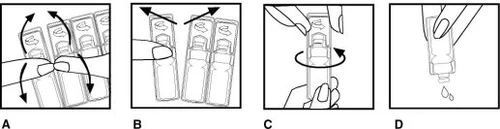
- Bend the single-dose container forward and backward (Figure A).
- Carefully separate a new container from the strip, first from the top and then from the middle (Figure B), leaving the rest in the aluminum foil packaging.
- Open the single-dose container by twisting the top in the direction indicated by the arrow (Figure C).
- Gently squeeze the container to transfer its contents into the nebulizer chamber (Figure D).
- Connect the compressor.
- Check that the mist coming from the mouthpiece is uniform.
- Stand or sit upright so that you can breathe normally.
- Place the mouthpiece between your teeth and on the upper part of your tongue. Breathe normally, but only through your mouth (you may use nose clips to assist). Try not to block the airflow with your tongue.
- Continue until all of the Bramitob is used up, which takes approximately 15 minutes.
- If you are interrupted, or need to cough or rest during administration, turn off the compressor to save medication. Reconnect the compressor when you are ready to resume treatment.
If you still have any doubts about how to use this medicine, consult your doctor or pharmacist.
Maintenance of the nebulizer and compressor:
Follow the manufacturer's instructions regarding maintenance and use of the nebulizer and compressor.
4. Possible adverse effects
Like all medicines, this medicine can cause adverse effects, although not everyone experiences them.
If you are unfamiliar with any of the adverse effects listed below, ask your doctor to explain them to you.
The most frequent adverse effects of Bramitob, which may affect up to 1 in 10 people, are: cough and hoarseness.
The uncommon adverse effects of Bramitob, which may affect up to 1 in 100 people, are: mouth ulcers (due to Candida infection), dizziness, deafness, increased salivation, tongue inflammation, rash, sore throat, alteration in liver function tests (increase in liver enzymes in blood), wheezing, nausea, dryness of the mucosa, presence of blood in sputum, oropharyngitis (inflammation of the throat), chest pain, hearing loss, headache, difficulty breathing, weakness, increased sputum production (substance expelled when coughing), gastric pain, and fungal infections.
The rare adverse effects, which may affect up to 1 in 1,000 people, are: loss of appetite, tinnitus (ringing in the ears), chest tightness or difficulty breathing, loss of voice, nosebleeds, nasal discharge, mouth ulcers, vomiting, taste disturbances, asthma, dizziness, loss of strength, fever, and pain and laryngitis (voice changes with sore throat and difficulty swallowing).
The very rare adverse effects, which may affect up to 1 in 10,000 people, are: swelling of the lymph nodes, somnolence, hearing problems, ear pain, deep and rapid breathing (hyperventilation), inflammation of the sinuses (sinusitis), diarrhea, allergic reactions including urticaria and pruritus, deficiency of oxygen available in the blood and body tissues (hypoxia), back pain, abdominal pain, abdominal discomfort, and general malaise.
Reporting of adverse effects
If you experience any type of adverse effect, consult your doctor or pharmacist, even if it is a possible adverse effect not listed in this leaflet. You may also report them directly through the national reporting system included in the Spanish Pharmacovigilance System for Human Medicines Website: www.notificaram.es.
By reporting adverse effects, you can help provide more information on the safety of this medicine.
5. Bramitob Storage
-
Keep this medicine out of the sight and reach of children.
-
For individual use only. Do not use this medicine after the expiry date stated on the label and on the outer packaging next to CAD. The expiry date refers to the last day of the month indicated. You may still use Bramitob even if the solution has changed in colour.
In-use shelf life: Bramitob bags (intact or opened) can be stored for up to 3 months at a temperature not exceeding 25 °C.
-
Store the containers in a refrigerator (between 2 °C and 8 °C). If a refrigerator is not available, and for transportation purposes, the containers may be stored for up to 3 months at a temperature below 25 °C.
-
Keep the containers in the original packaging to protect them from light.
-
After opening the single-dose container, use it immediately.
-
After the first administration, immediately dispose of the used single-dose container.
-
Medicines must not be disposed of via wastewater or household waste. Dispose of containers and unused medicines at the SIGRE collection point at your pharmacy. If you are in doubt, ask your pharmacist how to properly dispose of unused containers and medicines. This way, you will help protect the environment.
6. Contents of the pack and other information
Composition of Bramitob
The active substance is tobramycin. Each 4 ml single-dose container contains 300 mg of tobramycin.
The other components (excipients) are: sodium chloride, sulfuric acid, and sodium hydroxide (to adjust pH), water for injections.
Appearance of the product and contents of the pack
Bramitob is a yellowish transparent solution.
Bramitob solution for nebulization is supplied in single-dose containers of 4 ml. Each sealed pouch contains 4 containers, in pack sizes of 4, 16, 28 or 56 units.
Only some pack sizes may be commercially available.
Marketing Authorisation Holder and Manufacturer
Marketing Authorisation Holder:
Chiesi España, S.A.U., Plaça d’Europa, 41-43, Planta 10 – 08908 L’Hospitalet de Llobregat - Barcelona (Spain)
Manufacturer:
Chiesi Farmaceutici S.p.A., 96 Via San Leonardo, 43122 Parma (Italy).
or
Genetic S.p.A., Contrada Canfora, 84084 Fisciano (Italy).
This medicinal product has been authorised in the following European Economic Area member states under the following names:
Austria: Bramitob
Czech Republic: Bramitob
Denmark: Bramitob
Finland: Bramitob
Germany: Bramitob
Greece: Bramitob
Hungary: Bramitob
Ireland: Bramitob
Italy: Tobrineb
Netherlands: Bramitob
Norway: Bramitob
Poland: Bramitob
Portugal: Bramitob
Slovak Republic: Bramitob
Spain: Bramitob
Sweden: Bramitob
United Kingdom (Northern Ireland): Bramitob
Date of the most recent review of this leaflet: January 2022.
Detailed information on this medicinal product is available on the website of the Spanish Agency for Medicines and Health Products (AEMPS) http://www.aemps.gob.es.
You can access detailed and up-to-date information about this medicinal product by scanning with your mobile phone (smartphone) the QR code included in the leaflet and packaging. You can also access this information at the following internet address:
https://www.aemps.gob.es/cima/especialidad.do?metodo=verPresentaciones&codigo=68621