Bivalirudine Sala 250 mg powder for concentrate for solution for injection or infusion EFG
Spain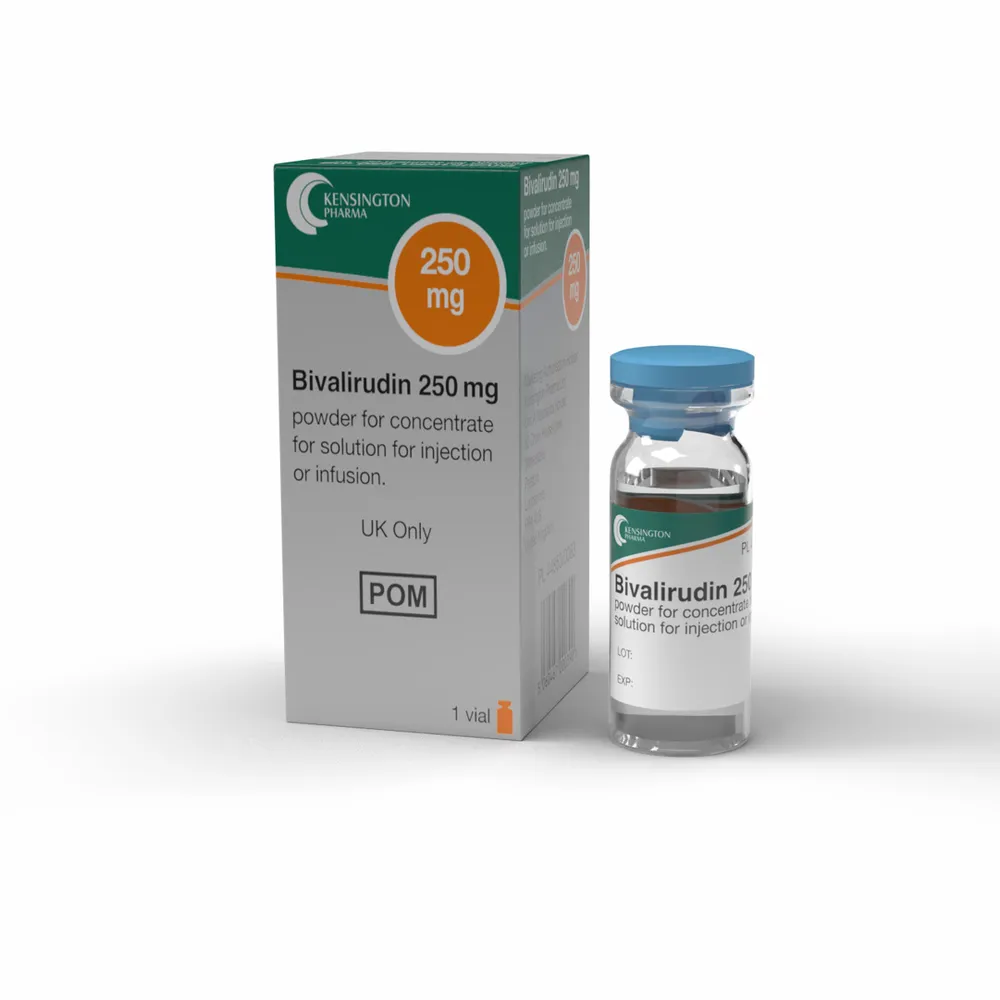
Table of Contents
- Package leaflet: Information for the user
- Introduction
- 1. What Bivalirudina Sala is and what it is used for
- 2. What you need to know before using Bivalirudina Sala
- 3. How to use Bivalirudina Sala
- 4. Possible adverse effects
- 5. Storage of Bivalirudina Sala
- 6. Contents of the container and other information
Package leaflet: Information for the user
Introduction
Package leaflet: information for the user
Bivalirudina Sala 250 mg powder for concentrate for solution for injection or infusion EFG
Bivalirudina
Read the entire leaflet carefully before you start using this medicine, because it contains important information for you.
- Keep this leaflet, as you may need to read it again.
- If you have any questions, ask your doctor.
- This medicine has been prescribed for you only, and you should not give it to other people, even if they have the same symptoms as you, because it could harm them.
- If you experience any adverse effects, consult your doctor, even if they are adverse effects not listed in this leaflet. See section 4.
Leaflet contents
- What Bivalirudina Sala is and what it is used for
- What you need to know before using Bivalirudina Sala
- How to use Bivalirudina Sala
- Possible side effects
- How to store Bivalirudina Sala
- Contents of the pack and other information
1. What Bivalirudina Sala is and what it is used for
Bivalirudina Sala contains a substance called bivalirudina, which is an antithrombotic medicine. Antithrombotics are medicines that prevent the formation of blood clots (thrombosis).
Bivalirudina Sala is used to treat patients:
- with chest pain due to heart disease (acute coronary syndromes - ACS)
- who are undergoing surgery to treat blockage of blood vessels (angioplasty and/or percutaneous coronary intervention - PCI).
2. What you need to know before using Bivalirudina Sala
Do not use Bivalirudina Sala
- if you are allergic to bivalirudin or to any of the other ingredients of this medicine (listed in section 6) or to hirudins (other anticoagulant medicines).
- if you are experiencing or have recently experienced bleeding in the stomach, intestine, bladder, or other organs, for example, if you have noticed blood in your stools or urine (except in the case of menstrual bleeding).
- if you have or have had blood clotting problems (low platelet count).
- if you have severe high blood pressure.
- if you have a heart tissue infection.
- if you have severe kidney problems or require dialysis. If in doubt, consult your doctor.
Warnings and precautions
Consult your doctor before using Bivalirudina Sala
- if bleeding occurs (in case of bleeding, treatment with Bivalirudina Sala will be discontinued). During treatment, your doctor will monitor you for signs of bleeding.
- if you have previously received treatment with medicines similar to Bivalirudina Sala (e.g., lepirudin).
- before starting the injection or infusion, your doctor will inform you about the signs of allergic reactions. These reactions are uncommon (affecting between 1 and 10 out of every 1,000 users).
- if you are receiving radiation therapy in the blood vessels supplying the heart (a treatment called beta or gamma radiation brachytherapy).
After treatment for a cardiac event with Bivalirudina Sala, you must remain hospitalized for at least 24 hours and be monitored for any symptoms or signs similar to those experienced during the cardiac event that led to your hospitalization.
Children and adolescents
- if you are a child (under 18 years of age), this medicine is not suitable for you.
Use of Bivalirudina Sala with other medicines
Inform your doctor:
- if you are taking, have recently taken, or might take any other medicines.
- if you are taking blood thinners or medicines that prevent blood clots (anticoagulants or antiplatelets, e.g., warfarin, dabigatran, apixaban, rivaroxaban, acetylsalicylic acid, clopidogrel, prasugrel, ticagrelor).
These medicines may increase the risk of adverse effects, such as bleeding, when administered together with Bivalirudina Sala. Bivalirudina Sala may affect the results of blood tests for warfarin (INR test).
Pregnancy and breastfeeding
If you are pregnant or breastfeeding, think you might be pregnant, or plan to become pregnant, consult your doctor before using this medicine.
Bivalirudina Sala should not be used during pregnancy unless absolutely necessary. Your doctor will decide whether this treatment is appropriate for you. If you are breastfeeding, your doctor will determine whether the use of Bivalirudina Sala is suitable in your case.
Driving and use of machines
The effects of this medicine are known to be short-term. Bivalirudina Sala is only administered when the patient is in hospital. Therefore, it is unlikely to affect your ability to drive or operate machinery.
Bivalirudina Sala contains sodium
This medicine contains less than 23 mg of sodium per vial and is therefore considered essentially "sodium-free".
3. How to use Bivalirudina Sala
Your treatment with Bivalirudina Sala will be supervised by a doctor. The doctor will decide how much Bivalirudina Sala you will receive and will prepare the medication.
The dose you receive depends on your body weight and the type of treatment you are undergoing.
Dosage
For patients with acute coronary syndrome (ACS) receiving medical treatment, the recommended initial dose is:
- 0.1 mg/kg body weight by intravenous injection, followed by an intravenous infusion (drip solution) of 0.25 mg/kg body weight/hour for up to 72 hours.
If, after this, you require a percutaneous coronary intervention (PCI), the dose will be increased to:
-
0.5 mg/kg body weight by intravenous injection, followed by an intravenous infusion of 1.75 mg/kg body weight/hour for at least the duration of the PCI. This intravenous infusion may continue for up to 4 hours.
-
When this treatment ends, the infusion may be reduced again to 0.25 mg/kg body weight/hour.
If you require coronary artery bypass surgery, treatment with bivalirudin will either be discontinued one hour before surgery or an additional dose of 0.5 mg/kg body weight will be administered by injection, followed by an infusion of 1.75 mg/kg body weight/hour.
For patients undergoing percutaneous coronary intervention (PCI) as initial treatment, the recommended dose is:
- 0.75 mg/kg body weight by intravenous injection, immediately followed by an intravenous infusion of 1.75 mg/kg body weight/hour (the intravenous infusion may continue for up to 4 hours).
If you have renal impairment, a dose reduction of Bivalirudina Sala may be necessary.
In elderly patients, if a decline in renal function is observed, dose reduction may be required.
The doctor will decide the duration of your treatment.
Bivalirudina Sala is for intravenous injection only, followed by an infusion (drip solution) into a vein (never into a muscle). It is administered and monitored by a physician experienced in the treatment of patients with heart disease.
If you receive more Bivalirudina Sala than you should
Your doctor will decide how to manage your treatment, including when to stop the medication and monitor you for any signs of adverse effects.
If you have any further questions about the use of this medicine, ask your doctor.
4. Possible adverse effects
Like all medicines, this medicine can cause adverse effects, although not everyone experiences them. If you experience any of the following potentially serious adverse effects:
- while you are in hospital: inform your doctor or nurse immediately
- after leaving hospital: contact your doctor directly or go immediately to the nearest hospital emergency department
The most common (may affect up to 1 in 10 people) and important adverse effect of treatment with Bivalirudina Sala is major bleeding, which could occur anywhere in the body (e.g., stomach, gastrointestinal tract (including vomiting blood or passing blood in stools), abdomen, lungs, groin, bladder, heart, eyes, ears, nose, or brain). Rarely, it may lead to stroke or be fatal. Swelling or pain in the groin or arm, back pain, bruising, headache, coughing up blood, pink or red-colored urine, sweating, dizziness, fainting, or nausea due to low blood pressure may all be signs of internal bleeding. Bleeding is more likely to occur if Bivalirudina Sala is used in combination with other anticoagulants or antiplatelet agents (see section 2, 'Use of Bivalirudina Sala with other medicines').
-
Bleeding and bruising at the injection site (after PCI treatment) which may be painful. Rarely, this may require surgical repair of the blood vessel in the groin (fistula, pseudoaneurysm) (may affect 1 in 1,000 people). Occasionally (may affect 1 in 100 people), platelet count may decrease, which could worsen bleeding. Bleeding from the gums (uncommon, may affect 1 in 100 people) is usually not serious.
-
Allergic reactions are uncommon (may affect up to 1 in 100 people) and usually not serious, although they may become serious in some circumstances and, rarely, may be fatal due to low blood pressure (shock). Initially, symptoms may be mild, such as itching, skin redness, rash, or small bumps on the skin.
Occasionally, reactions may be more severe, including throat itching, throat tightness, swelling of the eyes, face, tongue, or lips, high-pitched breathing sound (stridor), difficulty breathing, or difficulty exhaling.
- Thrombosis (blood clot), an uncommon adverse effect (may affect up to 1 in 100 people), which may result in serious or life-threatening complications such as heart attack. Thrombosis includes coronary artery thrombosis (blood clot in the heart arteries or within a stent resembling a heart attack, which may also be fatal) and/or catheter-related thrombosis, both of which are rare (may affect 1 in 1,000 people).
If you experience any of the following adverse effects (potentially less serious):
- while you are in hospital: inform your doctor or nurse
- after leaving hospital: first see your doctor. If this is not possible, go immediately to the nearest hospital emergency department
Very common adverse effects (may affect more than 1 in 10 people):
- Minor bleeding
Common adverse effects (may affect up to 1 in 10 people):
- Anaemia (low red blood cell count)
- Bruising (haematoma)
Uncommon adverse effects (may affect up to 1 in 100 people):
- Nausea (feeling unwell) and/or vomiting (being sick)
Rare adverse effects (may affect up to 1 in 1,000 people):
- Increased INR test values (blood test results for warfarin) (see section 2, Other medicines and Bivalirudina Sala)
- Angina or chest pain
- Slow heart rate
- Fast heart rate
- Difficulty breathing
- Reperfusion injury (no- or slow-reflow): poor blood flow in the heart arteries after reopening
Reporting of adverse effects
If you experience any type of adverse effect, consult your doctor, even if it is a possible adverse effect not listed in this leaflet. You can also report them directly via the Spanish Pharmacovigilance System for Human Medicines: www.notificaRAM.es
By reporting adverse effects, you can help provide more information on the safety of this medicine.
5. Storage of Bivalirudina Sala
Since Bivalirudina Sala is a medicinal product intended for use only within a hospital setting, healthcare professionals are responsible for its storage.
Keep this medicine out of the sight and reach of children.
Do not use this medicine after the expiry date stated on the carton after EXP. The expiry date refers to the last day of the month indicated.
Lyophilized powder: This medicine requires no special storage conditions.
Reconstituted solution: Chemical and physical in-use stability has been demonstrated for 24 hours at a temperature of 2–8°C. Store in a refrigerator (between 2°C and 8°C). Do not freeze.
Diluted solution: Chemical and physical in-use stability has been demonstrated for 24 hours at 25°C. Do not store above 25°C. Do not freeze.
From a microbiological standpoint, unless the method of opening/reconstitution/dilution excludes the risk of microbial contamination, the product should be used immediately.
If not used immediately, the times and conditions of storage are the responsibility of the user.
The solution should be from clear to slightly opalescent, colourless to slightly yellowish.
The physician should inspect the solution and discard it if particles are present or if discolouration occurs.
6. Contents of the container and other information
Composition of Bivalirudina Sala
- The active substance is bivalirudin.
- Each vial contains 250 mg of bivalirudin.
- After reconstitution (addition of 5 ml of water for injections to the vial to dissolve the powder), 1 ml contains 50 mg of bivalirudin.
- After dilution (mixing 5 ml of the reconstituted solution into an infusion bag containing glucose solution or sodium chloride solution [total volume 50 ml]), 1 ml contains 5 mg of bivalirudin.
The other components are mannitol and sodium hydroxide (to adjust pH).
Appearance of Bivalirudina Sala and contents of the container
Bivalirudina Sala is a powder for concentrate for solution for injection or infusion (powder for concentrate).
Bivalirudina Sala is a white to slightly yellowish-white powder in a glass vial.
Bivalirudina Sala is available in packs containing 2 or 10 vials.
Marketing Authorization Holder and Manufacturer
Laboratorio Reig Jofré, S.A.
C/ Gran Capitán, 10
08970 Sant Joan Despí (Barcelona)
Spain
Date of latest revision of this leaflet: November 2020
Detailed and updated information on this medicinal product is available on the website of the Spanish Agency of Medicines and Health Products (AEMPS): http://www.aemps.gob.es/
The following information is intended exclusively for healthcare professionals:
Healthcare professionals should consult the Summary of Product Characteristics (SmPC) for complete prescribing information.
Bivalirudina Sala is indicated as an anticoagulant in adult patients undergoing percutaneous coronary intervention (PCI), including patients with ST-segment elevation myocardial infarction undergoing primary PCI.
Bivalirudina Sala is also indicated for the treatment of adult patients with unstable angina/non-ST-segment elevation myocardial infarction (UA/NSTEMI) who are to undergo urgent or early intervention.
Bivalirudina Sala should be administered together with acetylsalicylic acid and clopidogrel.
Preparation instructions
Aseptic procedures must be used for the preparation and administration of Bivalirudina Sala.
Add 5 ml of sterile water for injections to one vial of Bivalirudina Sala and gently shake until completely dissolved and the solution is clear.
Withdraw 5 ml from the vial and further dilute to a total volume of 50 ml with 5% glucose solution for injection or 9 mg/ml (0.9%) sodium chloride solution for injection to obtain a final bivalirudin concentration of 5 mg/ml.
The reconstituted/diluted solution should be inspected visually for particulate matter and any discoloration. Solutions containing particulate matter must not be used.
Reconstituted/diluted solutions should be clear to slightly opalescent, colorless to slightly yellowish.
Disposal of unused medicine and all materials that have come into contact with it must be carried out in accordance with local regulations.
Incompatibilities
The following medicines must not be administered through the same intravenous line as bivalirudin, as they may cause cloudiness, formation of microparticles, or precipitation: alteplase, amiodarone hydrochloride, amphotericin B, chlorpromazine hydrochloride (HCl), diazepam, prochlorperazine edisylate, reteplase, streptokinase, and vancomycin hydrochloride.
The following six medicines show dose concentration incompatibilities with bivalirudin. Compatible and incompatible concentrations of these medicines are summarized in section 6.2. Medicines incompatible with bivalirudin at higher concentrations are: hydrochloride dobutamine, famotidine, haloperidol lactate, labetalol hydrochloride, lorazepam, and promethazine HCl.
Contraindications
Bivalirudina Sala is contraindicated in patients with:
- Known hypersensitivity to the active substance or to any of the excipients listed in section 6.1, or to hirudins.
- Active bleeding or high risk of bleeding due to disorders of hemostasis and/or irreversible coagulation disorders.
- Severe uncontrolled hypertension.
- Subacute bacterial endocarditis.
- Severe renal impairment (glomerular filtration rate <30 ml/min) and in dialysis-dependent patients. (see Section 4.3 of the SmPC)
Dosage
Patients undergoing percutaneous coronary intervention (PCI), including primary PCI
The recommended dose of bivalirudin in patients undergoing PCI is an intravenous bolus of 0.75 mg/kg body weight followed immediately by a continuous intravenous infusion at a rate of 1.75 mg/kg/h for at least the duration of the procedure. If clinically justified, the infusion of 1.75 mg/kg/h may be extended for up to 4 hours after PCI, followed by a reduced infusion dose of 0.25 mg/kg/h for 4–12 hours, if clinically necessary.
Patients should be carefully monitored after PCI for signs and symptoms consistent with myocardial ischemia.
Patients with unstable angina/non-ST-segment elevation myocardial infarction (UA/NSTEMI)
The recommended initial dose of bivalirudin in patients with acute coronary syndrome (ACS) is an intravenous bolus of 0.1 mg/kg followed by an infusion of 0.25 mg/kg/h. Patients who are to be managed medically may continue the infusion of 0.25 mg/kg/h for up to 72 hours.
If the patient undergoes PCI, an additional bolus of 0.5 mg/kg of bivalirudin should be administered before the procedure and the infusion rate increased to 1.75 mg/kg/h for the duration of the procedure.
After PCI, the reduced infusion dose of 0.25 mg/kg/h may be resumed for 4 to 12 hours, if clinically necessary.
For patients undergoing off-pump coronary artery bypass graft (CABG) surgery, the intravenous infusion of bivalirudin should be continued until the time of surgery. Immediately before surgery, a bolus dose of 0.5 mg/kg should be administered, followed by an intravenous infusion of 1.75 mg/kg/h during surgery.
For patients undergoing on-pump CABG surgery, the intravenous infusion of bivalirudin should be continued until 1 hour before surgery, after which the infusion should be discontinued and the patient treated with unfractionated heparin (UFH).
To ensure adequate administration of bivalirudin, the reconstituted and fully diluted product should be mixed well before administration (see section 6.6). The bolus dose should be administered as a rapid intravenous bolus to ensure that the full bolus reaches the patient before starting the procedure.
Intravenous infusion lines should be primed with bivalirudin to ensure continuous delivery of the drug after bolus administration.
The infusion dose should be initiated immediately after the bolus administration to ensure delivery before the procedure and must continue uninterrupted throughout the procedure. The safety and efficacy of a bivalirudin bolus dose without subsequent infusion have not been evaluated and are not recommended, even for anticipated short PCI procedures.
An increase in activated clotting time (ACT) may serve as an indicator that the patient has received bivalirudin.
Renal impairment
Bivalirudina Sala is contraindicated in patients with severe renal impairment (glomerular filtration rate <30 ml/min) and in patients undergoing dialysis (see section 4.3).
In patients with mild or moderate renal impairment, the ACS dose (bolus 0.1 mg/kg / infusion 0.25 mg/kg/h) does not require adjustment.
Patients with moderate renal impairment (GFR 30–59 ml/min) undergoing PCI (whether or not previously treated with bivalirudin for ACS) should receive a reduced infusion rate of 1.4 mg/kg/h. The bolus dose should not be modified from the dosage described under ACS or PCI.
Hepatic impairment
No dose adjustment is required.
(For complete information on dosage, refer to section 4.2 of the SmPC)
Shelf life
30 months
Reconstituted concentrate solution: chemical and physical stability has been demonstrated for 24 hours at 2–8°C. Store in a refrigerator (between 2 and 8°C). Do not freeze.
Diluted solution: chemical and physical stability has been demonstrated for 24 hours at 25°C. Do not store above 25°C. Do not freeze.
From a microbiological standpoint, unless the method of opening/reconstitution/dilution excludes the risk of microbial contamination, the product should be used immediately.
If not used immediately, the storage times and conditions are the responsibility of the user.