Bisoprolol Teva 5 mg film-coated tablets EFG
Spain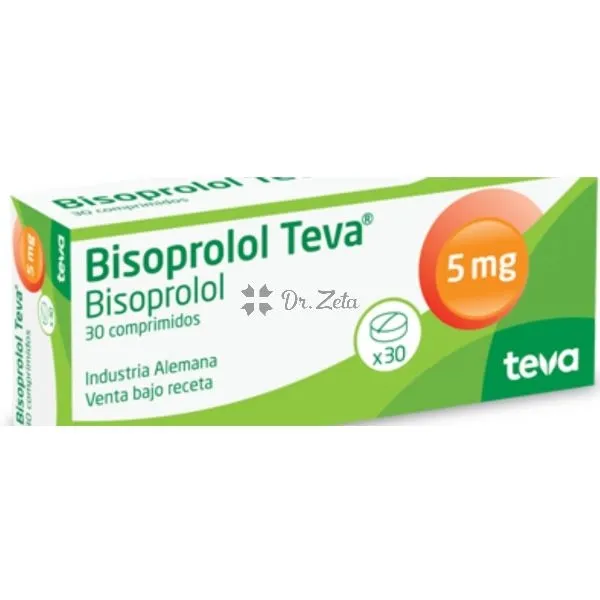
Table of Contents
- Package leaflet: Information for the user
- Introduction
- 1. What Bisoprolol Teva is and what it is used for
- 2. What you need to know before taking Bisoprolol Teva
- 3. How to take Bisoprolol Teva
- 4. Possible adverse effects
- 5. Storage of Bisoprolol Teva
- 6. Contents of the pack and other information
- **Marketing Authorization Holder and Manufacturing Responsible Person**
- Pharmachemie B.V.
- PO Box 552
- 2003 RN Haarlem
- Netherlands
- Teva Pharmaceutical Works Private Limited
Package leaflet: Information for the user
Introduction
Package leaflet: Information for the user
Bisoprolol Teva 5mg film-coated tablets EFG
Bisoprolol Teva 10mg film-coated tablets EFG
bisoprolol fumarate
Read the entire leaflet carefully before you start taking this medicine, because it contains important information for you.
-
Keep this leaflet, as you may need to read it again.
-
If you have any questions, ask your doctor or pharmacist.
-
This medicine has been prescribed for you only, and you should not give it to other people, even if they have the same symptoms as you, because it may harm them.
-
If you experience any adverse effects, consult your doctor or pharmacist, even if they are adverse effects not listed in this leaflet. See section 4.
Contents of the leaflet
- What Bisoprolol Teva is and what it is used for
- What you need to know before taking Bisoprolol Teva
- How to take Bisoprolol Teva
- Possible side effects
- How to store Bisoprolol Teva
- Contents of the pack and other information
1. What Bisoprolol Teva is and what it is used for
Bisoprolol belongs to a group of medicines called beta-blockers. These medicines protect the heart from excessive activity, helping the heart to relax and reducing blood pressure.
Bisoprolol is used to treat:
- High blood pressure (hypertension).
- Chest pain (angina pectoris).
2. What you need to know before taking Bisoprolol Teva
Do not take Bisoprolol Teva:
- If you are allergic to bisoprolol fumarate or to any of the other ingredients of this medicine (listed in section 6).
- If you have sudden heart weakness (acute heart failure) or worsening heart failure requiring intravenous medications that stimulate the heart.
- If you are in cardiogenic shock (shock caused by heart dysfunction).
- If you have certain heart conduction disorders (second- or third-degree AV block without a pacemaker, sinoatrial block).
- If you have certain heart rhythm disorders (sick sinus syndrome or sinoatrial block).
- If your heart rate is slow (less than 60 beats per minute) before starting treatment.
- If you have very low blood pressure (hypotension, systolic blood pressure below 100 mmHg).
- If you have severe asthma or any other breathing problems such as chronic respiratory disorders (COPD).
- If you have severe circulation problems in fingers, toes, arms, or legs, such as Raynaud's phenomenon. See also “Warnings and precautions”.
- If you have a tumor of the adrenal medulla that may cause extremely high blood pressure (untreated pheochromocytoma). See also “Warnings and precautions”.
- If you have a condition involving an imbalance in the body’s acid/base balance (metabolic acidosis).
- If you are being treated with floctafénine (a medicine used to relieve pain and inflammation) or sultopride (a medicine used to treat disorders of the nervous system). See also “Use of Bisoprolol Teva with other medicines”.
Warnings and precautions
Talk to your doctor before taking Bisoprolol Teva:
- If you frequently have lung disorders such as asthma or breathing difficulties. In sensitive patients, Bisoprolol may narrow the airways; in such cases your doctor may examine your lungs before starting treatment and may prescribe a bronchodilator (or increase its dose).
- If you are undergoing surgery. Your heart rate and blood pressure may change when anesthetics are used together with Bisoprolol. Inform the anesthetist that you are taking Bisoprolol.
- If you are scheduled for an X-ray examination using a contrast medium (so-called iodine-containing contrast agents). Inform your doctor that you are using Bisoprolol Teva.
- If you have diabetes, as Bisoprolol may mask the symptoms of low blood sugar (hypoglycemia). You should regularly check your blood glucose levels. See also “Use of Bisoprolol Teva with other medicines”.
- If you have a thyroid disorder, as Bisoprolol may mask symptoms of an overactive thyroid.
- If you are fasting.
- If you are receiving treatment for hypersensitivity reactions (anti-allergy treatments) or if you experience an allergic reaction. Bisoprolol may increase your sensitivity to substances you are allergic to and worsen the severity of allergic reactions.
- If you have a heart conduction disorder (called first-degree AV block).
- If you suffer from chest pain and pressure at rest (Prinzmetal's angina). Bisoprolol may increase the number and duration of attacks.
- If you have circulation problems in fingers, toes, arms, or legs (Raynaud's phenomenon) or painful leg cramps during exercise or walking (intermittent claudication). These conditions may worsen, especially at the beginning of treatment.
- If you have a tumor of the adrenal medulla (pheochromocytoma); Bisoprolol can only be used in combination with certain medicines (so-called alpha-blockers).
- If you have (or have had) a recurring skin disorder involving a rash with dry, scaly skin (psoriasis).
At the beginning of treatment, your doctor will monitor you regularly (especially when treating elderly patients).
Consult your doctor if any of the above warnings apply to you, or have applied to you in the past.
Children and adolescents
Bisoprolol is not recommended, as there is insufficient experience with the use of this medicine in children.
Use of Bisoprolol Teva with other medicines
Tell your doctor or pharmacist if you are taking, have recently taken, or might need to take any other medicines.
Do not take Bisoprolol Teva in combination with:
Inform your doctor especially if you are taking any of the following medicines, as the risk of adverse effects on the heart and/or changes in blood pressure increases when bisoprolol is used together with the medicines listed below.
-
Medicines used to treat heart rhythm disorders and high blood pressure, such as calcium channel blockers (verapamil, diltiazem, and bepridil).
-
Medicines used to treat high blood pressure such as clonidine and other blood pressure-lowering medicines that act on the part of the brain controlling blood pressure, such as methyldopa, guanfacine, moxonidine, and rilmenidine.
-
Medicines used to treat multiple sclerosis (fingolimod).
-
Other medicines used to treat high blood pressure.
-
Medicines used to treat severe depression such as MAO-A inhibitors (moclobemide).
-
Medicines used to treat heart rhythm disorders such as class I antiarrhythmics (e.g., disopyramide and quinidine) and class III antiarrhythmics (e.g., amiodarone).
-
Medicines used to treat chest pain and high blood pressure such as calcium antagonists (nifedipine and amlodipine, known as dihydropyridine derivatives).
-
Medicines used to treat Alzheimer's disease such as acetylcholinesterase inhibitors (rivastigmine, galantamine, and tacrine).
-
Other beta-blockers such as atenolol or metoprolol.
-
Eye drops containing beta-blockers such as timolol or betaxolol.
-
Medicines used to treat heart weakness and certain heart rhythm disorders such as digitalis glycosides (digoxin).
-
Anesthetics such as propofol and lidocaine. See also section “Warnings and precautions”.
-
Medicines used to treat severe depression such as tricyclic antidepressants (amitriptyline or clomipramine).
-
Medicines used to treat serious mental illnesses such as phenothiazines (chlorpromazine or perphenazine).
-
Medicines used to treat epilepsy such as barbiturates (phenobarbital).
-
Other medicines that lower blood pressure.
-
The muscle relaxant baclofen.
-
Medicines used to protect the body from the effects of certain cancer treatments such as amifostine.
-
The antimalarial medicine mefloquine.
-
Medicines used to control the immune system and inflammatory symptoms such as corticosteroids.
-
Medicines used to treat diabetes such as insulin, metformin, and tolbutamide; Bisoprolol may enhance the glucose-lowering effect of these products and may mask symptoms of low blood sugar. See also “Warnings and precautions”.
-
Medicines used to treat migraines such as ergotamine, as they may worsen circulation problems in arms and legs.
-
Medicines that stimulate a specific part of the nervous system such as sympathomimetics. Taking these medicines with Bisoprolol may reduce the effect of both products (dobutamine and isoprenaline) or cause increased blood pressure and worsened intermittent claudication (adrenaline and noradrenaline). Adrenaline is also used to treat allergic reactions. Higher doses of adrenaline may be needed to treat allergic reactions if you are taking bisoprolol at the same time.
-
A certain group of painkillers (so-called NSAIDs), such as ibuprofen, naproxen, and diclofenac; these may reduce the effect of bisoprolol.
-
Medicines used to treat Alzheimer's disease (donepezil).
-
Medicines used to treat a condition called myasthenia gravis (neostigmine).
-
An antibiotic primarily used to treat tuberculosis (rifampicin).
Pregnancy, breastfeeding, and fertility
If you are pregnant or breastfeeding, think you may be pregnant, or plan to become pregnant, consult your doctor or pharmacist before using this medicine.
Bisoprolol may be harmful during pregnancy and/or to the baby (increasing the risk of premature birth, miscarriage, growth retardation, low blood glucose, and reduced heart rate in the baby). Therefore, this medicine is not recommended during pregnancy unless clearly necessary.
It is unknown whether bisoprolol is excreted in breast milk. Therefore, breastfeeding is not recommended during treatment with this medicine.
Driving and using machines
Bisoprolol may occasionally cause dizziness or fatigue (see “Possible side effects”). If you experience these side effects, do not drive or operate machinery that requires full attention. Particular caution is needed at the start of treatment, when changing medication, and when using alcohol.
Bisoprolol Teva contains sodium
This medicine contains less than 1 mmol of sodium (23 mg) per coated tablet; hence, it is essentially “sodium-free”.
3. How to take Bisoprolol Teva
Follow exactly the instructions for use of this medicine provided by your doctor or pharmacist. If in doubt, consult your doctor or pharmacist again.
The tablets may be taken more easily with a large amount of water (1 glass).
The recommended dose is:
Adults
Initial dose: Your doctor will start treatment with the lowest possible dose. Sometimes 5 mg once daily (every 24 hours) may be sufficient.
The usual maintenance dose is 10 mg once daily. The maximum recommended dose is 20 mg per day.
Elderly patients
In general, dose adjustment is not necessary. It is recommended to start with the lowest possible dose.
Patients with severely reduced renal function
The maximum dose is 10 mg per day (every 24 hours). This dose may possibly be divided into two administrations.
Patients with severely reduced hepatic function
The maximum dose is 10 mg per day (every 24 hours).
Use in children and adolescents
The use of bisoprolol is not recommended, as there is insufficient experience with the use of this medicine in children.
If you take more Bisoprolol Teva than you should
If you have taken too much bisoprolol, contact your doctor or pharmacist immediately.
Symptoms that may occur when taking too high a dose include: reduced heart rate, lowered blood pressure, difficulty breathing, inadequate heart function, and low blood sugar levels (manifesting as hunger, sweating, dizziness, and palpitations). In severe cases, your doctor will likely perform stomach pumping (gastric lavage).
In case of overdose or accidental ingestion, contact the Toxicology Information Service at telephone 91 562 04 20.
If you forget to take Bisoprolol Teva
If you have missed a dose, take it as soon as possible. However, if it is almost time for your next dose, skip the missed dose and continue with your regular dosing schedule. Do not take a double dose of bisoprolol to make up for a missed dose.
If you stop taking Bisoprolol Teva
If you stop using Bisoprolol abruptly, your heart condition may worsen or your blood pressure may rise again. Therefore, it is best not to stop using this medicine suddenly. Your doctor will gradually reduce the dose.
If you have any further questions about the use of this medicine, ask your doctor or pharmacist.
4. Possible adverse effects
Like all medicines, this medicine may cause adverse effects, although not everyone experiences them.
If you experience any of the following effects, do not take Bisoprolol and see your doctor or go to the nearest hospital immediately.
- Difficulty breathing and swelling of the legs, which are symptoms of worsening heart failure (may affect up to 1 in 100 people)
- Breathing problems and wheezing due to narrowing of the airways in patients with asthma or respiratory diseases (bronchospasm) (may affect up to 1 in 100 people)
- Hypersensitivity reactions such as itching, redness, skin rash, swelling (hands, feet, face, neck, tongue, mouth or throat), difficulty breathing (may affect up to 1 in 1,000 people)
- Fever, fatigue, joint pain, rashes; symptoms of a disease called lupus syndrome (may affect up to 1 in 1,000 people)
- Yellowing of the whites of the eyes and skin (jaundice), dark urine, fatigue, and abdominal pain, which are symptoms of liver inflammation (hepatitis) (may affect up to 1 in 1,000 people)
- Seeing things that are not present (hallucinations) (may affect up to 1 in 1,000 people)
- Worsening of a recurring skin disease involving rashes and dry skin (psoriasis) (may affect 1 in 10,000 people)
The following adverse effects may also occur, among others:
Frequent: may affect up to 1 in 10 people
- (Fatigue), dizziness, or headache (these adverse effects occur especially at the beginning of treatment and are usually mild and often disappear within 1–2 weeks)
- Cold and/or numb hands and/or feet, worsening leg pain and weakness (intermittent claudication, Raynaud's phenomenon)
- Nausea, vomiting, diarrhea, abdominal pain, or constipation
- Hypotension (low blood pressure)
Uncommon: may affect up to 1 in 100 people
- Reduced heart rate, worsening of existing rhythm disorders such as AV block
- Drop in blood pressure, for example when rising quickly from a sitting or lying position, sometimes including dizziness (orthostatic hypotension)
- Depression
- Muscle weakness and muscle cramps, joint problems
- Sleep disorders
- Feeling of weakness
Rare: may affect up to 1 in 1,000 people
- Increase in liver enzymes (AST, ALT), which may be observed in a blood test
- Low blood glucose levels (hypoglycemia), including feeling hungry, sweating, dizziness, palpitations
- Increase in a type of fat found in the blood (triglycerides)
- Male impotence
- Inflammation of the nasal mucous membrane characterized by nasal congestion and runny nose (allergic rhinitis)
- Dry eyes (may be particularly problematic if you wear contact lenses)
- Nightmares
- Hearing disorders
- Fainting
Very rare: may affect up to 1 in 10,000 people
- Hair loss
- Inflammation of the eye or eyelid (conjunctivitis)
Reporting of adverse effects:
If you experience any type of adverse effect, talk to your doctor, pharmacist, or nurse, even if it is a possible adverse effect not listed in this leaflet. You can also report them directly via the Spanish Pharmacovigilance System for Human Medicinal Products: https://www.notificaram.es. By reporting adverse effects, you can help provide more information on the safety of this medicine.
5. Storage of Bisoprolol Teva
Keep this medicine out of the sight and reach of children.
Do not use this medicine after the expiry date stated on the packaging after “EXP”. The expiry date refers to the last day of the month indicated.
Bisoprolol Teva 5 mg film-coated tablets
Bottle: Do not store above 25°C. Keep the bottle tightly closed to protect it from light and/or moisture.
Blister pack: Do not store above 25°C. Keep the blister pack in the original packaging to protect it from light and/or moisture.
Bisoprolol Teva 10 mg film-coated tablets
Bottle: Do not store above 30°C. Keep the bottle tightly closed to protect it from light and/or moisture.
Blister pack: Do not store above 30°C. Keep the blister pack in the original packaging to protect it from light and/or moisture.
Medicines must not be disposed of via wastewater or household waste. Unused medicines should be returned to the SIGRE point at your pharmacy. If you have any doubts, ask your pharmacist how to properly dispose of unused medicines and their packaging. This helps protect the environment.
6. Contents of the pack and other information
Composition of Bisoprolol Teva film-coated tablets
Bisoprolol Teva 5 mg film-coated tablets
The active substance is bisoprolol fumarate: 5 mg per tablet. Each film-coated tablet contains 5 mg of bisoprolol fumarate.
Bisoprolol Teva 10 mg film-coated tablets
The active substance is bisoprolol fumarate. Each film-coated tablet contains 10 mg of bisoprolol fumarate.
The other components are:
Core: microcrystalline cellulose (E460), mannitol (E421), sodium croscarmellose (E466), magnesium stearate (E572);
Coating: hypromellose (E464), titanium dioxide (E171), macrogol 6000.
Appearance of the product and contents of the pack
Bisoprolol Teva 5 mg film-coated tablets are white, round, biconvex, film-coated tablets, marked with "5" on one side.
Bisoprolol Teva 10 mg film-coated tablets are white, round, biconvex, film-coated tablets, marked with "10" on one side.
The tablets are packed in blisters containing 20, 28, 30, 50, 56, 60, 84, 90, 98, 100 and 105 tablets each, and in bottles containing 20, 28, 30, 50, 56, 60, 84, 90, 98, 100 and 105 tablets each.
Only certain pack sizes may be marketed.
Marketing Authorization Holder and Manufacturing Responsible Person
Marketing Authorization Holder
Teva Pharma, S.L.U.
C/ Anabel Segura 11, Edificio Albatros B, 1st floor.
28108 Alcobendas, Madrid
Manufacturing Responsible Person
Pharmachemie B.V.
Swensweg 5, 2031 GA, Haarlem
PO Box 552
2003 RN Haarlem
Netherlands
Teva Pharmaceutical Works Private Limited
Pallagi út 13
H-4042 Debrecen
Hungary
This medicinal product is authorised in the Member States of the European Economic Area and in the United Kingdom (Northern Ireland) under the following names:
Belgium Bisoprolol TEVA 5 mg film-coated tablets
Bisoprolol TEVA 10 mg film-coated tablets
France Bisoprolol TEVA 5 mg, comprimé pelliculé
Bisoprolol TEVA 10 mg, comprimé pelliculé
Netherlands Bisoprololfumaraat 5 PCH, omhulde tabletten 5 mg
Bisoprololfumaraat 10 PCH, omhulde tabletten 10 mg
Spain Bisoprolol Teva 5 mg film-coated tablets EFG
Bisoprolol Teva 10 mg film-coated tablets EFG
United Kingdom (Northern Ireland) Bisoprolol Fumarate 5 mg Film-coated Tablets
Date of the most recent review of this leaflet: December 2022
Detailed and up-to-date information on this medicinal product is available on the website of the Spanish Agency of Medicines and Medical Devices (AEMPS) http://www.aemps.gob.es