Biodramina Caffeine coated tablets
Spain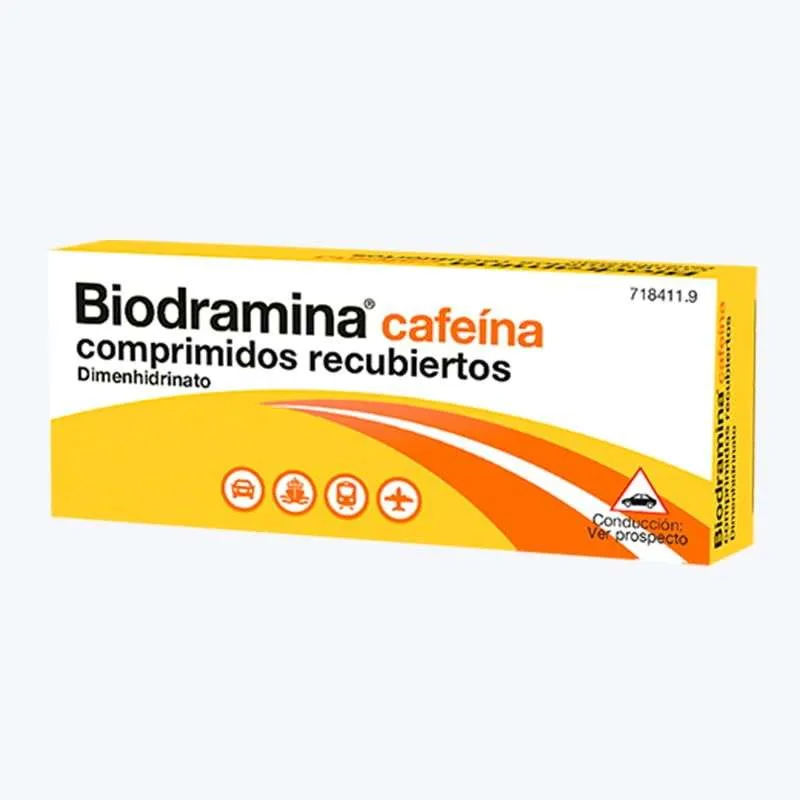
Table of Contents
- Package leaflet: Information for the user
- Introduction
- 1. What Biodramina Caffeine is and what it is used for
- 2. What you need to know before taking Biodramina Cafeína
- 3. How to take Biodramina Cafeína
- 4. Possible adverse effects
- 5. Storage of Biodramina Cafeína
- 6. Contents of the pack and other information
Package leaflet: Information for the user
Introduction
Package leaflet: Information for the user
Biodramina Cafeína Coated Tablets
Dimenhydrinate/Caffeine/Pyridoxine hydrochloride
Read the entire leaflet carefully before you start taking this medicine, because it contains important information for you.
Always follow exactly the instructions for use provided in this leaflet or as directed by your doctor or pharmacist.
- Keep this leaflet, as you may need to read it again.
- If you need advice or more information, consult your pharmacist.
- If you experience any adverse effects, consult your doctor or pharmacist, even if they are adverse effects not listed in this leaflet. (See section 4).
- You should consult a doctor if your condition worsens or if you do not improve after 7 days.
Leaflet contents:
- What Biodramina Cafeína is and what it is used for
- What you need to know before taking Biodramina Cafeína
- How to take Biodramina Cafeína
- Possible adverse effects
- How to store Biodramina Cafeína
- Contents of the pack and other information
1. What Biodramina Caffeine is and what it is used for
Dimenhydrinate acts against motion sickness caused by various modes of transportation.
Caffeine has a stimulant effect on the nervous system and therefore counteracts the drowsiness that dimenhydrinate may cause.
Pyridoxine, due to its action on the central nervous system, is used in conditions involving nausea and dizziness, such as those caused by motion.
Biodramina Caffeine is indicated for the prevention and treatment of symptoms of motion sickness caused by land, sea, or air travel, such as nausea, vomiting, and/or vertigo in adults and children over 12 years of age.
You should consult a doctor if your condition worsens or does not improve after 7 days.
2. What you need to know before taking Biodramina Cafeína
Do not take Biodramina Cafeína:
- If you are allergic to dimenhydrinate, diphenhydramine, caffeine (or its derivatives such as aminophylline, theophylline…), pyridoxine hydrochloride, or any of the other components of this medicine (listed in section 6).
- If you have porphyria (a rare disorder, usually hereditary, characterized by excessive excretion of porphyrins in feces and urine).
- If you are experiencing asthma attacks.
- If you suffer from mental disorders causing nervous excitement, convulsive seizures with or without loss of consciousness (epilepsy), anxiety states, or insomnia (difficulty sleeping).
- If you have severe liver, heart, stomach or duodenal ulcer, or high blood pressure.
- If you are being treated with levodopa (a medicine used for Parkinson's disease).
Warnings and precautions
- If you have asthma or severe respiratory diseases (chronic obstructive pulmonary disease, emphysema, chronic bronchitis), as thickening of secretions may occur and affect expectoration.
- If you have a condition involving abnormal overactivity of the thyroid gland (hyperthyroidism), increased intraocular pressure (glaucoma), enlarged prostate (prostatic hypertrophy), or any disease causing urinary tract or gastrointestinal obstruction.
- If you are over 65 years old, dry mouth, urinary retention, nausea, sedation, confusion, and low blood pressure (hypotension) may occur.
- If you are taking any medicine that causes ear toxicity, as symptoms of such toxic effects (such as ringing in the ears, dizziness, or vertigo) may be masked.
- If you are diabetic, you should be aware that caffeine may increase blood sugar levels.
- If you have any liver or kidney disease, stomach or duodenal ulcer, or stomach inflammation (gastritis), you should consult your doctor before taking this medicine.
- You should consult your doctor before taking this medicine if you have or have had heart conditions (cardiac arrhythmia, myocardial ischemia, etc.), especially when performing physical exercise or being at high altitudes.
- If you are sensitive to other xanthines such as theophylline or aminophylline, you should consult your doctor before taking this medicine.
- If you suspect you may have symptoms of appendicitis such as nausea, vomiting, or abdominal cramps, it is recommended to see a doctor to rule out appendicitis, as dimenhydrinate may interfere with the diagnosis of this condition.
- It is recommended to avoid exposure to very high temperatures and to follow appropriate hygiene and dietary measures, such as adequate ventilation and hydration.
- Avoid exposure to sunlight (even when cloudy) and to UVA lamps (ultraviolet rays) while taking this medicine.
- Concurrent use of tobacco with the caffeine contained in this medicine increases caffeine degradation.
Interference with diagnostic tests:
If you are scheduled to undergo any laboratory tests (blood, urine, etc.), inform your doctor that you are taking this medicine, as it may alter the results of these tests.
If you are scheduled to undergo any allergy testing, including skin tests, it is recommended to discontinue treatment at least 72 hours before the test to avoid interfering with test results.
Additionally, diabetic patients should be aware that caffeine may increase blood glucose levels.
Children
Do not use this medicine in children under 12 years of age.
Taking Biodramina Cafeína with other medicines
Inform your doctor or pharmacist if you are taking, have recently taken, or might need to take any other medicine.
In particular, if you are taking any of the following medicines, it may be necessary to adjust the dose of Biodramina Cafeína or avoid taking it altogether:
Medicines that mainly interact with dimenhydrinate:
- Anaesthetics and other substances with central nervous system depressant effects.
- Antibiotics of the aminoglycoside group.
- Antidepressants such as monoamine oxidase inhibitors (MAOIs).
- Anti-Parkinson’s drugs.
- Neuroleptics (used to calm agitation and neuromuscular hyperactivity).
- Ototoxic medicines (which may affect the ear) (see section Warnings and precautions).
- Medicines that may cause photosensitivity (skin reactions due to sensitivity to sunlight).
Medicines that mainly interact with caffeine:
- Oral contraceptives.
- Anti-infective quinolones (e.g., pipemidic acid, ciprofloxacin), linezolid, and erythromycin.
- Barbiturates (used as anticonvulsants).
- Adrenergic bronchodilators and theophylline (used to treat bronchial asthma).
- Calcium.
- Cimetidine (used to treat excessive gastric secretion and stomach ulcers).
- Disulfiram (used in alcohol dependence treatment).
- Phenytoin (used to treat epilepsy).
- Iron (used to treat anemia) (caffeine reduces iron absorption, so administration should be spaced by at least 2 hours).
- Lithium (antidepressant).
- Mexiletine (used for heart rhythm disorders [cardiac arrhythmias]).
- Procarbazine (anticancer medicine).
- Selegiline (used to treat Parkinson’s disease).
- Thyroxine (used to treat thyroid disorders).
Medicines that mainly interact with pyridoxine hydrochloride:
- Levodopa (medicine used for Parkinson’s disease).
- Phenobarbital and phenytoin (medicines used for epilepsy).
- Amiodarone (heart medicine).
- Altretamine and cyclophosphamide (medicines used for cancer).
- Penicillamine (used for rheumatic diseases).
- Hydralazine (used for hypertension).
- Antituberculosis medicines (isoniazid, cycloserine, ethionamide).
- Oral contraceptives.
- Immunosuppressants (such as corticosteroids, cyclosporine, azathioprine, etc.) used in organ transplantation.
Taking Biodramina Cafeína with food, drinks, and alcohol
Alcohol consumption is not recommended during treatment with this medicine.
Limit your intake of beverages containing caffeine (coffee, tea, chocolate, and cola drinks) while taking this medicine.
Taking pyridoxine with food delays pyridoxine absorption.
Pregnancy, breastfeeding, and fertility
If you are pregnant or breastfeeding, think you may be pregnant, or plan to become pregnant, consult your doctor or pharmacist before using this medicine.
Taking medicines during pregnancy may be harmful to the embryo or fetus and should be monitored by your doctor.
Breastfeeding women should not take this medicine without first consulting their doctor or pharmacist, as this medicine passes into breast milk.
Driving and using machines
Do not drive or operate heavy machinery, as this medicine may cause drowsiness or reduced reaction ability at recommended doses.
Biodramina Cafeína contains Sunset Yellow FCF (E110).
This medicine may cause allergic reactions as it contains Sunset Yellow FCF (E110). It may provoke asthma, especially in patients allergic to acetylsalicylic acid.
3. How to take Biodramina Cafeína
Follow exactly the instructions for use provided in this leaflet or those indicated by your doctor or pharmacist. If in doubt, ask your doctor or pharmacist.
The recommended doses are:
Adults and children over 12 years: 1-2 tablets (50-100 mg dimenhydrinate, 50-100 mg caffeine, and 15-30 mg pyridoxine hydrochloride). If necessary, repeat the dose every 4-6 hours. Do not administer more than 4 tablets (200 mg dimenhydrinate, 200 mg caffeine, and 60 mg pyridoxine hydrochloride) per day.
Use in children
Children under 12 years of age must not take this medicine.
Patients with liver disease: should consult their doctor before taking this medicine, as a dose adjustment may be necessary.
This medicine is taken orally.
It is recommended to take the tablets with food, water, or milk to minimize gastric irritation.
The first dose should be taken at least half an hour before starting the journey (preferably 1-2 hours beforehand), leaving at least 4 hours between doses. The last dose should not be taken within 6 hours of going to bed, to avoid possible insomnia, especially in patients with difficulty sleeping.
If symptoms worsen or persist for more than 7 days, consult your doctor.
If you take more Biodramina Cafeína than you should
If you have taken more Biodramina Cafeína than you should, consult your doctor or pharmacist immediately.
Symptoms of overdose include mainly: dilated pupils, flushed face, excitement, hallucinations, confusion, irritation of the stomach and intestines with nausea, vomiting and diarrhea, movement disorders, convulsions, deep unconsciousness (coma), sudden decrease in respiratory and heart function (cardiorespiratory collapse), and death. Symptoms may take more than 2 hours to appear after overdose.
In case of overdose or accidental ingestion, go immediately to a medical center or call the Toxicology Information Service (telephone: 91.5620420), indicating the medicine and the amount ingested.
If you have any further questions about the use of this medicine, ask your doctor or pharmacist.
4. Possible adverse effects
Like all medicines, Biodramina Cafeína can have adverse effects, although not everyone will experience them.
Adverse effects are usually mild and transient, especially at the beginning of treatment.
During the period of use of dimenhydrinate, the following adverse reactions have been observed, although their frequency could not be established with certainty:
- Nausea, vomiting, constipation, diarrhoea, stomach pain.
- Loss of appetite and dry mouth.
- Drowsiness and sedation (drowsiness).
- Headache, dizziness and vertigo.
- Increased viscosity of bronchial mucus, making breathing difficult.
- Urinary retention and sexual impotence.
- Glaucoma (increased intraocular pressure of the eye).
- Dilatation of the pupils, blurred vision or double vision.
- Skin allergic reactions and photosensitivity after intense sun exposure, which may cause urticaria, itching and skin redness.
- Decrease in blood levels of red blood cells, white blood cells, leukocytes and platelets.
- Porphyria (a rare disorder, usually hereditary, characterized by excessive excretion of porphyrins in faeces and urine).
- Hypertension or hypotension (increase or decrease in blood pressure).
- Tachycardia, palpitations and/or cardiac arrhythmias.
- Hyperexcitability may occur, especially in children, with symptoms such as insomnia, nervousness, confusion, tremor, irritability, euphoria, delirium, palpitations and even convulsions.
In addition, due to caffeine, the following may occur:
- Excitement, restlessness and/or difficulty sleeping.
- Tinnitus (ringing in the ears).
- Disorientation.
- Rapid breathing.
- Hot flushes.
- Increased urine production.
- Hyperglycemia or hypoglycemia (increase or decrease of blood glucose).
Administration of pyridoxine hydrochloride may cause the following adverse effects:
- Decreased platelet count in blood.
- Allergic reactions, including skin allergic reactions and photosensitivity.
- Folic acid deficiency.
- Headache, tingling sensation and numbness in feet and hands, drowsiness, insomnia and memory impairment.
- Breathing difficulties (apnea, dyspnea).
- Nausea.
- Suppression of lactation, breast pain and breast enlargement.
- Liver enzyme abnormalities.
If you experience any adverse effects, consult your doctor or pharmacist, even if they are adverse effects not listed in this leaflet.
Reporting of adverse effects:
If you experience any type of adverse effect, consult your doctor or pharmacist, even if they are possible adverse effects not listed in this leaflet.
You can also report them directly via the Spanish System for Pharmacovigilance of Human Medicines: https://www.notificaram.es.
By reporting adverse effects, you can help provide more information on the safety of this medicine.
5. Storage of Biodramina Cafeína
Keep this medicine out of sight and reach of children.
Store below 25°C.
Do not use this medicine after the expiry date stated on the carton after EXP. The expiry date refers to the last day of the month indicated.
Medicines should not be disposed of via wastewater or household waste. Dispose of unused containers and medicines at the SIGRE collection point at your pharmacy. If you have any doubts, ask your pharmacist how to dispose of containers and medicines you no longer need. This will help protect the environment.
6. Contents of the pack and other information
Composition of Biodramina Cafeína
- The active substances are dimenhydrinate, caffeine, and pyridoxine hydrochloride. Each tablet contains 50 mg of dimenhydrinate, 50 mg of caffeine, and 15 mg of pyridoxine hydrochloride.
- The other components (excipients) are methylcellulose, microcrystalline cellulose, magnesium stearate, sodium carboxymethyl starch A (from potato), ammonium methacrylate copolymer Type A, talc, titanium dioxide (E171), sunset yellow lake S (E110), triethyl citrate, polyethylene glycol 6000, dimethicone. See section 2 "Biodramina Cafeína contains sunset yellow lake S (E110)."
Appearance of the product and contents of the pack
Biodramina Cafeína are round, orange, film-coated tablets with a score line on one side.
They are available in packs containing 4 and 12 tablets.
Marketing Authorization Holder:
URIACH CONSUMER HEALTHCARE, S.L.
Av. Generalitat 163-167
08174 Sant Cugat del Vallès
(Barcelona – Spain)
Manufacturer:
Noucor Health, S.A.
Av. Camí Reial, 51-57
08184 Palau-solità i Plegamans
(Barcelona-Spain)
Date of the most recent revision of this leaflet: October 2013
“Detailed and up-to-date information on this medicinal product is available on the website of the Spanish Agency for Medicines and Health Products (AEMPS) http://www.aemps.gob.es.”