Biktarvy 50 mg/200 mg/25 mg film-coated tablets
Spain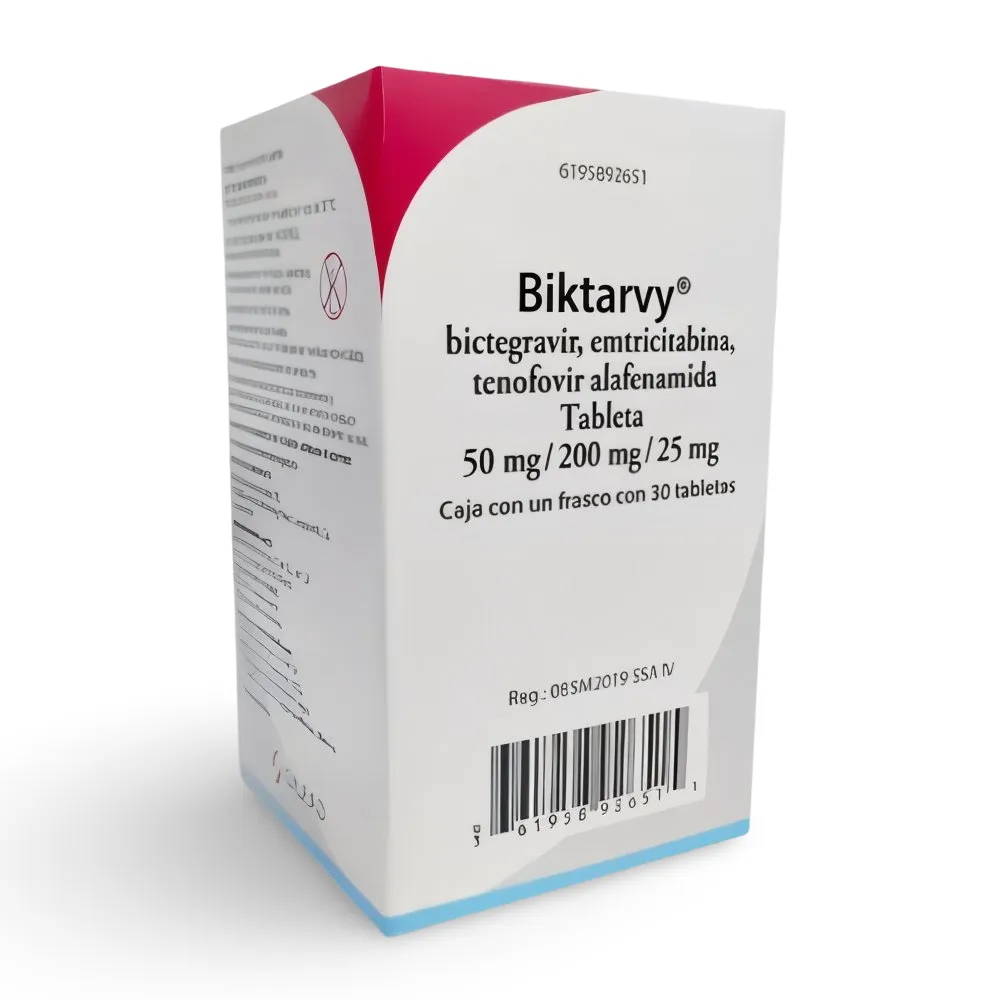
Table of Contents
Package leaflet: Information for the user
Introduction
Package leaflet: information for the user
Biktarvy 50 mg/200 mg/25 mg film-coated tablets
bictegravir/emtricitabine/tenofovir alafenamide
This medicine is subject to additional monitoring, which will allow quicker detection of new safety information. You can help by reporting any side effects you may experience. How to report side effects is explained at the end of section 4.
Read all of this leaflet carefully before you start taking this medicine, as it contains important information for you.
- Keep this leaflet, as you may need to read it again.
- If you have any questions, ask your doctor or pharmacist.
- This medicine has been prescribed for you only, and you should not give it to other people, even if they have the same symptoms as you, as it may harm them.
- If you experience any side effects, talk to your doctor or pharmacist, even if they are side effects not listed in this leaflet. See section 4.
Contents of the leaflet
- What Biktarvy is and what it is used for
- What you need to know before taking Biktarvy
- How to take Biktarvy
- Possible side effects
- How to store Biktarvy
- Contents of the pack and other information
1. What Biktarvy is and what it is used for
Biktarvy contains three active substances:
- bictegravir, an antiretroviral medicine known as an integrase strand transfer inhibitor (INSTI)
- emtricitabine, an antiretroviral medicine of a type known as a nucleoside reverse transcriptase inhibitor (NRTI)
- tenofovir alafenamide, an antiretroviral medicine of a type known as a nucleotide reverse transcriptase inhibitor (NtRTI)
Biktarvy is a single tablet for the treatment of human immunodeficiency virus-1 (HIV-1) infection in adults.
Biktarvy reduces the amount of HIV in the body. This improves the immune system and reduces the risk of developing HIV-related illnesses.
2. What you need to know before taking Biktarvy
Do not take Biktarvy
-
If you are allergic to bictegravir, emtricitabine, tenofovir alafenamide, or any of the other ingredients of this medicine (listed in section 6 of this leaflet).
-
If you are currently taking any of the following medicines:
- rifampicin, used to treat certain bacterial infections such as tuberculosis
- St. John’s wort (Hypericum perforatum, hypericin), a herbal medicine used for depression and anxiety, or products containing it.
-
If you are taking any of these medicines, do not take Biktarvy and contact your doctor immediately.
Warnings and precautions
Talk to your doctor before starting to take Biktarvy:
-
If you have liver problems or a history of liver disease, including hepatitis. Patients with liver diseases such as chronic hepatitis B or C who are receiving antiretroviral therapy have an increased risk of developing severe and potentially life-threatening liver complications. If you have hepatitis B virus infection, your doctor will carefully assess the most appropriate treatment regimen for you.
-
If you have hepatitis B. Liver problems may worsen after stopping Biktarvy.
-
Do not stop taking Biktarvy if you have hepatitis B. Talk to your doctor first. You can find further details in section 3, Do not interrupt treatment with Biktarvy.
While taking Biktarvy
Once you start taking Biktarvy, be alert for:
-
Signs of inflammation or infection
-
Joint pain, stiffness, or bone problems
-
If you experience any of these symptoms, inform your doctor immediately. You can find more information in section 4, Possible side effects.
Although kidney problems have not been observed with Biktarvy, there is a possibility that you may develop kidney problems if you take Biktarvy for a prolonged period.
While taking this medicine, you may still transmit HIV to others, although effective antiretroviral therapy reduces this risk. Consult your doctor about which precautions are necessary to avoid infecting others. This medicine is not a cure for HIV infection. While you are taking Biktarvy, you may still develop infections or other conditions associated with HIV infection.
Children and adolescents
Do not give this medicine to children and adolescents under 18 years of age. The use of Biktarvy has not yet been studied in children and adolescents under 18 years of age.
Other medicines and Biktarvy
Tell your doctor or pharmacist if you are taking, have recently taken, or might need to take any other medicines. Biktarvy may interact with other medicines. As a result, blood levels of Biktarvy or other medicines may be affected. This could prevent your medicines from working properly or worsen their possible side effects. In some cases, your doctor may need to adjust the dose or monitor your blood levels.
Medicines that must never be taken with Biktarvy:
-
rifampicin, used to treat certain bacterial infections such as tuberculosis
-
St. John’s wort (Hypericum perforatum, hypericin), a herbal medicine used for depression and anxiety, or products containing it.
-
If you are taking any of these medicines, do not take Biktarvy and contact your doctor immediately.
Talk to your doctor if you are taking:
-
medicines used to treat HIV and/or hepatitis B containing:
- adefovir dipivoxil, atazanavir, bictegravir, emtricitabine, lamivudine, tenofovir alafenamide, or tenofovir disoproxil
-
antibiotics, used to treat bacterial infections, containing:
- azithromycin, clarithromycin, rifabutin, or rifapentine
-
antiepileptics, used to treat epilepsy, containing:
- carbamazepine, oxcarbazepine, phenobarbital, or phenytoin
-
immunosuppressants, used to control the body's immune response after transplantation, containing cyclosporine
-
medicines for healing ulcers containing sucralfate
-
Inform your doctor if you are taking any of these medicines. Do not stop your treatment without consulting your doctor.
Talk to your doctor or pharmacist if you are taking:
-
antacids for treating stomach ulcers, heartburn, or acid reflux, containing aluminium and/or magnesium hydroxide
-
mineral supplements or vitamin supplements containing magnesium or iron
-
Talk to your doctor or pharmacist before taking Biktarvy if you are taking any of these medicines.
Antacids and magnesium supplements: you must take Biktarvy at least 2 hours before taking antacids or supplements containing aluminium and/or magnesium. Alternatively, you may take Biktarvy with food at least 2 hours after taking the antacid or supplement containing aluminium and/or magnesium.
Iron supplements: you must take Biktarvy at least 2 hours before taking iron supplements, or you may take them together with food.
Pregnancy and breastfeeding
- If you are pregnant or breastfeeding, think you may be pregnant, or plan to become pregnant, consult your doctor or pharmacist before using this medicine.
- Inform your doctor immediately if you become pregnant and ask about the potential benefits and risks of your antiretroviral treatment for you and your baby.
If you have taken Biktarvy during pregnancy, your doctor may request periodic blood tests and other diagnostic tests to monitor your child's development. In children whose mothers took nucleoside reverse transcriptase inhibitors (NRTIs) during pregnancy, the benefit of protection against HIV outweighed the risk of adverse effects.
Do not breastfeed while taking Biktarvy. This is because some of the active substances in this medicine pass into breast milk. It is recommended that you do not breastfeed to avoid transmitting the virus to your child through breast milk. If you wish to breastfeed, speak to your doctor first.
Driving and using machines
Biktarvy may cause dizziness. If you experience dizziness during treatment with Biktarvy, do not drive or operate tools or machinery.
Biktarvy contains sodium
This medicine contains less than 1 mmol of sodium (23 mg) per tablet; essentially, it is "sodium-free".
3. How to take Biktarvy
Take Biktarvy exactly as prescribed by your doctor. Do not change the dose or stop taking it without first talking to your doctor.
- Take once daily: Take one tablet by mouth each day, with or without food.
- Do not chew, split, or crush the tablet: Swallow the tablet whole.
- If you miss a dose: If you usually take your dose in the morning and you forget to take it, take it as soon as you remember during the same day. If you do not remember until the next day, skip the missed dose and take the next dose at your regular time. Do not take two doses to make up for a missed dose.
- If you vomit after taking the tablet: Take another tablet. If you vomit again, contact your doctor for advice.
Keep taking Biktarvy every day as directed, even if you feel well. Stopping treatment may lead to an increase in the amount of HIV in your blood and resistance to antiviral medicines.
Store Biktarvy at room temperature, away from moisture and heat. Keep the medication in its original container.
If you have any questions about how to take Biktarvy, ask your doctor or pharmacist.
Follow exactly the administration instructions for this medicine as given by your doctor.
If in doubt, consult your doctor or pharmacist again.
The recommended dose is:
Adults: one tablet daily, with or without food
Do not chew, crush, or split the tablet.
-
Consult your doctor or pharmacist if you are taking:
-
Antacids for treating stomach ulcers, heartburn, or acid reflux, containing aluminium hydroxide and/or magnesium hydroxide
-
Mineral supplements or vitamins containing magnesium or iron
-
See section 2 for more information on how to take these medicines with Biktarvy.
If you take more Biktarvy than you should
If you take more than the recommended dose of Biktarvy, you may be at increased risk of experiencing possible adverse effects with this medicine (see section 4, Possible adverse effects).
Contact your doctor immediately or go to the nearest emergency department. Take the medicine bottle with you so you can easily describe what you have taken.
If you forget to take Biktarvy
It is important not to miss a dose of Biktarvy.
If you miss a dose:
- If you remember within 18 hours of the time you usually take Biktarvy, take the tablet as soon as possible. Then take your next dose at the usual time.
- If you remember more than 18 hours after your usual dose time, do not take the missed dose. Wait and take the next dose at the usual time.
If you vomit within 1 hour after taking Biktarvy, take another tablet. If you vomit more than 1 hour after taking Biktarvy, you do not need to take another tablet until your next scheduled dose.
Do not stop treatment with Biktarvy
Do not stop treatment with Biktarvy without first talking to your doctor. Stopping Biktarvy may seriously affect the effectiveness of future treatments. If Biktarvy is stopped for any reason, consult your doctor before restarting Biktarvy tablets.
When you notice that you are running low on Biktarvy, contact your doctor or pharmacist to obtain more. This is very important, as the amount of virus may start to increase if the medicine is interrupted, even for a short period of time. This could make the disease harder to treat.
If you have HIV infection and hepatitis B, it is especially important not to stop your treatment with Biktarvy without first speaking to your doctor. You may need to have blood tests for several months after stopping treatment. In some patients with advanced liver disease or cirrhosis, stopping treatment is not recommended, as it may lead to worsening of hepatitis, a condition that could potentially be fatal.
- Contact your doctor immediately about any new or unusual symptoms after stopping your treatment, particularly symptoms you associate with hepatitis B virus infection.
If you have any other questions about the use of this medicine, ask your doctor or pharmacist.
4. Possible side effects
Like all medicines, this medicine can cause side effects, although not everyone gets them.
Possible side effects: tell a doctor immediately
-
Any sign of inflammation or infection. In some patients with advanced HIV infection (AIDS) and a history of opportunistic infections (infections that occur in people with a weakened immune system), signs and symptoms of inflammation from previous infections may occur shortly after starting treatment for HIV. These symptoms are believed to result from an improved immune response, enabling the body to fight infections that may have been present without obvious symptoms.
-
Autoimmune disorders may also occur, in which the immune system attacks healthy tissues of the body, after starting treatment for HIV infection. Autoimmune disorders may occur many months after starting treatment. Be alert for any symptoms of infection or other symptoms such as:
-
muscle weakness
-
weakness starting in the hands and feet and moving towards the trunk
-
palpitations, tremor, or hyperactivity
-
If you notice any of these symptoms or any symptoms of inflammation or infection, inform your doctor immediately.
Common side effects
(may affect up to 1 in 10 people)
- depression
- abnormal dreams
- headache
- dizziness
- diarrhea
- feeling sick (nausea)
- tiredness (fatigue)
Uncommon side effects
(may affect up to 1 in 100 people)
- anemia
- vomiting
- stomach pain
- digestive problems causing discomfort after meals (dyspepsia)
- gas (flatulence)
- swelling of the face, lips, tongue, or throat (angioedema)
- itching (pruritus)
- rash
- hives (urticaria)
- joint pain (arthralgia)
- suicidal behaviour
- anxiety
- sleep disorders
Blood tests may also show:
-
Higher concentrations of substances called bilirubin and/or serum creatinine in the blood
-
If you consider any of the side effects you experience to be severe, inform your doctor.
Other effects that may occur during treatment for HIV
The frequency of the following adverse effects is considered unknown (frequency cannot be estimated from available data).
-
Bone problems. Some patients treated with combined antiretroviral medicines such as Biktarvy may develop a bone disease called osteonecrosis (death of bone tissue due to loss of blood supply to the bone). Prolonged use of these types of medicines, corticosteroid use, alcohol consumption, having a very weak immune system, and being overweight may be among the many risk factors for developing this disease. Signs of osteonecrosis include:
- joint stiffness
- joint discomfort and pain (especially in the hip, knee, and shoulder)
- difficulty moving
-
If you notice any of these symptoms, inform your doctor.
During HIV treatment, there may be an increase in weight and in blood glucose and lipid levels. This may be partly related to improved health and lifestyle, and, in the case of blood lipids, sometimes to the HIV medicines themselves. Your doctor will monitor these changes.
Reporting of side effects
If you experience any side effect, talk to your doctor or pharmacist, even if it is a possible side effect not listed in this leaflet. You can also report them directly through the national reporting system included in Appendix V. By reporting side effects, you can help provide more information on the safety of this medicine.
5. Storage of Biktarvy
Keep this medicine out of sight and reach of children.
Do not use this medicine after the expiry date stated on the carton and bottle after {EXP}. The expiry date is the last day of the month indicated.
Store in the original packaging to protect from moisture. Keep the bottle tightly closed. Do not use if the bottle seal is missing or broken.
Medicines should not be disposed of via wastewater or household waste. Ask your pharmacist how to dispose of containers and medicines no longer required. This will help protect the environment.
6. Contents of the container and other information
Composition of Biktarvy
Active substances: bictegravir, emtricitabine and tenofovir alafenamide. Each Biktarvy tablet contains bictegravir sodium equivalent to 50 mg of bictegravir, 200 mg of emtricitabine, and tenofovir alafenamide fumarate equivalent to 25 mg of tenofovir alafenamide.
Other components:
Tablet core
Microcrystalline cellulose, croscarmellose sodium, magnesium stearate.
Film coating
Polyvinyl alcohol, titanium dioxide (E171), macrogol, talc, iron oxide red (E172), iron oxide black (E172).
Appearance of the product and contents of the container
Biktarvy film-coated tablets are film-coated, brownish-purple, capsule-shaped tablets, marked on one side with «GSI» and on the other side with «9883». Biktarvy is available in bottles of 30 tablets and in packs containing 3 bottles, each containing 30 tablets. Each bottle contains a silica gel desiccant, which should be kept in the bottle to help protect the tablets. The silica gel desiccant is contained in a separate sachet or container and must not be swallowed.
Only certain pack sizes may be marketed.
Marketing Authorization Holder
Gilead Sciences Ireland UC
Carrigtohill
County Cork, T45 DP77
Ireland
Manufacturer
Gilead Sciences Ireland UC
IDA Business & Technology Park
Carrigtohill
County Cork
Ireland
For more information about this medicinal product, contact the local representative of the marketing authorization holder:
Belgium/Belgium/Belgium Gilead Sciences Belgium SPRL-BVBA Tel/Tel: + 32 (0) 24 01 35 50 | Lithuania Gilead Sciences Poland Sp. z o.o. Tel.: + 48 (0) 22 262 8702 |
Greece Gilead Sciences Ireland UC Tel.: + 353 (0) 1 686 1888 | Luxembourg/Luxembourg Gilead Sciences Belgium SPRL-BVBA Tél/Tel: + 32 (0) 24 01 35 50 |
Czech Republic Gilead Sciences s.r.o. Tel: + 420 (0) 910 871 986 | Hungary Gilead Sciences Ireland UC Tel.: + 353 (0) 1 686 1888 |
Denmark Gilead Sciences Sweden AB Tlf: + 46 (0) 8 5057 1849 | Malta Gilead Sciences Ireland UC Tel: + 353 (0) 1 686 1888 |
Germany Gilead Sciences GmbH Tel: + 49 (0) 89 899890-0 | Netherlands Gilead Sciences Netherlands B.V. Tel: + 31 (0) 20 718 36 98 |
Estonia Gilead Sciences Poland Sp. z o.o. Tel.: +48 (0) 22 262 8702 | Norway Gilead Sciences Sweden AB Tlf: + 46 (0) 8 5057 1849 |
Greece Gilead Sciences Hellas MEPE Tel: + 30 (0) 210 8930 100 | Austria Gilead Sciences GesmbH Tel: + 43 (0) 1 260 830 |
Spain Gilead Sciences, S.L. Tel: + 34 (0) 91 378 98 30 | Poland Gilead Sciences Poland Sp. z o.o. Tel.: + 48 (0) 22 262 8702 |
France Gilead Sciences Tél: + 33 (0) 1 46 09 41 00 | Portugal Gilead Sciences, Lda. Tel: + 351 (0) 21 7928790 |
Croatia Gilead Sciences Ireland UC Tel: + 353 (0) 1 686 1888 | Romania Gilead Sciences Ireland UC Tel: + 353 (0) 1 686 1888 |
Ireland Gilead Sciences Ireland UC Tel: + 353 (0) 214 825 999 | Slovenia Gilead Sciences Ireland UC Tel: + 353 (0) 1 686 1888 |
Iceland Gilead Sciences Sweden AB Sími: + 46 (0) 8 5057 1849 | Slovakia Gilead Sciences Slovakia s.r.o. Tel: + 421 (0) 232 121 210 |
Italy Gilead Sciences S.r.l. Tel: + 39 02 439201 | Finland/Finland Gilead Sciences Sweden AB Puh/Tel: + 46 (0) 8 5057 1849 |
Cyprus Gilead Sciences Hellas MEPE Tel: + 30 (0) 210 8930 100 | Sweden Gilead Sciences Sweden AB Tel: + 46 (0) 8 5057 1849 |
Latvia Gilead Sciences Poland Sp. z o.o. Tel.: + 48 (0) 22 262 8702 | United Kingdom Gilead Sciences Ltd. Tel: + 44 (0) 8000 113 700 |
Date of the most recent review of this leaflet:
Detailed information on this medicine is available on the European Medicines Agency website: http://www.ema.europa.eu.