Berinert 500 IU powder and solvent for solution for injection and for infusion
Spain
Table of Contents
Package leaflet: Information for the user
Introduction
Package leaflet: information for the user
Berinert 500 IU
Powder and solvent for solution for injection and infusion.
C1 esterase inhibitor human
Read the entire leaflet carefully before you start using this medicine.
- Keep this leaflet, as you may need to read it again.
- If you have any questions, ask your doctor or pharmacist.
- This medicine has been prescribed for you only and you should not give it to other people, even if they have the same symptoms as you, because it may harm them.
- If you experience any adverse reactions, consult your doctor or pharmacist, even if they are adverse reactions not listed in this leaflet. See section 4.
Leaflet contents
- What Berinert is and what it is used for
- What you need to know before using Berinert
- How to use Berinert
- Possible side effects
- How to store Berinert
- Contents of the pack and other information
1. What Berinert is and what it is used for
What is Berinert?
Berinert is supplied as a powder and solvent. The prepared solution must be administered by intravenous injection or infusion.
Berinert is prepared from human plasma (the liquid part of blood). The active substance is human C1 esterase inhibitor protein, derived from plasma.
What is Berinert used for?
Berinert is used for the treatment and preoperative prevention of hereditary angioedema type I and II (HAE, edema = swelling). Hereditary angioedema is a congenital disorder of the vascular system. HAE is not an allergic disease. HAE is caused by insufficient, absent, or defective synthesis of C1 esterase inhibitor, which is an important protein. The disease is characterized by the following symptoms:
- sudden swelling of hands and feet,
- sudden facial swelling with a feeling of tightness,
- swelling of eyelids and lips, possible swelling of the larynx (voice organ) leading to breathing difficulties,
- swelling of the tongue,
- colicky abdominal pain.
Generally, any part of the body may be affected.
2. What you need to know before using Berinert
The following sections contain information your doctor should consider before administering Berinert to you.
Do not use Berinert:
- If you are allergic to C1 esterase inhibitor protein or to any of the other components of this medicine (listed in section 6).
Inform your doctor or pharmacist if you are allergic to any medication or food.
Warnings and precautions
- If you have previously experienced allergic reactions to Berinert. You should take antihistamines and corticosteroids as prophylaxis, if advised by your doctor.
- In the event of allergic or anaphylactic reactions (severe allergic reaction causing serious breathing difficulties or dizziness). Administration of Berinert must be stopped immediately (e.g., by stopping the infusion).
- If you experience swelling of the larynx (laryngeal edema). You must be carefully monitored and emergency treatment must be readily available.
- During use for treating indications and dosages for which the medicine has not been approved (e.g., Capillary Leak Syndrome, CLS). See section 4. "Possible side effects".
Your doctor will carefully weigh the benefits of treatment with Berinert against the risk of developing these complications.
Viral safety
When medicines derived from human blood or plasma are administered, certain measures must be taken to prevent transmission of infections to patients. These measures include:
- careful selection of blood and plasma donors to exclude those at risk of carrying infectious diseases, and
- testing for specific markers of viruses and infections in individual donations and pooled plasma.
Manufacturers of these products also include steps in the processing of blood or plasma to eliminate or inactivate viruses. Nevertheless, despite these measures, the possibility of transmitting infectious agents cannot be completely ruled out when administering medicines derived from human blood or plasma. This also applies to emerging or unknown viruses and other types of infections.
The measures applied are considered effective against enveloped viruses such as human immunodeficiency virus (HIV, the AIDS virus), hepatitis B virus, hepatitis C virus (liver inflammation), and for non-enveloped viruses such as hepatitis A virus (liver inflammation) and parvovirus B19.
Your doctor may recommend vaccination against hepatitis A and B if you are treated regularly/repeatedly with medicines derived from human plasma.
It is strongly recommended that each time Berinert is administered, your doctor records the date of administration, the batch number, and the volume injected.
Use of Berinert with other medicines
- Inform your doctor or pharmacist if you are using, have recently used, or might need to use any other medicines, including medicines without a prescription.
- Berinert must not be mixed with other medicines or diluents in the same syringe or infusion equipment.
Pregnancy and breastfeeding
- If you are pregnant or breastfeeding, think you may be pregnant, or plan to become pregnant, consult your doctor or pharmacist before using this medicine.
- During pregnancy and breastfeeding, Berinert should only be used if clearly indicated.
Driving and using machines
The effect of Berinert on the ability to drive and use machines is none or negligible.
Berinert contains sodium
Berinert contains up to 49 mg of sodium (main component of table/cooking salt) per vial. This corresponds to 2.5% of the maximum daily sodium intake recommended for an adult.
3. How to use Berinert
Treatment must be initiated and supervised by a physician experienced in the management of C1 esterase inhibitor deficiency.
Dosage
Adults
Treatment of acute angioedema attacks:
20 IU per kilogram of body weight (20 IU/kg b.w.).
Preoperative prevention of acute angioedema attacks:
1000 IU administered 6 hours prior to a medical, dental, or surgical procedure.
Paediatric population
Treatment of acute angioedema attacks:
20 IU per kilogram of body weight (20 IU/kg b.w.).
Preoperative prevention of acute angioedema attacks:
15 to 30 IU per kilogram of body weight (15–30 IU/kg b.w.) administered 6 hours prior to a medical, dental, or surgical procedure. The dose should be selected based on clinical circumstances (e.g., type of procedure and severity of the disease).
If you use more Berinert than you should
Cases of overdose have not been reported.
Reconstitution and method of administration
Berinert is injected into a vein (intravenous administration), usually by your doctor or nurse. You or your caregiver may also inject Berinert, but only after receiving adequate training. If your doctor decides that you may be treated at home, you will be given detailed instructions. You will be provided with a diary to record each injection given at home, which you must bring with you each time you visit your doctor. You or your caregiver will be regularly reviewed on how to administer the injections to ensure correct technique over time.
General instructions
- The powder must be dissolved and withdrawn from the vial under aseptic conditions. Use the syringe provided with the product.
- The prepared solution must be clear and transparent. After filtering or transferring the solution (see below), it should be inspected visually for particulate matter and discoloration before administration.
- Do not use the solution if it is visibly cloudy or contains particles or residues.
- Any unused portion of the medicine or residual materials must be disposed of in accordance with local regulations and following your doctor's instructions.
Reconstitution
Before opening any vial, allow the Berinert powder and the solvent to reach room temperature. To achieve this, leave the vials at room temperature for approximately one hour, or hold them in closed hands for a few minutes. DO NOT expose the vials to direct heat. The vials must not be heated above body temperature (37 °C).
Carefully remove the protective caps from the solvent vial and the powder vial. Clean the exposed rubber stoppers of both vials with an alcohol-impregnated wipe and allow them to dry. Now transfer the solvent to the powder vial using the provided administration system (Mix2Vial). Please follow the instructions below:
|
|
|
|
|
|
|
|
|
Discard the solvent vial with the blue adapter of the Mix2Vial attached. |
|
|
|
|
 1
1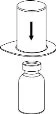 2
2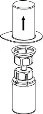 3
3 4
4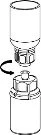 5
5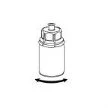 6
6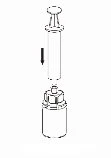 7
7Transfer of the reconstituted solution to the syringe and administration
8 |
|
9 |
|
Administration
The solution must be administered by slow intravenous (i.v.) route, either by injection or by infusion (4 ml/minute).
4. Possible adverse effects
Like all medicines, this medicine may cause adverse effects, although not everyone experiences them.
Contact your doctor immediately
- if any adverse effect occurs, or
- if you notice any adverse effect not listed in this leaflet.
Adverse effects with Berinert are rare.
The following adverse effects have been observed rarely (in 1 to 10 out of 10,000 patients/individuals):
? There is an increased risk of thrombosis (blood clot formation) during attempts at prophylactic or therapeutic treatment of Capillary Leak Syndrome (leakage of fluid from small blood vessels into tissues), for example, during and after cardiac surgery with extracorporeal circulation. See section 2. “Warnings and precautions”.
- Increase in body temperature, as well as burning sensation and itching at the injection site.
- Hypersensitivity or allergic reactions (such as irregular heartbeat, rapid heartbeat, drop in blood pressure, skin redness, rash, breathing difficulties, headache, dizziness, feeling unwell).
In very rare cases (less than 1 in 10,000 patients/individuals or isolated cases), allergic reactions may progress to shock.
Reporting of adverse effects
If you experience any type of adverse effect, consult your doctor or pharmacist, even if it is a possible adverse effect not listed in this leaflet. You may also report them directly through the Spanish Pharmacovigilance System for Human Medicines: www.notificaRAM.es. By reporting adverse effects, you can help provide more information on the safety of this medicine.
5. Storage of Berinert
- Keep this medicine out of the sight and reach of children.
- Do not use Berinert after the expiry date stated on the label and on the carton.
- Do not store above 30°C.
- Do not freeze.
- Store the container in its outer packaging to protect it from light.
- Berinert does not contain preservatives, so the prepared solution should preferably be used immediately.
- If the prepared solution is not administered immediately, it should be used within 8 hours. The reconstituted product should only be stored in the vial.
6. Contents of the pack and other information
Composition of Berinert
Active substance:
Human C1 esterase inhibitor (500 IU/vial; after reconstitution: 50 UI/ml)
For further information, see the section "This information is intended for healthcare professionals only."
Other components:
Glycine, sodium chloride, sodium citrate.
See the last paragraph of section 2. "Berinert contains sodium."
Solvent: Water for injections.
Appearance of the product and contents of the pack
Berinert is presented as a white powder and is supplied with water for injections as solvent.
The prepared solution should be clear and transparent.
Presentation
Box containing 500 IU:
1 vial with powder (500 IU)
1 vial with 10 ml of water for injections
1 transfer device with filter 20/20
Administration kit (inner pack):
1 single-use 10 ml syringe
1 venous access set
2 alcohol wipes
1 dressing
Marketing Authorization Holder and Manufacturer
CSL Behring GmbH
Emil von Behring Strasse, 76
35041 Marburg, Germany
For further information about this medicinal product, please contact the local representative of the Marketing Authorization Holder:
CSL Behring S.A.
Tarragona 157, 18th floor
08014 Barcelona
Spain
This medicinal product is authorized in the European Economic Area member states and in the United Kingdom (Northern Ireland) under the following names:
Berinert 500 IE Pulver und
Lösungsmittel zur Herstellung einer
Injektions- oder Infusionslösung Austria
Berinert 500 Belgium, Cyprus, Germany, Greece, Luxembourg, Poland, Portugal
Berinert 500, 500 IU Powder and solvent
for solution for injection/infusion Bulgaria
Berinert 500 IU Czech Republic, Slovakia
Berinert Denmark, Italy
Berinert 500 IU, injektio/infuusiokuiva-aine
ja liuotin, liuosta varten Finland
Berinert 500 UI, poudre et solvant pour
solution injectable/perfusion France
Berinert 500 NE por és oldószer
oldatos injekcióhoz vagy infúzióhoz Hungary
Berinert 500 IU, pulver og væske til
injeksjons-/infusjonsvæske, oppløsning Norway
Berinert 500 UI, pulbere si solvent
pentru solutie injectabila/perfuzabila Romania
Berinert 500 i.e. prašek in vehikel za
raztopino za injiciranje ali infundiranje Slovenia
Berinert 500 UI Polvo y disolvente para solución
inyectable y para perfusión Spain
Berinert 500 IE, pulver och vätska till
injektions-/infusionsvätska, lösning Sweden
Berinert 500 UI powder and solvent
for solution for injection/infusion United Kingdom
Date of the most recent revision of this leaflet: October 2021
Detailed and up-to-date information on this medicinal product is available on the website of the Spanish Agency of Medicines and Health Products (AEMPS) http://www.aemps.gob.es
This information is intended for healthcare professionals only
QUALITATIVE AND QUANTITATIVE COMPOSITION
The potency of human C1 esterase inhibitor is expressed in International Units (IU), related to the current WHO standard for C1 esterase inhibitor products.